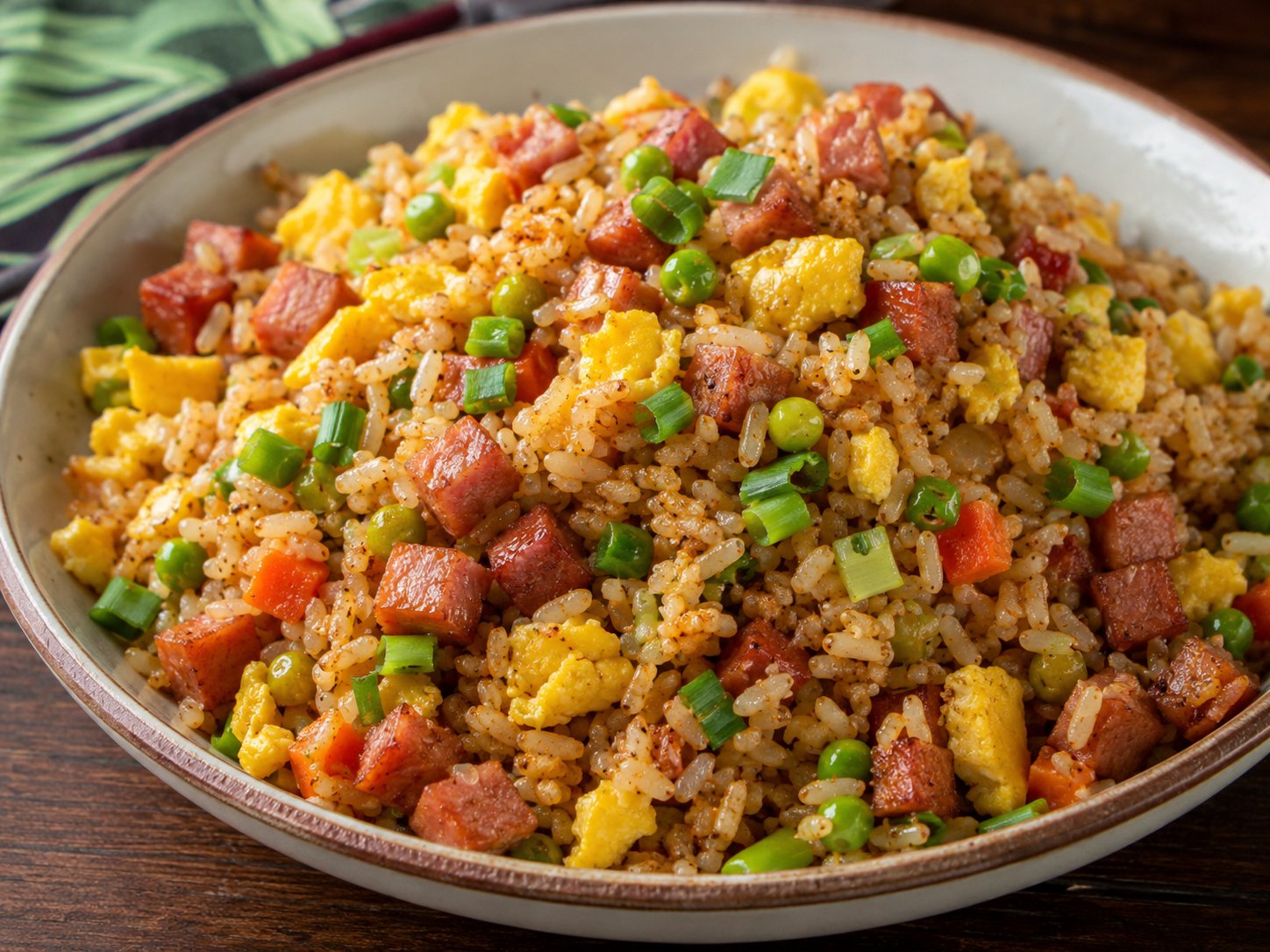


Spam fried rice is the dish you make on Sunday night when the lunch rice from earlier in the week is still in the fridge and there's a half-can of Spam in the cabinet. Diced Spam crisps in its own fat, day-old rice gets the wok-fried treatment, eggs scramble into the grain, green onions go in at the end, a splash of shoyu finishes it. It is built from the cheapest possible ingredient list and it is one of the best things you can eat for breakfast, lunch, or dinner.
The dish carries two histories at once. Fried rice came in with the first wave of Chinese contract laborers who arrived to work the sugar plantations in the 1850s. Spam came in with the U.S. military during World War II, when canned, shelf-stable protein was easier to ship to troops in the Pacific than fresh meat, and it stayed because it kept well in tropical heat. Locals took the two and put them in the same pan. Hawaii now eats more Spam per capita than any other U.S. state — roughly seven million cans a year — and Spam fried rice is on the menu at every diner from Rainbow Drive-In in Kapahulu to Cafe 100 in Hilo.
At a glance
4
10 minutes
15 minutes
Easy
Ingredients
For the fried rice
- 4 cups cooked white rice, ideally a day or two old and refrigerated
- 1 can (12 oz) Spam (Classic, Lite, or Less Sodium — whichever you grew up on), cut into small dice
- 3 large eggs, lightly beaten
- 1 bunch green onions, sliced thin (green and white parts kept separate)
- 3 cloves garlic, minced
- 1 tablespoon fresh ginger, minced (optional but worth it)
- 1 cup frozen peas and carrots, thawed (optional)
To finish
- 2 tablespoons Aloha Shoyu or other Japanese-style soy sauce
- 1 teaspoon sesame oil
- 1/2 teaspoon white pepper
- Furikake to taste (optional)
Equipment
- Large carbon-steel wok or a 12-inch heavy skillet
- Wooden spatula or wok shovel
- Sharp knife and cutting board
To serve
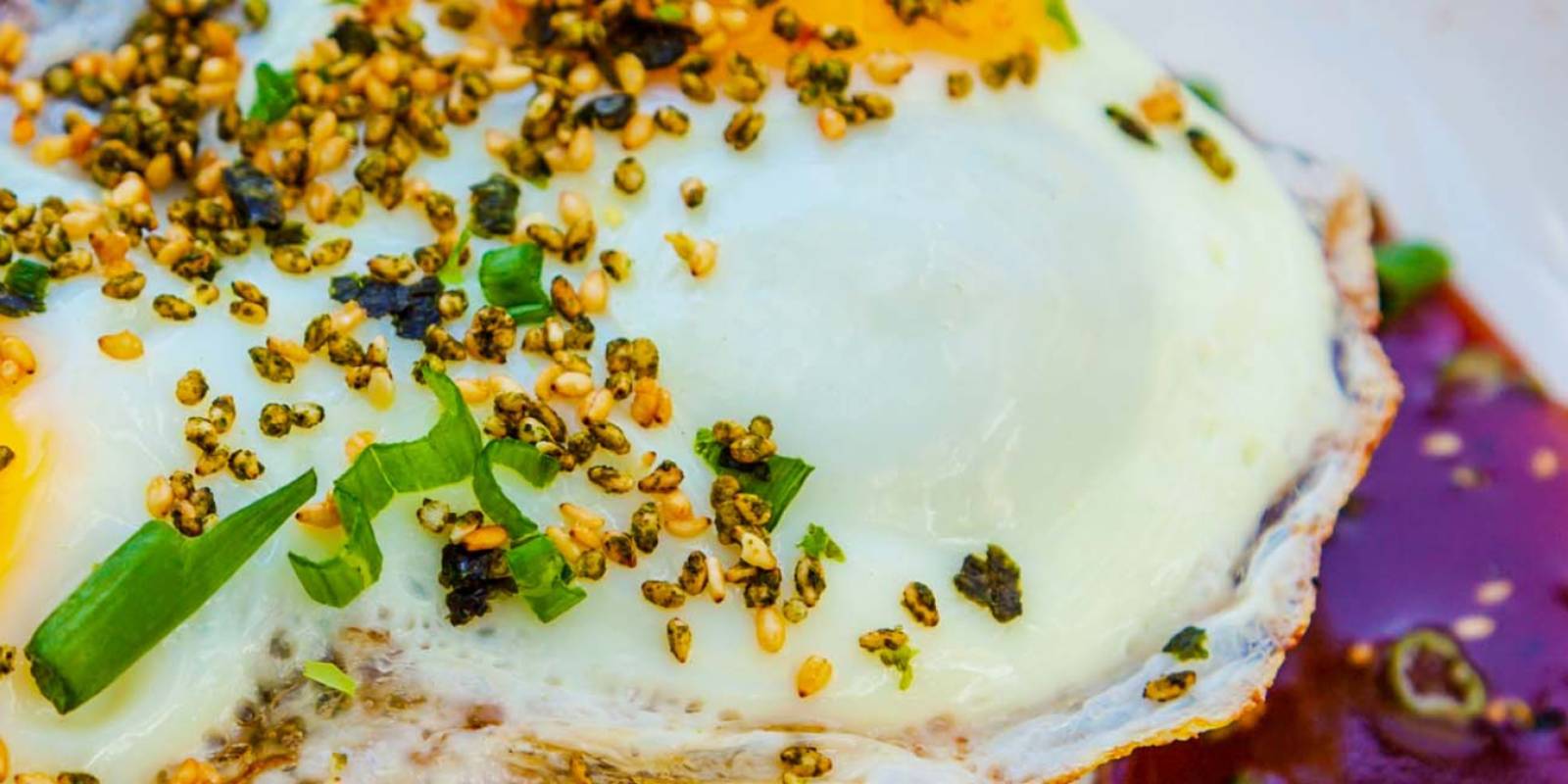
- A fried egg on top, runny yolk
- Hot sauce on the side — sriracha or chili-pepper water
- Slices of fresh cucumber or kimchi as a cold counterpoint
Method
- Use day-old rice. Really. Fresh rice is too wet and clumps. Day-old refrigerated rice has dried out just enough that the grains separate when they hit the pan. If all you have is fresh rice, spread it on a sheet pan and chill it uncovered in the fridge for at least an hour first. Break up any clumps with your hands before cooking.
- Crisp the Spam. Heat the wok over high heat until a drop of water dances and evaporates instantly. Add the diced Spam — no oil needed; the Spam renders its own fat. Cook, stirring occasionally, until the cubes are browned on at least two sides, about 3 to 4 minutes. Push the Spam to one side of the wok.
- Scramble the eggs. Pour the beaten eggs into the empty side of the wok and let them set for 10 seconds. Scramble with the spatula until just barely cooked — they should still look soft and glossy. Push to the side with the Spam.
- Bloom the aromatics. Drop the white parts of the green onions, the garlic, and the ginger into the cleared center of the wok with a small drizzle of oil if it looks dry. Stir for 30 seconds until fragrant but not browned.
- Add the rice. Add the cold rice and the optional peas and carrots. Press the rice flat against the bottom of the wok with the back of your spatula and let it sit untouched for 30 seconds to build a little crust on the bottom. Then toss everything together, working the Spam and eggs back into the rice from the side. Keep tossing for 2 to 3 minutes until every grain looks coated and the rice is heated through.
- Season and finish. Drizzle the shoyu and sesame oil around the rim of the wok so they sizzle as they hit. Add the white pepper. Toss once more. Off the heat, stir in the green tops of the green onions. Taste and adjust shoyu. Plate immediately, top with furikake if using, and put a runny-yolk fried egg on top of each serving.
Notes from a local cook
Use the lid of the Spam can as a Spam measure. The little pull-tab can is exactly the right amount for a 4-cup batch of rice. If you have more rice, scale to two cans — never just one Spam to extra rice. Underseasoned Spam fried rice is sad fried rice.
The shoyu goes on the rim of the pan, not the rice. Pour it where the metal is screaming-hot so it sizzles and caramelizes for a second before hitting the grain. That instant of heat is where the smoky-savory depth comes from. Pour it directly onto cold rice and you get soggy salty grains.
Brand matters for the Spam. Hormel makes the original. If you grew up here, you probably have a household preference between Classic, Lite, 25% Less Sodium, and the more recent Teriyaki and Garlic versions. Classic is the default I'd suggest for fried rice — the salt and the rendered fat carry the dish. Lite works if you're cutting back on sodium but you'll want to bump the shoyu up by half a tablespoon to compensate.
Other proteins are welcome. Diced char siu (Chinese roast pork), Portuguese sausage, lup cheong (Chinese sausage), bacon, or even leftover kalua pig all slide in cleanly. Some weeknight cooks throw in all four and call it kitchen-sink fried rice. The structure of the dish is the same; the protein is what's in the fridge.
While You're on the Islands
Eat it made by someone else. The benchmark Spam fried rice on Oahu is on the breakfast and lunch boards at Rainbow Drive-In off Kapahulu Avenue, open since 1961 and still run by the Ifuku family. It also turns up as the rice option on the loco moco plates at Aiea Bowl in central Oahu. On Big Island, Cafe 100 in Hilo has been at it since 1946. Browse our Hawaii Eats guides for the full plate-lunch and diner picks across the islands.
Buy the ingredients fresh. Every Foodland and Times Supermarket on the main islands stocks multiple Spam varieties in the canned-meat aisle, plus pre-sliced Spam in the refrigerated section for musubi-makers — Hawaii Spam flavors (like Spam Hot & Spicy) sometimes differ slightly from what's stocked on the mainland.
Bring It Home
What you can substitute, what you can't: Spam is sold nationwide, so nothing here needs special sourcing. Day-old, cold rice is the real key to good fried rice — fresh-cooked rice turns mushy in the pan instead of frying up with separate grains.
Where to try this in Hawaii