
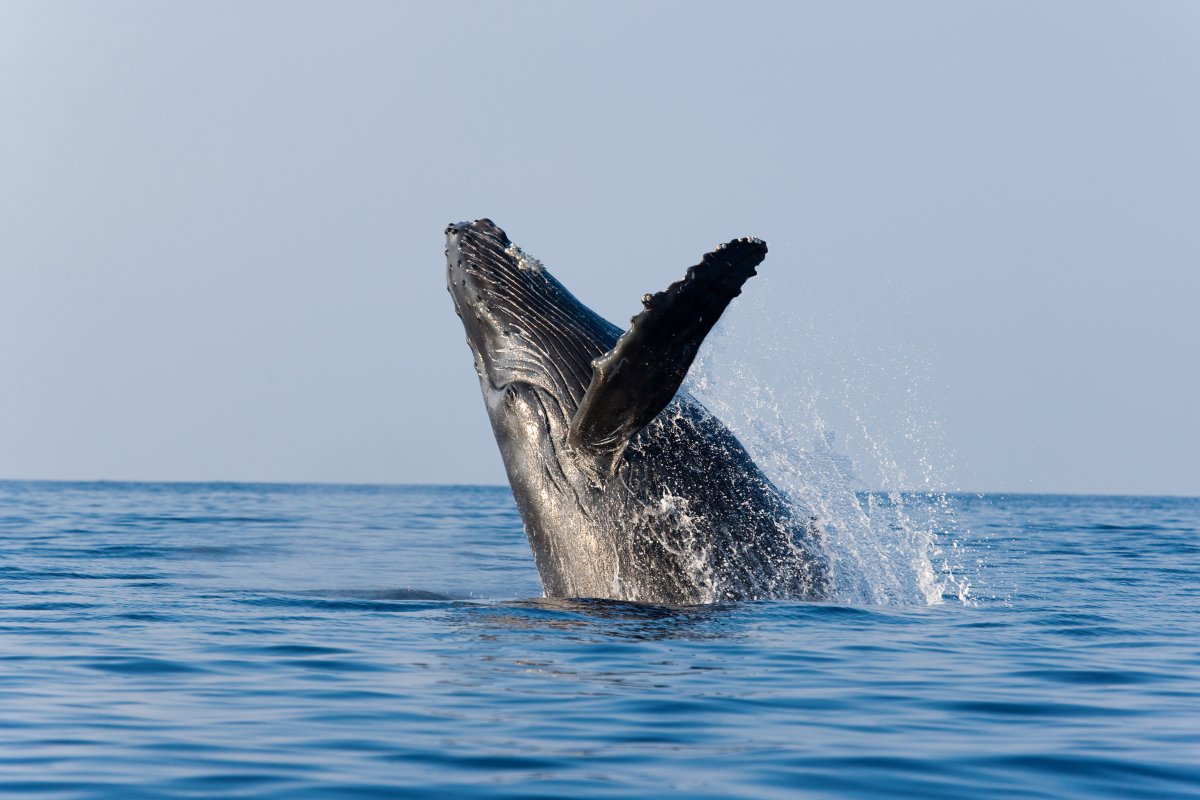


Mother and Calf Humpback Whales
Whale Watching in Hawaii
Humpback Whales
Hawaii is the only place in the United States where humpback whales mate, calve, and nurse their young. These gentle giants find Hawaii’s warm waters and lack of natural predators ideal.
The humpback whale continues to have populations that are classified as an endangered species, primarily as a result of commercial whaling, which significantly reduced populations worldwide. By the early 1990s, the North Pacific population was still a fraction of its historic size, and Hawaii was already one of its most important winter breeding areas.
Thankfully, since the international ban on commercial whaling, North Pacific humpbacks have recovered into the mid-tens of thousands, even as recent research tracks declines from the early-2010s peak. In 2016, NOAA announced through the work of ongoing conservation efforts that the majority of humpback populations could be removed from the endangered species classification. As of late 2024, four populations remain endangered and one remains threatened, but the species' recovery remains one of the clearest conservation wins of the modern whale-watching era.
The whales feed during the summer months in the cool, nutrient-rich northern waters of Alaska, then take the roughly 3,000-mile trek south to Hawaii. In Hawaii, the yearly whale migration is considered a homecoming, since humpback calves are born in Hawaii. The gentle giants are treated with great respect and are believed to be aumakua (family guardians) by some Native Hawaiians.

Humpback Whale Migration Map to Hawaii
Whale Watching Season
Whales have plate-like bristles known as baleen in their mouths instead of teeth, and they feed on krill and schools of small fish such as herring. At birth, whale calves are roughly 10 to 15 feet long and commonly weigh around a ton. An adult humpback can grow to more than 40 feet in length and weigh around 40 tons.
The Hawaiian Islands Humpback Whale National Marine Sanctuary lies within the shallow warm waters surrounding the main Hawaiian Islands and was created by Congress in 1992 to protect humpback whales and their habitat in Hawaii through education, research, and resource management activities; some of which include public surveys. Residents and visitors can participate in seasonal shore-based whale counts when current sanctuary and partner count dates are posted.
Visitors to the Hawaiian Islands can enjoy sighting these magnificent creatures from a land or sea vantage point through the winter season. For current timing, use our Hawaii whale season tracker; in general, sightings build in November and December and become most dependable from January through March. There are a variety of ways that you may see these ocean giants; the best legal close-up viewing is from a responsible boat tour that keeps the required 100-yard distance, but whales can also be spotted from elevated shoreline viewpoints — see our guide to watching whales from shore. For the best experience, we recommend a professionally guided whale-watching tour during the core winter months.
Hawaii Whale Season Tracker See if humpbacks are active right now Check current season status, monthly activity levels, and the best shore-viewing spots across the islands. Check the tracker »Whale Watching on Maui
Maui is a top whale-watching spot for boat-based viewing; in fact, it is one of the best in the world. The majority of the whales that migrate to Hawaii bask in the warm, hospitable, and generally calm Maui Nui waters. The shallow Auau Channel between West Maui and Lanai is one of the core gathering areas.
While Maui is the best location for humpback whale spotting, the other islands also see many whales in season. There are fabulous whale-watching tours on Kauai, the island of Oahu, and off the shores of the Big Island. On any boating adventure, there will be the opportunity to watch numerous whales displaying a variety of behaviors, such as the tail slap or pec slap (the whale will raise its tail fluke or fin and slap it on the surface of the water), which serve as communication signals. Other impressive acrobatic displays include spy hopping (the whale rises vertically with its head out of the water), blowing (the whale surfaces to breathe, shooting water out of its blowhole), and the famous breach - where the whale will launch itself out of the water, giving visitors the opportunity to see almost the entire body of the whale. Mothers can be seen breaching alongside their calves, which is a truly magnificent sight!
By regulation, humpback whales cannot be approached closer than 100 yards, in respect of these endangered ocean creatures and for the safety of sightseers. Be sure to check the weather conditions before you plan your whale-watching adventure, and remember to pack your sun protection gear, as well as your camera and binoculars for optimal spotting.
However, if you choose to view these magnificent creatures, your whale-watching adventure in Hawaii will surely be a memorable experience.

The majestic humpback whales put on a stunning show