
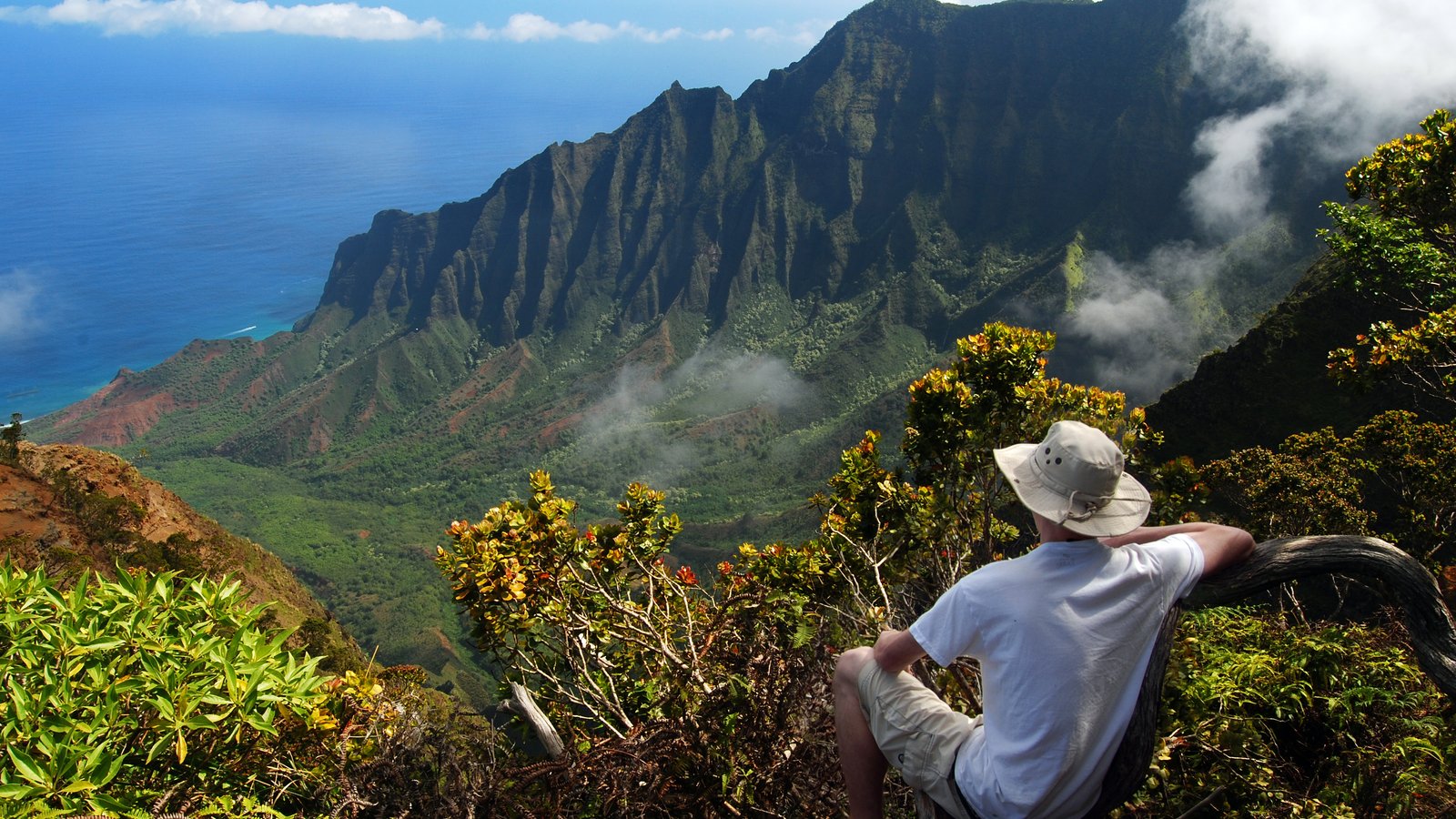
Hawaii doesn't know you're on vacation. The ocean doesn't know you saved for three years to stand beside it. The cliff doesn't know this is your only sunset. The summit doesn't know you have dinner reservations back at the resort. The islands are beautiful and they are indifferent, and holding both of those ideas at once is the whole point of this piece.
Vacation changes the way people pay attention. We drive an unfamiliar road while looking at the view. We follow our children toward the water while carrying chairs, towels, and half the contents of the hotel room. We see other people snorkeling and assume the ocean must be safe. Hawaii looks so much like paradise that it can make careful people lower their guard.
I have spent more than two decades returning to these islands, photographing them, writing about them, and helping other people plan their own trips. Hawaii remains one of the most beautiful places I have ever seen. But beauty isn't the same as safety, and the sooner a visitor accepts that, the better the trip goes.
That distinction matters. This is not an argument for being afraid of Hawaii. It is an argument for seeing the place clearly enough to respect it.
Paradise is not a theme park
A theme park is engineered around the visitor. The dangerous machinery is hidden. The edge has a railing. The water has a measured depth. Somebody has already decided whether the ride should operate in today's conditions.
Hawaii has lifeguards, rangers, warning signs, forecasts, and closures, and every one of them matters. But the islands themselves are a living natural system. Conditions change. A trail gets slick. A calm-looking channel starts moving. Rain falls miles above the waterfall where you are standing. Wind pushes volcanic haze into a place that was clear that morning. A beach that worked yesterday may be the wrong beach today.
Many of the forces that make Hawaii beautiful are the same forces that make it unforgiving. The ocean built the beaches and keeps reshaping them. Rain carved the valleys and can turn a stream into a flood. Volcanoes built the islands, the high summits, and the views above the clouds. Those summits also put a visitor from sea level into thin air within a couple of hours.
You do not need to fear any of that. You do need to stop expecting the landscape to behave like an attraction.
The ocean is where vacation mode becomes dangerous
Snorkeling may be the clearest example. It looks gentle. You float, look down, and breathe through a tube. It feels less demanding than swimming, which is one reason inexperienced ocean swimmers try it.
Hawaii's Ocean Safety program calls snorkeling one of the state's most popular ocean activities and warns that it can also be one of the most dangerous. Its advice is wonderfully unglamorous: know your health and swimming limits, check conditions, use a buddy, ask the lifeguard, and get out if you feel wrong. That is not language written to ruin a beach day. It is language written by people who know what a beautiful morning can hide.
The same rule applies when you are standing on wet rock to photograph a wave, walking into shorebreak, or following a child who has drifted twenty feet farther down the sand. Never let somebody else's presence make the decision for you. A dozen people in the water can all be misreading the same ocean.
Start with a lifeguarded beach. Read the posted signs. Ask what the water is doing today. Our Hawaii ocean safety guide explains the recurring hazards, and the live ocean report is there for the conditions that do not care what the guidebook said.
Hawaii Ocean Safety puts the basics plainly: swim near a lifeguard, obey every posted warning, use a buddy, and tell somebody else which beach you are visiting and when you expect to return. A flag or warning sign is not there to make the beach less welcoming. It is information you may not be able to read from the sand.
Hanakapiai Beach is the clearest example I know. The water can look irresistible after the hike in, but the Hawaii Division of State Parks says swimming or wading there is not recommended, the surf and rip currents can be extremely treacherous, and drownings occur regularly. There is no lifeguard at the beach. Read the signs and stay out of the water.
Some hazards do not look dangerous at all
Hawaii's elevation changes can be almost absurd. You can eat breakfast near sea level and stand above 10,000 feet at Haleakalā before lunch. On the Big Island, Mauna Kea rises to nearly 14,000 feet. The road makes that transition feel easy. Your body may disagree.
Altitude illness does not care how fit you are. The CDC considers any unacclimatized traveler going above 8,000 feet at risk. A headache, nausea, dizziness, or unusual fatigue is not something to push through for the photograph. Descending is not giving up. It is the correct response to the mountain.
Scuba adds another invisible calculation. Ascending to altitude too soon after a dive increases decompression-sickness risk, which is why the CDC tells divers to leave an appropriate surface interval before flying or traveling to altitude. A dive in the morning and a volcano summit that afternoon may look efficient on an itinerary. It is not a smart pairing. Our Hawaii altitude guide goes deeper into both summits and when to turn around.
Vog can be easy to dismiss for the opposite reason: it may look like ordinary haze. But the U.S. Geological Survey identifies people with asthma, heart or lung conditions, older adults, pregnant people, infants, and children as more likely to experience health effects. If the air bothers you, go inside, change elevation or location, and check current air quality. The volcano does not need to look dramatic for its emissions to matter.
The photograph is not worth the last step
Hawaii constantly asks you to move closer. Closer to the cliff edge. Closer to the blowhole. Farther out on the lava shelf. One more rock into the stream for a cleaner waterfall photograph.
I understand the pull. Photography has shaped the way I see these islands. But a camera narrows your attention at exactly the wrong moment. You start composing the frame instead of reading the ground. You step backward without looking. You watch the screen while the next wave arrives.
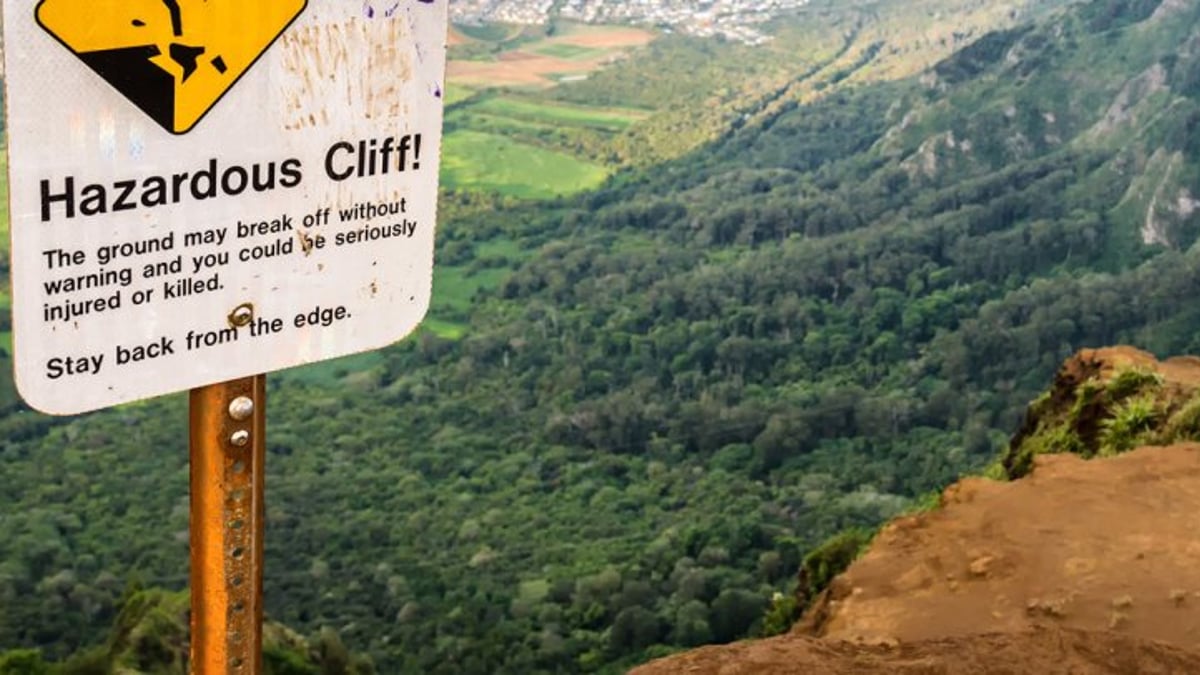
The photograph is beautiful. The warning belongs in the frame too.
Posted signs are not decorations and railings are not challenges. At Hawaii Volcanoes National Park, the National Park Service warns visitors to stay back from cliffs, cracks, vents, and unstable lava terrain. Around streams and waterfalls, rain can be falling somewhere you cannot see. Hawaii's Division of State Parks warns that gentle streams can quickly become rushing torrents. The correct response to rising or muddy water is not to finish the photograph. It is to move to higher ground.
A guide's confidence does not replace your judgment
In 2011, I joined a guided hike that took us out onto Kalepa Ridge on Kauai. We ended up on a narrow ridgeline, and I remember feeling that it was not very safe. What made it easier to keep going was the fact that a guide was leading us. I treated the guide's willingness to proceed as proof that the risk must be acceptable.
Looking back, I do not think I should have overridden my own reaction. A guide may know the terrain better than you do. That does not mean you surrender your judgment or your consent. If a route feels beyond your ability or comfort, say so. Ask to stop, turn around, or take another route. You do not owe anybody the next step.
If something feels wrong, that is enough reason to stop. The reverse is not true: feeling comfortable does not prove that something is safe. Comfort cannot reveal an ocean current, erase a post-dive altitude risk, identify unfamiliar fruit growing beside a trail, or turn wildlife into an invitation to approach or touch.
Use your judgment, then add real information. Ask a lifeguard, ranger, or another qualified local authority rather than relying on the crowd. Before a hike, check current conditions, use a buddy, and leave your route and expected return time with somebody who is not going. That is also the National Park Service's advice for hiking in Hawaii.
With children, make attention somebody's only job
Parents do not stop watching their children in Hawaii. The problem is that Hawaii gives them too much to watch at once. The wave, the phone, the bag, the cooler, the older child asking a question, the younger one moving toward the water.
The Hawaii Department of Health recommends designating a water watcher: one adult whose job is constant visual contact, without a phone, conversation, or alcohol competing for attention. That is a much stronger system than asking every adult to keep half an eye on the children. When everyone is vaguely responsible, nobody is fully responsible.
Trade the role. Say the handoff out loud. Keep small children within reach near water. Do not let a calm lagoon, a hotel pool, or a crowd of other families persuade you that supervision can become casual.
Pay attention without becoming afraid
The goal is not to spend a Hawaii trip cataloging everything that could go wrong. That would miss the islands in a different way.
The goal is margin. Check the forecast before leaving and the conditions again when you arrive. Choose the lifeguarded beach and swim with a buddy. Ask the ranger. Leave your hiking route and expected return time with someone. Keep room between your body and the edge. Give the ocean a full-time watcher when children are near it. Be willing to change the plan without treating the change as a lost day.
A good Hawaii day can survive the word no. No, not this beach today. No, not one more step for the photograph. No, not the summit after the dive. No, not this route simply because the guide is willing. No, the child does not go into the water while both adults unload the car.
That is not fear. It is respect, and respect has always been the better way to experience Hawaii.
Hawaii does not know you are on vacation. Now you do. Keep your eyes open, keep the people you love close, and let that awareness make the trip better, not smaller.
Aloha y'all,
John
Before you head out
Use the reference guide for the full safety checklist, then check the live conditions that can change today's plan.