
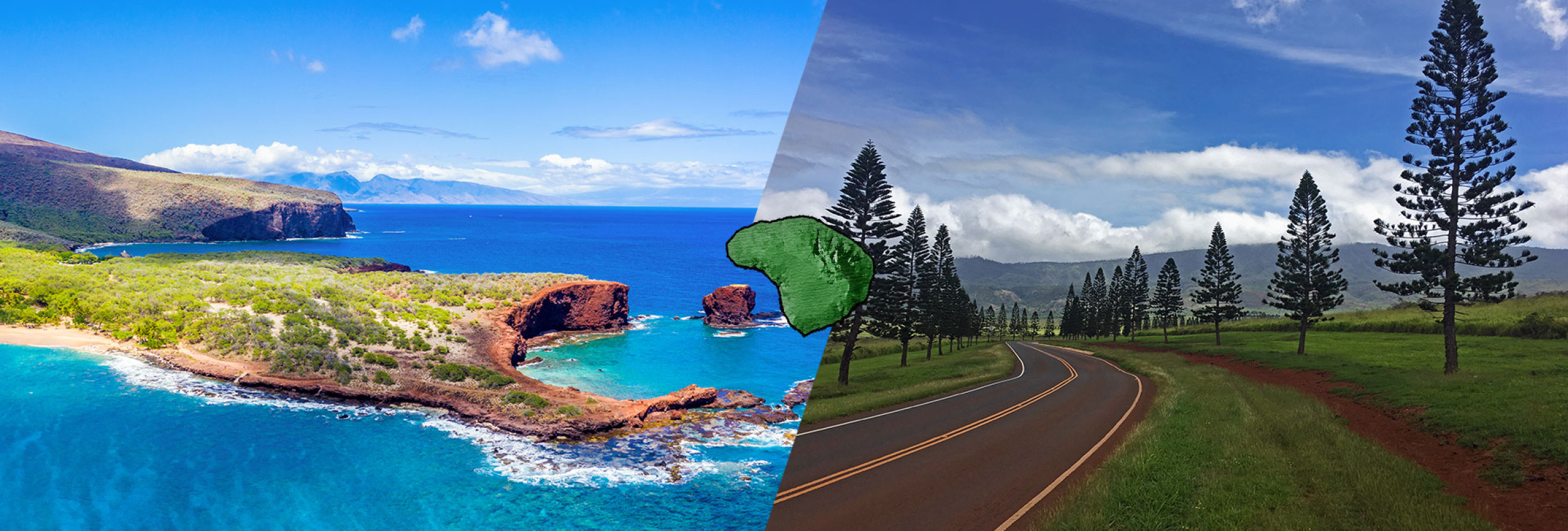



The Pineapple Island
Lana'i Visitor Guide
Visit Lānaʻi with a plan that benefits the island
Lānaʻi combines a small island community, plantation history, rugged landscapes, and resort lodging. A good visit is not a search for privacy or “undiscovered” places; it is a deliberately planned stay that respects access limits and directs meaningful spending toward businesses and organizations that welcome visitors.
Lānaʻi is the sixth-largest island in the Hawaiian chain, with one primary town and limited transportation. A workable itinerary may combine Lānaʻi City, Hulopoʻe Bay, a cultural program, and only those remote sites whose roads and access are confirmed open. Build the trip around current conditions rather than a checklist.

Your Guide to Lanai, Hawaii
The Expeditions Ferry connects Maʻalaea Harbor on Maui with Mānele Harbor on Lānaʻi. Confirm the current duration and check-in requirement with the operator when planning a day trip. Interisland flights also serve Lānaʻi Airport.
Schedules, fares, luggage rules, and harbor conditions can change. Check the official Expeditions site for the current timetable and price before booking either direction, and leave enough margin for the connection you actually hold.
Most air itineraries connect through Honolulu or Maui. Resort flight packages and transfer terms change, so confirm any offer directly with the lodging provider before relying on it.
Once you land, Lanai City will most likely be your first destination. However, don't let the term city fool you. Lanai City is closer to a small village with only a few accommodation options, a small market, one school, and there are also no traffic lights.
Lānaʻi City is the island's civic and commercial center, not a staged visitor district. Spending time there can make a trip more useful to the community when you patronize businesses that are open to visitors, follow local cues, and make room for everyday island life.
Choose meals, shops, cultural programs, and stewardship opportunities that explicitly welcome participation. The goal is reciprocal support, not access to residents or a performance of “living like a local.”
While Lanai City has plenty of places to explore, you'll also have access to tons of day trips and outdoor activities that display the beauty of Hawaii.
Is Lanai a Privately Owned Island?
Larry Ellison, founder of Oracle, acquired the majority of Lānaʻi in 2012. That ownership shapes much of the island's lodging, transportation, land access, and development, while public agencies, community organizations, small businesses, and residents retain distinct roles.
Visitors should not interpret a small population or low traffic as permission to expect private access or an island “to themselves.” Confirm which roads, shorelines, businesses, and cultural experiences are actually open and invited.
Although most of the island is owned by Ellison, it's still open to the public. It is a popular day-trip destination for travelers visiting Hawaii as it's extremely close to the large island of Maui.
Pulama Lanai
Pūlama Lānaʻi is a land and resource management company overseeing many operations and initiatives on Ellison-owned land. Its role does not replace the distinct authority or work of public agencies and community organizations.
Lānaʻi combines resort accommodations with a working island community. Plan both transportation and community-benefiting spending before arrival so the visit is more than a resort-to-beach transfer.

Where to Stay on Lanai Island
Lanai has three main lodging options, all open and operating.
- Four Seasons Resort Lanai: A beachfront resort at Hulopoʻe Bay. Check the property directly for current rates, dining, transportation, and package terms.
- Hotel Lanai: A small lodging option in Lānaʻi City with convenient access to town businesses. Confirm current availability and terms directly.
- Sensei Lānaʻi, A Four Seasons Resort: An adults-only wellness resort in the upcountry Koʻele area. Check the property directly for current minimum stays, rates, and programming.
The lodging options differ sharply in setting, price, and transportation support. Compare current terms, then make time and budget for Lānaʻi City businesses rather than keeping the entire stay inside one property.
Short-term rental inventory is limited and can change. Verify that any listing is lawful, currently available, and compatible with the transportation plan before booking.
If you want a different experience from the tourist-heavy islands, a stay on Lanai is the move. Plenty of attractions on-island, and Maui is just a ferry ride away for day trips.

What's the Best Way to Get Around Lanai Island?
Lānaʻi has limited public transportation, and resort shuttles do not function as an islandwide public transit system. Arrange transportation before arrival. A four-wheel-drive vehicle may be required for specific open, unpaved roads, but it is not automatically the best choice for every itinerary.
A four-wheel-drive rental is a transportation tool, not permission to go off-road or search for hidden places. Stay on roads that are open to your vehicle, follow every closure and private-property notice, confirm the rental company's restrictions, and turn around when road or weather conditions exceed your experience. Do not create new pullouts or tracks.
If you're not comfortable driving around the island, hotels like the Four Seasons have shuttles available to transport guests to the different popular attractions on the island.

Lanai Has Outdoor Activities that Appeal to Everyone
Lānaʻi offers hiking, shoreline visits, cultural learning, and guided activities, but many remote routes have limited services and conditional access. Choose fewer places and confirm each one rather than trying to cover the island.
The island may suit travelers who can work within limited transportation and services. Cultural institutions and guided programs can provide context before any remote-road outing.
Carry water, sun protection, appropriate footwear, and a real turnaround time. Remote conditions are a planning constraint, not part of the attraction.
Visit Keahiakawelo With Cultural and Road Awareness
Keahiakawelo is a culturally significant dryland landscape of boulders, rock towers, and orange earth north of Lānaʻi City.
Use current official and local road guidance for Keahiakawelo rather than treating the site as an automatic first stop.
Rather than lush green vegetation, you might think of when you hear the term 'garden,' the Garden of the Gods is a long stretch of boulders, rock towers, and bright orange terrain. This space is home to a rich and interesting legend involving a competition between two Hawaiian priests that resulted in a long fire that burned all the vegetation in the area to the ground.
Light changes the colors of the landscape throughout the day, but road conditions, visibility, and enough daylight for the return trip matter more than arriving for a particular photograph.
Access uses unpaved roads and may require an approved four-wheel-drive vehicle or an authorized guide. Confirm the road is open and permitted under your rental agreement; stay on the established road and do not move, stack, or remove rocks.
Gaze Upon Deserted Ships from World War II at Shipwreck Beach
Shipwreck Beach received its name from the more than a dozen ships and vessels that have deteriorated along the island from accidental wrecks. Strong winds and powerful tides have caused many an interesting treasure to wash up on the shore, and visitors often have a blast exploring the beach.
The primary visible wreck is YOGN-42, a WWII-era concrete barge that sits offshore. Several other vessels from various eras are scattered along the coast.
Reaching the Shipwreck Beach area involves unpaved roads and may require an approved four-wheel-drive vehicle. Confirm current access and rental restrictions with a reliable island source, stay on the established road, and leave enough daylight to return.
You'll want to avoid driving along the sand in a vehicle because it's likely that you'll get stuck, and you don't want to end up paying any hefty towing fees.
The shoreline is long, exposed, and can be rocky. Set a conservative turnaround point rather than attempting to cover the whole coast, and wear footwear suited to uneven ground.
The views of Molokai and Maui are stunning, but swimming is unsafe due to strong currents and high winds.
Along the beach, there is also a trail that leads to petroglyphs. These rock carvings may have been used for various reasons and often depict what many believe to be historical events.
The walk along Shipwreck Beach has no shortage of amazing historical monuments to explore. Plus, you'll have amazing views of the neighboring islands along the entire journey.
Get Your Camera Ready for the Views Along Munro Trail
Munro Trail crosses forested uplands and exposed viewpoints, but current vehicle, bicycle, and hiking access can change with land-management and road conditions. Confirm the permitted use and route status before going.
Munro Trail is also one of the only spots where visitors have the chance to gaze upon all six major Hawaiian Islands at once.
It is a long, exposed route rather than a casual short walk. Choose only an activity that is currently permitted and prepare to turn around before weather, fatigue, or daylight narrows your margin.
There are no dependable visitor facilities along the route, so carry water, food, navigation, and sun and rain protection. Do not rely on a phone signal or assume that a previously available entrance remains open.
This entire trail is home to gorgeous views that you will not want to miss while visiting Lanai. Make sure to charge your camera and phone batteries because you won't be able to help but take plenty of photos of the incredible views along the way.
Learn the Island's History at the Lanai Culture and Heritage Center
The Lānaʻi Culture & Heritage Center is a strong early stop when it is open. Its exhibits and programs provide island history and context that can improve decisions during the rest of the visit.
Check current hours and visitor guidance before going. Listen to how the center presents Lānaʻi rather than treating cultural stories as scenery for later stops.
A special note is that while admission to the exhibits is free, similarly to many of the island's attractions, donations are highly encouraged.
The Lanai Cultural Heritage Center is quite small, but the hospitality and depth of the exhibits are plenty to keep you engaged for an afternoon.
Many visitors also recommend actually making this one of the first stops to explore when visiting Lanai because it gives a good lay of the land and information about the plentiful attractions and adventures you're likely to go on later in your trip.
A visit or donation can support an island institution that preserves and shares Lānaʻi's history on community terms.
Sunbathe and Swim Along the Reef at Hulopoe Bay
Lānaʻi's beaches vary greatly in access, facilities, and ocean conditions. Hulopoʻe Bay is the island's best-known visitor beach and has a very different access profile from remote shorelines.
If you're staying at the Four Seasons Resort, you'll likely be making Hulopoe Bay your go-to spot as it has everything you need to relax and explore all day long.
Hulopoʻe can offer swimming and snorkeling when conditions are suitable, but there is no lifeguard. Assess the water on arrival and stay on shore when surf, currents, visibility, or your experience make entry uncertain.
Observe tide-pool and reef life without touching, feeding, chasing, or removing animals. Keep fins, feet, and equipment off coral and allow dolphins and other wildlife to control the distance.
For a complete guide to the best snorkeling on Lanai, including boat tours from Maui and shore snorkeling tips, see our Lanai Snorkeling Guide.
Marine wildlife sightings vary by season and day. Humpback whales are present in Hawaiian waters during the winter and spring migration period, while spinner dolphins may use nearshore habitat year-round. Keep the required distance and never pursue wildlife.
One important thing to note when visiting Hulopoe Bay is that its beachgoers are asked to leave the sea life, fish, and animals completely alone. To protect their natural habitats and leave the space open and beautiful to future visitors, those who spend time on the beach are asked to appreciate the sights but not to move or take any of the sea life or to chase after the dolphins.
Hulopoe Beach has public restrooms, showers, picnic tables, and BBQ grills. There are no lifeguards, and drones are not permitted. The bay is a protected marine preserve. Access is free.
Wildlife is never guaranteed. Use current NOAA and site guidance for required viewing distances and responsible behavior.
Walk the Puʻu Pehe Trail With Cultural Respect
If you've spent enough time on Hulopoe Bay and want to do some exploring, strap on your tennis shoes and take the 20-minute hike along the southeast side of the bay to Puu Pehe or Sweetheart Rock.
Puʻu Pehe is a culturally significant landmark with stories that deserve more care than a brief romantic nickname. Use community or cultural-center interpretation when available, stay on the established path, and keep back from cliff edges.
Sweetheart Rock is sandwiched between Manele and Hulopoe Bays, and the rock rises almost 80 feet above the water, making it truly a magnificent sight. If you can, many visitors recommend hiking along the trail and coming to the rock around sunset.
The overlook is best approached as a cultural landscape and exposed coastal trail, not a themed photo prop. Carry water and return before darkness if you are unfamiliar with the path.
Consider Access and Ocean Conditions at Polihua Beach
Polihua is a remote shoreline reached over rough roads. Treat the drive and beach as conditional on current road access, weather, vehicle rules, and your ability to be self-sufficient.
Drive time is not dependable on rough island roads. Treat any estimate as secondary to current access, weather, vehicle limits, and the time needed to return safely.
There are no dependable visitor services at the beach. Bring what you need, leave no waste, stay within established access, and do not treat a quiet shoreline as private space.
If you stick around long enough, during the late winter and early spring, you may even be able to spot a humpback whale along the shore. Nothing beats an unintended sighting of some of the most magnificent ocean animals in the world.
Swimming can be dangerous because of strong currents, surf, and the lack of lifeguard support. Enjoy the shoreline from land when conditions are uncertain, and turn around before the road or daylight becomes a problem.
Polihua is not a default day-trip stop. Choose it only when access is confirmed and the remote-road commitment fits the rest of the itinerary.
Experience Incredible Views at the Kaunolu Ruins
Kaunolū Village Site preserves an extensive Native Hawaiian settlement occupied from at least the 1400s and later associated with Kamehameha I. It is a National Historic Landmark and should be approached as an archaeological and cultural site, not simply another scenic stop.
This area brings together the rich history and culture of the island and spectacular views of the incredibly tall cliffs at this part of the island.
Road access to Kaunolū can be rough and conditions change. Confirm that the route is open, permitted for your vehicle, and within your experience before departing.
Kaunolū is a significant cultural landscape, not an uncrowded alternative or an opportunity to solicit stories from residents. Stay within open access, do not climb on or disturb features, and use authoritative interpretation.
Do not swim in unsafe water or approach people who are fishing. Never touch, trace, chalk, or climb near petroglyphs or archaeological features.

Plan Meals That Include Lānaʻi City
Meal planning is one of the simplest ways to direct visitor spending beyond a resort. Include Lānaʻi City businesses, confirm current hours, and keep a backup because small-island schedules and supplies can change.
Dining ranges from resort restaurants to independent cafés and plate-lunch counters in town. Treat published menus and hours as planning leads rather than guarantees.
Make sure to check out some of these restaurants while spending time in Lanai:
- Nobu Lanai (Four Seasons): Japanese cuisine with ocean views, fresh seafood, and craft cocktails.
- Osteria Mozza Lanai (Four Seasons): Italian dining from chef Nancy Silverton.
- One Forty (Four Seasons): Steakhouse with locally sourced ingredients.
- VIEWS (Four Seasons): Casual poolside dining and drinks.
- The Break (Four Seasons): Quick bites and coffee near Hulopoe Beach.
- Lāna'i City Bar & Grill (Hotel Lanai): Casual American fare in Lanai City.
- No Ka 'Oi Grindz Lanai: Local plate lunches and comfort food in Lanai City.
- Blue Ginger Café: A Lanai City institution since 1991 at 409 7th St. Home-style dishes and baked goods.
Groceries and markets: Lānaʻi City has limited grocery and market options. Verify current locations, days, and hours locally rather than relying on an old directory schedule.
Timing tip: Many Lanai City restaurants close their kitchens early, and only a few are open on Sundays. Plan accordingly, especially if you're not eating at the resort.
The Four Seasons covers fine dining, but Lanai City has local spots worth seeking out on their own.
When picnicking, use established facilities, pack out everything, and avoid bringing waste or demand that the site is not equipped to handle.
Lānaʻi City has casual food options that can direct more visitor spending into town. Check current days and hours, be patient with limited staffing and supplies, and have a backup rather than expecting resort-city availability.

Build a Lānaʻi Visit Around Readiness and Reciprocity
Lānaʻi will not fit every traveler or every day-trip schedule. Its limited transportation and services reward advance planning and a shorter, more deliberate list of places.
A day trip can work when ferry times and prearranged transportation leave enough margin. An overnight stay creates more time for Lānaʻi City meals, shops, cultural learning, and stewardship opportunities that are explicitly open to visitors.
Weather varies across the island and can quickly change road and ocean conditions. Check the forecast, but keep enough margin to change plans in the field.
In Lānaʻi City, act as a guest in a working community: follow posted rules, respect personal space, and support businesses and programs that welcome visitors.
Choose Lānaʻi when you are prepared to plan transportation carefully, respect limited access, and make community benefit part of the itinerary. Confirm the ferry or flight, lodging, ground transportation, and invited activities before committing.
Lānaʻi is a good fit when its transportation limits, invited experiences, and community-first expectations match the trip you are prepared to plan.
The island's small scale makes visitor choices visible. Keep the itinerary compact, support Lānaʻi City, and treat legal access and community capacity as firm limits.
Get Your Free Hawai'i Guide
Instant access — opens immediately
- Beaches, activities & top spots
- Restaurant & dining recommendations
- Maps, itineraries & insider tips
Want the full offline version? Get the Complete Hawai'i Guidebook →

Hulopo'e Bay & Beach, Sweetheart Rock (Pu'u Pehe), and Shark's Bay on Lanai