
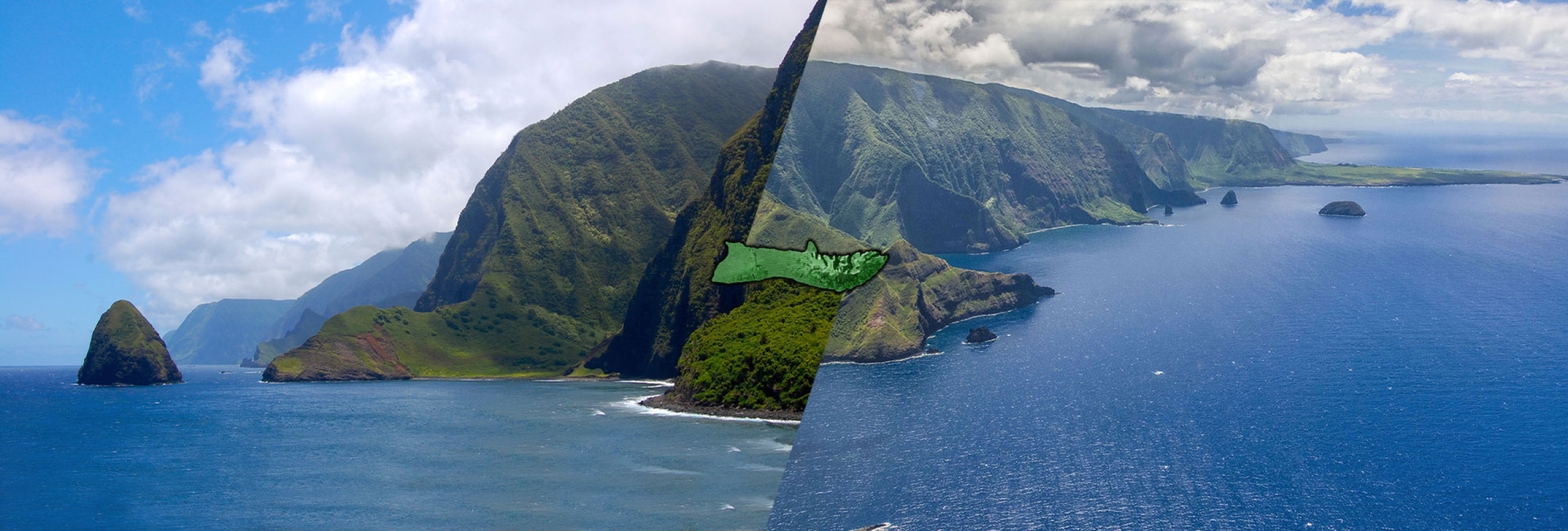



The Friendly Island
Moloka'i Visitor Guide
Visit Molokai as a Guest, Not a Consumer
Molokai is a home before it is a destination. A worthwhile visit begins with realistic expectations: follow current access rules, enter private or culturally sensitive places only with permission, support businesses and programs that explicitly welcome visitors, and do not go looking for “hidden” places that residents have chosen not to promote.
Molokai, the fifth-largest island in Hawaii, stretches 38 miles from end to end and spans 10 miles at its widest point. Its rural communities, cultural landscapes, sea cliffs, and extensive fringing reef are not products to consume. Molokai’s community has repeatedly asked that tourism remain small, respectful, and shaped by local priorities.
Current Conditions (checked August 7, 2026): Access to Kalaupapa National Historical Park is in flux. Kalaupapa Saints Tours ended in June 2026 after the passing of its founder, longtime resident Aunty Meli Watanuki. The National Park Service provided its first public tour on July 9, 2026, but on July 11, 2026, said protesters were present and that future public tours are temporarily paused while it reassesses the feasibility of visitor access. Do not count on Kalaupapa tour access when planning a Molokai trip until the NPS guided tours page posts a new update. Elsewhere on the island, Hotel Molokai remains the primary hotel. Book accommodations and car rentals well in advance — availability is limited.

Get to Know the Island of Molokai
Molokai rewards visitors who arrive prepared, keep their plans modest, and understand that some places are not visitor attractions.
The island has no cruise hub or large resort district. Visitor services overlap with everyday community spaces, so courtesy matters: do not photograph people without permission, treat residents as neighbors rather than part of an attraction, and follow posted or personally communicated boundaries.
Molokai has fantastic attractions, but they're often centered on the values and history of the island, which may create a unique experience for different visitors. Many of the activities on the island are not suited for visitors trying to get as many things packed into the itinerary as possible.
Plan fewer stops, allow extra time, and choose experiences that are clearly offered to visitors. Do not assume that a road, shoreline, valley, or path is open simply because it appears on a map.
The island is 38 miles long and 10 miles across, with three major areas making up the island:
- The West End: This area is quiet and largely undeveloped, but access varies. Stay on public roads and at clearly open facilities, and never cross ranch land, gates, or private property to reach a shoreline.
- Central Molokai: Home to the central town of Kaunakakai, a fishing town that also has some unique shopping options and a pier for those late evening walks. There are also incredible bakeries and other local dining options that will give you a great sense of the island's culture.
- The East End: The east end includes narrow roads, active communities, cultural landscapes, and a mix of public, private, and kuleana lands. Confirm access before departing, drive patiently, and enter valleys or trails only through an authorized guide or landholder invitation.
Molokai is a small island, but there are plenty of activities and tours to guide you through the island's history and culture. This island is known as the spot to escape to when visitors and other Hawaiian locals want to escape the hustle and bustle of large cruise ships and resorts that usually pepper most of the other larger islands.
Molokai communities have worked hard to preserve the natural landscape of the island. You won't find any buildings that are any taller than the surrounding trees in order to keep the ocean views and access as clear as possible.

Molokai is Not Your Average Tourist Destination
Molokai residents have repeatedly resisted large-scale tourism proposals in order to protect land, culture, and community life. That choice is not an invitation to seek out an “untouched” Hawaii; it is a boundary visitors should understand and respect.
Fast-paced sightseeing is a poor fit here. A better visit supports locally owned businesses, keeps noise and traffic low, and leaves places exactly as found without expecting access to residents’ daily lives.
Respect does not guarantee access or interaction. Accept “no,” a closed gate, a posted sign, or the absence of an invitation without pressing for an exception.

When Is the Best Time to Travel to Molokai?
You've set your sights on visiting the island, and now it's time to figure out when the best time to book your flight is. You'll be happy to know that the weather on the island is very consistent all year round!
Temperatures generally stay in the mid-70s to high-80s all year long. You can book a trip to Molokai almost any time of the year and be confident that you'll have mild temperatures. Not too cool and not too hot days make for the perfect travel destination, especially when you'll likely be spending most of your time outside exploring all that the island has to offer.

Best Accommodations in Molokai
In Molokai, you're more likely to come across a cozy bed and breakfast or a rustic cottage home for rent along the beach more than a large resort. In fact, the island is one of the few that lack a large-scale resort.
The most options for accommodations if you plan to spend a few nights on the island are going to be in the main town of Kaunakakai. This is where most of the hotels and rental properties are situated. These quaint and cozy accommodations are perfect for any visitor that wants a genuine island experience, close to the water with amazing views.
Here are some of the top-rated rentals and hotels in Molokai:
- Hotel Molokai: An established beachfront hotel with bungalow-style accommodations, Wi-Fi, beach access, and a pool. Confirm current room availability directly.
- Molokai Shores: Offers one- and two-bedroom condo-style units with full kitchens and access to a community pool. Rates vary by season and unit, so confirm current pricing before you budget around a specific number. The location provides quick access to some of the most popular trails and lookouts of the island.
Note: Small inns and cottage rentals on Molokai can change availability quickly. Verify any non-hotel property directly before building an itinerary around it.
Vacation rentals through Airbnb and VRBO are also available on Molokai, ranging from basic rooms to full homes. These can be a good alternative when the limited hotel inventory fills up.
The lack of large resorts means that almost anywhere you stay, you'll have unobstructed access to the beach and the amazing Molokai views. Molokai accommodations are relaxed and casual spaces where visitors can unwind from their island adventures while listening to the rolling waves of the beach.
A lot of condos also include kitchenettes or full kitchens, and there are a few grocery stores peppered around the central town. Many of the beaches have plenty of picnic facilities, making it easy for visitors to pick up a few things at one of the local grocery stores in the central part of the island and have a great meal on the beach.
With the cozy spaces, Molokai also includes impeccable hospitality that makes each and every visitor feel welcomed and relaxed.
Choose Community-Appropriate Activities on Molokai
Molokai’s rural communities and cultural landscapes require more care than a conventional sightseeing checklist. Choose places that are clearly open, follow the instructions of land managers and community hosts, and change plans when access is uncertain.
Low visitor numbers do not make a beach, trail, or neighborhood an undiscovered attraction. Quiet places may lack parking, restrooms, emergency access, or community consent for promotion.
Visitor areas and everyday community spaces often overlap. Buy from local businesses, keep a respectful distance from homes and gathering places, and avoid turning residents into part of the visitor experience.
Let community invitations—not social media, map pins, or claims that a place is “secret”—determine where you go and what you share afterward.
Take a Tour of Kalaupapa
Kalaupapa is one of the most powerful places in Hawaii. This remote peninsula, walled off by 1,600-foot sea cliffs, served as a forced exile colony for people with Hansen's disease (leprosy) from 1866 to 1969. Roughly 8,000 people were sent here against their will during that era.
Patient residents remain connected to the peninsula. Aunty Meli Watanuki — who founded Kalaupapa Saints Tours and brought visitors back after the five-year COVID closure — passed away in May 2026. Visitor access is strictly limited to protect residents' privacy and dignity.
Access changed hands in the summer of 2026. Kalaupapa Saints Tours ended in June 2026 at the request of Aunty Meli's estate. The National Park Service provided its first public tour on July 9, 2026, as a limited, non-commercial offering, but future public tours are now temporarily paused while NPS reassesses the feasibility of visitor access. Check the NPS guided tours page before making any plans for Kalaupapa.
Important: The NPS model announced in June was a hike-in experience for visitors 16 and older, with $20 reservations plus a $1 fee through recreation.gov. If tours resume under that model, expect to hike the Kalaupapa Pali Trail down to the peninsula and back up at the end of the day: roughly 3 miles each way with a 1,600-foot elevation change, up to 8 miles of walking in total. Past fly-in visitor tours and mule rides are not operating.
If visitor access resumes, plan for a self-sufficient all-day outing: there are no shopping or dining options at Kalaupapa. The experience is sobering and deeply moving. Father Damien (now Saint Damien) devoted his life to caring for the exiled residents here, and the park preserves that history.
Visit Halawa Valley Only Through Community-Led Access
Halawa Valley is a living cultural landscape on Molokai’s east end, with public, private, and kuleana lands. It is not an open-access hiking destination.
Enter the valley only through an authorized, community-led guide or with direct landholder permission. Do not use roadside pullouts, online tracks, or an unverified map pin as permission to enter.
Molokai’s 2026–2028 destination plan calls for a more formal, community-directed access framework for Halawa. That system is a planned action, not a promise that tours or permits are available now. Confirm the current offering directly before driving east.
If no authorized visit is available, choose another activity rather than attempting the valley independently.
The east-end road is narrow and serves residents. Drive slowly, yield when appropriate, do not block gates or driveways, and turn back if you do not have confirmed access at your destination.
Take a Tranquil Walk Along Papohaku Beach
Papohaku Beach offers a long shoreline and broad sunset views, but its quiet setting does not make it private. Use designated public access and facilities, and give other beachgoers generous space.
Papohaku is Molokai’s longest stretch of sandy beach. Conditions and use levels vary, so do not plan around promises of having the beach to yourself.
Keep voices and music low, pack out everything you bring, and avoid photographing residents or community events without permission.
The main exception is during Molokai's large annual hula festival. Molokai's Ka'ana district (Pu'u Nana hill) is regarded as the birthplace of hula, and the annual Ka Hula Piko festival draws visitors and locals to celebrate one of the most important Hawaiian cultural traditions.
Safety note: Papohaku Beach has powerful currents and dangerous shorebreak. Swimming is not recommended. Enjoy the walk, the sunsets, and the solitude, but stay out of the water here.

Explore a True Rainforest at Kamakou Preserve
The biodiversity of the Kamakou preserve is truly incredible. This forest is home to more than 200 different species of native plants that provide a home for many different birds, insects, and other organisms.
This preserve is located along the slope of Molokai's tallest mountain, and you'll be in awe of the lush and abundant nature around you if you choose to hike through the preserve. This forest is even home to a few endangered species of birds, so you'll be getting an experience that is not easily replicated if you choose to spend some time among the animals of this preserve.
If you want to know more about the species of plants and other living beings throughout the hike, check current access before you go. Kamakou Preserve protects fragile native habitat, and visitor access can be limited or guide-permission based rather than a normal walk-up trail. A guided outing is the best way to learn about the species of plants and animals that are found nowhere else on earth.

Mail Someone a Coconut from the Hoolehua Post Office
If you're into quirky and fun activities while visiting new places, this Molokai post office has got you covered.
The Hoolehua Post Office has long been known for its Post-a-Nut program, which allows a properly prepared coconut to be mailed without a box. Treat it as a conditional stop rather than a guaranteed activity.
Call the post office before making a special trip to confirm current availability, preparation rules, and postage. Cost depends on the coconut’s weight and destination.
Sending someone back home a coconut is a fun way to show that you're enjoying your time in Molokai and that it's a unique island that's determined to maintain its personality.

View Kalaupapa From a Public Overlook
The overlook at Palaau State Park sits roughly 1,600 feet above the Kalaupapa Peninsula and offers a public, land-based view when weather permits. The National Park Service’s nearby-attractions guidance describes the overlook and its interpretive exhibits.
Use the overlook as an alternative when park tours are unavailable. The view is not permission to enter Kalaupapa, and an aerial tour should not be framed as a workaround for community access limits.
Stay behind barriers, keep the area quiet, and treat the peninsula as a living community rather than scenery alone.

Choose Ocean Activities With Local Guidance
Although this island is small, there is no shortage of land activities for every adventurer, but there's also just as much fun to be had in the water.
Ocean conditions and community expectations vary by place. A local operator or current official guidance is a better starting point than a “best beach” list.
- At Kumimi Beach and elsewhere along the fringing reef, never stand on, touch, or walk across coral. Use only clearly public access and legal parking.
- Go on a whale watching tour (peak season: December-April).
- Kayak or paddle only when current conditions and an experienced local operator support the plan.
Molokai Fish and Dive is the island's primary water activity operator, offering snorkel trips, kayak rentals, and fishing charters. They are also the best source for current ocean conditions and gear rentals.
Molokai’s destination plan proposes future stewardship and visitor education at Kumimi. Those measures are not a substitute for present care: stay off the reef, pack out everything, and leave if parking or shoreline use would crowd the community. The road becomes extremely narrow beyond Kumimi; continue farther east only for a confirmed, authorized visit, and turn back when access is uncertain.
These water activities are the perfect way to balance out a lot of those hikes and outdoor adventures.
Support Places That Explicitly Welcome Visitors
Molokai’s community has made clear that tourism should remain small, responsible, and locally beneficial. Visitors can help by spending with locally owned businesses and participating only in programs that actively invite them.
Courtesy does not require residents to share their time, stories, or private places. A friendly exchange may happen naturally, but it should never be treated as something a visitor is owed.
Volunteer only through an established program that has requested the work, explains its community purpose, and provides clear instructions. Do not ask business owners or residents for “secret” beaches, trails, fishing spots, or ways around access restrictions.
Slow down rather than collecting locations for social media. Some places, knowledge, and stories are not intended for visitors or public sharing.
Patronize businesses and cultural programs that clearly welcome guests, follow their lead, and let the value of the visit come from responsible participation rather than a claim to have experienced the “real” Molokai.

Support Molokai Restaurants and Food Businesses
Molokai’s food businesses are an especially direct way for visitor spending to remain in the community. Most are casual, independently operated, and work with limited staffing and supplies.
Choose locally owned options, verify hours directly, order patiently, and understand that an item may sell out. These are practical places serving their community, not performances staged for visitors.
- Paddler's Restaurant and Bar: Blends local favorites like macaroni salad with creative flavors. Its menu ranges from hot wings to curry dishes; confirm current kitchen and bar hours directly.
- Molokai Pizza Cafe: The local neighborhood spot. After a day of hiking, a cheesy slice is the right call. Verify current hours and payment options locally before going.
- Kanemitsu's Bakery: Famous for its hot bread, served from the back door in the evening. Founded in 1935 and a James Beard Award semifinalist. Lines form early, so verify current bakery and hot-bread window hours before going.
- Carol Rocha's Pacific Eatery: Fusion cuisine blending Hawaiian and Pacific Rim flavors. Verify current hours locally before going.
Note: Do not assume on-site dinner at Hotel Molokai. Confirm current dining options before you arrive.
Plan your meals: Restaurant and grocery hours can be limited and may change, especially on Sundays. Verify each business directly, stock up while stores are open, and do not assume you can grab dinner on a whim.
Many island menus feature familiar local favorites alongside each owner’s own cooking style. Spending here can support residents without turning private community life into an attraction.
Be friendly, but do not press staff or other customers for access to beaches, trails, fishing spots, or other places that are not publicly promoted.

Getting to and Around Molokai
Getting here takes some planning, and flying is the only current public passenger option — the Maui–Molokai passenger ferry no longer operates. Most scheduled island-hopper service is sold through Mokulele Airlines or Southern Airways Express, flying small aircraft to Molokai Airport (MKK) in Hoolehua. Seats are limited, so book flights early.
Once on island, you will want a car. Molokai Car Rental and Makai Car Rental are the main local rental options, and inventory is extremely limited, so book as far in advance as possible. The State of Hawaii’s Molokai Airport ground transportation page lists Hele Mai Taxi at (808) 336-0967; confirm the current fare before you ride. The free MEO public shuttle provides limited weekday and Saturday service.
For car rentals across Hawaii, check Discount Hawaii Car Rental for competitive rates.
Molokai Ranch
Molokai Ranch owns approximately one-third of the island (55,575 acres). It closed all tourism operations in 2008 and operates as a working cattle ranch. Guoco Group put the property up for sale in 2017 with a reported asking price of $260 million; community-led buyback discussions were still active in 2025. The ranch's status significantly shapes what is and isn't accessible on the island's west end.
Final Thoughts on Molokai
Molokai asks visitors to connect with the land and culture on community terms. Its resistance to large-scale development is a boundary to honor, not a marketing hook.
Set your expectations: no traffic lights, no chain restaurants, no elevators, limited cell service, most businesses closed Sundays, very few ATMs. Grocery prices run 50-75% higher than Oahu. This is not a resort vacation.
A good trip is not measured by how many secluded places you reach. It is measured by whether your plans were invited, your spending supported the island, and your presence created no extra burden for residents.
Book your flight and car early, confirm each access-dependent activity directly, and keep a flexible alternative ready when a place is closed or an invitation is unavailable.
From Kalaupapa’s sea cliffs to Kapuaiwa’s coconut grove, Molokai holds extraordinary history, living culture, and community responsibilities. Experience only what is clearly open or offered, and leave sensitive valleys, fishponds, shorelines, and other places alone when access is uncertain.
Come with humility, support locally rooted businesses, and accept that being a respectful guest sometimes means choosing not to go.
Molokai welcomed 29,844 visitors in 2024 and averaged 468 visitors on the island per day, according to DBEDT figures reported by The Molokai Dispatch.
Get Your Free Hawai'i Guide
Instant access — opens immediately
- Beaches, activities & top spots
- Restaurant & dining recommendations
- Maps, itineraries & insider tips
Want the full offline version? Get the Complete Hawai'i Guidebook →

Molokai Coastal View