

Hiking Tours on the Big Island
Big Island hiking tours solve a specific problem: Hawaiʻi Island is large, the best trail days are spread between Kona, Hilo, Volcano, Kohala, and private ranch land, and conditions can change quickly around lava fields, rainforest, wind, vog, and altitude. A guide is most useful when you want volcano interpretation, private-land access, cruise-port timing, or a safe route through unfamiliar terrain. If you already know the trail and only need a scenic walk, a self-drive day may be the better value.
The easiest place to compare guided and self-guided options is Hawaiʻi Volcanoes National Park. The park protects Kīlauea and Mauna Loa landscapes from the coastline up to the Mauna Loa summit near 13,681 feet (NPS park overview), and the National Park Service breaks visitor activities into day hiking, backcountry hiking, crater-rim driving, Chain of Craters Road, and the Kahuku Unit. Start with a ranger source, then decide whether you want an operator to handle the drive, timing, interpretation, and safety calls.
When to Book a Guide
- You are staying in Kona or Kohala and want a volcano day. The drive to Volcano is long enough that a guided tour can be worth it for pickup, pacing, after-dark crater timing, and not driving back tired.
- You want private-access terrain. Operators such as Hawaiʻi Forest & Trail run tours on private ranch and forest land that regular visitors cannot simply walk into on their own.
- You want a dedicated Kīlauea specialist. A private guide such as Kīlauea EcoGuides makes sense when the point is understanding the volcano, not just checking off an overlook.
- You are arriving by cruise ship in Hilo. Book an operator that publishes cruise-port timing and return policies rather than trying to improvise a rental car, park entry, lunch, and a trail day on the clock.
- Your group has mixed comfort levels. A guide can choose a shorter lava-field walk, an overlook-heavy route, or a more ambitious crater hike without forcing everyone into the wrong day.
Best Big Island Hiking Tour Styles
Volcanoes National Park Walks
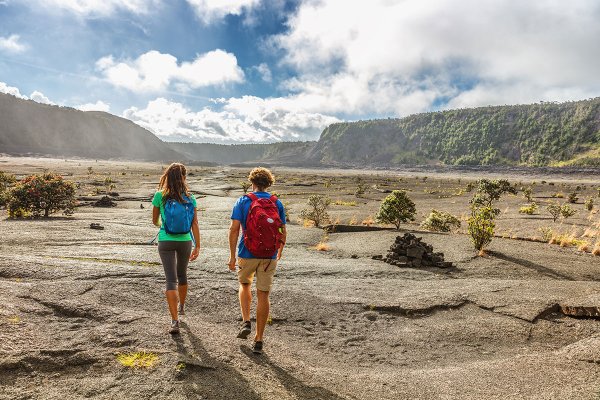
This is the core Big Island hiking tour category. Good routes usually combine one or two short trail segments with crater overlooks, steam vents, lava-tube context, and time for changing park conditions. Self-guided visitors should keep NPS current conditions open before leaving Kona, Hilo, or Volcano because volcanic activity, poor air, road work, fire danger, and trail damage can change the day.
Hualālai and Private-Access Hikes
Some of the most interesting guided hikes are not inside the national park. Much of Hualālai sits on private land, and commercial guides like the Hidden Craters Hike use permitted access to reach cloud-forest and crater terrain you cannot recreate with a map. Expect uneven footing, possible mud, and cooler upland weather even when the Kona coast is dry.
Waterfall and Rainforest Walks
Hāmākua and Hilo-side hikes are the lush counterpoint to the lava-field day. These work best for travelers who want tropical vegetation, waterfall scenery, and shorter walking segments rather than a fitness-focused crater hike. Pair this lane with our Big Island waterfall adventures guide if swimming access or waterfall-rappelling style matters to the group.
Backcountry and High-Elevation Routes
Mauna Loa is not a casual vacation hike. The NPS Mauna Loa hiking page treats it as backcountry travel with rough lava rock, altitude, low-visibility risk, permit considerations, and limited services. Most visitors should build a shorter Volcanoes National Park day unless they already have backcountry experience and current park guidance.
Self-Guided Hikes That Still Fit the Plan
A guide is not required for every Big Island walking day. Kīlauea Iki Trail, Nāhuku, Devastation Trail, Puʻuloa Petroglyphs, Kaloko-Honokōhau's coastal paths, and many resort-area petroglyph walks can be planned independently when conditions are good and your group is prepared. For trail-by-trail ideas, use our top Big Island hiking trails guide before booking anything.
Do not treat social media directions as access permission. Waipiʻo Valley, private ranch lands, lava-tube systems, shoreline lava fields, and closed park sections all have rules that can change. If a route depends on a gate, a permit, a county restriction, or private land, verify the current access source first or choose a guided option that clearly has permission.
What to Bring
- Closed-toe walking shoes with grip; lava rock and wet roots punish beach sandals.
- A light rain shell for Volcano, Hilo, Hāmākua, and cloud-forest routes.
- More water than you think you need, especially for Kona-side lava fields and petroglyph walks.
- Sun protection for exposed lava, crater, and coast sections.
- A flexible plan if volcanic gas, rain, road work, or air quality changes the route.
Getting Between Trailheads
Big Island trailheads are spread across four coasts, and you will do real driving between Kona-side lava fields, Volcano, and the Hilo/Hāmākua rainforest side. If you are self-driving instead of booking a guided pickup, compare rates through Discount Hawaii Car Rental and check your rental agreement before assuming any rough, steep, or unpaved road is allowed.
Related reading: Hawaii guided hiking tours by island · Top Big Island hiking trails · Volcanoes National Park tours · All Big Island activities