

Hawaiʻi Guide · Audio Driving Tour
Kona Coffee Belt BETA
A half-day drive down the Mamalahoa Kona Heritage Corridor — the 20-mile mauka strip on the leeward flank of Hualālai where Japanese immigrant families rebuilt the coffee industry after the 1899 collapse. Holualoa's gallery village, a free farm tour at Greenwell, the Living History Farm, the Kealakekua Bay overlook where Captain Cook died in 1779, the Painted Church, and the City of Refuge at the end. ~8 curated stops.
38 miles
~1h 35min driving
8 curated stops
Free self-guided audio tour
~1h 35min
total driving time
38 mi
total distance
8 stops
curated stops
4-5h
suggested day
We may link to trusted Hawaiʻi resources at no extra cost to you.
Before you drive:
The Kona Coffee Living History Farm — the cultural anchor of this drive — is open Tuesdays and Fridays only, 10 am to 2 pm. If that's the stop you most want to see, plan around it. Puʻuhonua o Hōnaunau accepts no cash at the entrance booth — credit or debit card only, $20 per vehicle (or use an America the Beautiful pass). At Kealakekua Bay, kayak landings at the Captain Cook Monument (Kaʻawaloa side) are prohibited except via two licensed commercial operators; launching from the Nāpōʻopoʻo wharf is also prohibited. Most Holualoa galleries (including Donkey Mill Art Center) are closed Sunday through Tuesday — visit Wed–Sat.
Build your own route
Pick a preset or tap the ✓ Include chip on any stop below to customize.
8
of 8 stops selected
-
Intro
Intro
Show transcript
You're about to drive through twenty miles of coffee country—volcanic soil, sunny mornings, afternoon clouds that roll in like clockwork. Plan four to five hours with stops, longer if you want to eat or take the Kealakekua Bay detour to look out over the Captain Cook Monument. Fuel up before you leave Kona. The stops will announce themselves as we go. Let's go. -
 180MILE0Stop · mile 0 makai
Holualoa Village
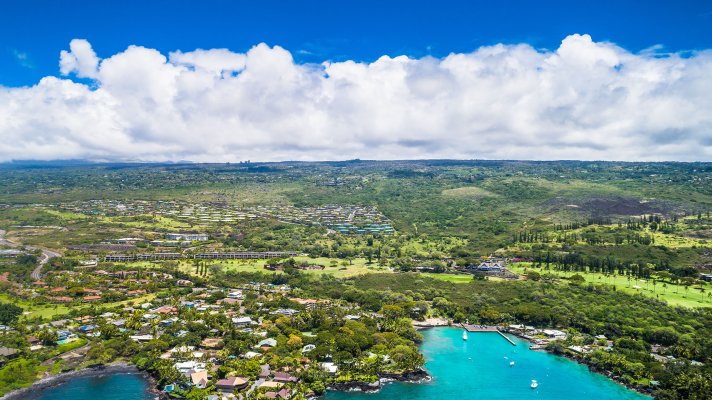
Holualoa is the gallery / coffee village at ~1,400 ft on Hwy 180 (Old Mamalahoa). Half-mile village stretch with multiple galleries, the Donkey Mill Art Center, the historic Kona Hotel (1926, currently not operating as lodging), and Holualoa Inn (working B&B, not a walk-in stop). Donkey Mill — converted from a 1930s coffee mill in 2002, open Wed–Sat 10:00 am – 6:30 pm, closed Sun/Mon/Tue, free gallery + gift shop, 78-6670 Mamalahoa Hwy. GPS 19.57426, -155.94352. Driving in from the Kona side: take Hualālai Road (Hwy 182) from Kuakini Hwy, climb ~1,400 ft over 4 miles, turn south on Hwy 180. The village center is about a mile south of the Hualālai Rd / Hwy 180 junction. Cars park along the village's short main street. Roads narrow — go slow.
Approach Cue (~12-15 sec)Show transcript
Coming up on the makai side in about half a mile—Holualoa village, where galleries and the Donkey Mill Art Center fill a half-mile stretch at elevation. Park along the main street and explore the converted 1930s coffee mill. Roads narrow through here, so keep your speed down and watch for pedestrians.Arrival Narration (~45-60 sec)Show transcript
You're standing in Holualoa at about 1,400 feet elevation, halfway up the slope of Hualālai. The village splits its working life between coffee and art—farms occupy the surrounding land while galleries and studios line this half-mile stretch of road. Your anchor stop is the Donkey Mill Art Center, a 1930s coffee mill converted in 2002 into a community gallery and gift shop. It's open Wednesday through Saturday from 10 am to 6:30 pm, free entry, no reservation needed. The historic Kona Hotel, the 1926 cream-colored structure on the main road, marks the village center but no longer operates as lodging. Park along the main street and walk. Most shops here close Sunday through Tuesday. When you've finished exploring, head north on Highway 180 toward the UCC Hawaii Kona Coffee Estate—a half-mile up the road, free self-guided tours, open Monday through Friday, 9 am to 4:30 pm. -
Connector · 180 7 min drive · 2 mi
Connector Holualoa To Ucc
Show transcript
You're driving through the Kona Coffee Belt now, where volcanic soil and afternoon clouds combine to grow coffee. Farms here are small and typically owner-operated. The coffee that comes from this region reflects what's particular to the place—the rock, the elevation, the way moisture moves through the zone. You're about to reach UCC Hawaii's Kona Coffee Estate on the left side of the highway, about half a mile south. The driveway is signed, and there's a small gravel parking lot in front of the visitor center. -
 7 min from previous stop · 2 miStop makai
Ucc Hawaii
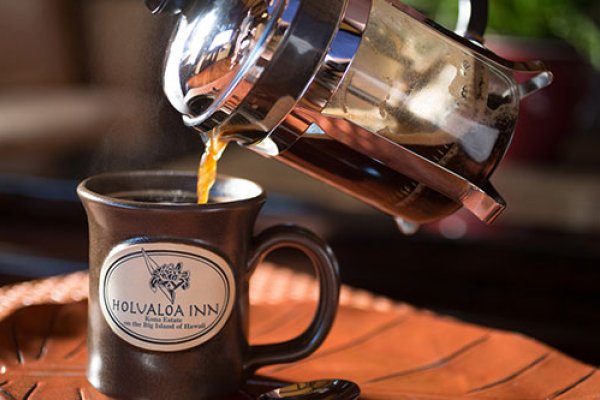
UCC Hawaii Kona Coffee Estate at 75-5568 Mamalahoa Hwy, Holualoa. Mon–Fri 9:00 am – 4:30 pm, closed Sat/Sun. Phone (808) 322-3789. Self-guided estate tours are free and walk-in. Roastmaster Tour $50/person, 1 hour, Mon–Fri. Seasonal harvesting tours Aug–early Dec. Japanese-owned (Ueshima Coffee Co. of Kobe, est. 1933 in Japan; bought the Kona estate in 1989). The deepest narrative tie on this drive to the Japanese-immigrant Kona-coffee story we'll keep coming back to. Source: https://ucc-hawaii.com/
Approach Cue (~12-15 sec)Show transcript
Coming up on the makai side, UCC Hawaii Kona Coffee Estate. Closed weekends, so you need Monday through Friday before 4:30 pm. Free self-guided tours, just walk in. The Roastmaster Tour runs $50 per person for an hour if you want more detail.Arrival Narration (~45-60 sec)Show transcript
You smell the roast before you see the roastery—that dark, almost sweet char hanging in the air. You're standing at UCC Hawaii Kona Coffee Estate, run by Ueshima Coffee Company, a Japanese roaster founded in Kobe in 1933. They bought this place in 1989 and opened it to visitors. The story here goes deeper than the coffee itself. When the Kona coffee market crashed in 1899, plantation owners leased small plots to immigrant families—mostly Japanese laborers who'd come for sugar work. By 1910, around eighty percent of Kona's coffee farmers were Japanese. That small-farm, family-run model became the backbone of the industry and persists today. UCC's modern presence here is the contemporary chapter of that hundred-and-twenty-year-old connection. The self-guided tour is free and walks you through the estate's trees, the mill, and the tasting room—thirty minutes if you move through, longer if you linger. The roastery is open Monday through Friday, nine to four-thirty. Head south toward Captain Cook after to see where this story began. -
Connector · 180 14 min drive · 6.5 mi
Connector Ucc To Greenwell
Show transcript
The slopes around you are volcanic—dark lava fields shaped by Hualālai. That's why Kona coffee grows here. The elevation, the soil, the way the afternoon clouds roll in and shade the plants—it all matters. This particular stretch has conditions that make the coffee distinctive. You're driving through land where geography and crop have become inseparable, where what grows in this soil tastes different from anywhere else. -
14 min from previous stop · 6.5 miStop makai
Greenwell Farms
Greenwell Farms at 81-6581 Mamalahoa Hwy, Kealakekua. GPS 19.51103, -155.92049. Complimentary farm tours daily 9:00 am – 3:00 pm (last tour 3:00 pm). Phone (808) 323-9616. Walk-in welcome; private tours by email reservation. The largest of the on-route free-tour stops; the anchor for the lower belt. Family operation since 1850 — the founder, Henry Nicholas Greenwell, was an English immigrant who arrived in 1850 and grew the operation into the first Kona-coffee brand to win an international award (Paris 1873). Source: https://www.greenwellfarms.com/
Approach Cue (~12-15 sec)Show transcript
Coming up on the makai side—Greenwell Farms, the largest free coffee-farm tour on this route. Daily tours run 9 am to 3 pm, walk-in welcome, no reservation needed. Parking's in the main lot on the makai side just past Kainaliu.Arrival Narration (~45-60 sec)Show transcript
You're standing at one of the few spots where you can actually walk into a working coffee farm. The air here smells like earth and roasted beans — that's the mill running makai, toward the ocean. Greenwell Farms has been doing this since 1850. Henry Nicholas Greenwell, an English immigrant, built this into the first Kona coffee brand to win international recognition at the Paris Exposition in 1873. That win put Kona coffee on the world map. The operation stayed in the family. What makes Kona coffee distinct is the elevation, volcanic soil, and that predictable afternoon cloud cover between fourteen hundred and twenty-five hundred feet. The tour takes about forty-five minutes and walks you through the trees, the working mill, and a tasting bar. Complimentary tours run daily from nine to three, with the last tour at three. You just walk in. Grab a bag at the gift shop on your way out if you want to take it home — the Estate Reserve gives you a direct taste of what single-estate Kona is. -
Connector · 180 4 min drive · 1.2 mi
Connector Greenwell To Manago
Show transcript
You're in the Kona Coffee Belt now, moving through land that's been shaped by coffee farming. The elevation and volcanic soil here supported the crop for generations. You'll pass through Kealakekua and into Captain Cook town over the next couple miles. The Manago Hotel—a historic green building on the makai side of the highway—marks the first of two stops in this area. The road itself follows the old route through these settlements, connecting the places where people built their lives. Some farms are still working; others have been abandoned. This landscape holds both: what's still growing and what's been left behind. -
 4 min from previous stop · 1.2 miStop makai
Manago Hotel Restaurant
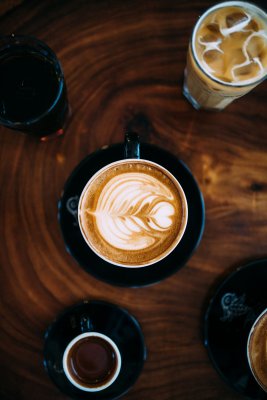
Manago Hotel at 82-6155 Mamalahoa Hwy, Captain Cook. Restaurant ONLY is currently open. Wed–Sat lunch 11 am – 2 pm; dinner 5 pm – 7:30 pm. Closed Sun/Mon/Tue. Famous for the pork chops (the dish that defines the menu since 1917). Hotel building IS still standing but rooms are NOT currently being rented — the property is on the market. Do not recommend booking a room. The restaurant is family-run and remains operating as of the 2026 research pass. Source: managohotel.com
Approach Cue (~12-15 sec)Show transcript
Coming up on the makai side—Manago Hotel, the historic green building as you come south into Captain Cook. Restaurant only, open Wed–Sat lunch eleven to two, dinner five to seven-thirty. Their pork chops have been the draw since 1917. Skip the hotel rooms; they're not renting right now.Arrival Narration (~45-60 sec)Show transcript
You're standing in front of a weathered wooden building makai — toward the ocean — off Mamalahoa Hwy, and the smell of grilled pork chops drifts through the air. This is Manago Hotel, opened in 1917 by a Japanese-American family who made Captain Cook their home. The dining room is still theirs to run, and the menu hasn't budged much in over a hundred years — pork chops with miso soup, rice, and pickled vegetables. The hotel rooms aren't currently being rented, but that doesn't matter. Wednesday through Saturday, lunch runs eleven to two, dinner five to seven-thirty. No reservations needed. Bring cash or card. When you're finished eating, the Kona Coffee Living History Farm sits just south of here — that's where we're headed next. -
Connector · 180 4 min drive · 1.1 mi
Connector Manago To Living History
Show transcript
You're moving through the Kona coffee belt now. These slopes have conditions that favor coffee—the afternoon clouds, the volcanic soil. The farms here are small operations, mostly family-run, quite different from what you'd find on the mainland. Just ahead on your right, less than a mile down, you'll see the Kona Coffee Living History Farm. It's the D. Uchida Farm, signed from the highway. If you're curious about how coffee actually grows here and what the work looks like, it's worth a stop. The farm sits right on Mamalahoa Highway at 82-6199—still very much an active operation, not a museum piece. -
 4 min from previous stop · 1.1 miStop makai
Living History Farm
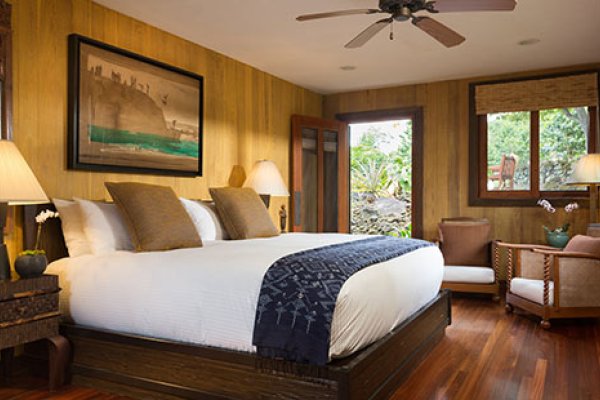
Kona Coffee Living History Farm at 82-6199 Mamalahoa Hwy, Captain Cook, HI 96704. Operated by Kona Historical Society at the historic D. Uchida Farm. **Tue and Fri only**, 10:00 am – 2:00 pm (last entry 1:15 pm). Admission $15 adult / $5 student. Smithsonian-affiliated; the only working living-history coffee farm in the United States. Tells the Japanese-immigrant coffee story directly — period costumes, the original Uchida family farmhouse, the working mill, the donkey, the kuriba (coffee hulling shed). Groups >20 must reserve via programs@konahistorical.org. Source: https://konahistorical.org/kona-coffee-living-history-farm
Approach Cue (~12-15 sec)Show transcript
Coming up on the makai side in about half a mile—the Kona Coffee Living History Farm. Open Tuesdays and Fridays, ten to two, with last entry at one-fifteen. Admission is fifteen dollars for adults, five for students. Park in the small lot and check in at the visitor center first.Arrival Narration (~45-60 sec)Show transcript
You're standing at the original D. Uchida family farmhouse—the Kona Historical Society operates it now as a living history site with docents in period costume, the hand-cranked mill, and the kuriba where green beans were processed. This farm has been here since 1900, and it's the only working living-history coffee farm in the country. The story told here—how immigrant families rebuilt an industry after the 1899 collapse—shapes everything you'll see on the rest of this drive. If today's Tuesday or Friday between ten and two, go in and plan an hour. If the gate's locked, the farmhouse is visible from the road, and the cultural story carries through every farm ahead. -
Connector · 180 12 min drive · 5 mi
Connector Living History To Kealakekua
Show transcript
You're heading toward Kealakekua Bay now. The road ahead drops fast—about thirteen hundred feet down the mountainside in just a few miles. Those switchbacks aren't just steep; they're the only way to get down here safely. The bay itself is protected now as a marine life conservation district. That protection exists for a reason: the water and the life in it matter. Take the switchbacks slow. Fifteen minutes down is the right pace for a road like this. You'll find parking at Hikiau Heiau, at the bottom where the bay opens up. -
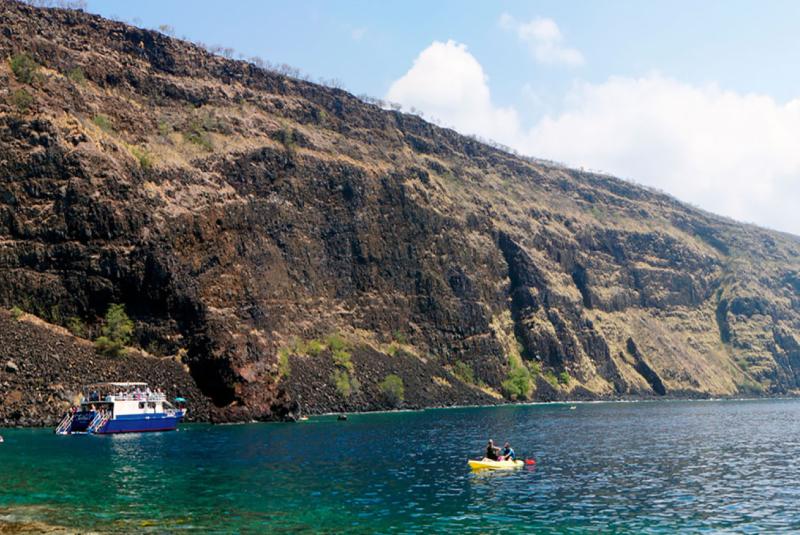 12 min from previous stop · 5 miStop makai
Kealakekua Bay
Kealakekua Bay State Historical Park at the end of Napoʻopoʻo Road in Kealakekua. Operated by DLNR. Daily 7 AM – 8 PM, free entry. Southern Napoʻopoʻo side has Hikiau Heiau (the dry-stack lava-rock temple platform dedicated to Lono), a rocky beach park, restrooms. The Captain Cook Monument is visible across the bay on the north (Kaʻawaloa) shore. The 2-mile-each-way descent trail to the monument is too long for this driving tour — flagged as an add-on only. **Kayak landing at Kaʻawaloa is prohibited** except via two permitted commercial operators (Adventures in Paradise, Kona Boys); launching from Nāpōʻopoʻo wharf is also prohibited. The bay is a state Marine Life Conservation District with strict no-take protections — popular for snorkel tours that anchor offshore but not for shore-entry swimming here. Source: https://dlnr.hawaii.gov/dsp/parks/hawaii/kealakekua-bay-state-historical-park/
Approach Cue (~12-15 sec)Show transcript
Coming up on the makai side—Kealakekua Bay State Historical Park at the end of Napoʻopoʻo Road. Park in the lot near Hikiau Heiau, a lava-rock temple platform. The Captain Cook Monument is visible across the bay. Free entry, open daily 7 AM to 8 PM. Plan twenty minutes. The bay's rocky from shore and protected—if you want to snorkel the reef, go via licensed boat tour out of Keauhou or Kailua-Kona.Arrival Narration (~45-60 sec)Show transcript
You're standing at the largest natural harbor on the Big Island, and that dry-stack lava-rock platform right here is Hikiau Heiau — a temple dedicated to Lono, the Hawaiian god of harvest. It's still treated as sacred ground, so walk around it, not on it. Across the bay at Kaʻawaloa, you can see a small white obelisk on the cliffs — the Captain Cook Monument, marking where Cook was killed in 1779 during a confrontation over a stolen longboat. Cook arrived during Makahiki, the harvest festival sacred to Lono, and was received with ceremony. When his damaged ship forced them back a week later, the season had changed to Kū, the war god, and the welcome turned hostile. Cook died in the fight that followed, stabbed with a metal dagger that British sailors had traded to Hawaiians just days before. The monument sits on British sovereign soil by treaty. The trail down is two miles each way with a 1,300-foot climb on the return, so skip it today. Twenty minutes here gives you the geography. Then head back up Napoʻopoʻo Road to Highway 11. -
Connector · 180 8 min drive · 3.3 mi
Connector Kealakekua To Painted Church
Show transcript
You're driving through country that's been shaped by lava and shaped by people. The volcanic soil here supports the coffee farms you'll see on these slopes—some small operations, some larger. This road itself connects different parts of the island's story. The land you're passing through has layers: the geology beneath, the generations who settled and farmed here, the routes they established. You're following paths that Hawaiian people used long before this became a road, traveling the same elevations where the conditions favored certain crops and certain lives. That continuity—moving through the same terrain across centuries—is what makes this drive feel different from most. -
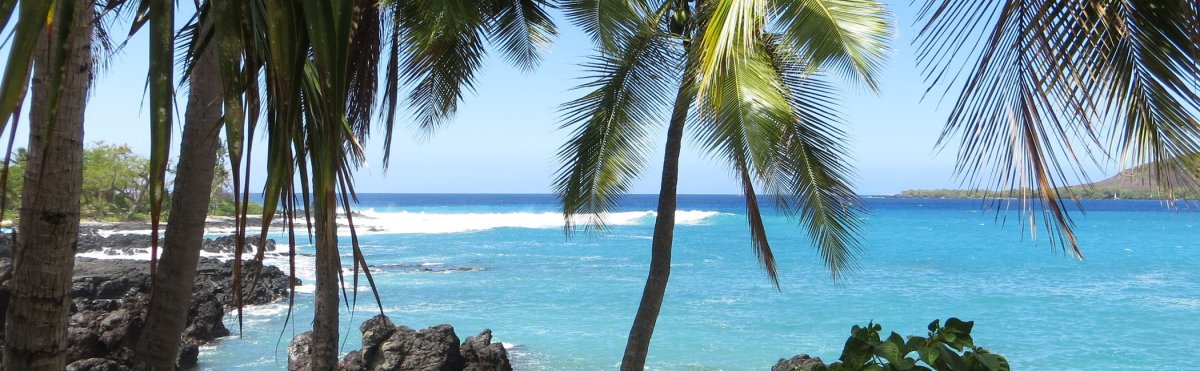 8 min from previous stop · 3.3 miStop mauka
Painted Church
St. Benedict's Painted Church at 84-5140 Painted Church Road, Captain Cook (actually in Honaunau ahupuaʻa). Phone (808) 328-2227. Visitor hours vary across sources — parish site lists Mass times only; Yelp lists Tue–Fri 9:30 am – 3:30 pm; HVCB describes "open to the public for viewing seven days a week." Donation-based; no admission fee. Built in the late 1890s; Father John Velghe painted the interior frescoes around 1899–1904. Source: thepaintedchurchhawaii.org
Approach Cue (~12-15 sec)Show transcript
Coming up on the mauka side in about half a mile—St. Benedict's Painted Church, built in the late 1890s. Father John Velghe painted the interior frescoes around 1899 to 1904. It's donation-based with no admission fee. Park in the gravel lot out front, and call (808) 328-2227 ahead if you're making this a special detour.Arrival Narration (~45-60 sec)Show transcript
You're standing in front of a small wooden church with hand-painted Biblical scenes covering the interior walls—ʻōhia trees and ferns woven into European religious imagery, all created by one Belgian priest over a century ago. St. Benedict's was built in the late 1890s, and Father John Velghe painted every inch of the interior himself between 1899 and 1904. He had no budget for stained glass or imported art, so he painted what he saw around him. The church is tiny—about ten minutes if you move through—but what stops you is the actual fact of it: a priest in a remote rural mission creating something intricate by hand because he had no other choice. The frescoes have been restored periodically and remain visible. Visitor hours vary, so check before you go inside; there's a donation box by the door if you want to contribute. -
Connector · 180 2 min drive · 0.6 mi
Connector Painted Church To Puuhonua
Show transcript
You're driving through the Kona Coffee Belt now. The volcanic soil and elevation here support coffee growing, something the land proved capable of sustaining. About three miles ahead, you'll see the park entrance for Puʻuhonua o Hōnaunau signed on your right. The visitor center and main parking lot are down at the makai end, toward the ocean. This was a place of refuge in Hawaiian culture—where people who broke kapu could seek safety and find absolution. The coast is drawing closer as the elevation drops. -
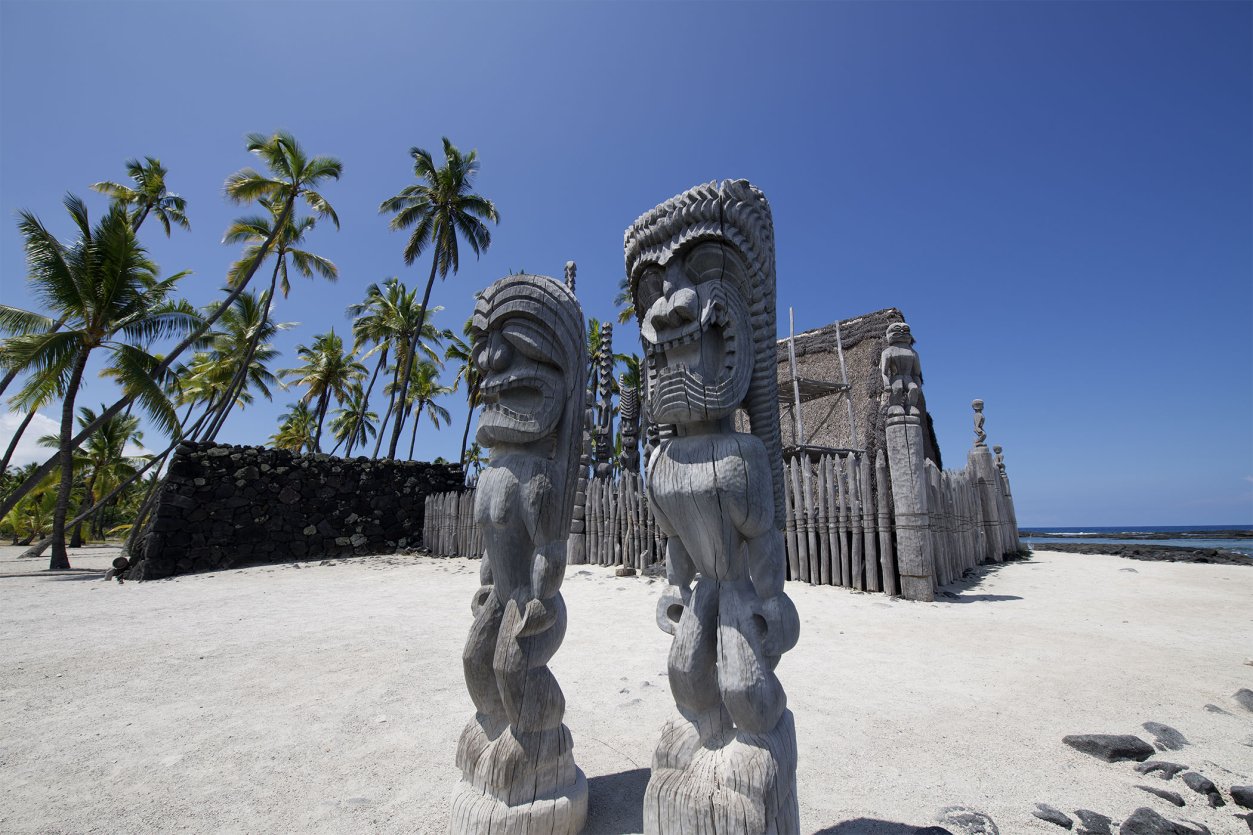 2 min from previous stop · 0.6 miStop makai
Puuhonua O Honaunau
Puʻuhonua o Hōnaunau National Historical Park. Mailing PO Box 129, Hōnaunau, HI 96726. Phone (808) 328-2326. **Hours daily 8:15 am – sunset (visitor services 8:30 am – 4:30 pm).** Entry fees as of 2026: $20/vehicle (up to 8 passengers), $15/motorcycle, $10/person foot or bicycle (16+); under 16 free. Annual passes: Park Annual $35, Hawaiʻi Tri-Park Annual $55, America the Beautiful $80. **The park does NOT accept cash — credit/debit only.** GPS approximately 19.42150, -155.91020. Sources: nps.gov/puho/planyourvisit/fees.htm and /hours.htm
Approach Cue (~12-15 sec)Show transcript
Coming up on the makai side in about half a mile—Puʻuhonua o Hōnaunau National Historical Park. This is the cultural endpoint of the drive. Plan an hour minimum if you walk the Great Wall loop and read the kiosk signage. Opens 8:15 am, closes at sunset. $20 per vehicle—credit or debit only, no cash at the booth.Arrival Narration (~45-60 sec)Show transcript
You can feel the lava rock under your feet here, makai—toward the ocean—and that's the first real clue. Puʻuhonua o Hōnaunau was a place of refuge in old Hawaiʻi, where anyone who broke a sacred law could come and be absolved by priests. The Great Wall you see, that dry-stack lava-rock barrier built around 1550 with no mortar, still divides the royal grounds from the refuge area. Inside are reconstructed hale, carved kiʻi, fishponds, tidepools. This is an active cultural site, not a frozen exhibit. Watch for honu resting on shore; keep your distance, at least twenty feet. The full loop around the Great Wall runs about three-quarters of a mile, flat but exposed, so bring water and a hat. The visitor center has restrooms and a small bookstore. Hours are 8:15 am to sunset daily, with visitor services until 4:30 pm. -
Outro
Outro
Show transcript
You've spent the afternoon moving through Kona's coffee story from the 1899 collapse forward — the immigrant families who rebuilt it, the generational farms still there. Head back north on 160 to 11, through Honaunau and Captain Cook, about 45 minutes into Kailua-Kona. If you've got time, Kaloko-Honokōhau sits north of town for a sunset walk and is free with the America the Beautiful pass. Otherwise, pick a dinner spot and call it done. Thanks for riding along.
This tour is created with AI from HawaiiGuide route content and read by the computer-generated Mele and Kani voices. Hawaiian names and place names may occasionally be mispronounced — mahalo for your patience as we refine.
Other Big Island audio drives
Three more audio tours on the Big Island — pick the one that fits your route.
Big Island · 55 mi · cross-island
Saddle Road & Mauna Kea Drive →
The cross-island drive on the Daniel K. Inouye Highway (Hwy 200) — Hilo to Waimea between Mauna Kea and Mauna Loa, with the optional Mauna Kea Visitor Information Station detour at 9,200 feet. About 1h 45m driving plus stops.
Start the audio tour »
Big Island · 82 mi · 1-way
Hilo to South Point →
The long run down Highway 11 from Hilo through Volcano, Pāhala, and Naʻalehu to Ka Lae — the southernmost point in the United States — ending at the Green Sand Beach parking lot. Full-day commitment.
Start the audio tour »
Big Island · ~13 mi · out-and-back
Crater Rim Drive →
The two-lobe drive along the rim of Kīlauea Caldera inside Hawaiʻi Volcanoes National Park. Steam vents, caldera overlooks, the 1959 Kīlauea Iki eruption site, the Volcano Art Center in the original 1877 lodge. About three hours with stops.
Start the audio tour »
Need help planning?
Search & Planning Chat →

Hawaiʻi Weather Forecast
Today’s Weather Brief · Audio · ~45s
0:00
0:54
Read the transcript
Trades are breezy right now with scattered showers on the windward side and mountains; the leeward coast stays mostly dry. Tomorrow stays breezy with the same pattern.
A tropical disturbance southeast of the islands is likely to become a tropical storm by mid-week and approach the state Thursday through Saturday. The exact track is still uncertain. If it comes closer, expect heavier rain over a longer stretch; if it stays farther out, impacts will be shorter and lighter. Winds will increase late this week, with potential gusts over 70 miles per hour on the highest summits.
Plan your leeward beach time and snorkeling for today through Tuesday. Save summit drives and offshore water sports for after Saturday, and check updates daily as this develops.
Created with AI from the official NWS forecast discussion · verify with NWS before heading out
Loading forecast…
Temperature
Weather data by Open-Meteo.com
Current Time in Hawaiʻi
--:----
Hawaiʻi Standard Time · UTC−10 · No Daylight Saving
You’re on Hawaiʻi timeMainland US
International
Aloha Today daily podcast →
Full HST breakdown, FAQ & DST schedule →

Get Your Free Hawaii Visitor Guide
Enter your email and we'll send you instant access to our free 2026 Hawaii Starter Guide + Summary Guidesheets.