
Summer is one of the easier stretches of the year to ride a bike in Hawaiʻi. The leeward sides stay dry most days, and daylight runs from before 6 a.m. past 7 p.m. in June — plenty of room for a sunrise ride and a beach lunch on the same day. What you actually get on a Hawaiʻi bike tour depends on which island you’re on. Maui has the famous downhill from outside Haleakalā. Oahu has the easy coastal e-bike loop. The Big Island has 19 miles of car-light volcano road. Kauai has a paved coastal path that hugs the water for most of an afternoon. Below is the by-island shortlist for summer 2026 — what each coast does best and how to pick the ride that matches your day.
Why summer is a good time for a Hawaiʻi bike tour
Two practical reasons. The first is weather. Hawaiʻi’s wet season runs roughly October through April, per the National Weather Service in Honolulu. By May the windward and mountain slopes generally dry out, and through August the wet sides of Kauai and the Big Island tend to give you workable mornings for a ride. Conditions still vary day to day — check the forecast the night before. The second is timing. Trade winds in summer often build through the day, so sunrise and mid-morning windows tend to feel calmer than late afternoon. Most guided tours run early for that reason. One caveat. Summer is the busy season for Hawaiʻi visitors overall, and from what we see on operator availability, the marquee morning bike tours fill up earlier than in winter. Sunrise e-bike slots and Haleakalā downhill departures are usually the first to go. We covered the broader booking curve in our summer 2026 tour booking lead times piece — bike tours sit in the 1–2 week range for most operators, longer if you want a specific morning departure on a specific date.
Oahu — Diamond Head e-bikes, Kailua, and the Tantalus downhill
Oahu is friendly territory for a vacation bike day. The leeward roads are dry most of the year, and you can start pedaling from Waikiki itself. Three different bike experiences are within easy reach of most resort hotels. A popular guided ride is the Diamond Head sunrise e-bike loop. Groups meet in Waikiki, ride coastal e-bikes through Kapiolani Park to the Diamond Head lookout for sunrise photos, and roll back through Kahala. Electric assist flattens the one real climb to the crater overlook, which is why this works for travelers who haven’t pedaled a real bike in a decade. We unpack the format on our Oahu bike tours page. The other Oahu story is Kailua and the windward side. Active Oahu Tours runs an e-bike-and-food itinerary that leaves from Kailua town and works in Lanikai with a couple of food stops — book it as a Kailua E-Bike Kau Kau Adventure (half day). The same operator also rents Kailua e-bikes by the day if you’d rather set your own pace. Kailua is flatter than Waikiki, with a wide turquoise bay at Kailua Beach you can walk straight into when you finish. The third option is the Tantalus downhill. Operators shuttle you to the upper reaches of Tantalus Drive above Honolulu — the road tops out at over 1,600 feet of elevation — and you coast back down through old-growth rainforest. Zero pedaling. Pūʻū ʻUalakaʻa State Park sits partway down with a panoramic view of Honolulu and the south shore, and it’s a common photo stop on the way down. To compare current Oahu options on Viator’s Oahu tours page, open the page and filter for “bike” or “e-bike.” Sunrise departures tend to fill first.
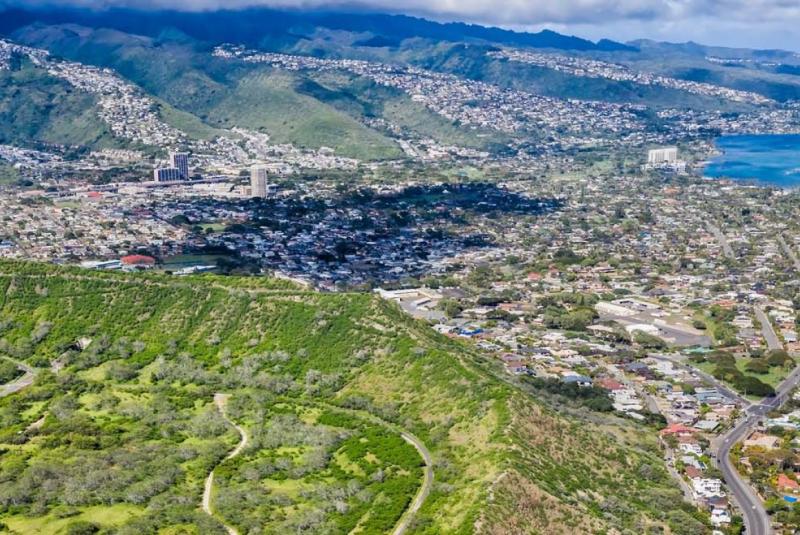
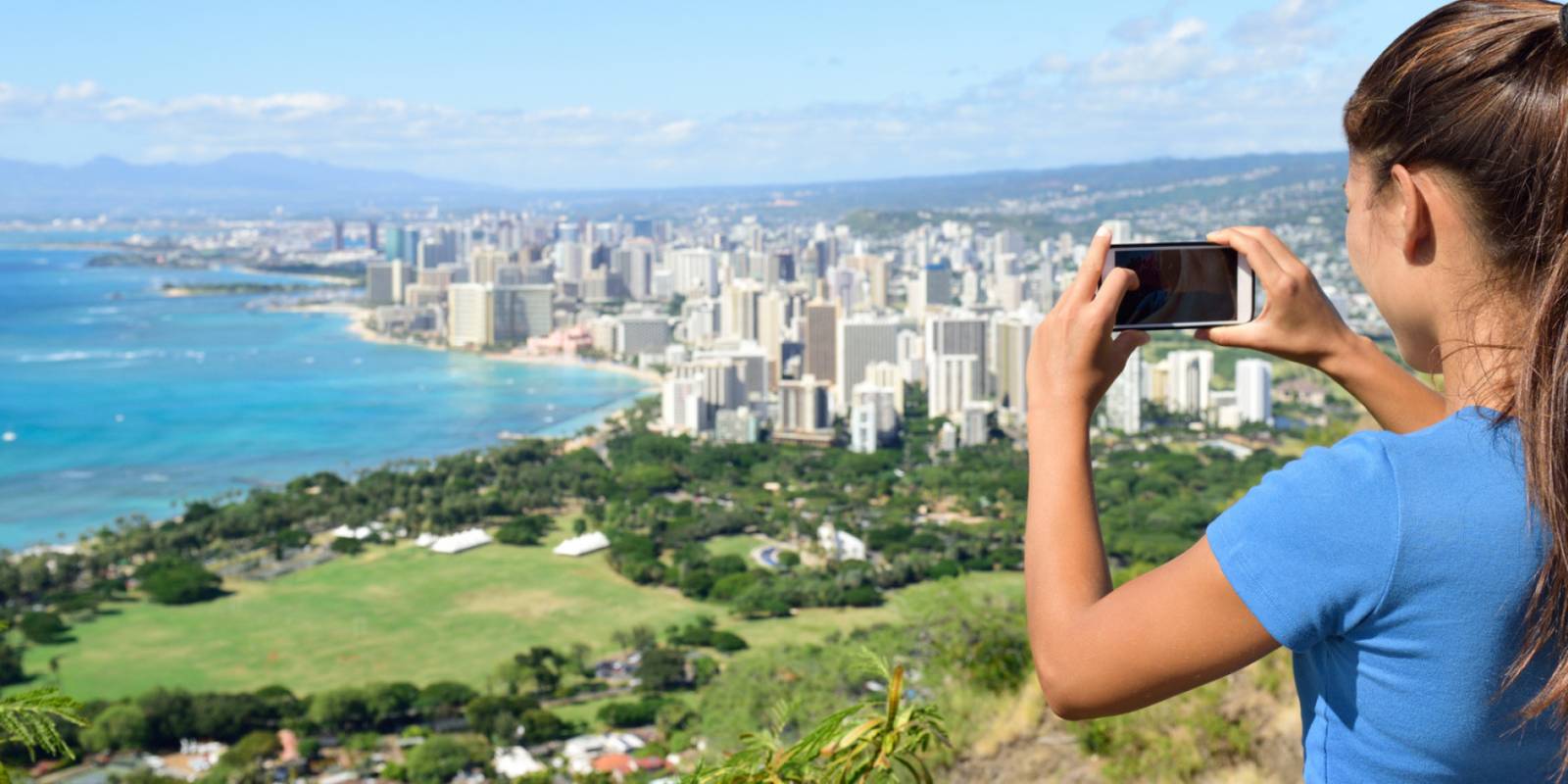
Diamond Head from above. The sunrise e-bike loop from Waikiki tops out at the crater overlook on the right side of this shot.
Maui — the Haleakalā downhill, and how the rules actually work
The signature Maui ride is the Haleakalā downhill: drive up the volcano before sunrise, then bike the long descent through Upcountry. It’s one of Maui’s best-known bike experiences. One thing to know up front. Commercial bike tours can’t start at the summit anymore. The National Park Service suspended summit-start commercial bike tours inside Haleakalā National Park after a string of fatal accidents in 2007 ( NBC News reporting from the time). Today, the park’s own page confirms that every legal commercial downhill ride begins at 6,500 feet, just outside the park boundary, and rolls about 26 miles down through Upcountry. You can still drive your group up to the summit first to watch sunrise (most tours include that), but you start pedaling from the boundary. Two formats. Guided tours ride in a group with a lead and sweep driver and stop together for breakfast in Kula or Makawao. Self-guided (or “self-paced”) tours put you on a bike at the same starting point and let you ride at your own speed, stopping where you want. Self-guided is usually the cheaper option on operator booking pages; guided is worth the difference if you’ve never ridden a downhill at altitude before, or if you want a hand on the brakes around the switchbacks. Compare the two formats side by side on whichever operator you’re considering before you book. A few operators we know. Paʻia-based Emountain Bike Tour Maui ( per its contact page) runs e-mountain bike experiences: the Experience Tour and the longer Grand Tour. That’s a different category from the Haleakalā downhill but worth knowing about if you want a powered trail ride instead of a pavement coast. For the downhill itself, see Maui downhill bike tours on Viator; the lineup includes both guided and self-paced versions. A practical note about the early start. Sunrise pickups at Maui resorts run between 2:00 and 3:00 a.m. depending on hotel location, and other operators run pickups as late as 4 a.m. The summit sits between 32 and 65 °F year-round, and it’s at the colder end before dawn even in summer. Bring a real layer, not a beach cover-up. Inclusions vary by operator, so check your tour’s gear list and pack your own warm layer (a long-sleeve fleece and a beanie) unless it’s listed. The packing baseline for Hawaiʻi day trips covers the rest.
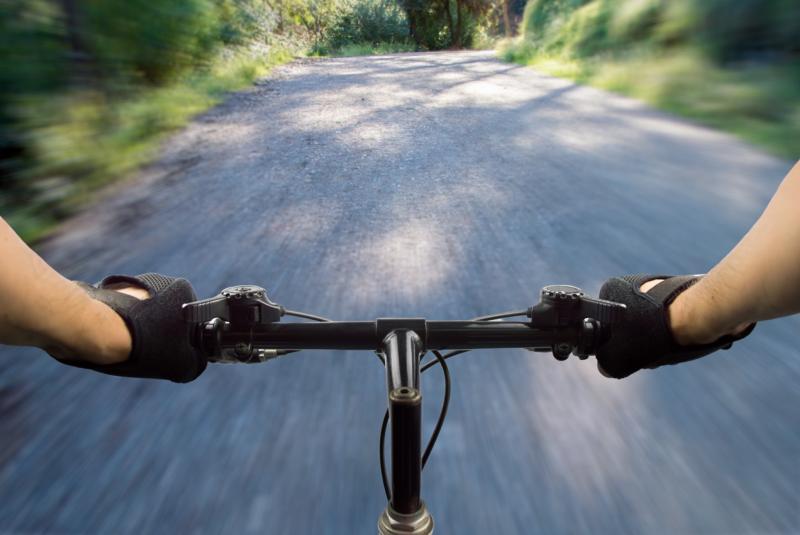
Chain of Craters Road inside Hawaiʻi Volcanoes National Park drops 3,700 feet over 19 miles to the coast — light traffic and the kind of views you can't get from a vehicle window.
Big Island — Volcanoes National Park and the Kona coast
The Big Island bike story is two different rides on opposite sides of the island. The first is Hawaiʻi Volcanoes National Park. The park is open to bikes on most of its paved roads, including Crater Rim Drive, Chain of Craters Road, and roads in the Kahuku Unit ( per the NPS bike page). E-bikes are allowed everywhere a regular bike is. Chain of Craters Road is the standout: it drops about 3,700 feet over 19 miles through old lava flows to the coast, with light traffic and views you don’t get from a windshield. The simplest format is to start near Kīlauea Visitor Center, ride down Chain of Craters to the coast, and arrange a shuttle pickup at the bottom — the climb back up on a regular bike is brutal in the afternoon sun. An e-bike makes the round trip more feasible, but a 19-mile climb with 3,700 feet of gain still leans on battery range, rider fitness, heat, and wind. Confirm your bike’s range and the route with your rental operator before you skip the shuttle. The park itself doesn’t run rentals, so you book a tour or rent before you arrive. Volcano-village operator Bike Volcano sits near the park entrance and handles both rentals and guided rides; on the broader market, Viator’s Big Island tours list current park-area bike options. Plan for an early start regardless. The park’s official guidance asks cyclists to avoid the busiest hours of 10 a.m. to 3 p.m. on Crater Rim Drive between Kīlauea Visitor Center and Kūpinaʻi Pali, and on Chain of Craters Road. Morning shadows on the lava flows photograph far better anyway. The second ride is the Kona coast. The Aliʻi Drive corridor runs flat along the leeward shoreline through Kailua-Kona town and the resort strip. E-bike rentals from town shops cover the route easily. It’s the loose Big Island equivalent of the Diamond Head loop on Oahu: a sunrise or late-afternoon cruise with ocean on one side and coffee shops on the other, no real climbing involved. Park near Kailua Pier, ride south past Magic Sands and the historic Hulihe’e Palace, and turn around when you’ve had enough. The coffee farms in Kona’s coffee belt sit within an e-bike day’s range of town if you want a longer route, but the climb up to Holualoa is a real one. Save it for a cool morning and a fully charged battery, or book a shop tour with shuttle support instead.
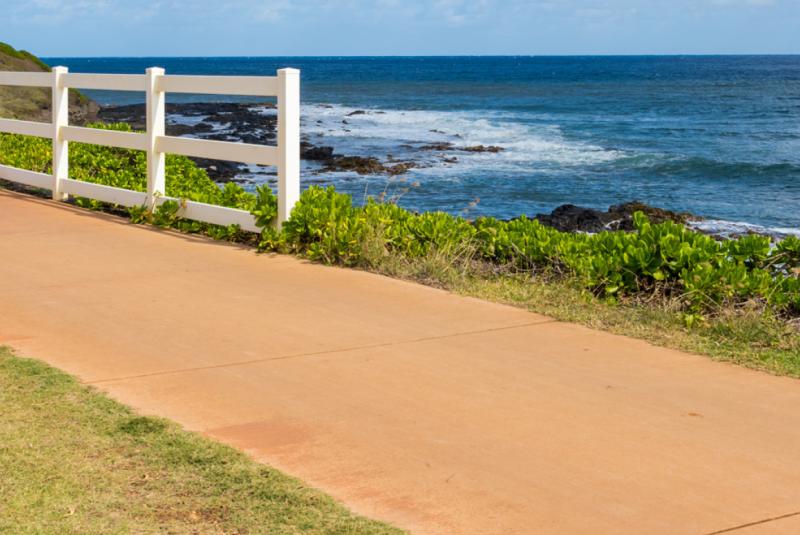
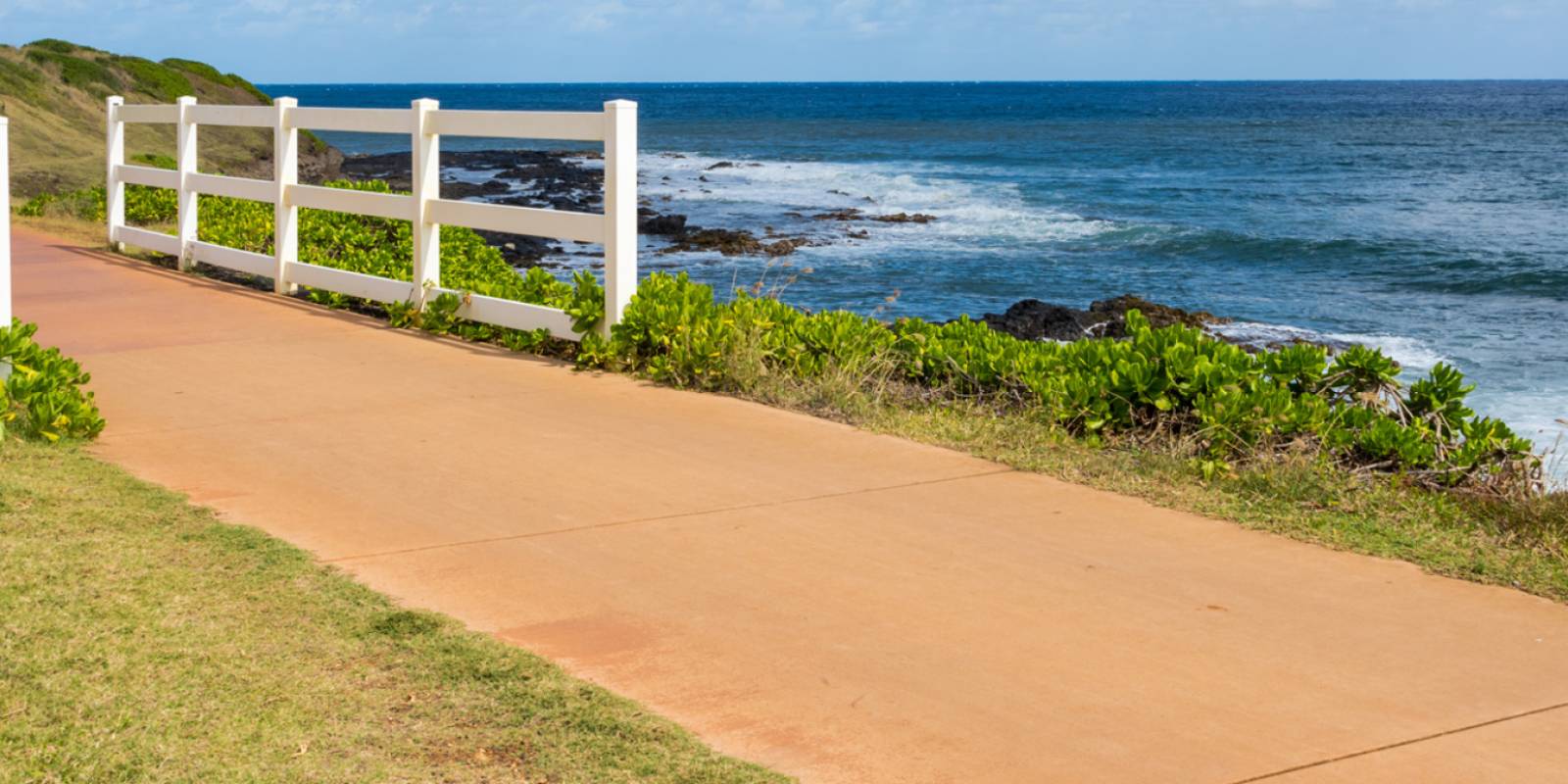
Ke Ala Hele Makalae stays right on the Kauai coast for almost all of its current paved length. Easy scenic ride, doable with kids.
Kauai — Ke Ala Hele Makalae and the east-shore coastal path
Kauai’s bike answer is a paved multi-use path called Ke Ala Hele Makalae — “the path that goes by the coast.” It runs along the east shore between roughly Lydgate and Anahola ( per the official Hawaiʻi tourism page), hugging the water for most of its length. Several segments are open now, with the Kapaʻa-to-Donkey Beach stretch being the most popular for visitors. What makes it work as a vacation ride: it’s flat, it’s paved, and the ocean is right there. Several Kapaʻa shops rent cruisers and e-bikes by the hour or day, so you can roll out for a couple of hours, stop for shave ice in town, and drop the bike when you’re done. No guide required, though guided e-bike rides on the path do exist if you’d rather have someone else handle the logistics. Bring sunscreen, water, and a windbreaker. The east shore catches trades head-on, and the path has limited shade once you’re past the tree line near the trailheads. Mornings are generally the calmer window.
Picking the right ride for your day
Quick logic. If you want the photogenic crater shot and a flat ride back to a beach lunch, do the Diamond Head e-bike loop on Oahu. If you want the bucket-list descent and don’t mind a 2 a.m. wake-up, book the Haleakalā downhill on Maui. If you want a long, quiet road through lava country, ride Chain of Craters on the Big Island. If you want a flat coastal cruise with the kids, rent on the Kapaʻa path on Kauai. Whichever you pick, book the morning slot, bring layers for any ride that starts above sea level, and confirm pickup time the night before. Hawaiʻi roads are quiet at sunrise. That’s the whole pitch.