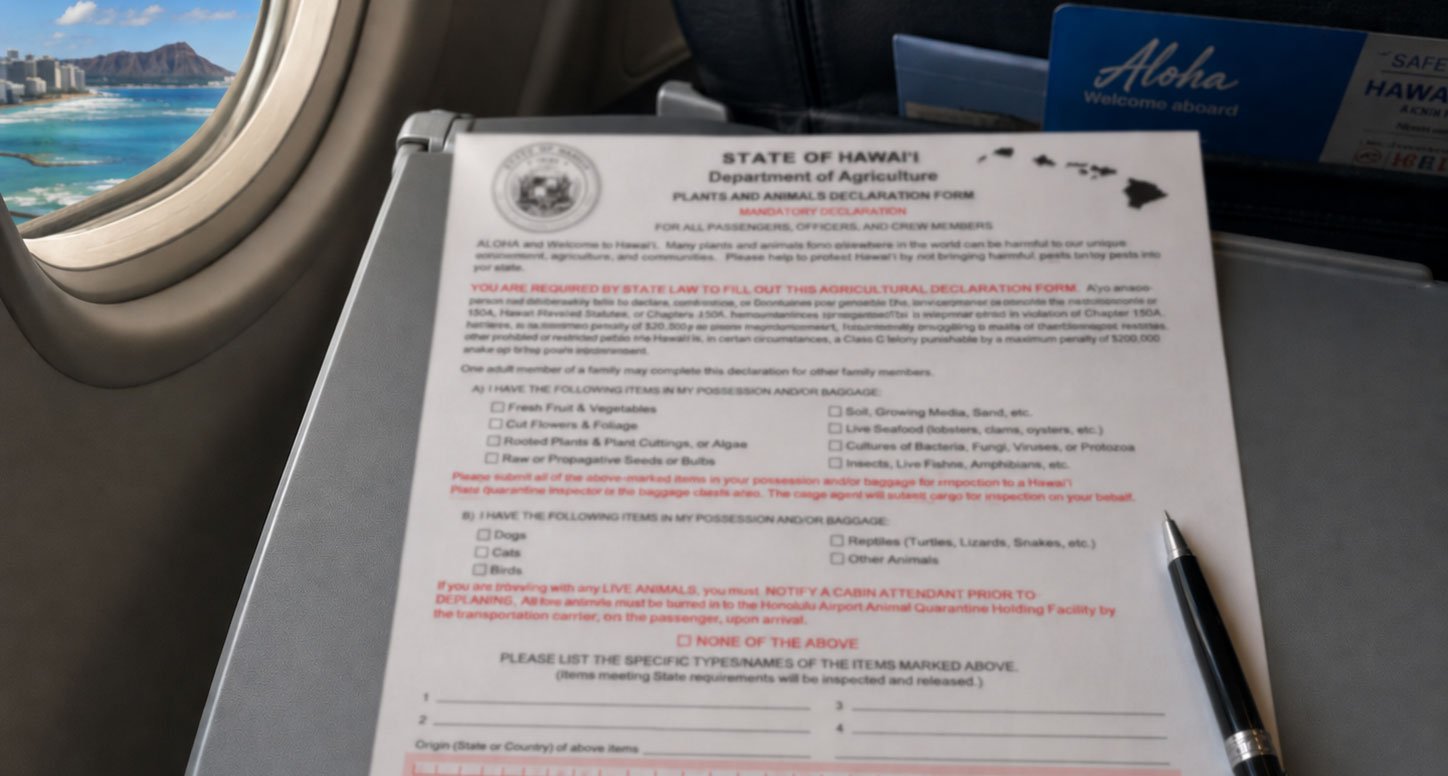


Flying to Hawaiʻi from the continental U.S.? Put the agriculture declaration on your preflight checklist. The state’s Akamai Arrival website is the starting point. Complete the form even if you are carrying no agricultural items; if you are bringing regulated items, declaring them is only the first step.
Use Akamai Arrival Before Your Flight
HDOT’s December 2025 airport update says the digital agriculture declaration is available on all domestic flights to Hawaiʻi. Do not wait for a paper card to begin the process.
- Within five days of departure: open Akamai Arrival and follow its “Submit Your Form Now” link.
- Check who belongs on the form: the state allows one form for a household on the same flight when the home address and, if applicable, lodging address match.
- Answer the declaration questions: select the no-items option if appropriate, or declare the agricultural items you are bringing.
- Before leaving the airport: make sure the declaration is complete and present regulated items for inspection.
The official FAQs explain the submission window and household rules. For additional questions, use the contact email listed in the state’s FAQ. Keep your flight and lodging details handy rather than relying on memory.
Which Arrival Process Applies?
From the continental U.S.: use Akamai Arrival, including when you have nothing to declare. On an international flight: the state’s FAQ says travelers follow U.S. Customs and Border Protection procedures and are not required to submit this state declaration. Follow the international arrival instructions for your flight; this does not exempt agricultural goods from inspection.
Keep the direction of travel clear. This page covers arriving in Hawaiʻi. An island hop and a flight back to the mainland have different inspection rules; those are covered below and in our Hawaiʻi airports guide.
What You Need to Declare
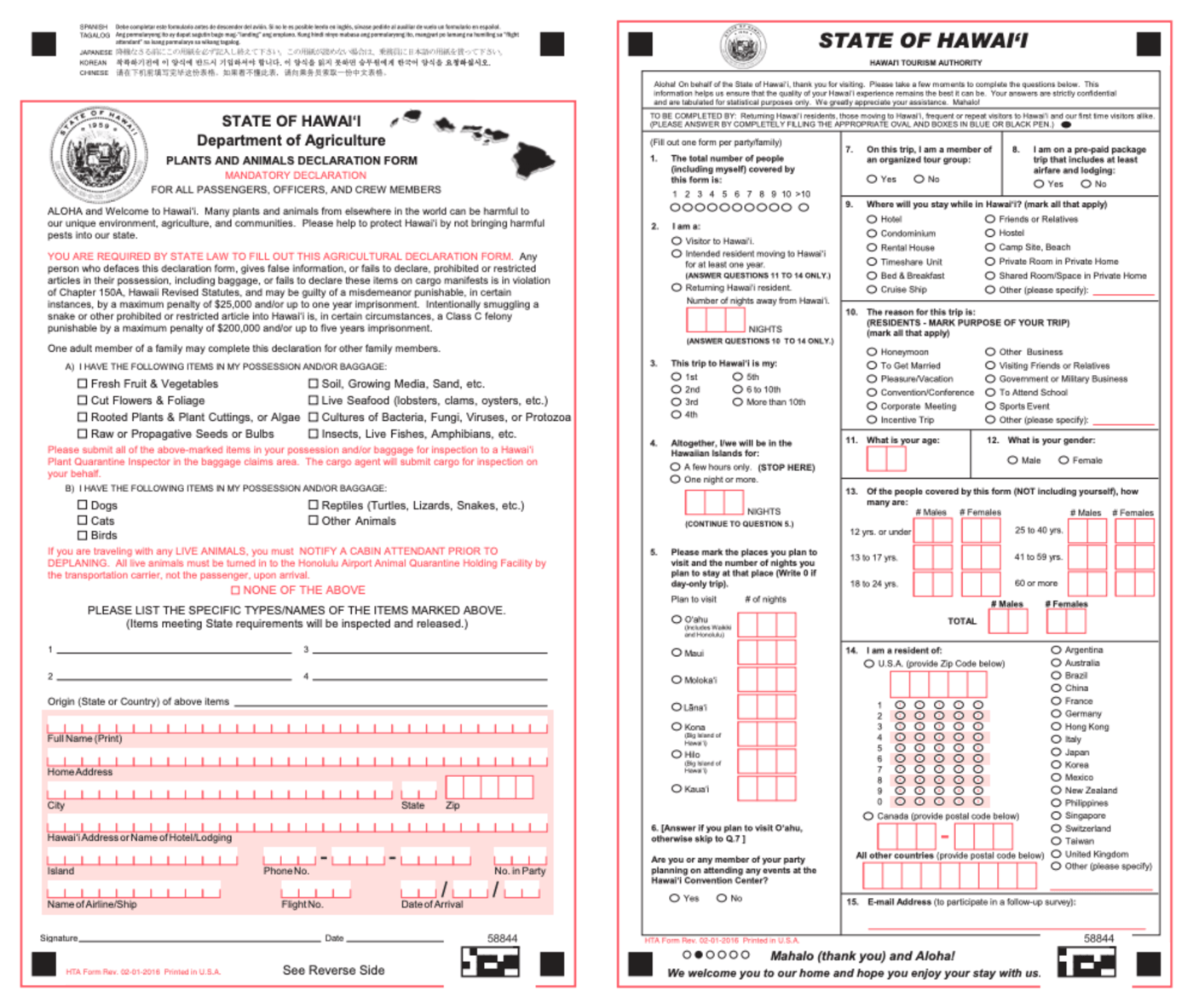
The state’s mainland-to-Hawaiʻi guidance covers plants and plant parts, including fruit, vegetables, cut flowers and foliage; animals, including live fish and live seafood; soil; microorganism cultures; and related containers or packing materials. Check the exact items in your luggage before answering the form.
Keep anything requiring inspection accessible. A plant packed at the bottom of a suitcase still has to be presented to an inspector. If you are unsure whether an item is permitted, check with the state’s Plant Quarantine Branch before packing it. Listing an item on the form does not replace a required permit or inspection.
Check the Item, Not Just the Food Category
Do not assume all fresh produce is prohibited, or that pineapple and coconut are automatically allowed into Hawaiʻi. The state permits many plants and plant parts after inspection, but its restricted list includes pineapple, coconut and other commodities requiring advance arrangements. Origin, species and preparation can change the rule.
The Plant Guidelines provide item-specific requirements. Plants must be free of pests and disease, and their growing medium cannot contain soil. Some plants need permits, certificates, treatment or quarantine. Check that guidance before buying a plant to bring on your trip.
For ordinary snacks from within the U.S., the state generally allows cooked, canned, frozen or commercially processed and/or packaged foods. Its mainland-arrival guidance says manufactured foods do not require declaration or inspection. Fresh fruit falls under the state’s agricultural-item declaration and inspection requirements. For unusual ingredients or unprocessed items, verify the rule before travel.
What Happens at Baggage Claim
Declared agricultural items must be presented at the Agricultural Inspection Counter near the baggage-claim exits, according to the state’s mainland-arrival guidance. Finishing the online declaration does not complete that inspection. Follow the inspector’s instructions before taking the items out of the airport.
Our planning advice: separate the declaration task from the inspection task. Submit the form before the airport rush, then keep regulated items together and easy to show. If you are connecting to another island, check that island’s inspection requirements before buying plants or arranging animal transport.
Traveling With a Pet
Akamai Arrival does not replace animal-entry paperwork. Dogs and cats have a separate Animal Quarantine process; use the checklist for your pet’s origin and arrival airport before booking. Direct arrival at Kona, Kahului or Līhuʻe requires advance arrangements that differ from arrival in Honolulu. Do not use a general packing list as approval to bring an animal.
Why Accurate Declarations Matter
The state declaration website explains the penalties for false information, failure to declare and prohibited imports. Do not assume an undeclared item will result only in a warning. Hawaiʻi’s entry checks help keep harmful pests out; explore the islands’ natural environment in our plants and animals guide.
Island Hops and the Flight Home
An ordinary interisland flight is separate from the mainland-arrival declaration. The state’s interisland inspection guidance tells passengers carrying potted plants, cuttings or live animals other than dogs and cats to contact Plant Quarantine in advance. Check the departure island’s inspection hours and any restrictions on the item.
When you leave Hawaiʻi for the U.S. mainland, USDA rules apply to agricultural products. Use our departure inspection guide and souvenir packing guide before shopping for fruit, flowers or plants. An item allowed into Hawaiʻi is not automatically allowed on the trip home.
Your Preflight Checklist
- Identify whether your Hawaiʻi arrival is domestic or international.
- For a mainland arrival, add Akamai Arrival to your checklist within five days of departure.
- Check regulated items before packing; arrange permits or pet requirements well ahead of travel.
- Keep items needing inspection accessible when you reach baggage claim.
- Use our travel tips and flight-planning guide for the rest of your arrival plan.