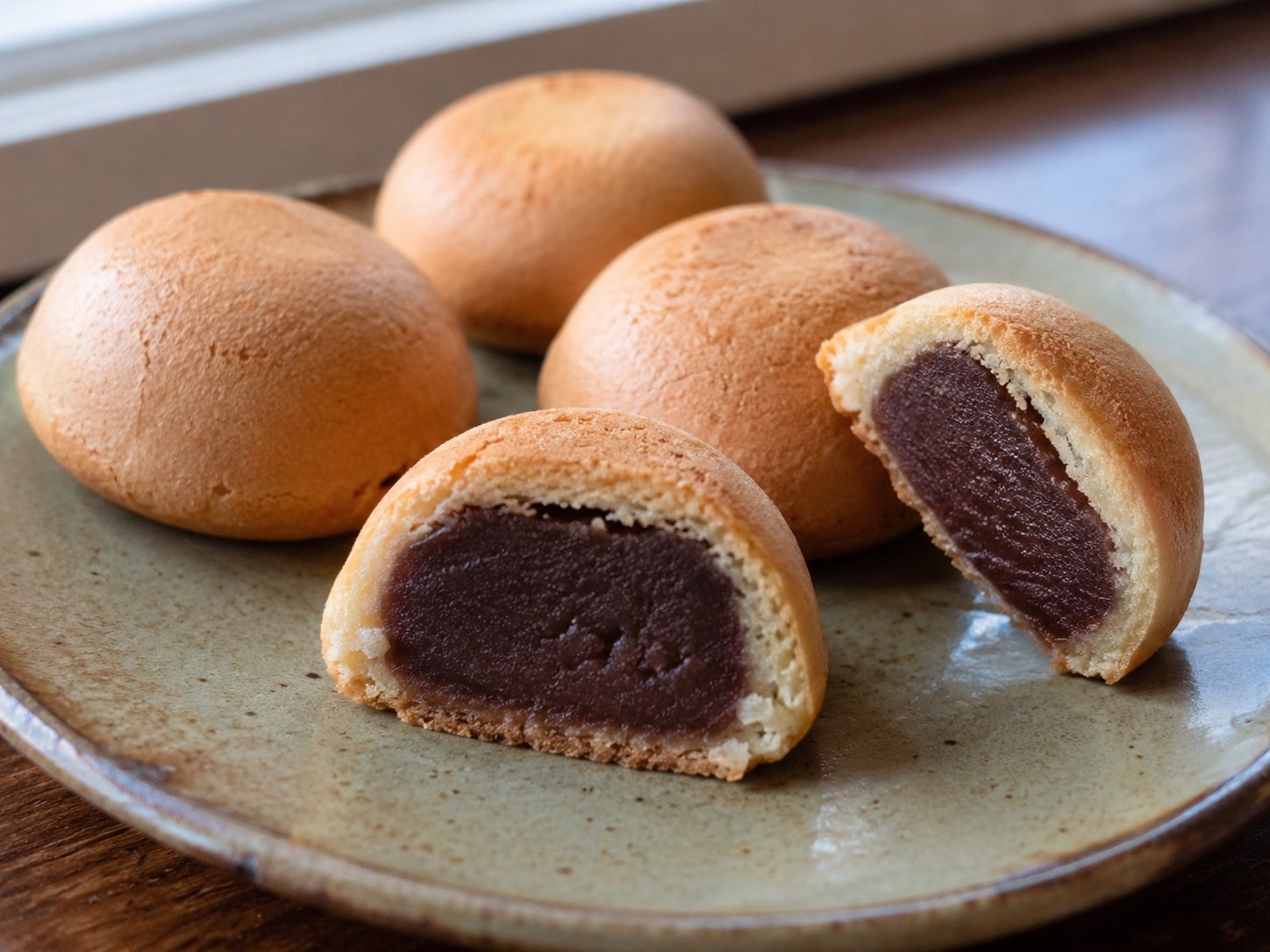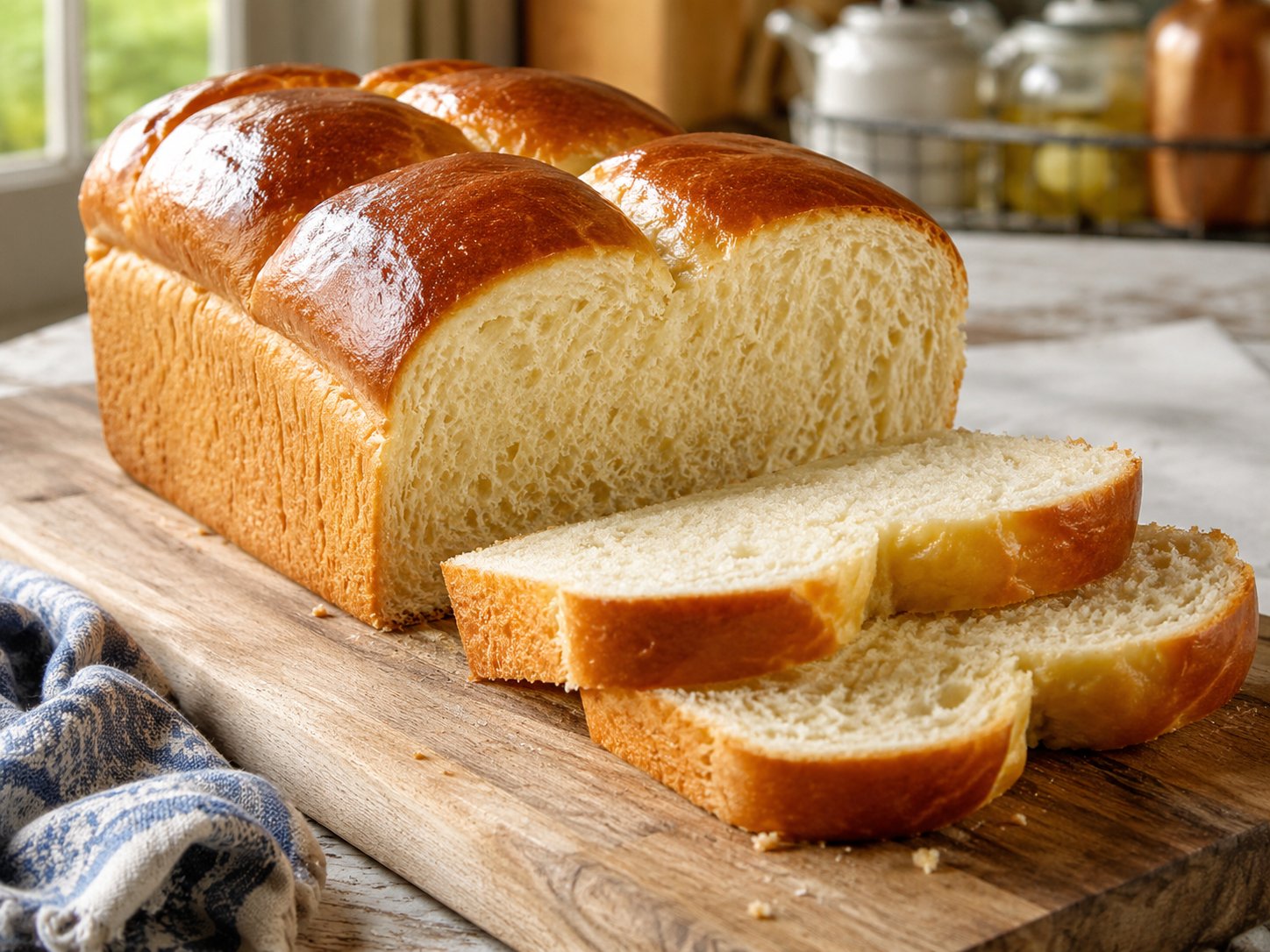
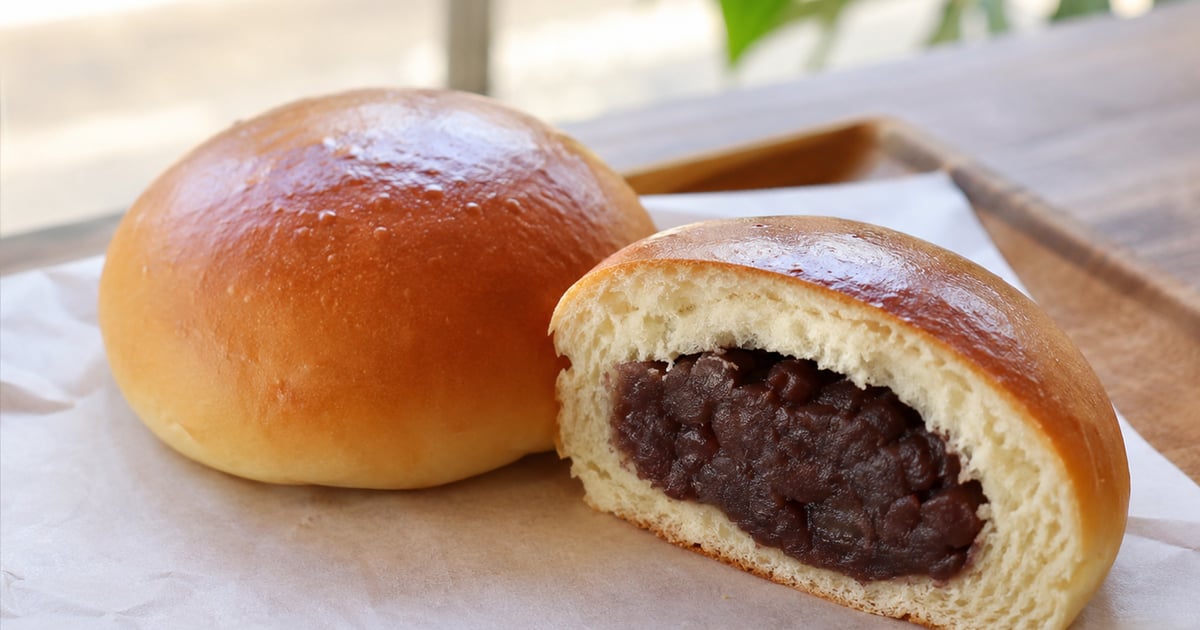

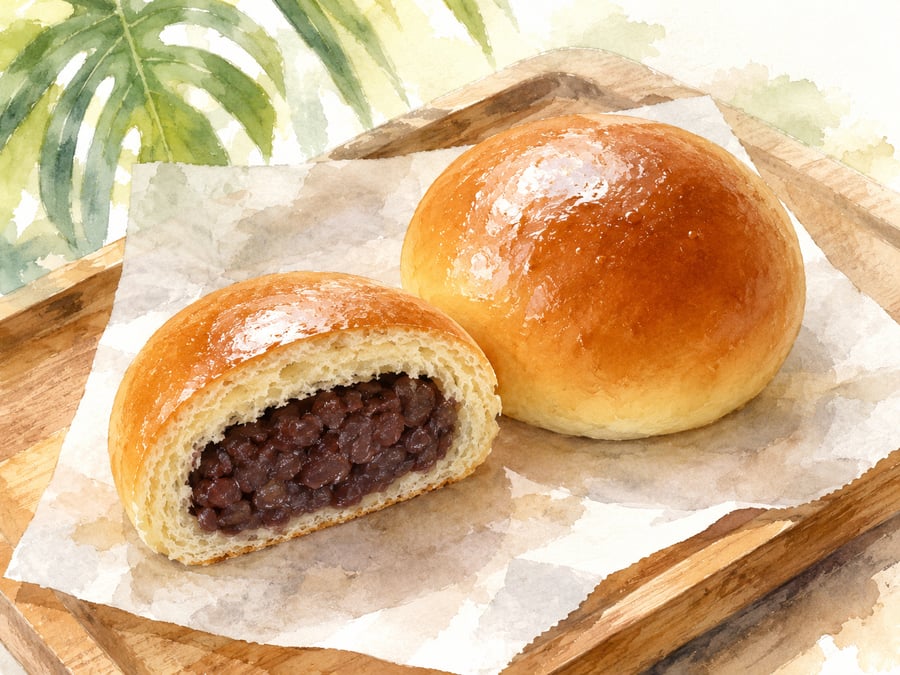
Anpan is the sweet red bean bun that runs the case at every Japanese bakery in Hawaii. Soft yeasted milk bread on the outside, a fist of sweet azuki paste on the inside. The top gets brushed with egg wash and a pinch of sesame, and you eat it cut in half over a napkin with tea or cold milk. This recipe makes 12 buns and uses the tangzhong milk-bread method, which is what gives you the pillow-soft crumb you remember from a Honolulu bakery bag.
Two fillings to know. Koshian is smooth strained azuki paste. Tsubuan is the chunky one with whole beans still in it. Hawaii bakeries mark koshian buns with black sesame and tsubuan with toasted white sesame so you can tell them apart in the case.
At a glance
12 buns
30 minutes
2 hours 30 minutes
Moderate
Ingredients
For the milk bread dough (tangzhong method)
- 3 tablespoons bread flour (for the tangzhong starter)
- ½ cup whole milk (for the starter)
- 3½ cups bread flour (for the main dough)
- ¼ cup granulated sugar
- 2¼ teaspoons (1 packet) instant yeast
- 1 teaspoon fine sea salt
- ½ cup warm whole milk
- 1 large egg
- 4 tablespoons unsalted butter, softened
For the filling and finish
- 1½ cups koshian (smooth) or tsubuan (chunky) red bean paste, about a 16 oz can
- 1 large egg yolk + 1 teaspoon water (for egg wash)
- 1 tablespoon black sesame seeds for koshian buns, toasted white sesame for tsubuan
Equipment
- Stand mixer with dough hook (or strong arms and a wooden spoon)
- Small saucepan for the tangzhong
- Bench scraper
- Two parchment-lined sheet pans
- Pastry brush
- Kitchen scale (helpful, not required)
To serve
- Hot green tea or hojicha, the classic pairing
- Cold milk for the kids
- An afternoon and a napkin
Method
- Make the tangzhong. In a small saucepan, whisk the 3 tablespoons of bread flour into the half-cup of milk until smooth. Set over medium heat and stir constantly with a whisk for 2 to 3 minutes. You want a thick paste that holds a trail when you drag the whisk across the bottom. Scrape it into a small bowl and let it cool to room temperature. This pre-cooked flour paste is what gives Japanese milk bread its pillow texture.
- Mix the dough. In the bowl of a stand mixer, combine the 3½ cups bread flour, sugar, yeast, and salt. Add the cooled tangzhong, the warm milk, and the egg. Mix on low with the dough hook until the dough comes together into a shaggy mass, about 3 minutes. Add the softened butter one tablespoon at a time, letting each piece absorb before adding the next. Knead on medium for 8 to 10 minutes. The dough is ready when it pulls cleanly from the sides of the bowl and feels smooth and elastic.
- First rise. Form the dough into a ball and put it in a lightly oiled bowl. Cover with plastic wrap and let it rise at warm room temperature until doubled, 60 to 90 minutes. Press a finger into the surface. If the dent stays, it's ready.
- Portion the filling. While the dough rises, divide the bean paste into 12 equal portions (about 2 tablespoons each). Roll each into a small ball and chill on a plate. Cold filling holds its shape and is easier to wrap.
- Shape the buns. Punch the dough down and turn it onto a lightly floured surface. Divide into 12 equal pieces, about 70 grams each if you have a scale. Working one at a time, flatten a piece into a 4-inch round with the heel of your hand. Set a ball of bean paste in the center. Gather the edges up over the filling, pinch tightly to seal, and place seam-side down on the parchment. Repeat with the rest. Leave 2 inches between buns.
- Second rise. Cover the buns loosely with a clean towel and let them rise 40 to 50 minutes, until puffy but not doubled. Halfway through, heat the oven to 375°F.
- Egg wash and seed. Whisk the egg yolk with the teaspoon of water. Brush each bun gently and thoroughly. Press a pinch of black sesame seeds into the center of each koshian bun. For tsubuan, use toasted white sesame instead, so you can tell them apart later.
- Bake. 15 to 18 minutes, until the tops are deeply golden and the buns sound hollow when tapped on the bottom. Cool on a wire rack at least 15 minutes before eating. The filling holds heat like jam and will scorch the roof of your mouth.
Notes from a local cook
Skip the bean paste from scratch the first time. Canned koshian and tsubuan from a Japanese grocery (or a well-stocked Asian aisle) is excellent. Eden Foods and Shirakiku are both widely available and reliable. Making anko from dried azuki is a 3-hour project on top of an already-long baking day. Worth doing once. Not worth doing on a Saturday morning when you want anpan by lunchtime.
Tangzhong is the secret weapon. The pre-cooked flour-and-milk paste looks like a fussy extra step. It's the difference between dense, dry bun bread and the soft, almost translucent crumb you remember from Hawaii Japanese bakeries. It locks in moisture during baking and keeps the buns soft for two or three days instead of going stale overnight. Don't skip it.
Pinch the seam properly. The most common failure with anpan is the bottom seam opening in the oven and the bean paste leaking out. Pinch hard, then pinch again, then sit the bun seam-side down so the weight helps keep it closed. If one splits anyway, eat it warm. Tastes the same.
Variations to know. The classic Hawaii bakery case also runs cream-an (custard cream), chocolate-an, and matcha-an. The dough is identical. Only the filling changes. Once you have the milk bread method down, the whole shelf opens up.
A note on the history
Anpan was first sold in 1874 in Tokyo by Yasubei Kimura, a former samurai whose bakery, Kimuraya, married Western yeast bread to the Japanese sweet bean filling he grew up with. It came to Hawaii with the Kanyaku Imin, the first government-sponsored Japanese contract laborers, who began arriving on the plantations in 1885. Family-run Japanese bakeries followed the community to Honolulu in the early 20th century, and anpan stayed put. The Issei brought the recipe. The bakeries kept it on the shelf.
While You're on the Islands
Eat it made by someone else. Liliha Bakery on Oʻahu (the original Liliha Street shop opened in 1950) is the headline Honolulu bakery, though the coco puff is what they're known for and anpan is a quieter item. Japanese supermarkets like Don Quijote in Honolulu often have anpan in the bakery section, but stock changes by day. Smaller family-run okazuya counters on Maui and Kauaʻi sometimes run anpan, sometimes don't. Call before you make a special trip.
Buy the ingredients fresh. Don Quijote and other Japanese supermarkets carry canned koshian and tsubuan bean paste in the same aisle — easy to grab a few cans if you want to try baking these in a vacation rental.
Bring It Home
What you can substitute, what you can't: canned koshian and tsubuan (Eden Foods, Shirakiku) are stocked at most mainland Japanese or Asian grocery stores, so there's no need to pack anything home — just look in the same aisle once you're back. The dough technique (tangzhong) doesn't require any special Hawaii-sourced ingredient, just patience.
Where to try this in Hawaii