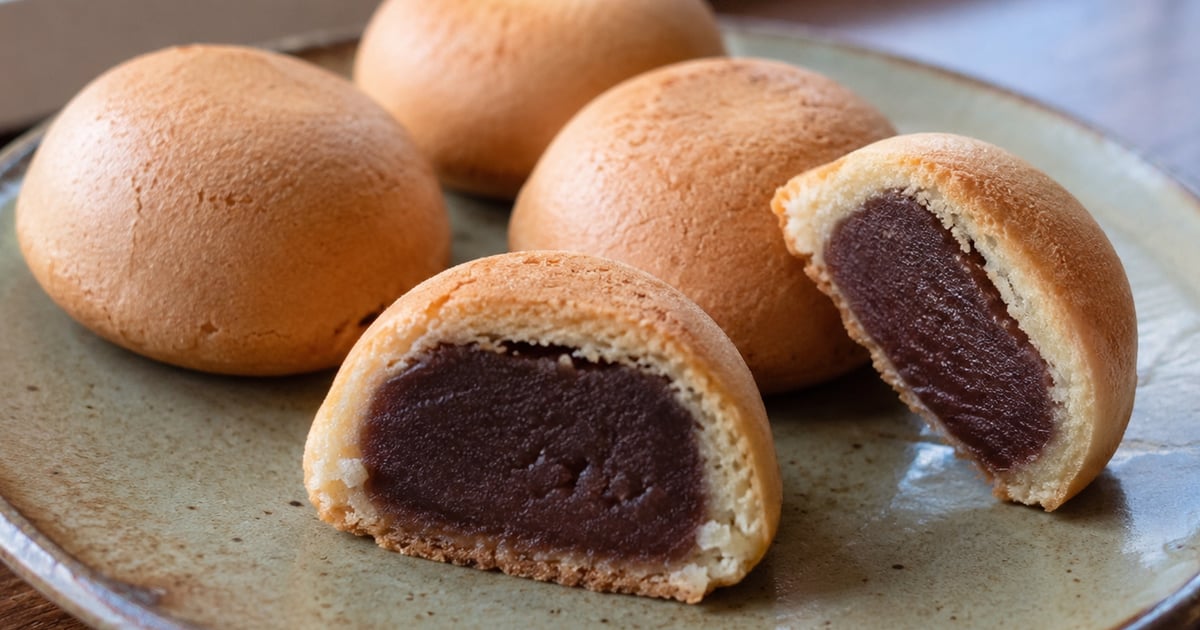

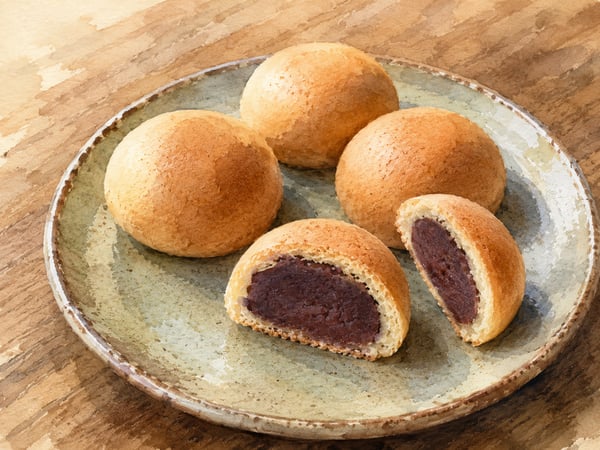
Manju in Japan is usually steamed — soft, slightly chewy, often filled with red bean paste (japan-guide.com). The Hawaiian version went a different way. Hawaiian manju is baked, with a dough closer to a tender pastry crust than to a steamed bun. Inside, the same sweetened azuki bean paste (an) you'd find in Tokyo. The result sits somewhere between a Japanese sweet and a Western hand pie, and it has lived on the shelves of Honolulu bakeries for the better part of a century.
Japanese immigrants began arriving in Hawaii in 1885 to work the sugar plantations (Library of Congress), and they brought their bean-paste sweets with them. Over generations the dough drifted toward what Western ovens could deliver — a butter-shortening crust instead of a gyuhi or steamed-bun wrapper — and the dish became a Hawaii-specific take on the original. Nisshodo Candy Store in Honolulu has been turning out manju for decades, and the best ones today still come from small family bakeries on Oahu.
At a glance
24 small manju
1 hour (including dough rest)
20 minutes
Moderate
Ingredients
For the dough
- 3 cups all-purpose flour
- 1/2 cup granulated sugar
- 1 teaspoon baking powder
- 1/2 teaspoon salt
- 1/2 cup unsalted butter, cold and cubed
- 1/2 cup vegetable shortening, cold
- 2 large eggs, lightly beaten
- 1 teaspoon vanilla extract
- 2 to 4 tablespoons cold milk, as needed
For the filling
- 1 can (15 oz) sweetened azuki bean paste (an / koshian — find at Asian markets), or 2 cups homemade
- Pinch of salt
For the egg wash
- 1 egg yolk
- 1 tablespoon milk
- 1 teaspoon black sesame seeds (optional, for the top)
Equipment
- Food processor or pastry cutter (for the dough)
- Rolling pin
- 3-inch round cookie cutter or drinking glass
- Two parchment-lined baking sheets
- Pastry brush
To serve
- Best at room temperature, with hot green tea
- Store in an airtight container; eat within 3 days
- Freezes well for up to a month — wrap individually
Method
- Make the dough. In a food processor, pulse the flour, sugar, baking powder, and salt to combine. Add the cold cubed butter and shortening. Pulse 8 to 10 times, until the mixture looks like coarse cornmeal with some pea-sized lumps of fat. With the processor running, drizzle in the beaten eggs and vanilla, then add cold milk one tablespoon at a time until the dough just comes together. Stop before it forms a ball. Turn it out, divide in half, flatten into two disks, wrap, and refrigerate at least 30 minutes.
- Prep the filling. Open the can of sweetened azuki paste and scoop it into a small bowl. Stir in a pinch of salt to lift the sweetness. With clean hands, roll the paste into 24 small balls, each about a heaping tablespoon (1 ounce). Set them on a parchment-lined plate. If the paste is too soft to hold a shape, chill in the freezer for 10 minutes before rolling.
- Roll and cut. Working with one disk at a time (keep the other cold), roll the dough on a lightly floured surface to about 1/8 inch thick. Cut out 3-inch rounds with a cookie cutter or thin-rimmed drinking glass. Re-roll the scraps once; beyond that, the dough gets tough. You should get 24 rounds total from both disks.
- Fill and seal. Place a ball of azuki filling in the center of each dough round. Gather the dough up and around the ball, pinching the edges shut at the top. Roll between your palms to round the package. Place seam-side down on a parchment-lined baking sheet, leaving 1 inch between each one. They'll spread slightly but not much.
- Egg wash and bake. Preheat the oven to 350°F. Whisk the egg yolk with the milk to make a wash. Brush the top of each manju with the wash and sprinkle with a few black sesame seeds if using. Bake 18 to 22 minutes, until the tops are deep golden brown. Cool on the sheet for 5 minutes, then transfer to a rack. They keep their shape best after they cool completely.
Notes from a local cook
The dough is the make-or-break. Hawaiian manju dough sits between a pie crust and a sugar cookie — cold ingredients, minimal handling, no over-working. If the dough cracks when you fold it around the filling, it's too dry — knead in a teaspoon more cold milk. If it sticks to the rolling pin, it's too warm; chill for 15 minutes and try again. The texture after baking should be shortbread-tender, not flaky.
An vs. koshian. Tsubuan (whole bean paste, with some texture) and koshian (smooth, strained paste) both work. Koshian gives a smoother filling against the tender dough; tsubuan has slightly more chew. Either is fine. The canned sweetened paste from any Asian market is genuinely good — no need to cook your own beans unless you want to.
Lima bean an is the other Hawaii version. Some Honolulu bakeries fill their manju with sweetened lima bean paste (white an), which gives a paler, milder filling. To make your own: cook 1 cup dried baby lima beans until very soft, drain, mash with 3/4 cup sugar and a pinch of salt over low heat until it's a thick paste. Use the same way as the azuki.
The shape varies by bakery. Some bakeries roll Hawaiian manju into a perfect dome and bake them seam-down. Others fold the dough into a half-moon, like a small hand pie. Both are correct. The flavor is the same; the shape is house style. If you want them all the same, pick one and commit before you start filling.
While You're on the Islands
Eat it made by someone else. The classic Honolulu source is Nisshodo Candy Store in Kalihi, founded in 1921 by Asataro Hirao and now into its third generation of the same family (Hawaii Business). Their manju is small and soft, with a clean azuki sweetness. A handful of other small bakeries around Oahu carry their own versions. If you're on Oahu, the side trip to Nisshodo's factory storefront is worth it. See our Oahu dining guide for more sweet-shop stops.
Buy the ingredients fresh. Canned koshian bean paste is sold at any Japanese or Asian grocery on the islands, same as on the mainland — no special on-island sourcing trip needed for this one.
Bring It Home
What you can substitute, what you can't: canned koshian and tsubuan are stocked at most mainland Japanese grocery stores under the same names, so nothing here needs packing home — just know what to look for once you're back.
Where to try this in Hawaii