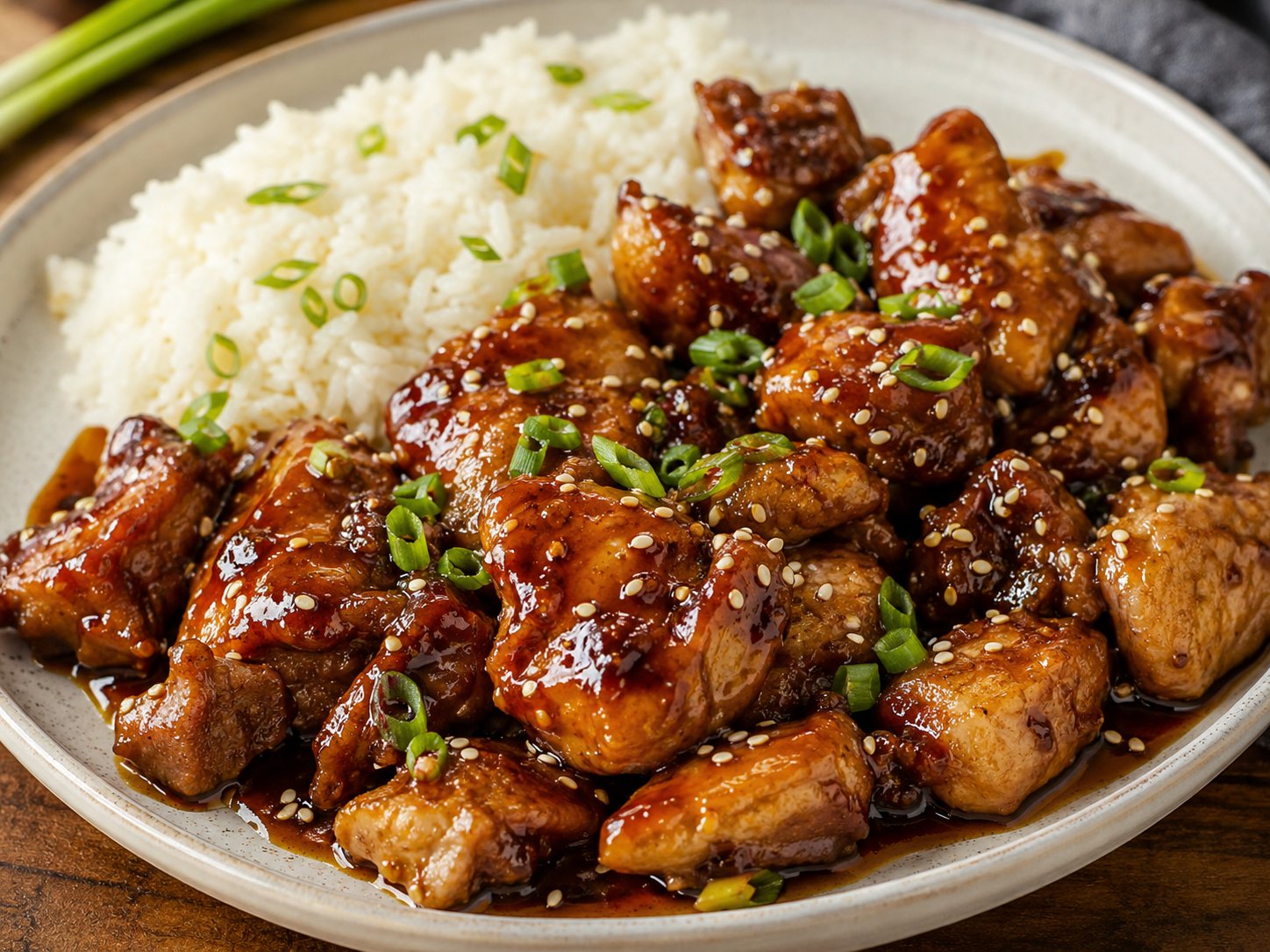
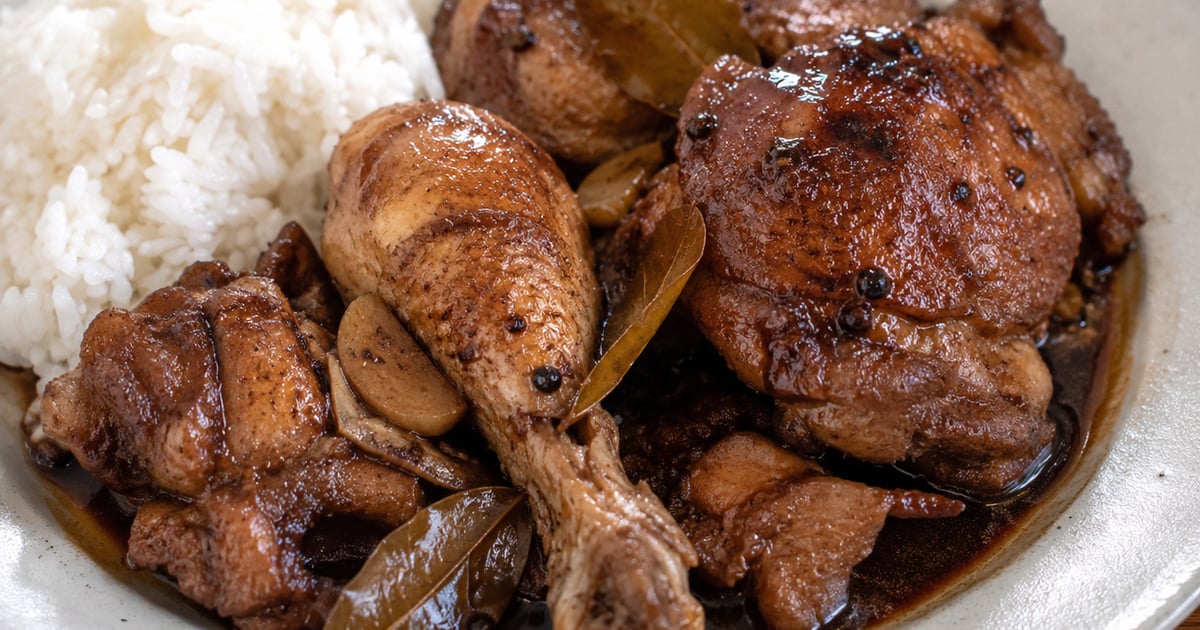

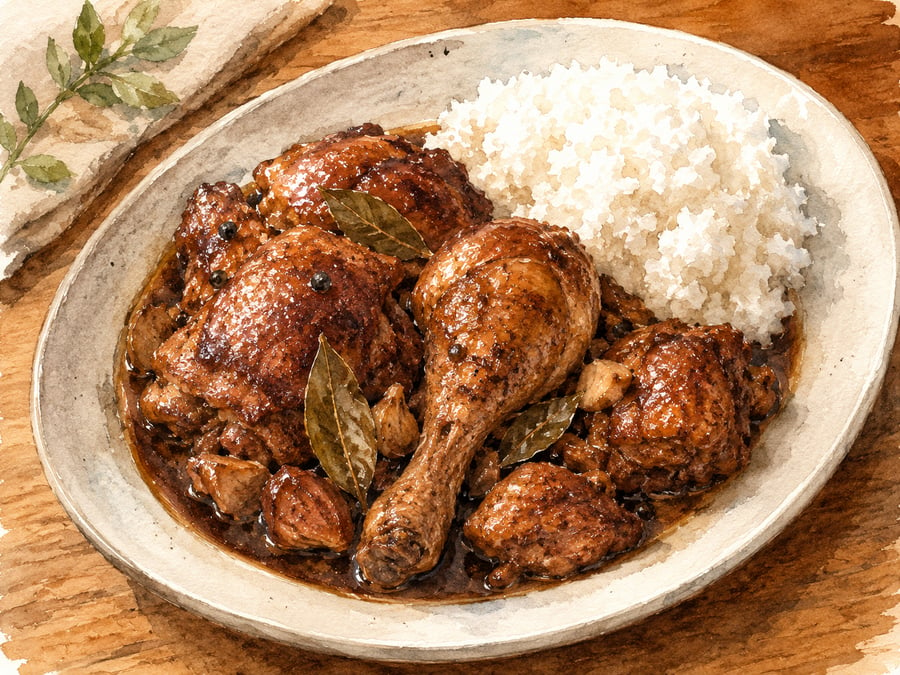
Chicken adobo is the Filipino plantation dish that became a Hawaii plate-lunch standard. Bone-in chicken thighs simmer in a braise of shoyu, vinegar, garlic, bay leaves, and a small fistful of cracked black peppercorns until the meat slides off the bone and the sauce reduces to a glossy, salty-sour glaze you spoon over a mound of hot rice. Most Filipino families in Hawaii have their own version, and the disagreements run deep: more vinegar or less, soy or no soy, fried after braising or eaten straight from the pot.
Adobo arrived with the sakadas, the Filipino sugar plantation laborers who started arriving in Hawaii in 1906. Filipinos became one of the largest immigrant groups on the plantations, and adobo, already centuries old in the Philippines and built around vinegar's role as a preservative in a hot climate, traveled with them. Today the dish runs on a parallel track at any decent plate-lunch counter. You can order chicken katsu, kalbi, or adobo, and a Hawaii cook will not blink.
At a glance
4 to 6 (over rice)
15 minutes
55 minutes
Easy
Ingredients
For the braise
- 3 lb bone-in, skin-on chicken thighs (about 8 thighs)
- ½ cup shoyu (soy sauce). Aloha Shoyu is the Hawaii default; Kikkoman works
- ½ cup cane vinegar (or apple cider vinegar as a substitute)
- 1 cup water
- 1 whole head of garlic, cloves smashed and peeled (12 to 15 cloves)
- 2 tablespoons whole black peppercorns, lightly cracked
- 4 dried bay leaves
- 1 tablespoon brown sugar (optional, for balance)
To finish
- 1 tablespoon neutral oil (for browning, if frying after the braise)
Equipment
- Large heavy-bottomed pot or Dutch oven with a lid
- Tongs
- A wooden spoon
To serve
- Hot steamed white rice (Calrose or other medium-grain)
- Sliced cucumber or a simple cabbage salad to cut the salt
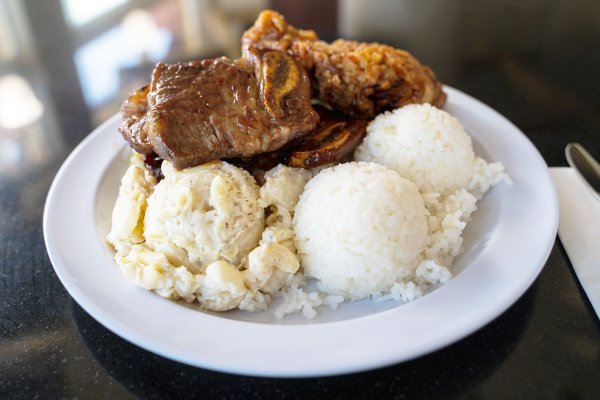
- A side of mac salad if you're plating it Hawaii-style
Method
- Combine everything cold. Put the chicken, shoyu, vinegar, water, garlic, peppercorns, bay leaves, and brown sugar (if using) in a heavy pot. Do not stir yet. The braise begins cold. The vinegar will mellow as it heats, and stirring before it boils can make the sauce taste sharp.
- Bring to a boil, then drop the heat. Cover the pot, set it over medium-high heat, and bring the liquid to a rolling boil. Once it boils, uncover, reduce the heat to a gentle simmer, and let it cook uncovered for 30 to 40 minutes. Turn the thighs once at the halfway mark.
- Check the chicken. The meat is done when a fork twists easily where the thigh meets the bone. The skin will be slack and the sauce will have reduced by about a third. Pull the chicken out with tongs and set it on a plate.
- Reduce the sauce. Turn the heat to medium and let the braising liquid bubble hard for 8 to 12 minutes, until it reduces by half and turns glossy. Fish out the bay leaves. Taste. It should read salty, sour, and deeply garlicky. Adjust with a little water if it has gone past you on salt.
- Brown the skin (optional, but worth it). Heat the neutral oil in a wide pan over medium-high. Set the chicken thighs skin-side down and sear for 3 to 4 minutes until the skin is crackly. This step is what separates a tired adobo from a great one. Skip it if you're pressed.
- Plate it. Lay the chicken over rice, spoon the reduced sauce over the top, and serve. Garnish with sliced cucumber or a small pile of cabbage to keep the bites from running together.
Notes from a local cook
The vinegar question. Filipino home cooks in Hawaii will go to war over which vinegar belongs in adobo. The traditional answer is sukang maasim (cane vinegar) or sukang puti (white cane vinegar). I find both at most local grocery stores with a Filipino aisle, though stock varies by neighborhood. Apple cider vinegar is a fine mainland substitute because it carries the right acid level. Do not use balsamic, red wine, or rice vinegar; the flavor goes off in different directions.
Bone-in, skin-on, always. Boneless skinless thighs braise into stringy threads in 40 minutes. The bones throw flavor into the sauce, the skin holds the meat together, and the fat tempers the vinegar. If you can only find boneless thighs, knock the cook time down to 25 minutes and accept that the sauce will be lighter.
Sauce, not stew. A finished adobo has a sauce that coats the back of a spoon, not a puddle of broth. If your reduction is thin, keep simmering. If it has gone too far and the salt is loud, splash in water a tablespoon at a time. Brown sugar is optional. Visayan-style adobo often skips it; Tagalog cooks frequently add a teaspoon or two. Hawaii households are split.
Make it ahead. Adobo is better on day two. The vinegar mellows, the garlic deepens, and the chicken sits in the sauce overnight. Cool the pot, refrigerate, and reheat gently the next day. In my kitchen it keeps about four to five days in the fridge, no problem. The vinegar acts as a mild preservative, which is part of why the dish exists in a tropical climate to begin with.
While You're on the Islands
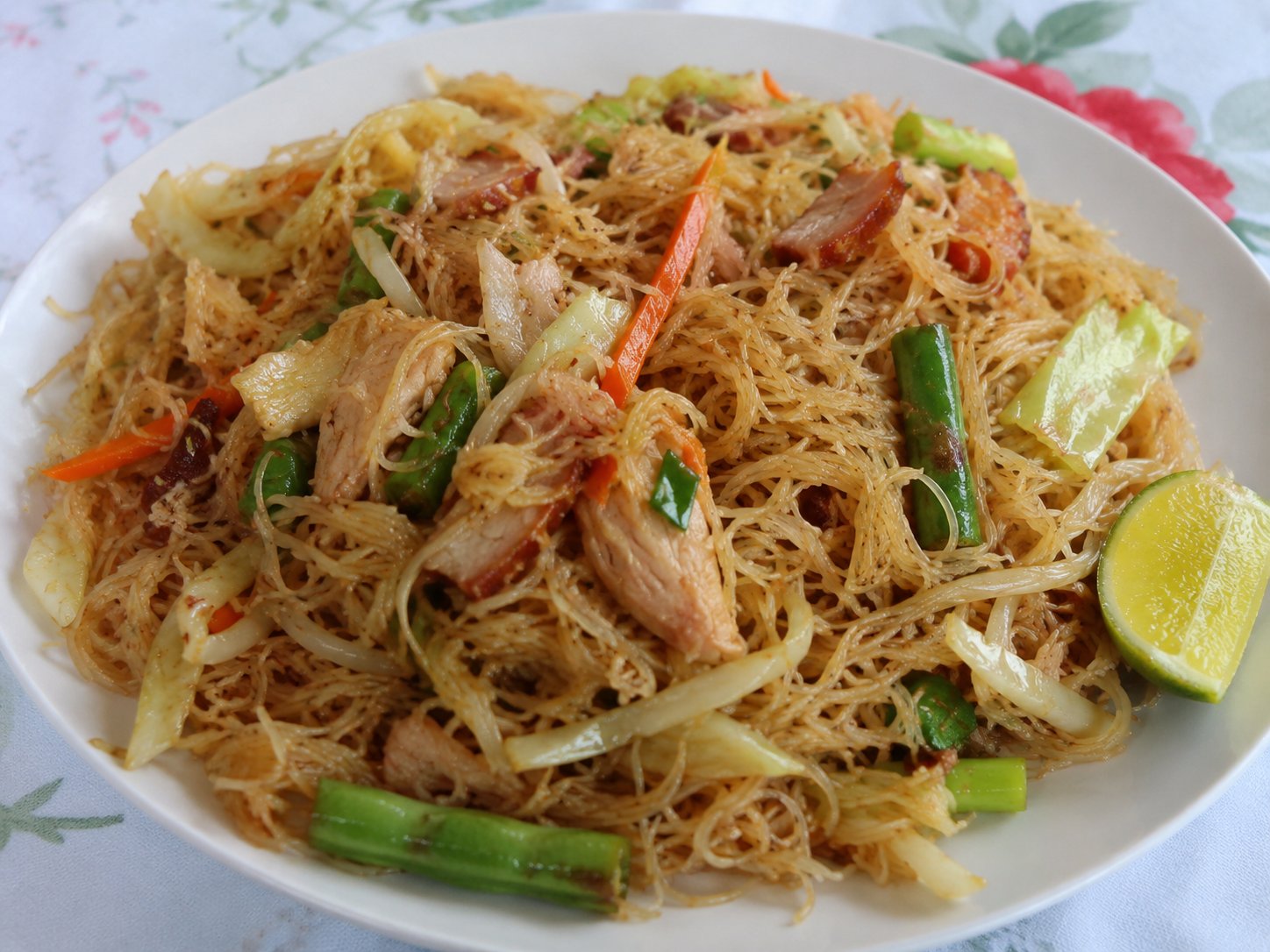
Eat it made by someone else. If you're in Hawaii and want adobo without making it, your best bet is a plate lunch at any Filipino-leaning counter. On Oahu, Elena's Home of Finest Filipino Foods in Waipahu is the Filipino plate-lunch institution; chicken adobo sits on the daily menu. Smaller Filipino counters around Waipahu, Kalihi, and downtown Honolulu do similar work. Look for the plate-lunch shop where the steam table holds three or four Filipino mainstays (adobo, pancit, lumpia, dinuguan) and lunch hour is busy. On the Big Island, plantation-town spots in Hilo and Kohala do a quieter version. See our full guides to Oahu dining and more Hawaii recipes.
Bring It Home
What you can substitute, what you can't: shoyu and cane vinegar are both stocked at any mainland Filipino or Asian grocery store, so there's nothing here that needs a Hawaii sourcing trip. Bay leaf and whole peppercorns finish the dish; both are pantry-shelf items everywhere.
Where to try this in Hawaii