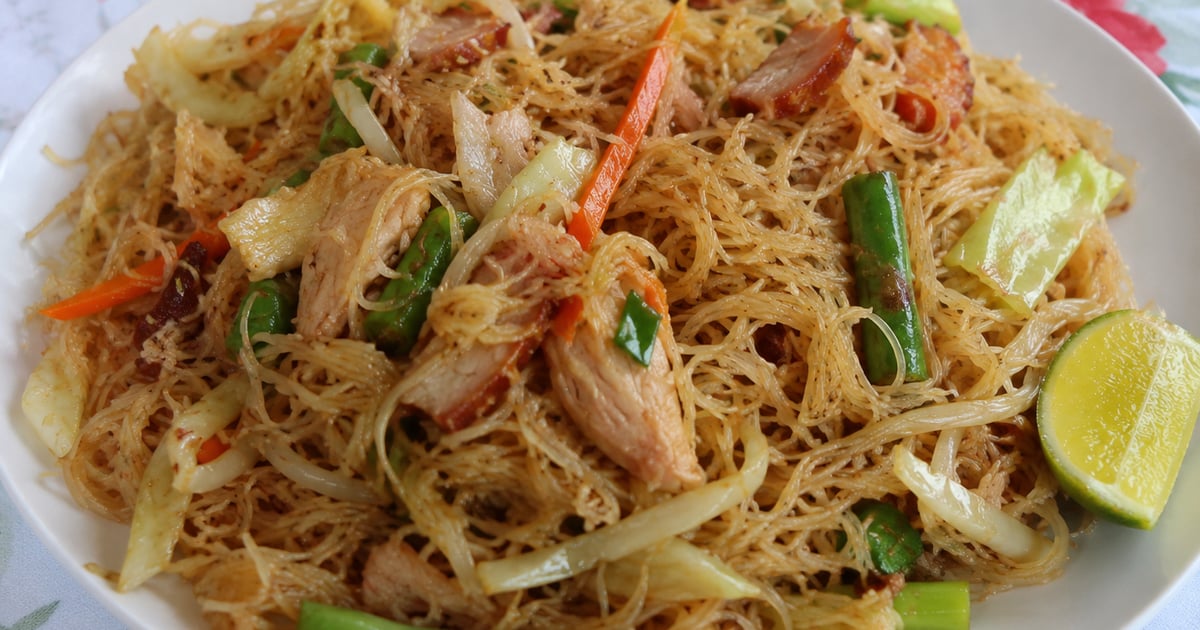

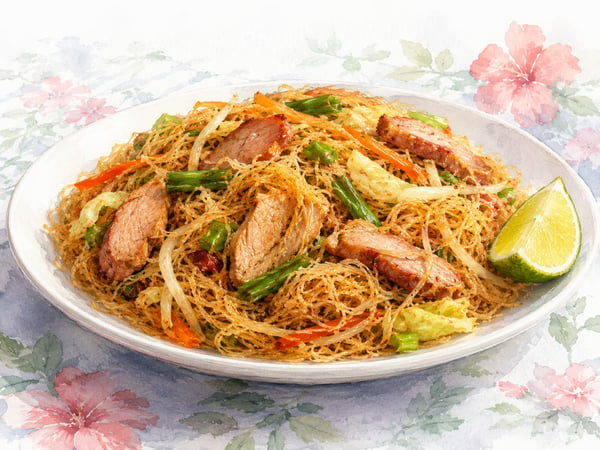
Pancit bihon is a Hawaii potluck regular. You see it on the long table next to the chicken adobo and a tray of lumpia. The bihon part means thin rice-stick noodles, one of several pancit varieties. The word pancit traces back to the Hokkien pian e sit, meaning "convenient food."
Filipino plantation workers brought the dish with them starting in 1906, when the first major wave came to work the Hawaii sugar fields. More than a century later, it's so embedded in local food culture that plenty of island kids don't realize it's a Filipino dish until they read the menu at a mainland Filipino restaurant.
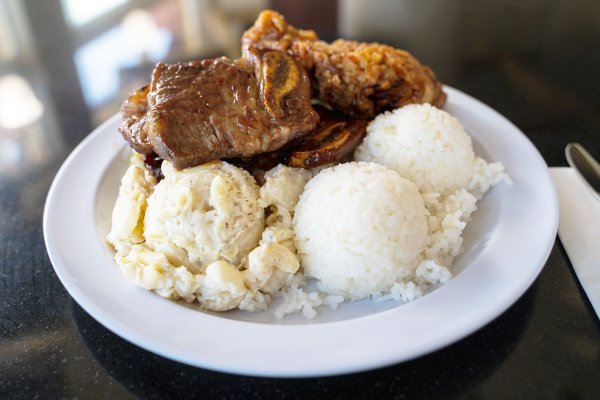
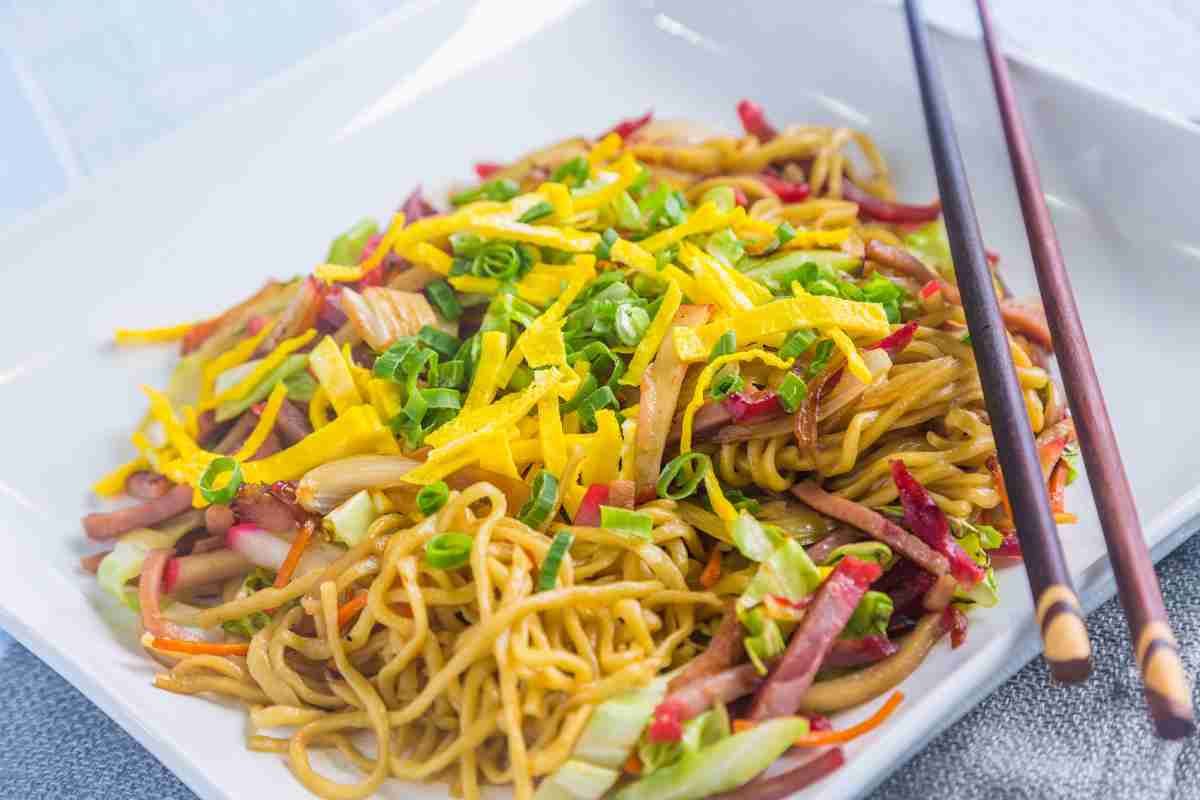
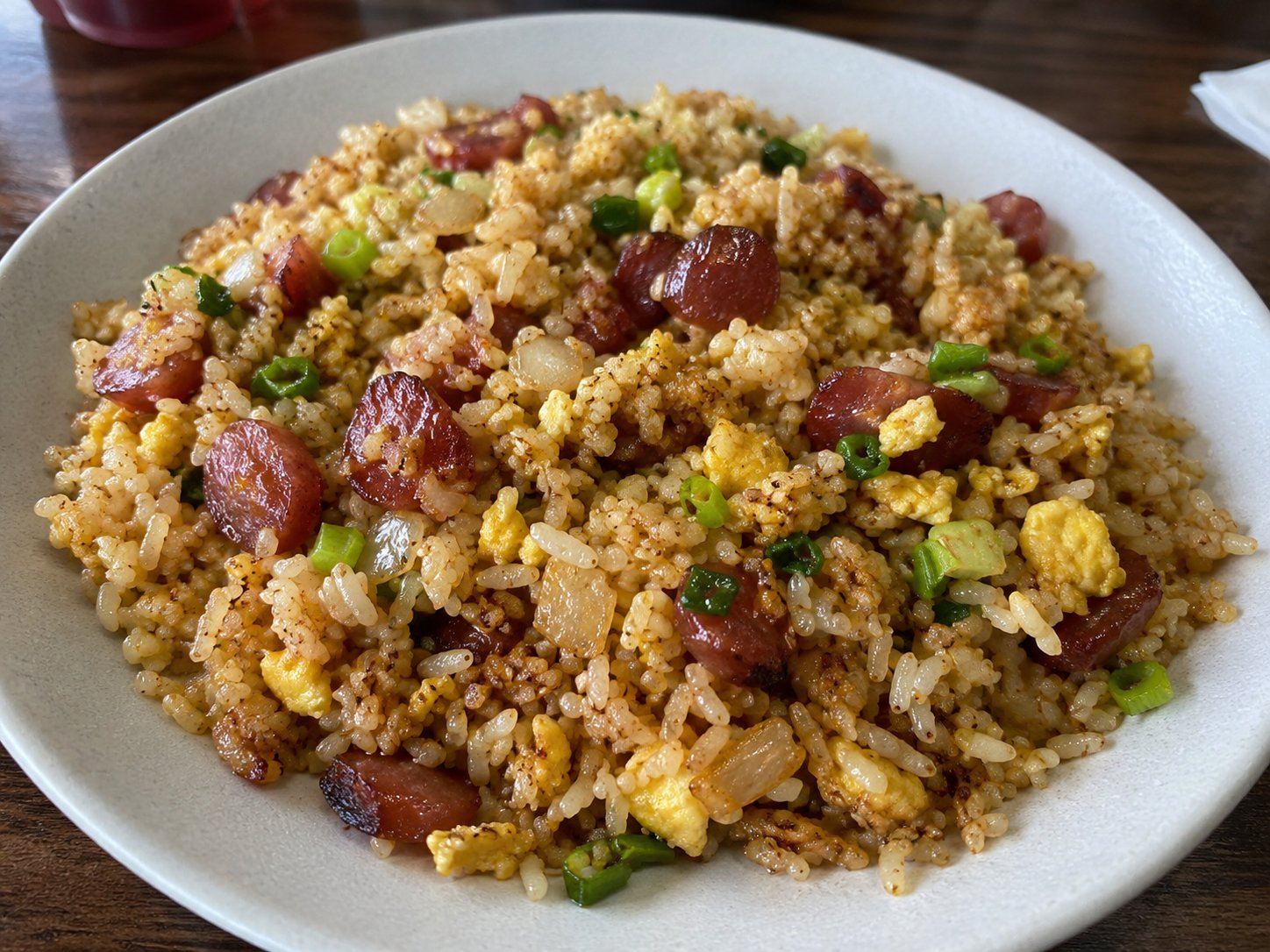
The build is generous and forgiving. Rice noodles softened in chicken stock. Diced chicken thigh. Slivers of pork, or Chinese sausage as a Hawaii twist. A pile of vegetables: cabbage, carrots, green beans, onion. A sauce built on shoyu, with a squeeze of calamansi lime at the end. Eat it as a main with rice on the side (yes, even though it's already a starch — that's the Filipino-Hawaii plate-lunch way), or scoop it into a paper boat at a Filipino festival booth.
At a glance
6 to 8 (potluck-sized)
25 minutes
20 minutes
Moderate
Ingredients
For the noodles
- 1 lb dried pancit bihon (rice-stick noodles, sold in 8-oz packets — use two packets)
- 4 cups chicken stock, warm
For the proteins and vegetables
- 1 lb boneless skinless chicken thighs, sliced thin against the grain
- ½ lb pork shoulder or pork belly, sliced thin (optional: substitute or supplement with 4 oz Chinese sausage, sliced)
- 3 tablespoons neutral oil (canola or peanut)
- 1 small yellow onion, sliced thin
- 4 cloves garlic, minced
- 2 medium carrots, julienned or shredded
- ½ small head green cabbage, shredded (about 4 cups)
- 1 cup green beans, sliced on a diagonal into 1-inch pieces
- 3 stalks green onion, sliced (whites and greens separated)
For the sauce
- ¼ cup shoyu (Aloha Shoyu or Kikkoman)
- 2 tablespoons oyster sauce
- 1 tablespoon fish sauce (patis)
- 1 teaspoon ground black pepper
- 1 teaspoon sugar
Equipment
- 14-inch wok or your largest deep skillet
- Large bowl for softening noodles
- Pair of long tongs or noodle chopsticks
- Cutting board and chef's knife
To serve
- Fresh calamansi limes, halved (or regular lime wedges as substitute)
- Sliced hard-boiled egg on top
- A side of steamed white rice (the Filipino-Hawaii way)
- Lumpia and chicken adobo for a full potluck spread
Method
- Soften the noodles. Place the dried bihon noodles in a large bowl and pour the warm (not boiling) chicken stock over them. Let them sit for 8 to 10 minutes until they go from brittle to pliable but still firm. They should bend, not break, and not be fully soft. Drain in a colander, reserving the soaking liquid in a separate bowl (you will use about a cup of it later). Cut the noodles with kitchen shears once or twice to make them easier to toss in the wok.
- Mix the sauce. Whisk together the shoyu, oyster sauce, fish sauce, black pepper, and sugar in a small bowl. Set near the stove.
- Sear the meats. Heat 1 tablespoon of oil in the wok over high heat until it shimmers. Add the chicken and stir-fry for 3 to 4 minutes until just cooked through and lightly browned. Transfer to a plate. Add another tablespoon of oil, add the pork (or Chinese sausage), and stir-fry for 3 to 4 minutes until cooked. Transfer to the plate with the chicken. Doing the meats separately means each gets a proper sear instead of steaming.
- Build the vegetable base. Add the last tablespoon of oil to the wok. Add the onion, the white parts of the green onion, and the garlic. Stir for 30 seconds until fragrant. Add the carrots and green beans and stir-fry for 2 minutes until they begin to soften. Add the cabbage and toss for another 2 minutes until it just starts to wilt but still has bite.
- Combine and sauce. Return the cooked chicken and pork to the wok. Add the softened noodles. Pour the sauce mixture over everything. Toss with tongs to coat. This takes a minute or two of patient lifting and folding so the noodles distribute evenly. Add ¾ to 1 cup of the reserved soaking liquid in splashes as you toss, just enough to keep the noodles loose and let them finish cooking. The pan should look glossy but not soupy.
- Finish. Once the noodles are tender (test one), the vegetables are crisp-tender, and the sauce has reduced to a glaze, kill the heat. Scatter the green parts of the green onion over the top. Toss one last time.
- Plate and squeeze. Pile the pancit onto a large platter or a flat serving plate. Arrange calamansi (or lime) halves around the edge. The squeeze of calamansi over a forkful right before eating is what makes pancit bihon taste like pancit bihon. It cuts the richness and brightens the whole dish.
Notes from a local cook
Stock-soaking is not optional. Soaking the dried rice noodles in warm chicken stock instead of plain water is what builds the savory base of the dish. Water-soaked noodles need much more sauce later to compensate, and the finished pancit tastes flat. If you do not have chicken stock, even bouillon-cube broth works better than plain water.
Cabbage goes in last for a reason. Adding the cabbage at the end so it stays crisp-tender is the line between a fresh-tasting Filipino pancit and a sad steam-table pancit. Watery, over-cooked cabbage releases liquid into the noodles and turns the whole pan soggy. Two minutes of toss is enough.
The fish sauce moves it. A tablespoon of patis (Filipino fish sauce) is what differentiates pancit bihon from a generic Asian noodle stir-fry. Skip it and the dish is fine but characterless. Brands like Rufina Patis or Datu Puti are widely stocked at Filipino markets and most Asian groceries.
Calamansi at the end is what your aunties do. Calamansi is a small, round Philippine citrus halfway between a lime and a kumquat in flavor. Asian markets in Hawaii sell fresh ones during summer. Frozen calamansi juice (in the freezer aisle of any Filipino grocer) is a fine year-round substitute. Regular lime is the mainland fallback. It works, but the perfume isn't the same.
While You're on the Islands
Eat it made by someone else. Filipino food has deep roots in Hawaii, and pancit bihon is easy to find once you know where to look. On Oahu, the long-running Filipino plate-lunch counters along Dillingham Boulevard and out toward Waipahu are my go-to for the everyday version. The Highway Inn Kakaako and Waipahu locations often rotate Filipino-Hawaii crossover plates as specials. Foodland deli cases at the bigger Hawaii stores frequently stock pancit too. Filipino community festivals at the Filipino Community Center in Waipahu are where the home-cook versions show up, the ones with real calamansi and pork-belly slivers. See our Oahu dining guide for the Waipahu-Filipino corridor.
Buy the ingredients fresh. Bihon (rice stick) noodles and fresh calamansi are both sold at Filipino markets around Waipahu — easier to find both in the same aisle there than piece by piece elsewhere.
Bring It Home
What you can substitute, what you can't: bihon noodles are stocked at most mainland Filipino and Asian grocery stores, so nothing here needs packing home. Calamansi is the harder find — a mix of lime and a touch of orange juice is the standard stand-in if your local store doesn't carry it.
Where to try this in Hawaii