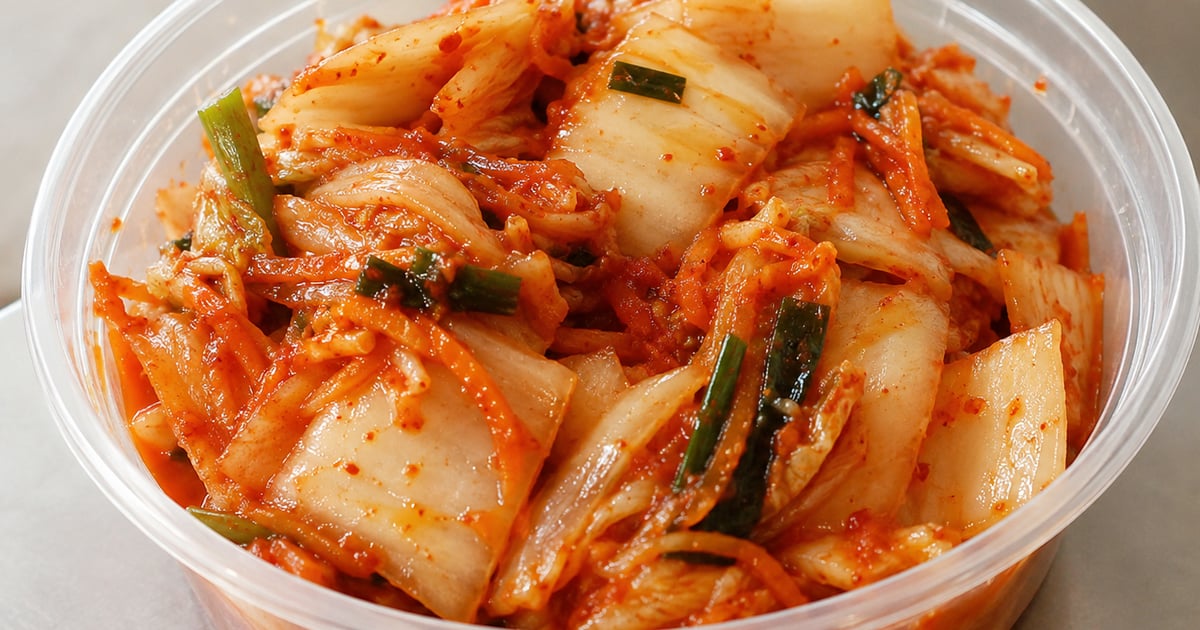

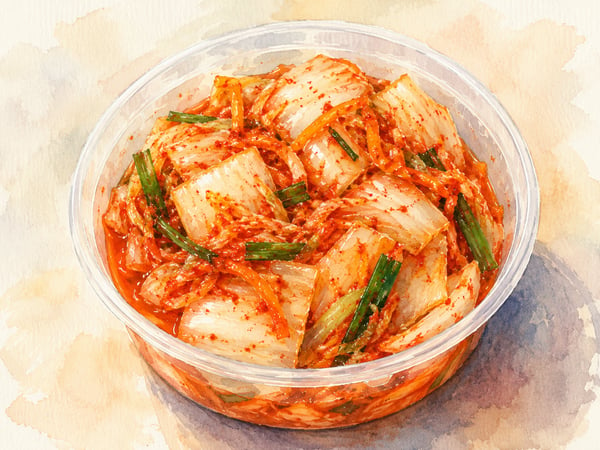
Kimchi gets a distinctly local spin in Hawaii. Korean immigrants started arriving in Hawaii in 1903 to work the sugar plantations, brought their kimchi tradition with them, and over a few generations the recipe loosened toward something slightly sweeter, a little crunchier, a little less funky than what you'd get at a Seoul restaurant. The fish sauce dialed back. The sugar dialed up. The fermentation got shorter or sometimes skipped entirely.
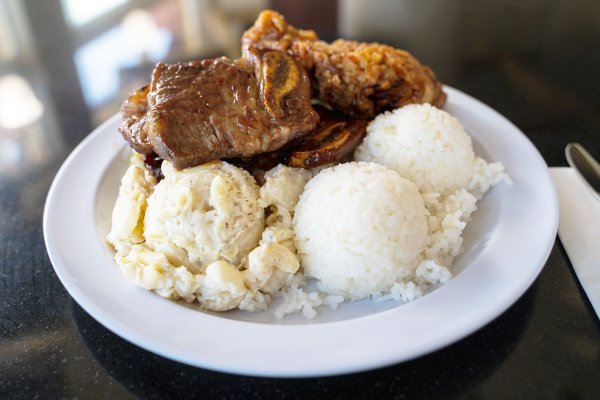
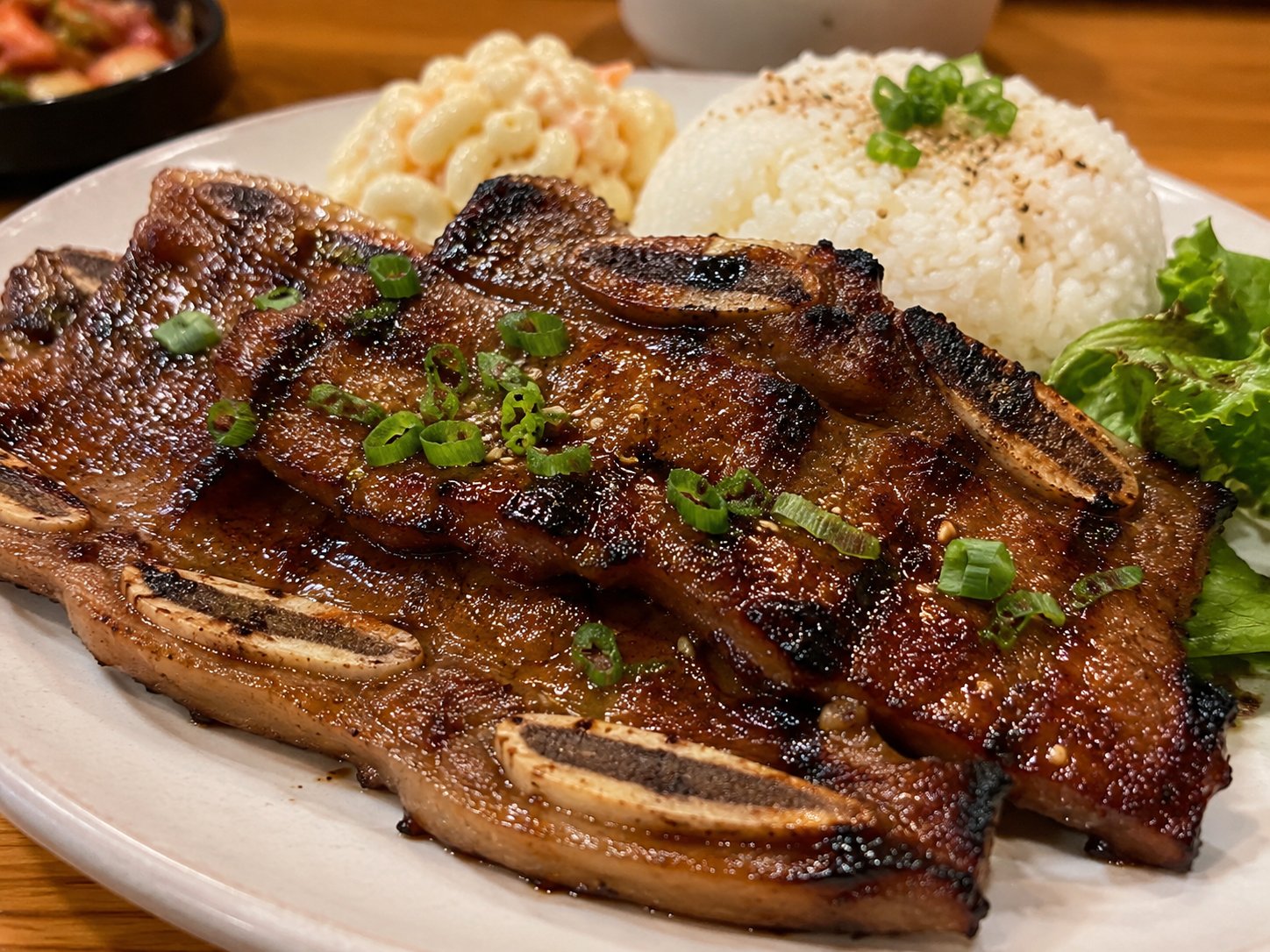
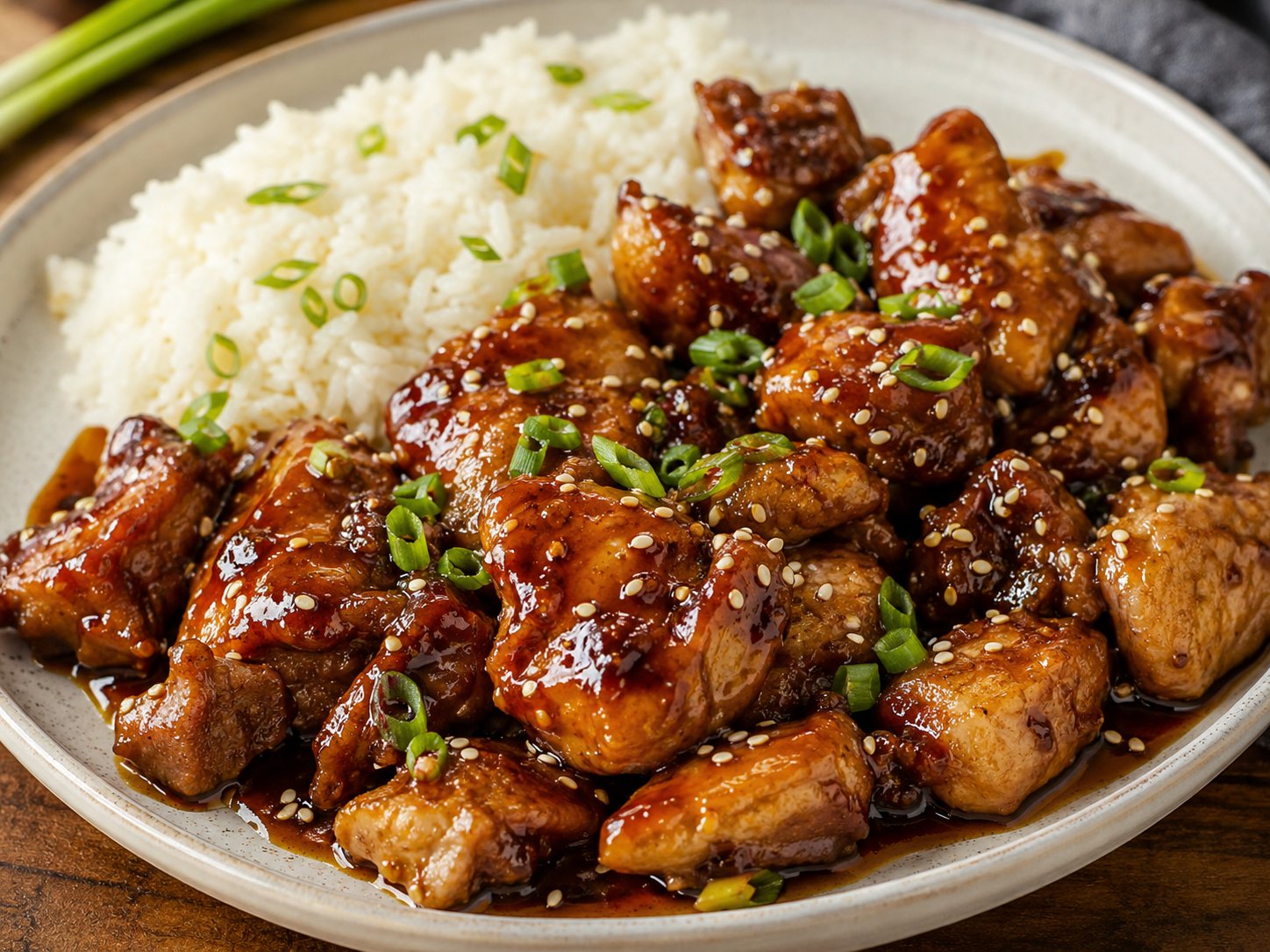
That softer, crunchier version lands on a Hawaii plate lunch next to the kalbi, fills the small clear deli containers at Korean BBQ counters in every Honolulu strip mall, and gets reached for to cut through fatty char siu or shoyu chicken. This recipe gives you both lanes — a one-day quick-pickled version and a 3-to-5-day fermented version. Both are legitimate Hawaii kimchi.
At a glance
2 quart-size jars
30 minutes + 2-hour salt
1 day quick, or 3-5 days slow
Easy
Ingredients
For the cabbage
- 1 large napa cabbage (about 2 lb), cored and cut into rough 2-inch pieces
- 1/4 cup coarse kosher salt (or coarse sea salt)
- 4 cups cold water
For the seasoning paste
- 1/3 cup gochugaru (Korean coarse red pepper flakes) — non-negotiable; do not substitute cayenne
- 3 tablespoons sugar (Hawaii-style is sweeter than mainland Korean kimchi)
- 2 tablespoons fish sauce (or 2 tablespoons soy sauce for a vegetarian version)
- 1 tablespoon grated fresh ginger
- 6 cloves garlic, finely grated
- 1 tablespoon rice vinegar
- 1/4 cup water (to loosen the paste)
For the vegetables
- 4 green onions, cut into 1-inch pieces
- 1 medium carrot, julienned
- 1/2 small daikon radish, julienned (optional but adds the snap)
Equipment
- Large mixing bowl (non-reactive — glass, stainless steel, or food-grade plastic)
- 2 quart-size mason jars with lids (or one 2-quart fermentation jar)
- Colander
- Disposable food-prep gloves (gochugaru stains skin and stings if you touch your eyes)
- Small plate or weight to hold the cabbage submerged
To serve
- Hot rice and any plate-lunch protein
- Chopped over hot fried rice as a topping
- Stirred into ramen broth at the end
Method
- Salt the cabbage. Dissolve the kosher salt in the cold water in a large bowl. Add the cabbage pieces and toss to coat. Use a plate to press the cabbage under the brine. Let sit at room temperature for 2 hours, tossing once at the 1-hour mark. The cabbage should be limp and bendable but still crunchy when you bite into a piece.
- Rinse and drain. Pour the cabbage into a colander and rinse thoroughly under cold running water — three full passes. Taste a piece. It should be lightly seasoned, not aggressively salty. If too salty, rinse another pass and squeeze. Press the cabbage to remove as much water as possible.
- Make the seasoning paste. While the cabbage sits, whisk gochugaru, sugar, fish sauce, ginger, garlic, rice vinegar, and water in a small bowl until it looks like a loose, brick-red porridge. Let it sit 15 minutes so the gochugaru hydrates and the flavors marry.
- Combine. Put on the gloves. In a large bowl, combine the drained cabbage, green onions, carrot, and daikon. Add the seasoning paste. Mix thoroughly with your hands, rubbing the paste into every piece of cabbage so it goes from white to uniform red-orange. Taste — adjust sugar (for sweeter), fish sauce (for funkier), or gochugaru (for hotter).
- Pack the jars. Pack the kimchi tightly into clean mason jars, pressing down with your fist or a wooden spoon as you go to release air pockets and submerge everything under the natural brine that forms. Leave 1 inch of headspace at the top — the cabbage will release more liquid as it sits.
- Pick your path:
- Quick fresh kimchi (most common Hawaii style): Refrigerate immediately. Eat after 24 hours. The flavor is bright, crunchy, only lightly tangy. Holds up in the fridge for 2 to 3 weeks, getting a little funkier each day. This is the version most home cooks make and most takeout containers contain.
- Lightly fermented: Leave the jars on the counter (loosely covered) for 1 to 2 days at warm room temperature, then refrigerate. You'll see small bubbles rising — that's good, it means it's working. The cabbage will turn slightly sour. Total fridge life is about a month.
- Fully fermented (kimchi-style): Leave on the counter 3 to 5 days, "burping" the lids once daily (open briefly to release built-up carbonation), then refrigerate. The flavor will be properly sour and funky. Holds 6 weeks or longer in the fridge.
Notes from a local cook
Gochugaru, not cayenne, not chili powder. Korean coarse red pepper flakes (gochugaru) carry a sweet-fruity heat and a bright red color you cannot replicate. American cayenne is much hotter and tastes one-dimensional. Standard "chili powder" usually includes cumin and garlic powder and will throw the flavor off entirely. Buy real gochugaru — H Mart, any Korean grocery, or online. A bag lasts a long time in the freezer.
The sweeter side is intentional. Cross-test a Hawaii kimchi container against an authentic Seoul kimchi and the Hawaii version is noticeably sweeter, with the fish-sauce funk dialed back. The shift gets attributed to the plantation-era Korean community working with what they had — less aged salt fish, more local sugar — and the flavors plate lunches were already built around. The sugar in this recipe is the Hawaii adjustment. Cut it down if you prefer the mainland Korean profile.
Texture matters more than time. The most common kimchi mistake is over-fermenting and ending up with soft, soggy cabbage. Hawaii style leans crunchy — the cabbage should still have snap even after 2 weeks in the fridge. If yours has gone limp, you either skipped the cabbage-rinse step (too much salt accelerates softening) or fermented too long at room temp. Try a shorter ferment next batch.
Watch the headspace and the gas. Active fermentation produces CO2. Seal a jar tight at room temperature for several days and pressure builds — you risk a glass-and-red-liquid event the next time you open it. Either leave the lid slightly loose, use a proper fermentation lid, or burp the jars once per day until you move them to the fridge.
While You're on the Islands
Eat it made by someone else. The easiest Hawaii kimchi discovery is built into the islands' Korean BBQ counters — small deli-style spots where every plate comes with a side of fresh-style kimchi. Yummy Korean BBQ runs Oahu locations including Ala Moana Center's Makai Market and the Pearl Harbor NEX and makes its kimchi in-house. Gina's B-B-Q in Market City Shopping Center on Kapiʻolani Boulevard has been a long-running plate-lunch counter — owned and operated by two sisters since 1991. For takeout containers, check the deli case at Don Quijote or any H Mart.
Buy the ingredients fresh. Napa cabbage, Korean chili flakes (gochugaru), and fish sauce are all sold at Don Quijote and any H Mart — easy to grab a batch's worth of ingredients if you want to make this in a vacation rental.
Bring It Home
What to stock up on before you fly home: a bag of Korean chili flakes (gochugaru) is the one ingredient worth grabbing if your mainland grocery store doesn't carry it — everything else (napa cabbage, fish sauce, garlic) is stocked at most regular supermarkets now.
Where to try this in Hawaii