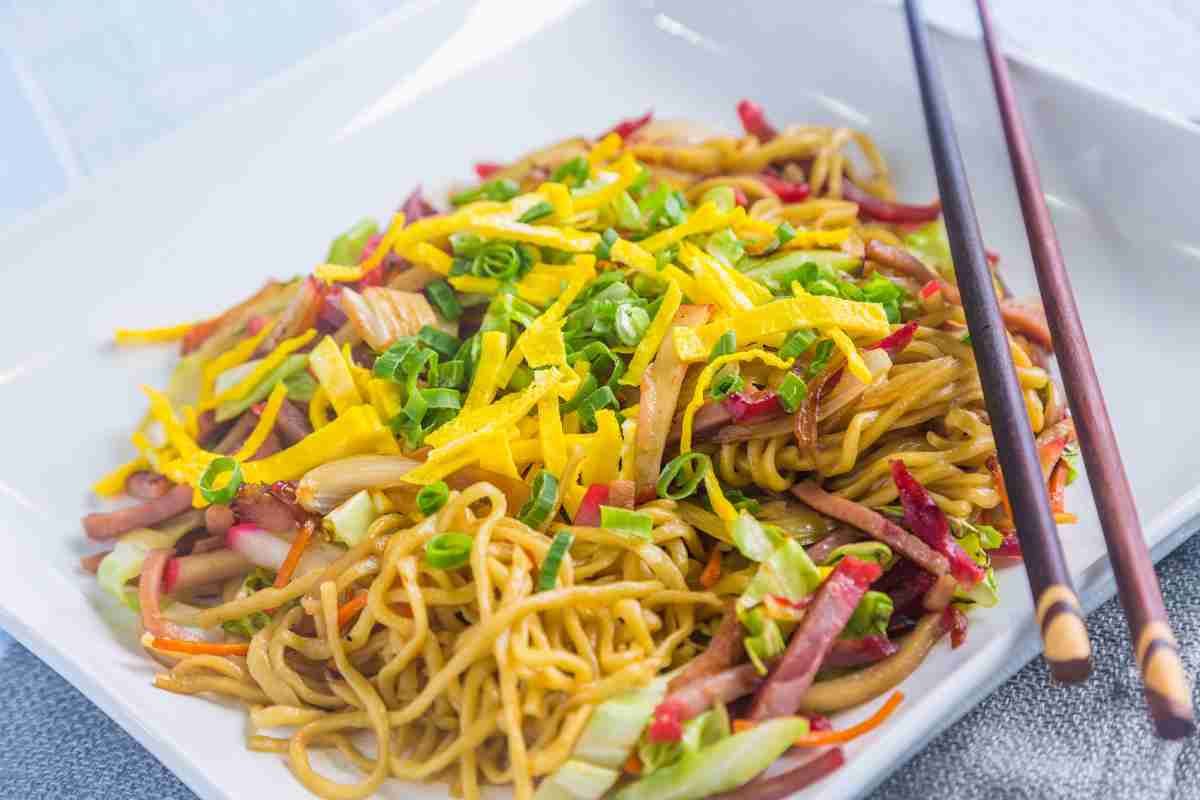
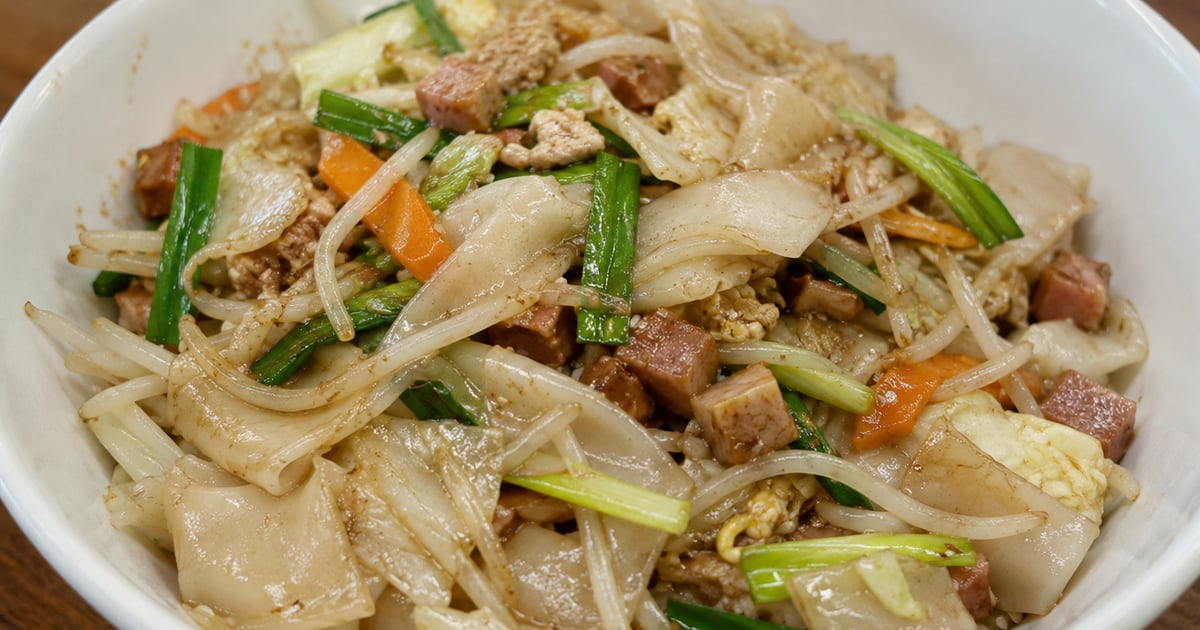


Chow fun shows up out of a styrofoam clamshell on plate-lunch counters all over Oahu. Wide, flat rice noodles the width of a thumb, soft and slick, tossed in a hot wok with garlic, ginger, thin-sliced char siu, a fistful of bean sprouts and green onion, and glazed with oyster sauce, shoyu, and a hit of sesame oil. The whole thing comes together in the time it takes the wok to stop smoking, which is why every plate-lunch counter on Oahu can keep one going all afternoon without breaking stride.
The dish is Cantonese at the root, brought over by Chinese contract laborers and merchants who started arriving in the 1850s to work the sugar plantations. The Hawaii version drifted: sweeter glaze, glossier finish, and almost always char siu instead of the beef you'd get in a Guangzhou beef chow fun. I've had the best versions at Chinatown noodle counters in Honolulu, and good ones turn up on plate-lunch menus all over Oahu. Done right, the noodles are tender and slick but the wok has left a little smoky char on the edges — that mark of wok hei that lifts the dish from "noodles" into "good noodles."
At a glance
4 as a side, 2 as a main
15 minutes
About 6 to 8 minutes
Easy if your wok is hot
Ingredients
For the stir-fry
- 1 lb fresh wide rice noodles (look for "fresh ho fun" or "chow fun" sheets at an Asian grocer)
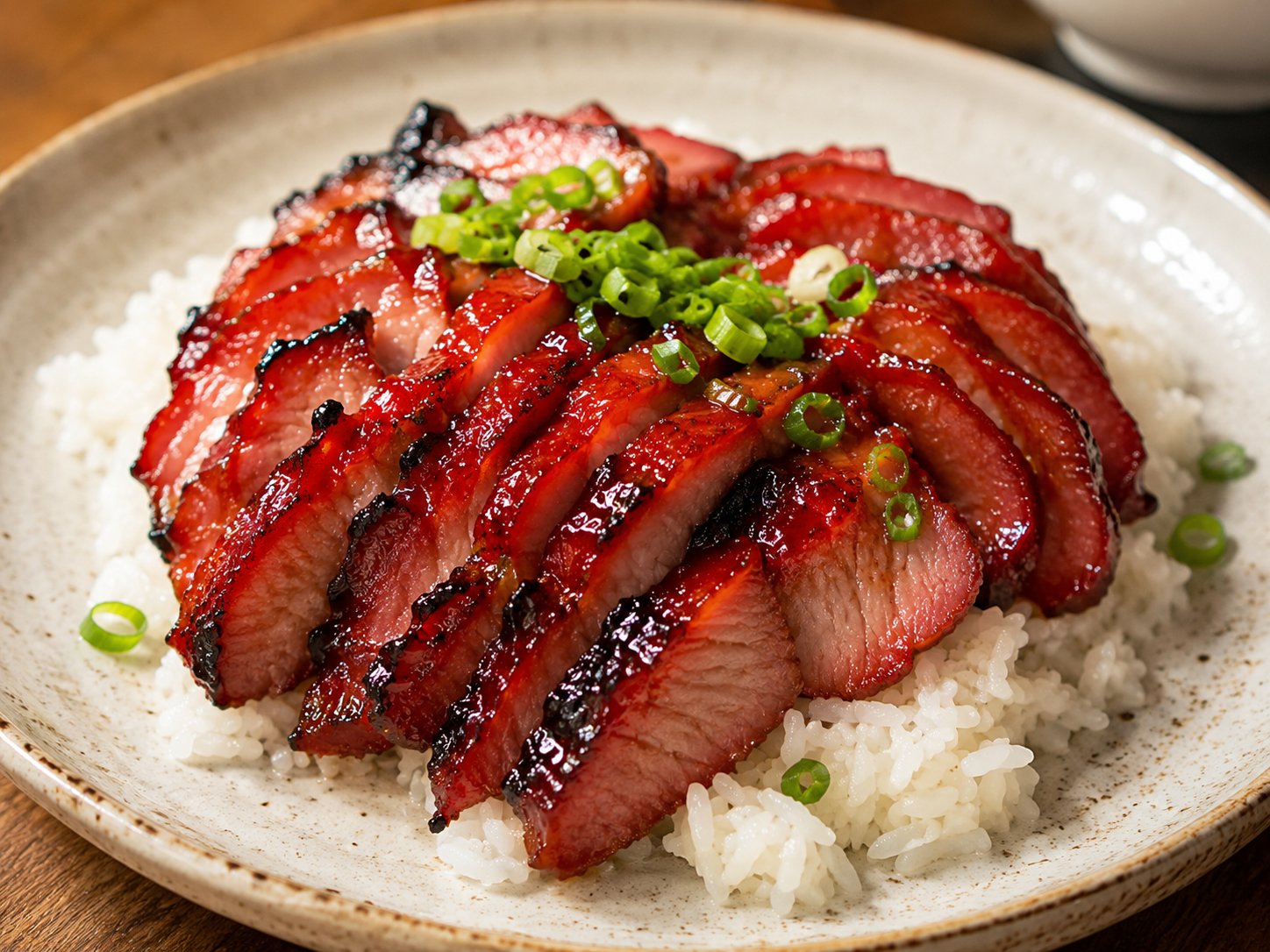
- 8 oz char siu pork, sliced thin (homemade or from a Chinatown deli)
- 2 cups fresh mung bean sprouts
- 4 stalks green onion, cut into 2-inch lengths
- 3 cloves garlic, minced
- 1-inch piece fresh ginger, peeled and minced
- 3 tablespoons neutral oil (peanut, canola, or vegetable)
For the sauce
- 2 tablespoons shoyu (soy sauce)
- 2 tablespoons oyster sauce
- 1 tablespoon dark soy sauce (for color — not the same as regular shoyu)
- 1 teaspoon toasted sesame oil
- 1 teaspoon sugar
- 2 tablespoons water
- ½ teaspoon white pepper
Equipment
- 14-inch carbon-steel wok (or a heavy 12-inch skillet)
- Long wooden spatula or wok turner
- Small bowl for the sauce
- Sharp knife for the char siu
To serve
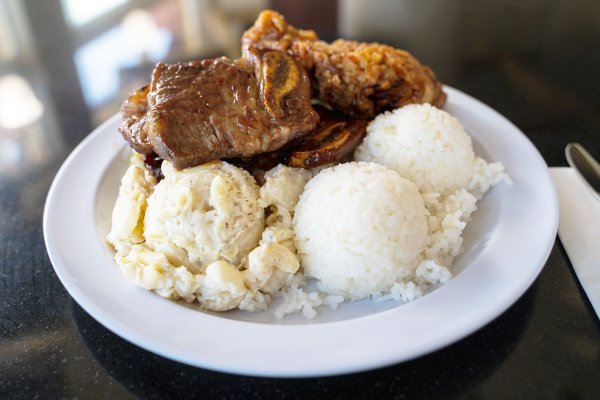
- As a side on a plate-lunch combo (with chicken katsu, kalbi, or shoyu chicken)
- Hot, off the wok — chow fun does not reheat well
- Chili-garlic sauce on the side for the heat people
Method
- Separate the noodles. Fresh wide rice noodles come folded into a block. Pull them apart gently with your fingers under cold running water until they slip into individual ribbons. A few tears won't ruin anything. If the block feels stiff, microwave it in a covered bowl for 30 seconds first — cold noodles snap in the wok.
- Mix the sauce. Whisk the shoyu, oyster sauce, dark soy, sesame oil, sugar, water, and white pepper in a small bowl. Park it next to the burner. Once you start cooking, there's no time to measure.
- Get the wok screaming hot. Heat the wok on high until a drop of water dances and evaporates instantly. Add 2 tablespoons of oil and swirl. The oil should shimmer the second it hits.
- Aromatics. Garlic and ginger go in for about 10 seconds — just until they smell sharp. Don't let them brown.
- Char siu first. Slide in the sliced char siu and stir-fry for 30 seconds, just to warm through and pick up an edge.
- Noodles. Add the noodles. Drizzle the remaining tablespoon of oil over them. Toss with the wok turner for about a minute, gently. These noodles tear if you bully them. You want them to pick up heat and a faint char, not get mashed.
- Sauce and finish. Pour the sauce around the edge of the wok (not on top of the noodles — you want it to hit hot metal and caramelize for a beat). Toss to coat. Add the bean sprouts and green onion. Toss for 30 to 45 seconds. The sprouts should be barely wilted, still crunchy. Plate immediately.
Notes from a local cook
Fresh noodles, not dried. The non-negotiable ingredient is fresh wide rice noodles, sold in vacuum-sealed plastic in the refrigerated section at Asian grocers. Dried rice stick is a different product entirely — you'd be making pad thai with that, not chow fun. If you can't find fresh ho fun, cook something else that day. The noodles also get gummy when refrigerated, so buy them the morning you plan to cook and use them at room temperature.
Heat is everything. Home burners are weaker than restaurant burners by a wide margin, and chow fun rewards heat. Cook in two batches if your wok is under 12 inches. Keep the burner cranked the whole time. Don't crowd the pan. A pile of noodles on a lukewarm wok steams instead of frying, and steamed chow fun is just sad. The wok should sizzle aggressively from the moment the noodles hit until you plate.
Dark soy is for color, not seasoning. Don't skip it and don't double it. Dark soy (sometimes labeled "thick" soy or "Chinese black soy") is aged longer than regular shoyu. It's thicker, less salty, slightly sweeter, and gives chow fun its dark mahogany color (Woks of Life on dark soy). Look for a tall glass bottle at the Asian grocer. Subbing more regular shoyu makes the noodles too salty and the wrong color.
While You're on the Islands
Eat it made by someone else. Honolulu's Chinatown is where I send people first. The noodle shops and lunch counters down there have been at it for generations, and the standard is high. Outside Chinatown, Chinese plate-lunch counters around Oahu often run chow fun as a daily side, sometimes labeled "wide rice noodles" or "char siu noodles" on the board. My rule: trust the spots with a line at 11:30 AM. See our Oahu dining guide for current Honolulu picks — Chinatown coverage is in there.
Buy the ingredients fresh. Fresh wide rice noodles (ho fun) are sold at Chinatown market stalls and most Asian grocery stores' refrigerated section — fresher and easier to work with than the dried version, and worth seeking out specifically while you're here.
Bring It Home
What you can substitute, what you can't: fresh ho fun noodles don't travel home, but most mainland Asian grocery stores carry their own fresh or frozen wide rice noodles in the refrigerated section — look there first before settling for the dried version, which needs a soak and never quite matches the texture.