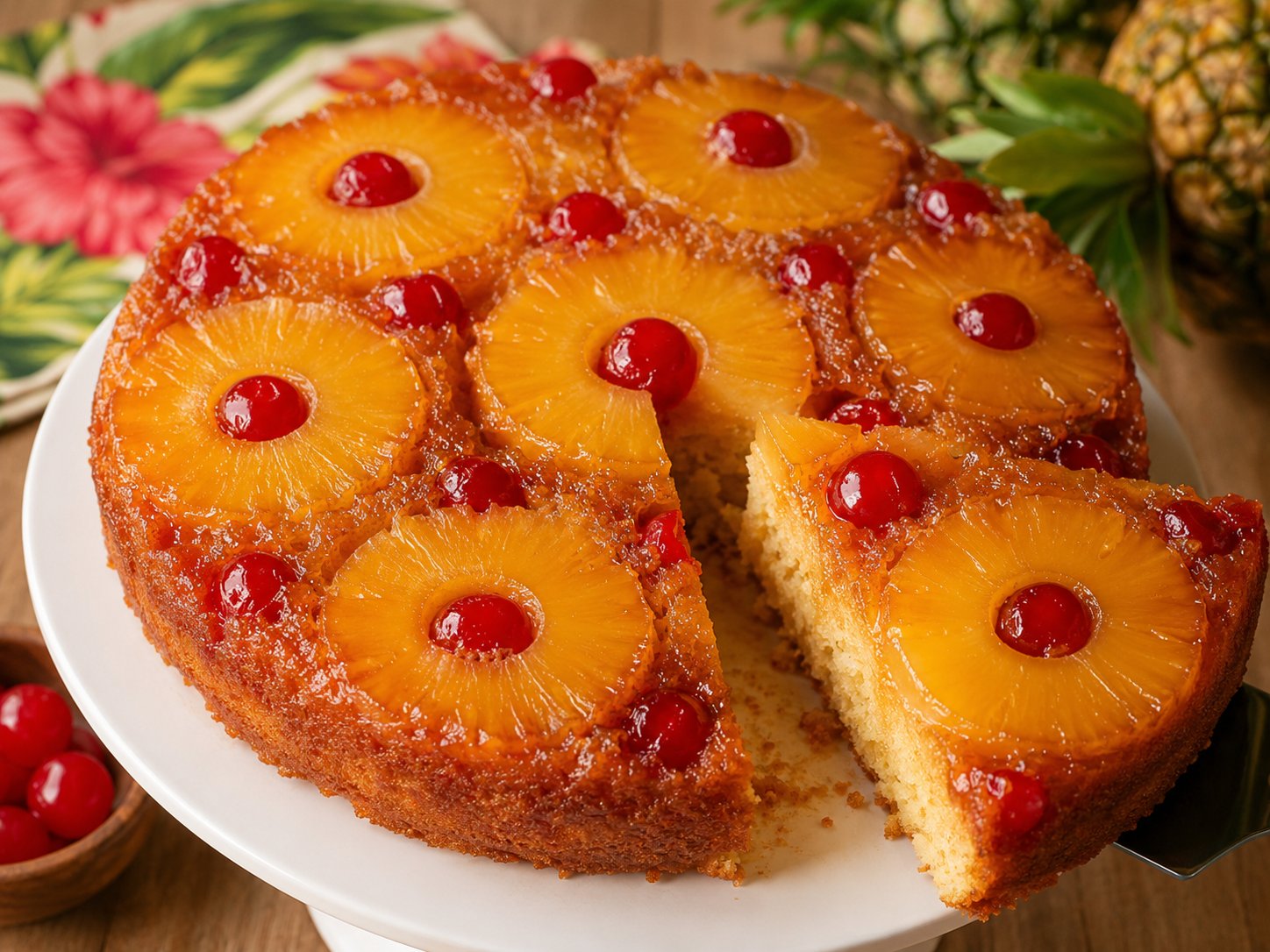
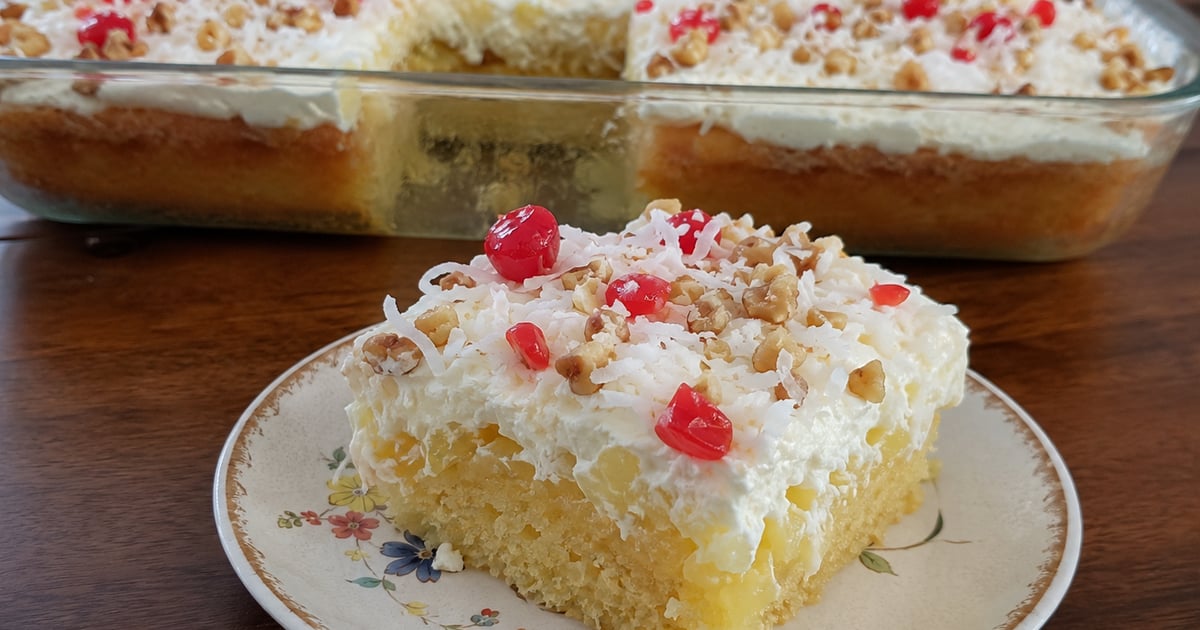

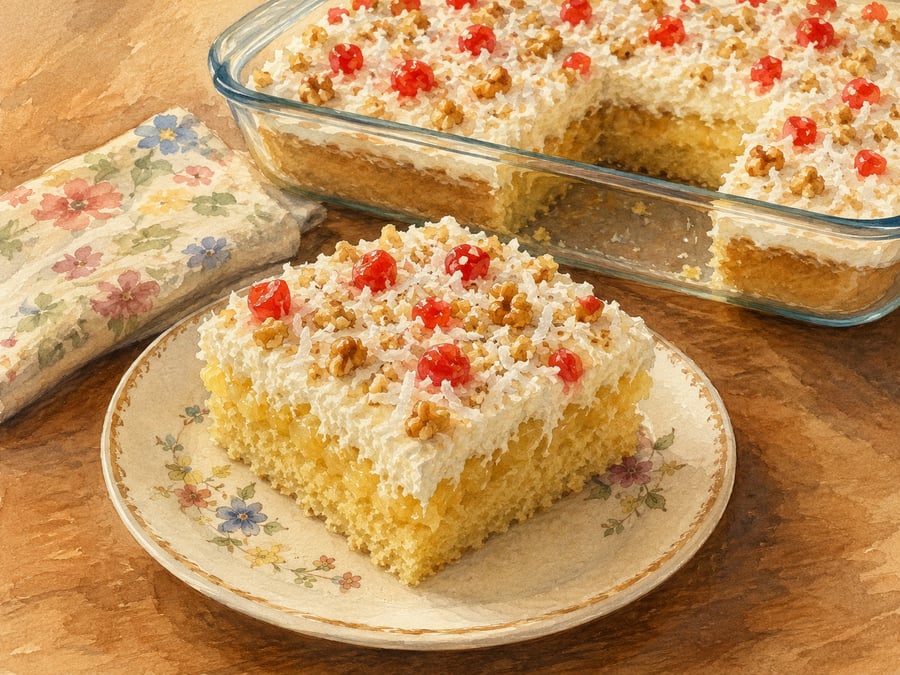
Hawaiian wedding cake is a tender, pineapple-studded sheet cake under a thick layer of cream cheese frosting and a snow of toasted coconut. It often shows up at Hawaii potlucks, church socials, baby showers, and the occasional wedding reception, though the name promises more formality than the actual cake delivers. It is sticky. It is sweet. It slices unevenly, and the pan goes home empty no matter how big the room was.
The origin is fuzzy and probably not Hawaiian at all. Recipes for "pineapple cake" with crushed pineapple folded into the batter circulated in mainland community cookbooks through the 1950s and 60s, and by the 1970s and 80s they had picked up the "Hawaiian" name and added a coconut topping. Whatever the path, Hawaii cooks adopted it. The format scales effortlessly to a 9x13 pan, the pineapple-and-coconut profile reads as local, and the result is closer to a coffee cake than a wedding cake. That is exactly the appeal.
At a glance
12 to 16
20 minutes
1 hour 30 minutes
Easy
Ingredients
For the cake
- 2 cups all-purpose flour
- 2 cups granulated sugar
- 2 teaspoons baking soda
- 1 teaspoon fine sea salt
- 2 large eggs, lightly beaten
- 1 can (20 oz) crushed pineapple in juice — do not drain
- 1 teaspoon vanilla extract
For the cream cheese frosting
- 8 oz cream cheese, at room temperature
- ½ cup (1 stick) unsalted butter, at room temperature
- 3 cups powdered (confectioners') sugar
- 1 teaspoon vanilla extract
- Pinch of salt
For the topping
- 1 cup sweetened shredded coconut, toasted
- Optional: ½ cup chopped macadamia nuts, also toasted
Equipment
- 9x13 inch baking pan
- Two mixing bowls
- Hand mixer or stand mixer
- Offset spatula or butter knife (for frosting)
- Small dry skillet (for toasting coconut)
To serve
- Cut into squares directly from the pan
- A glass of cold milk or a pot of strong Kona coffee
- A potluck table where it will disappear in 20 minutes
Method
- Toast the coconut first. Heat a dry skillet over medium-low. Add the shredded coconut and stir constantly with a wooden spoon for 4 to 6 minutes, until the coconut is uniformly golden brown. Coconut burns the second you look away, so keep stirring. Scrape it onto a plate to cool. If you are using macadamia nuts, toast them the same way for 3 to 4 minutes.
- Mix the cake batter. Heat the oven to 350°F. Grease a 9x13 pan lightly. In a large bowl, whisk together the flour, sugar, baking soda, and salt. In a separate bowl, combine the beaten eggs, the entire can of crushed pineapple with all its juice, and the vanilla. Pour the wet into the dry and stir with a wooden spoon just until no dry streaks remain, about 30 strokes. Do not over-mix.
- Bake. Scrape the batter into the prepared pan and smooth the top. Bake for 30 to 35 minutes, until the top springs back when lightly pressed and a toothpick inserted in the center comes out with a few moist crumbs. Set the pan on a rack and cool completely, about 90 minutes. Frosting a warm cake is how you end up with a melted puddle.
- Make the frosting. In a stand mixer or with a hand mixer, beat the cream cheese and softened butter on medium speed for 2 to 3 minutes until smooth and fluffy. Add the powdered sugar a cup at a time, beating between additions. Add the vanilla and a pinch of salt. Beat for another minute until the frosting holds soft peaks.
- Frost and finish. Spread the frosting evenly over the cooled cake with an offset spatula. Scatter the toasted coconut across the top. Let some of the frosting show through; do not pack it solid. Sprinkle the macadamia nuts over the coconut if using.
- Chill briefly, then serve. Refrigerate uncovered for 30 minutes to firm the frosting. Cut into squares directly from the pan. The cake is best the day it is made; leftovers keep covered in the fridge for 3 days.
Notes from a local cook
Use the juice. The whole point of this recipe is that you dump the entire can of crushed pineapple into the batter: fruit, juice, and all. The juice is the only liquid in the cake. Do not drain it. In practice, the juice carries enough moisture to keep the crumb tender well past day one, and the acidity gives the baking soda something to react with.
Crushed, not chunks. The recipe needs crushed pineapple specifically. The small pieces distribute evenly through the batter and almost dissolve as they bake. Chunks are too big and sink; tidbits work in a pinch but the texture suffers. A 20-oz can is the size you want — Dole sells one in 100% juice, which is the easiest to find on most island grocery shelves.
Toast the coconut, every time. Untoasted shredded coconut on top of this cake is the saddest version of the dessert. Toasting takes five minutes and turns the topping from a chewy garnish into the part of the cake people come back for seconds of. Do not skip.
Make it a day ahead, if anything. The cake is better cold from the fridge the next day than warm from the oven. The flavors marry, the frosting firms up, and the pineapple has soaked deeper into the crumb. If you are bringing it to a potluck, bake the day before.
While You're on the Islands
Eat it made by someone else. Hawaiian wedding cake is not really a restaurant dish. It lives at potlucks, church bake sales, plate-lunch dessert cases, and shared-room receptions. To buy a slice, check the dessert counter of any local plate-lunch spot that bakes its own sweets, or watch the rotating dessert lists at island restaurants like Hilo Bay Cafe in Hilo, where the housemade dessert lineup changes regularly. The most reliable way to find a great slice is still to be invited to a Hawaii potluck. See our full guides to Hawaii Eats and Oahu dining for more local food roundups.
Buy the ingredients fresh. Crushed pineapple in the can and vanilla pudding mix are sold at any island grocery store — no special sourcing required if you want to bake this for your own gathering while you're here.
Bring It Home
What you can substitute, what you can't: canned crushed pineapple, vanilla pudding mix, and graham crackers are stocked at any mainland grocery store — nothing here needs a Hawaii sourcing trip. This is a pantry-staple cake, which is exactly why it travels so well to potlucks everywhere.
Where to try this in Hawaii