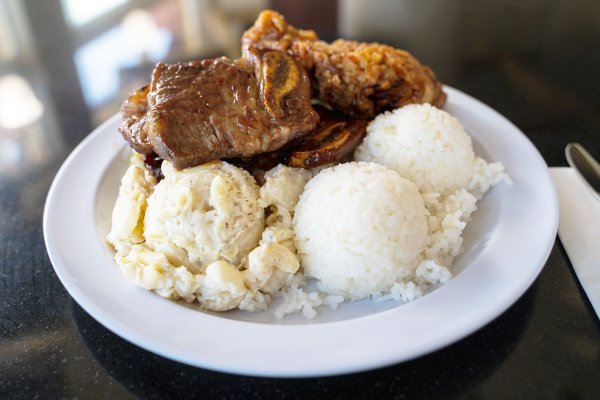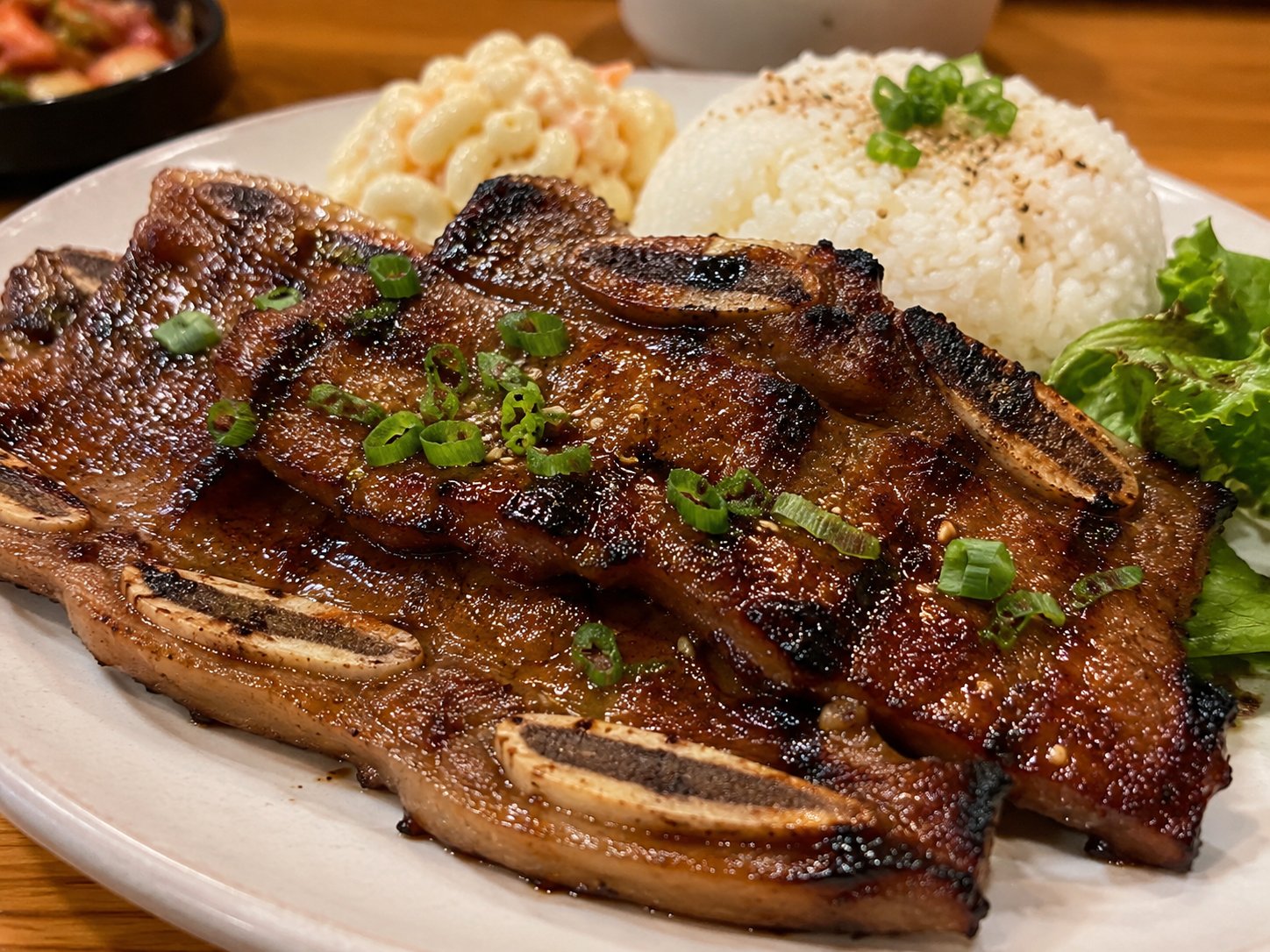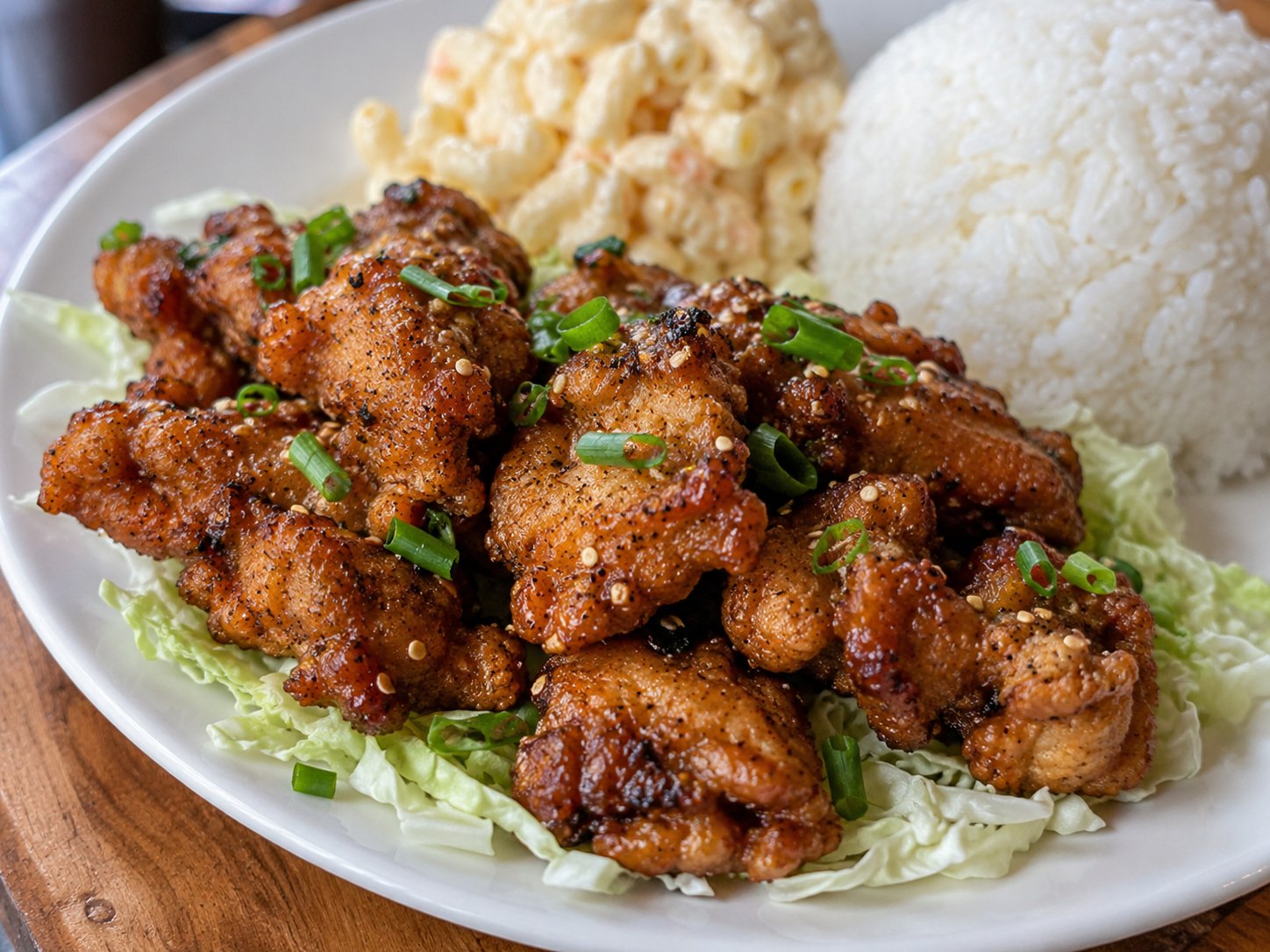
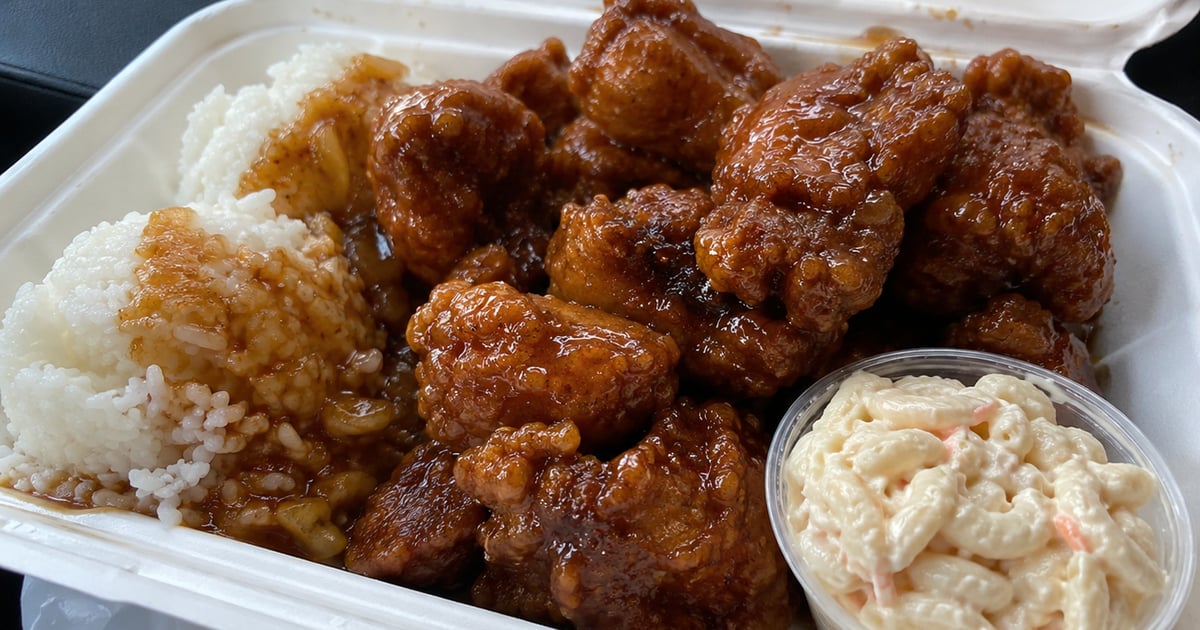

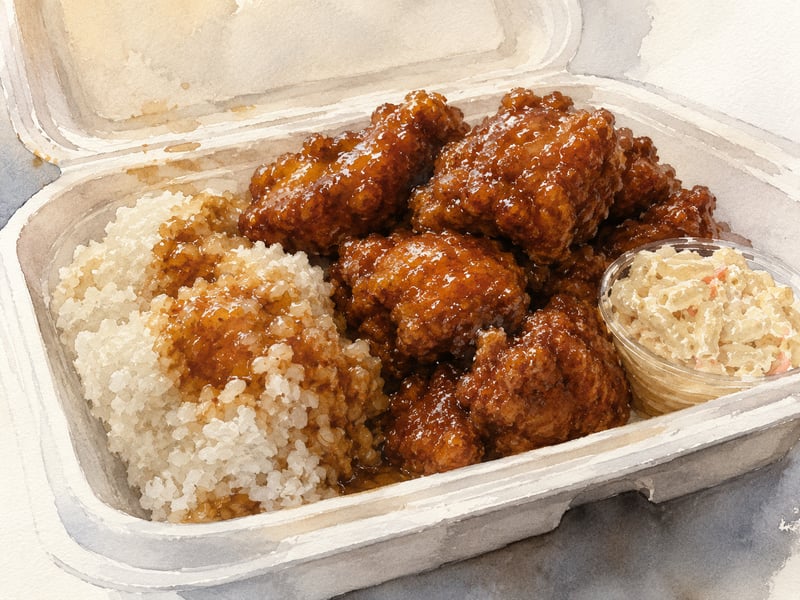
Hawaii-style Korean fried chicken is not the double-fried, crackly-shellac KFC-style chicken that took over the mainland in the 2010s. Itʻs a distinct island dish: boneless chicken thighs, lightly dredged in flour and fried golden, then tossed while still hot in a thick, glossy sauce of shoyu, brown sugar, garlic, sesame, and a hit of Korean chili. The result is sticky, salty-sweet, and lacquered — a fixture next to kalbi at the Korean BBQ plate counters tucked into Hawaii strip malls.
The dish grew out of Korean immigrant families running Korean BBQ takeout counters on Oahu, especially around Keeaumoku Street — widely known as Honoluluʻs Koreatown. To suit the local palate, the sweetness got pushed up, the heat got pulled back, and the shoyu-and-sesame glaze that already defined the plate-lunch menu carried over to the chicken. The two-piece Korean chicken combo — chicken plus kalbi, two scoops rice, scoop mac salad — is a standard order at Yummy Korean BBQ and most of its imitators. This recipe gets you there at home.
At a glance
4 over rice
30 minutes
15 minutes frying
Easy
Ingredients
For the chicken
- 2 lb boneless, skinless chicken thighs, cut into 1 1/2-inch pieces
- 1 teaspoon salt
- 1/2 teaspoon black pepper
- 1/2 teaspoon garlic powder
- 1 large egg, beaten
- 1/2 cup all-purpose flour
- 1/4 cup cornstarch
- Neutral oil for frying (vegetable, canola, or peanut), enough for 1 inch in the pan
For the sauce
- 1/3 cup shoyu (soy sauce)
- 1/3 cup packed brown sugar
- 3 tablespoons mirin or rice wine
- 2 tablespoons water
- 4 cloves garlic, finely minced
- 1 tablespoon grated fresh ginger
- 1 tablespoon toasted sesame oil
- 1 to 2 teaspoons gochugaru (Korean chili flakes) to taste
- 1 tablespoon toasted sesame seeds, plus more to finish
Equipment
- Heavy-bottomed pot, Dutch oven, or wok for frying
- Wire rack set over a sheet pan for draining
- Tongs or spider strainer
- Instant-read thermometer (recommended)
- Large bowl for the finishing toss
To serve
- Two scoops of hot white rice
- Scoop of macaroni salad on the side
- Kimchi or quick pickled cucumbers
- 2 stalks green onion, thinly sliced, for garnish
Method
- Season the chicken. Toss the cut chicken thighs with the salt, pepper, and garlic powder in a bowl. Let it sit at room temperature for 20 minutes (or refrigerate up to 4 hours). This light dry-brine keeps the inside juicy after the fryer.
- Mix the sauce. In a small saucepan, combine the shoyu, brown sugar, mirin, water, garlic, ginger, sesame oil, and gochugaru. Bring to a gentle simmer over medium heat, stirring until the sugar dissolves and the sauce thickens slightly — about 3 minutes. Stir in the sesame seeds. Keep warm.
- Heat the oil. Pour about 1 inch of oil into the pot and heat to 350F. Set up a wire rack over a sheet pan next to the stove.
- Dredge the chicken. Whisk the flour and cornstarch together in a wide bowl. Dip each piece of chicken first into the beaten egg, then into the flour mixture, pressing to coat. Shake off excess.
- Fry in batches. Carefully add chicken pieces to the oil, working in batches so the temperature stays above 325F. Fry for 6 to 7 minutes per batch, turning halfway, until the coating is deep golden brown and the internal temperature reaches 165F. Transfer to the wire rack.
- Toss in the sauce. Pour the warm sauce into a large bowl. Add the hot fried chicken pieces directly into the bowl and toss with tongs until every piece is glossy and coated. Work fast — the sauce sets quickly as it cools.
- Plate and serve. Transfer to a serving plate. Sprinkle with extra sesame seeds and sliced green onion. Serve immediately over rice with mac salad and kimchi on the side.
Notes from a local cook
Use thighs, not breasts. Thighs stay juicy and forgiving even after the second toss in hot sauce. Breast meat dries out and goes leathery the moment it cools. Iʻve never seen a Hawaii Korean BBQ counter use anything but thighs, and you shouldnʻt either.
The cornstarch in the dredge matters. A 2:1 ratio of flour to cornstarch gives you a coating that stays crisp even after the sauce hits it. Straight flour coatings go soggy fast under a wet glaze. The cornstarch is the difference between sticky-crisp and sticky-mushy.
Sauce-toss is the move, not sauce-pour. Pouring the sauce over plated chicken at the table dilutes the glaze and leaves dry patches. Tossing hot chicken straight into the warm sauce in a bowl coats every surface and lets the residual heat thicken the glaze into a lacquer. Thatʻs the technique Iʻve watched cooks use behind the line at the counters I order from.
Adjust the heat. One teaspoon of gochugaru gives the gentle warmth most plate-lunch counters serve. Two teaspoons brings real heat. To push toward a spicier "mauka" (mountain-side) Korean style, add a tablespoon of gochujang (Korean chili paste) to the sauce. Feeding kids? Drop the chili entirely — the shoyu-sesame glaze still tastes complete.
Make-ahead. The sauce keeps refrigerated in a sealed jar for several days — double the batch and use the leftover on shoyu chicken later in the week. Pre-cut and dry-brined chicken can sit in the fridge for up to 4 hours before frying.
While You're on the Islands
Eat it made by someone else. For the classic Honolulu Korean BBQ plate-lunch version, Yummy Korean BBQ has locations across Oahu — their Korean chicken combo with kalbi is a useful reference point for what this dish should taste like. Choiʻs Garden on Rycroft Street, just off Keeaumoku in Koreatown, is a longtime favorite and serves a more peppery, garlicky version. The Korean BBQ chicken plate at the takeout window of L&L Hawaiian Barbecue is the standardized plate-lunch version youʻll find at strip-mall locations across the islands. See our full guides to Oahu dining and Hawaii Eats.
Buy the ingredients fresh. Gochugaru (Korean chili flake) and gochujang are sold at any island Korean or Asian grocery store — worth picking up while you're here if you want to cook this once you're home.
Bring It Home
What you can substitute, what you can't: gochugaru and gochujang are stocked at most mainland Korean and Asian grocery stores, so nothing here needs packing home — just know the names to ask for once you're back.
Where to try this in Hawaii