
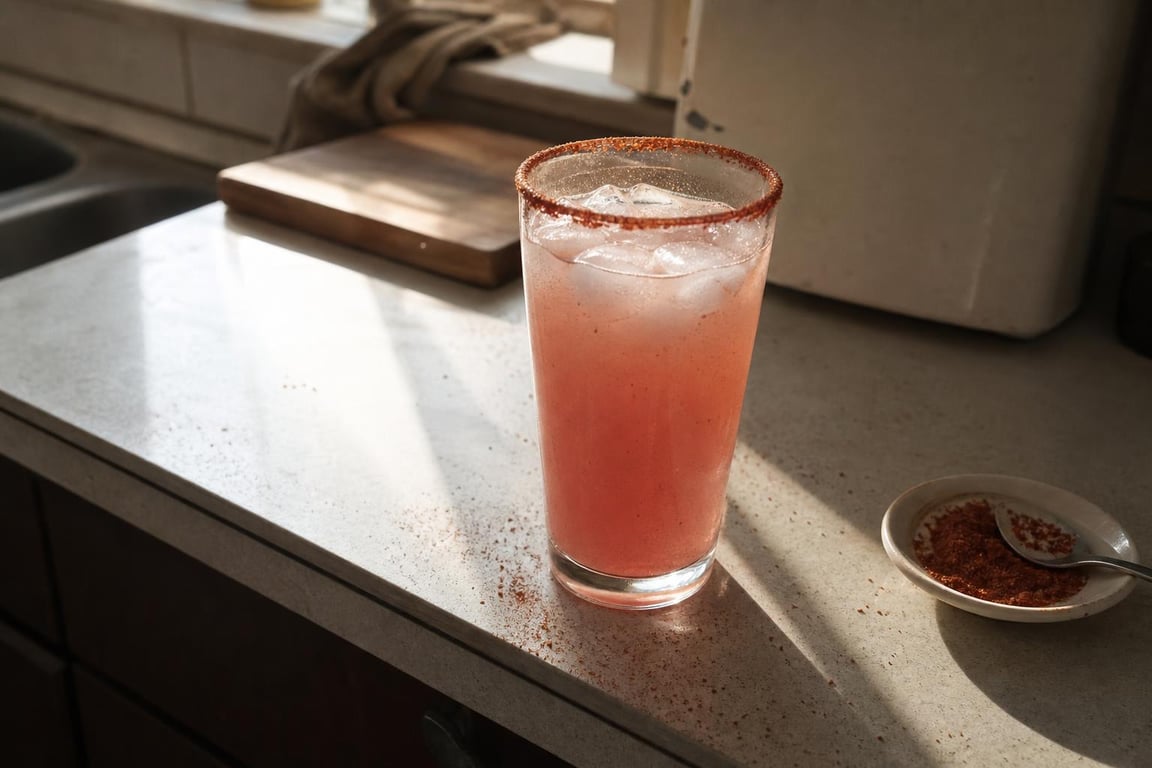
Li hing mui is a dried salted plum, and its rust-red powder is one of the defining flavors of growing up in Hawaii — sweet, sour, salty, and faintly licorice-ish all at once. The preserved-plum tradition arrived with Chinese immigrants during the sugar plantation era and built an entire snack culture around itself: the crack seed store, with its jars of preserved plums, mango, and everything else the powder could improve. Locals shake it onto fresh pineapple, green mango, apples, gummy bears — and into lemonade.
Li hing lemonade is the easiest way into the flavor. The powder dissolves into the drink and turns it a sunset pink while pushing the sweet-sour dial to eleven; the salt keeps it weirdly refreshing. First-timers either blink hard and ask for more or push the glass away — there's no middle. Make one glass before you commit to the pitcher.
At a glance
About 7 cups (6 tall glasses)
15 minutes
5 minutes (syrup)
Easy
Ingredients
For the lemonade
- 1 cup fresh lemon juice (5 to 6 lemons)
- 3/4 cup sugar
- 3/4 cup water (for the syrup)
- 5 cups cold water
- 2 to 3 teaspoons li hing mui powder, plus more for the rims
Optional
- A few whole li hing mui (dried plums) dropped in the pitcher
Equipment
- Small saucepan
- 2-quart pitcher
- Small plate for rimming glasses
To serve
- Tall glasses with ice, rims dusted red
Method
- Make the base lemonade. Dissolve the sugar in 3/4 cup water over low heat, cool, then combine in the pitcher with the lemon juice and cold water. This is a standard tart lemonade — the powder brings its own sweetness and salt, so don't over-sugar the base.
- Season with li hing, gradually. Start with 2 teaspoons of powder, stir hard, and taste. The flavor blooms as it dissolves — give it a minute before adding more. The drink should turn dusty pink and taste sweet-sour-salty in that order.
- Rim the glasses. Wet each glass rim with a lemon wedge and roll it in li hing powder on a plate. The rim is the concentrated hit; the drink is the mellow version. Together they're the full crack-seed experience.
- Serve over ice. Stir the pitcher before each pour — the powder settles into a pink sediment. If you dropped whole li hing mui in, they get better the longer they steep; fish one out and eat it when the pitcher's done.
Notes from a local cook
Read the powder label. The traditional preserved plum uses just salt, sugar, and licorice, but many of the commercial powders on shelves today sweeten and color the mix with aspartame and red dye. If you'd rather skip that, look for the "no aspartame" versions several Hawaii brands now sell; the flavor is slightly less candy-bright but closer to the original plum.
Start with less than you think. Li hing is intense, and over-powdered lemonade tastes like salted cough syrup. Two teaspoons per pitcher is a genuinely good starting dose; committed locals go double that.
The powder improves almost any fruit thing. Once you own a bag: shake it on fresh pineapple, mango, or apple slices, dust a margarita rim with it, or stir a pinch into our lilikoi lemonade for the full local-kid flavor stack.
Where to try the real thing
The cultural home base is the crack seed store — the old-school ones sell li hing everything, and a proper shop will let you smell the jars before you buy. Li hing lemonade itself pops up at shave ice stands, farmers markets, and plate-lunch counters across the islands, and the powder-rimmed margarita has become a common sight on beach-bar menus in Waikiki. If you just want a bag of powder to take home, Longs Drugs is a longtime clearinghouse for local snack culture and stocks a wide crack seed selection. See our crack seed guide and what to eat in Hawaii.