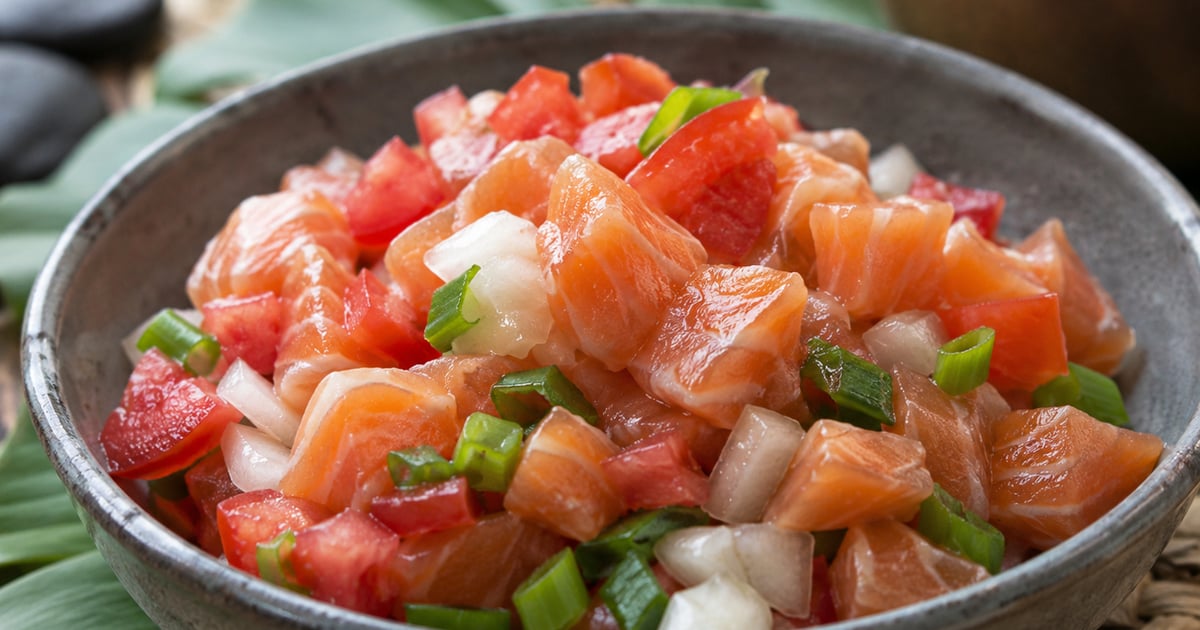

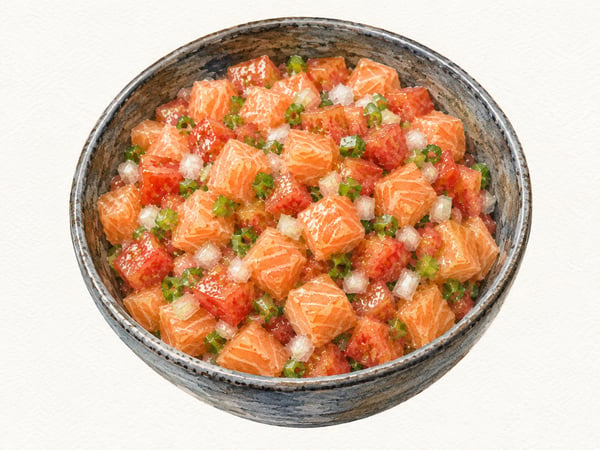
Lomi lomi salmon is the small cold cup at the corner of the luau plate. Salt-cured salmon, diced ripe tomato, sweet onion, green onion, a little ice — all "lomi-lomi'd" together with your fingers. Lomi means to rub, press, or massage in Hawaiian. It eats like a salsa-tartare hybrid, bright and salty, and it cuts through the richness of kalua pig and the sweetness of haupia on the same plate. Without it the plate feels heavier than it should.
Lomi lomi salmon isn't a precontact Hawaiian dish — salmon aren't found in Hawaii's warm waters. The fish arrived in the early-to-mid 1800s as a trade good: Russian traders brought salted salmon down from the Pacific Northwest, and North American whalers followed, sailing into Honolulu and Lahaina with barrels of the stuff. Hawaiians took the heavily salted fish and did with it what they did with every imported staple: integrated it into the existing plate. They rinsed off most of the salt, diced it into ripe tomatoes from the upland farms, mixed in sweet onion (the Maui onion if you could get it), and "lomi-lomi'd" the whole thing together. By the early 20th century it was a fixture at luaus and family gatherings, and it's still on the plate today. On older menus you'll see it called "salted salmon." Same dish.
At a glance
6 as a side (1 quart total)
20 minutes (after curing)
24 hours in the fridge
Easy
Ingredients
For the lomi
- ½ pound (8 oz) salmon fillet — see notes
- 3 tablespoons coarse Hawaiian sea salt or kosher salt (for curing; most rinses off)
- 3 large ripe tomatoes (about 1½ lbs), seeded and diced ¼-inch
- 1 medium sweet onion (Maui onion if you can find it; otherwise Vidalia or yellow), finely diced
- 4 green onions, thinly sliced — green and white parts
- 2 tablespoons cold water (or crushed ice for serving)
- Freshly ground black pepper, to taste
Method
- Cure the salmon. Place the salmon in a shallow dish and cover both sides generously with the coarse salt. Cover and refrigerate 24 hours. The salmon will firm up, take on a deeper coral color, and exude moisture — all signs the cure is working. If you're short on time, 8 hours will work, though the texture will be softer.
- Rinse, rinse, rinse. Rinse the cured salmon thoroughly under cold running water — at least 30 seconds — to remove most of the surface salt. Then soak in a bowl of cold water for 15 minutes. Drain. Taste a tiny piece: it should be assertively but pleasantly salty, like a good prosciutto. If it's too salty, soak in fresh cold water another 15 minutes and re-taste.
- Dice the salmon. Pat dry with paper towels. Remove any pin bones. Slice into thin strips, then dice ¼-inch to match the tomatoes. Place in a mixing bowl.
- Prep the vegetables. Dice the tomatoes ¼-inch (seed them first — too much liquid makes the lomi watery). Finely dice the sweet onion. Slice the green onions thinly.
- Lomi-lomi. Add the tomatoes, sweet onion, and green onions to the bowl with the salmon. Add the cold water. With clean hands, gently massage everything together for about 30 seconds — squeezing lightly so the tomato juice bleeds into the salmon and the salmon picks up the tomato flavor. This is what the name means; the texture changes when you do it right. Don't pulverize anything; keep the dice intact.
- Chill. Refrigerate at least 30 minutes, up to 4 hours. The dish should be served cold, ideally with a couple of small ice cubes nestled into the top to keep it that way on a luau buffet.
- Plate it. Spoon a few tablespoons into a small cup or ramekin on each plate. Pepper to taste at the table. Eat it with a fork — small bites — between richer Hawaiian plate dishes.
Notes from a local cook
Sashimi-grade isn't required. The salt cure is a low-temperature preservation step, not a cosmetic one. You can use ordinary fresh salmon fillet from the supermarket, as long as it smells clean and looks bright. If you want to be extra cautious, freeze the salmon at −4°F (−20°C) or below for 7 days before curing — one of the parasite-destruction methods listed in the FDA's Fish and Fishery Products Hazards and Controls Guidance for fish eaten without cooking.
The salt level is the whole game. Under-salt and the dish reads as raw fish with tomato. Over-salt and you can't taste anything but brine. The 24-hour cure plus the 15-minute soak is the proven combination. Always taste before mixing.
Maui onions matter (when you can get them). Outside the islands, the Vidalia is the closest analog. The point is the sweet-to-pungent ratio — a yellow onion is too sharp. If you only have yellow, soak the diced onion in ice water for 10 minutes before adding to mellow it.
Eat the same day. Lomi lomi salmon is at its best 30 minutes to 4 hours after mixing. Past 24 hours the tomatoes weep out, the salmon firms up too much, and the bright flavors flatten. It's a "make today, eat today" dish.
While You're on the Islands
Eat it made by someone else. The Native Hawaiian-plate sit-down on Oʻahu is Helena's Hawaiian Food on North School Street in Kalihi, a James Beard America's Classics honoree — lomi lomi salmon comes in a small cup beside kalua pig, butterfish, poi, and haupia. Confirm hours on their official site before driving over; they're closed several days a week. Highway Inn in Kakaʻako and Waipahu has been run by the Toguchi family since 1947 and is a friendlier intro for first-timers. Young's Fish Market in Kalihi sells Hawaiian plates to-go, including lomi salmon by the pint. Every commercial luau on the island serves it as part of the standard Hawaiian-plate course — see the full Hawaiian luaus page for the lineup.
Buy the ingredients fresh. If you're cooking this one in a vacation rental, the Maui onion you want is genuinely easier to find on-island than off — look for it labeled by name at Foodland or a local farmers market (the KCC Farmers Market on Oʻahu and the Maui Swap Meet both carry them in season). Most island grocers also stock pre-salted "salmon for lomi" in the fish case around the holidays; ask the counter if you don't see it out.
Bring It Home
What to stock up on before you fly home: a bag of Hawaiian alaea sea salt is the one thing worth packing — it's the traditional cure salt and travels fine in a carry-on (under the standard TSA limits for solids).
What you can substitute, what you can't: any coarse salt cures the salmon just fine, and a Vidalia onion is the standard mainland stand-in for Maui sweet onion — soak it in ice water for 10 minutes first to mellow the bite. The one thing that doesn't substitute is freshness of the tomato and onion themselves; this dish is only as good as the produce you dice into it, so buy them the same day you plan to mix.
Where to try this in Hawaii