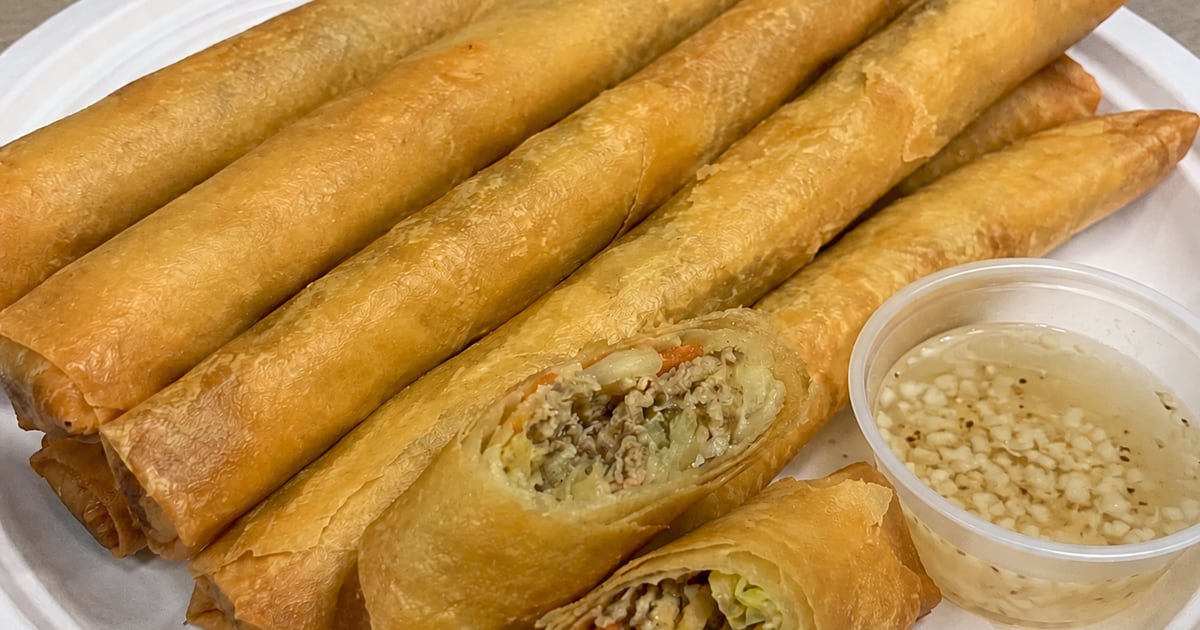


Lumpia is the unspoken rule of a Hawaii party. If there is no tray of lumpia on the side table, somebody forgot to bring the lumpia. They are skinny golden cigars about the size of your pinky, deep-fried until the wrapper shatters, with a pork-and-vegetable filling inside that hums of garlic, soy, and oyster sauce. You eat them with your fingers, dipped in a thin sweet-chili sauce or a vinegar-and-garlic dip, and you eat too many.
The dish is Filipino, not Native Hawaiian. It rode in with the Filipino plantation workers who started arriving in 1906 and kept coming through the 1940s, mostly from the Ilocos and Visayan regions. By the time the camps gave way to neighborhoods, lumpia had wedged itself into the local potluck rotation alongside the manapua, the kalbi, and the chicken katsu. The version you'll see most often in Hawaii is lumpiang Shanghai — pork-stuffed, fully fried, and small enough that a hungry uncle can eat seven without anyone noticing.
At a glance
About 40 small rolls
45 minutes
25 minutes (in batches)
Moderate
Ingredients
For the filling
- 1 lb ground pork (not lean — 80/20 is right)
- 1 medium carrot, peeled and finely grated
- 1 cup green cabbage, very finely shredded
- 3 stalks green onion, thinly sliced
- 4 cloves garlic, minced
- 1 small onion, finely chopped
- 2 tablespoons shoyu (soy sauce)
- 1 tablespoon oyster sauce
- 1 teaspoon white pepper
- 1 teaspoon salt
- 1 large egg, lightly beaten
For wrapping and frying
- 1 package spring roll wrappers, about 40 sheets (look for the Filipino brand at an Asian grocer)
- 1 small bowl of beaten egg, for sealing
- Neutral oil for frying (canola, vegetable, or peanut), about 3 cups
Equipment
- Heavy pan, wok, or Dutch oven for frying
- Slotted spoon or spider
- Wire rack set over a sheet pan
- Sharp knife and cutting board
To serve
- Sweet chili dipping sauce (Mae Ploy or a homemade lilikoi-chili version)
- Vinegar-garlic dip: rice vinegar, crushed garlic, a pinch of salt, optional chili
- Hot rice on the side if you're making it a meal
Method
- Squeeze the water out of the cabbage. This is the step everyone wants to skip and shouldn't. Salt the shredded cabbage with a pinch of the salt from the filling list, wait five minutes, then squeeze it hard in a clean kitchen towel until it stops weeping. A wet filling steams the wrapper from the inside and you'll end up with soggy lumpia.
- Mix the filling. In a large bowl, combine the pork, carrot, drained cabbage, green onion, garlic, onion, shoyu, oyster sauce, white pepper, salt, and the beaten egg. Mix with your hands until evenly combined but not packed. A light hand keeps the filling tender.
- Test the seasoning. Fry a teaspoon of the filling in a small pan until cooked through, taste, and adjust. Salt and pepper come up fast in a fried roll — resist the urge to over-season.
- Wrap. Peel one wrapper from the stack and set it on the counter as a diamond. Place about 1 tablespoon of filling in a line across the lower third, leaving 2 inches of wrapper on the left and right. Fold the bottom corner over the filling, tuck it tight, fold in the left and right corners, then roll forward to a thin cigar. Seal the top corner with a dab of beaten egg. Aim for finger-length and pencil-thin — not fat. Repeat. Keep finished rolls under a slightly damp towel so they don't dry out.
- Fry. Heat oil to 350°F (175°C) in a heavy pan. Fry the rolls in batches of 6 to 8, turning once, for about 3 to 4 minutes until deeply golden and crisp. Don't crowd the pan or the temperature drops and they soak up oil. Drain on a wire rack, not paper towels. A rack keeps the bottoms crisp.
- Serve hot. Cut each roll in half on the diagonal for the platter look, or serve whole. Put out both dipping sauces and stand back.
Notes from a local cook
Roll thin, not fat. The first batch of homemade lumpia almost always ends up too thick. A fat roll fries unevenly — the wrapper browns before the filling cooks through. Stick to a tablespoon per roll and pull the wrapper tight as you go.
Freeze the surplus. Lumpia is a freezer-friendly dish, which is the second reason it's the potluck workhorse. Arrange the wrapped, unfried rolls on a sheet pan, freeze until firm (about an hour), then bag them. Fry directly from frozen at 325°F (160°C) for 5 to 6 minutes. A touch lower than fresh, a touch longer, and they come out perfect.
Vary the filling. Plenty of Hawaii households substitute ground turkey, half pork half shrimp, or all shrimp. Some add water chestnuts for crunch. The frame is forgiving. What's not negotiable is the cabbage-squeeze and the thin roll.
While You're on the Islands
Eat it made by someone else. If you don't want to make your own, you don't have to look hard. Filipino-run plate-lunch counters and turo-turo (point-point) buffets carry lumpia daily across the islands. On Oahu, the Filipino food belt runs through Kalihi, Waipahu, and Ewa Beach — you'll find lumpia at neighborhood bakeries, mom-and-pop turo-turo counters, and the prepared-food coolers at island markets. On Maui, Kahului and Wailuku are the centers of the Filipino community. For current spots and hours, browse our island dining guides: Oahu dining, Maui dining, Big Island dining, and Kauai dining.
Buy the ingredients fresh. Lumpia wrappers (fresh or frozen) are sold at Filipino and Asian groceries in the same neighborhoods above — easier to find pre-made there than at a regular grocery store.
Bring It Home
What you can substitute, what you can't: frozen lumpia wrappers are sold at most mainland Filipino and Asian grocery stores under the same name, so nothing here needs packing home. Spring roll wrappers from a regular grocery store work in a pinch but are usually thicker and won't fry up as crisp.