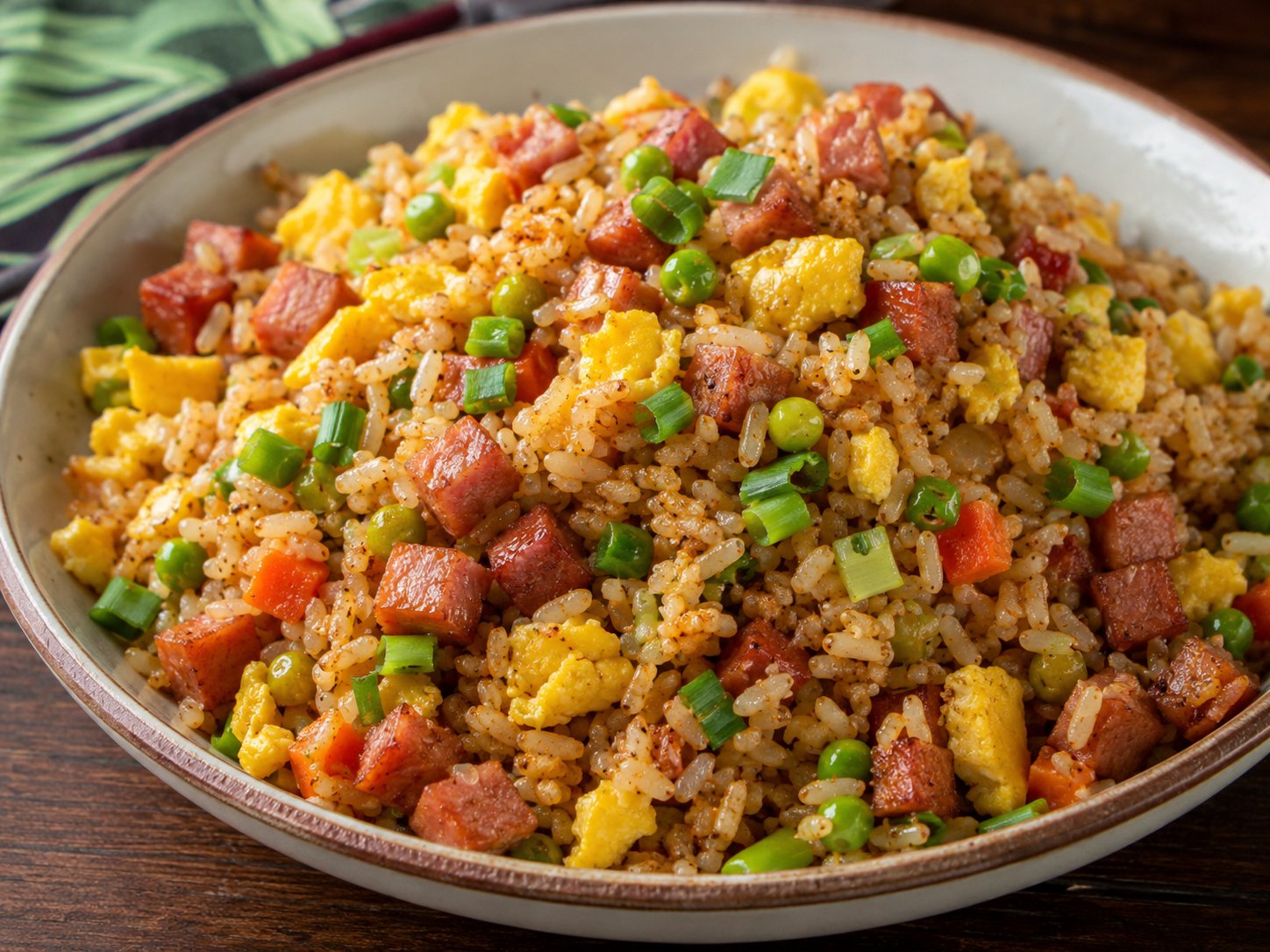
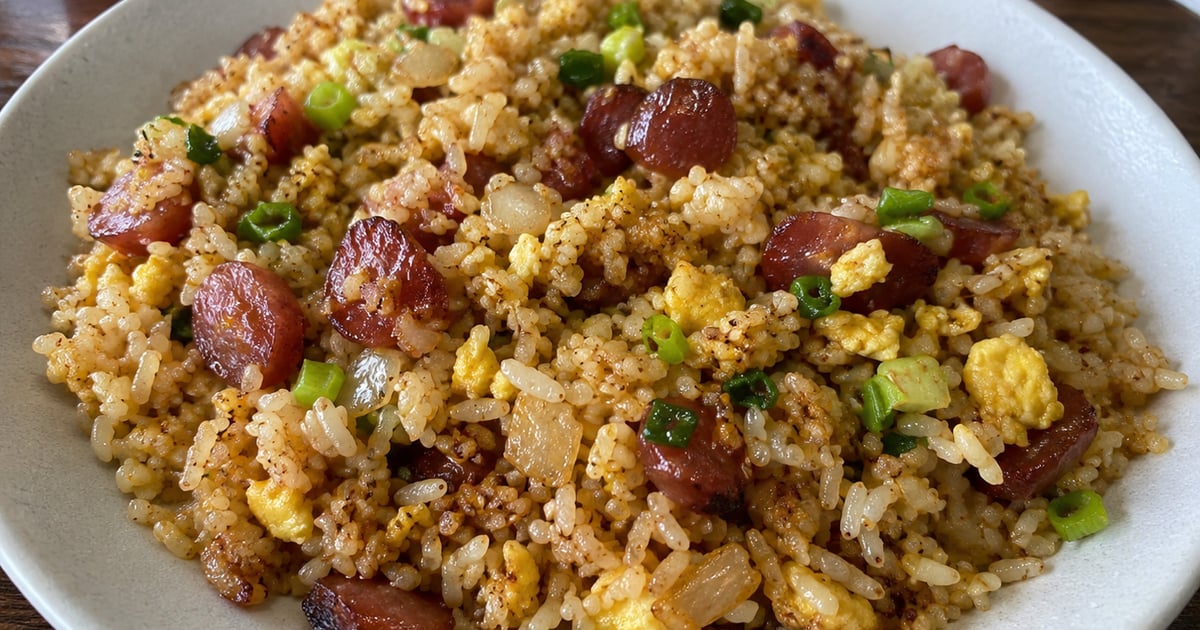

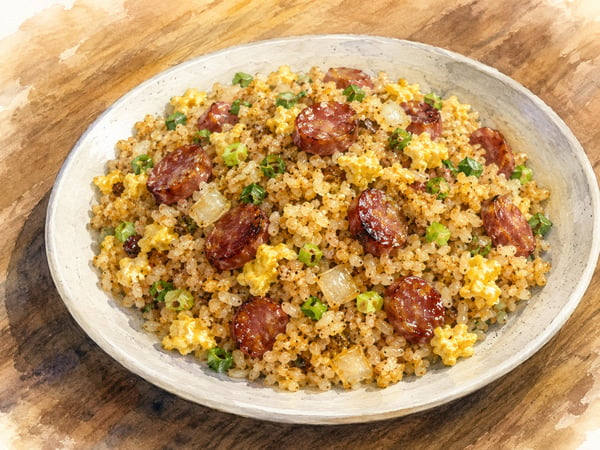
Lup cheong fried rice is the Hawaii breakfast plate everyone recognizes from the diner case without necessarily knowing the name. Lup cheong (also romanized as lap cheong, written 臘腸 in Cantonese) is a hard, sweet-cured pork sausage that arrived with Chinese laborers recruited to the sugar plantations beginning in the 1850s. The links are bright red, the texture sits somewhere between pepperoni and bacon, and the flavor is soy-sweet and faintly rosy from rice wine. Slice a link thin, render the fat into a screaming-hot wok, scrape in day-old rice, push it to the side, scramble an egg into the bare pan, and toss everything together with a hit of shoyu and a fistful of green onion. Ten minutes, plate, eat.
The dish is plantation-era pragmatism in one bowl. Cured sausage that did not need refrigeration, last night's rice, whatever egg the chickens laid, scallions from the garden. Today it still shows up on local-style breakfast menus around Honolulu, in Chinatown plate-lunch counters, and in the steam tables at Foodland. At home, it earns its keep as a fast, honest use for leftover rice.
At a glance
2 hearty or 4 side portions
10 minutes (plus day-old rice)
10 minutes
Easy
Ingredients
For the fried rice
- 3 cups cooked Calrose or jasmine rice, refrigerated overnight (about 1 cup raw)
- 2 links lup cheong (Chinese sweet-cured pork sausage), about 4 oz total, sliced on a diagonal into thin coins
- 2 large eggs, beaten
- 2 tablespoons neutral oil (peanut, canola, or grapeseed)
- 3 stalks green onion, sliced thin (whites and greens separated)
- 2 cloves garlic, minced
- 1 to 2 tablespoons shoyu (Aloha Shoyu or Kikkoman)
- 1 teaspoon toasted sesame oil, to finish
- Pinch of white pepper
Optional add-ins
- ½ cup frozen peas and carrots, thawed
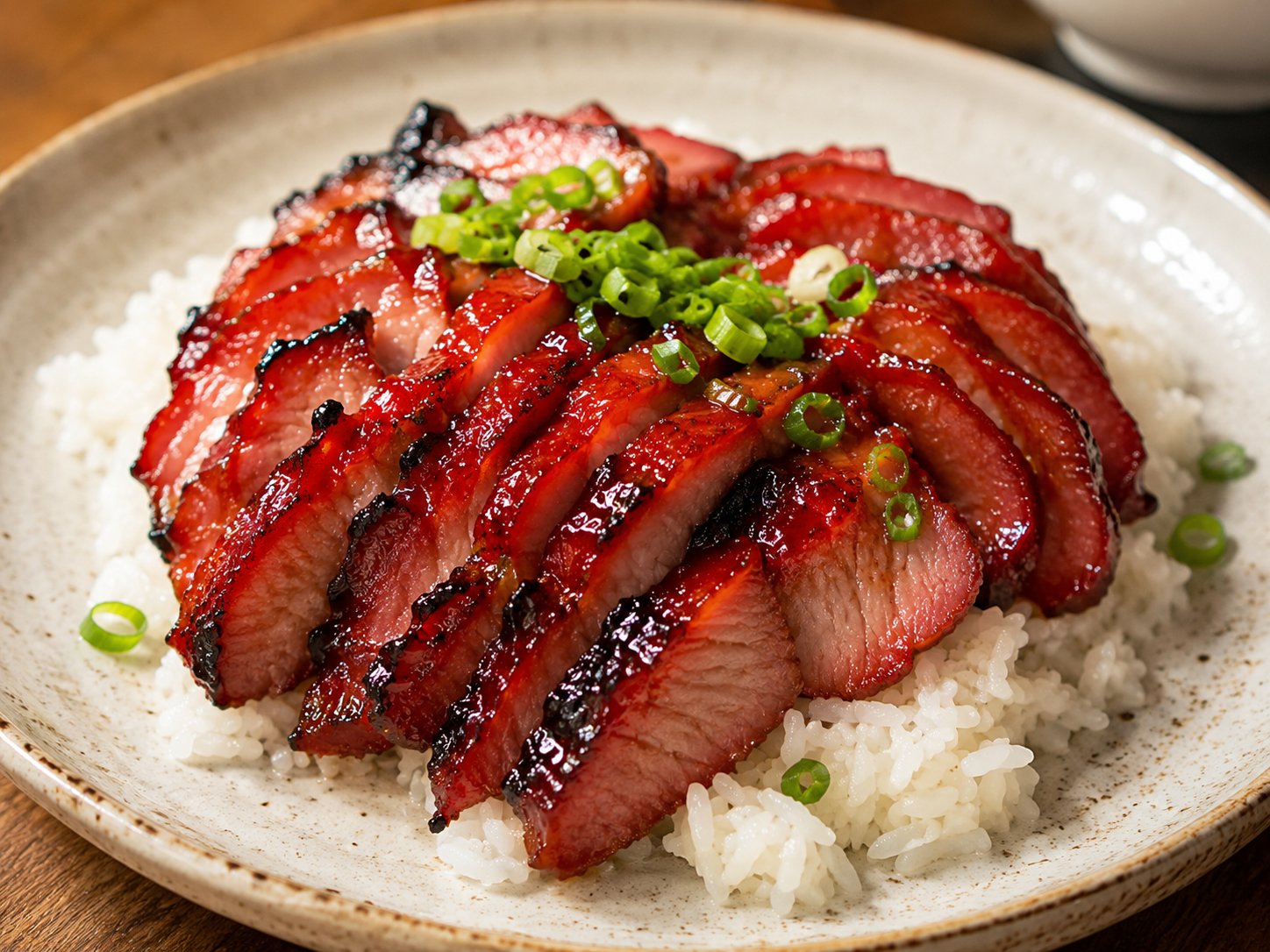
- 1 tablespoon char siu (Chinese roast pork), diced — see our char siu recipe
- 1 Hawaiian chili pepper, minced, for heat
Equipment
- 14-inch carbon-steel wok (or your largest nonstick skillet)
- Wok spatula or wide wooden spoon
- Sharp knife and cutting board
To serve
- Fried or sunny-side-up egg on top
- Pickled mustard greens or kim chee on the side
- A drizzle of chili-garlic sauce or a few dashes of sriracha
- Hot tea — oolong or jasmine — alongside
Method
- Day before: cook the rice and chill it. The single most important step happens in advance. Cook the rice as you normally would, spread it on a sheet pan to cool, then refrigerate uncovered for at least 4 hours, ideally overnight. Fresh rice is too soft and steamy and will turn to mush in the wok. Day-old rice has dried out enough to fry into separate, chewy grains.
- Render the sausage. Heat a dry wok or large skillet over medium-high heat until it just starts to smoke. Add the sliced lup cheong in a single layer. Cook, stirring once or twice, for 2 to 3 minutes. The sausage will give up a pool of fragrant orange fat — that is the cooking medium for the rest of the dish. Push the rendered sausage to the edge of the wok and leave the fat in the bottom.
- Add the aromatics. Add the oil to the rendered sausage fat. When it shimmers, add the white parts of the green onion and the garlic. Stir for 20 seconds, just long enough to perfume the oil without browning the garlic.
- Scramble the eggs. Push the sausage and aromatics to one side of the wok. Pour the beaten eggs into the open space. Let them set for 10 seconds, then scramble with the edge of the spatula into soft, broken curds. Stop before they are fully set. They will finish cooking with the rice.
- Add the rice. Break up the cold rice with your fingers as you add it so it goes into the wok in loose grains, not clumps. Stir to coat every grain with sausage fat and egg. Spread the rice into a single layer and let it sit untouched for 30 seconds. That is how you get the lightly toasted edges that distinguish proper fried rice from a stir-fry.
- Season and finish. Drizzle the shoyu around the edge of the wok, not over the rice. Shoyu hitting hot metal caramelizes and adds depth. Toss everything together. Taste and add more shoyu if needed. Pinch in white pepper, drizzle the sesame oil, scatter the green parts of the green onion across the top, and toss one more time.
- Plate. Spoon onto a warm plate. Top with a fried egg if you want the full diner-plate experience. Eat immediately while the edges are still crispy.
Notes from a local cook
Real lup cheong is the whole game. Authentic Chinese-style lup cheong is hard, dry, and slightly translucent when sliced thin. Imported brands like Kam Yen Jan and Sun Lee are common at Chinatown markets in Honolulu and at 99 Ranch on the mainland. Avoid "Chinese sausage" sold in soft, fresh-style links at the regular butcher counter — those are a different sausage entirely and the texture is wrong. The cured version is what plantation cooks used and what gives the dish its signature sweet-savory edge.
Day-old rice is not negotiable. Every shortcut around this fails. Spreading hot rice on a sheet pan and chilling it in the freezer for 30 minutes is the only acceptable rescue. Better: cook tomorrow's rice tonight. The dried surface of refrigerated rice is what lets each grain fry instead of steam. Without it you get a sticky stir-fried clump, not fried rice.
Heat over volume. Hawaii home cooks who grew up watching their grandparents stand over a Garland six-burner know the trick: very hot pan, not very full. If you double the recipe, cook it in two batches. A wok piled too full drops temperature, steams the rice, and never recovers.
The shoyu trick. Adding shoyu around the rim of the hot wok, not directly onto the rice, gives the sauce a few seconds of skillet contact that toasts the soy proteins and adds caramelized depth. It is a one-second move and it is the difference between fried rice that tastes like a diner and fried rice that tastes like a Chinatown breakfast counter.
While You're on the Islands
Eat it made by someone else. An easy entry point in Honolulu is Eggs 'n Things on Saratoga Road, which lists a "Fried Rice & Eggs" plate on its breakfast menu — the sausage on the plate isn't always specified, so ask what's in it that morning. Liliha Bakery's original Kuakini Street location runs a fried rice plate with two eggs; whether lup cheong is in the mix depends on the day, so call ahead. For the Chinatown version, walk Maunakea Street between Hotel and Pauahi: the lunch counters and Chinese plate-lunch shops along that block stock house-made versions in the steam table by mid-morning. See our Oahu dining guide for more on Chinatown stops.
Buy the ingredients fresh. Lup cheong (Chinese sausage) is sold in the refrigerated case at Chinatown markets and any island Asian grocery store — easy to grab a pack if you want to cook this in a vacation rental.
Bring It Home
What you can substitute, what you can't: lup cheong is sold at most mainland Chinese and Asian grocery stores, often vacuum-packed and shelf-stable, so there's nothing here that needs packing home — just know the name to ask for.
Where to try this in Hawaii