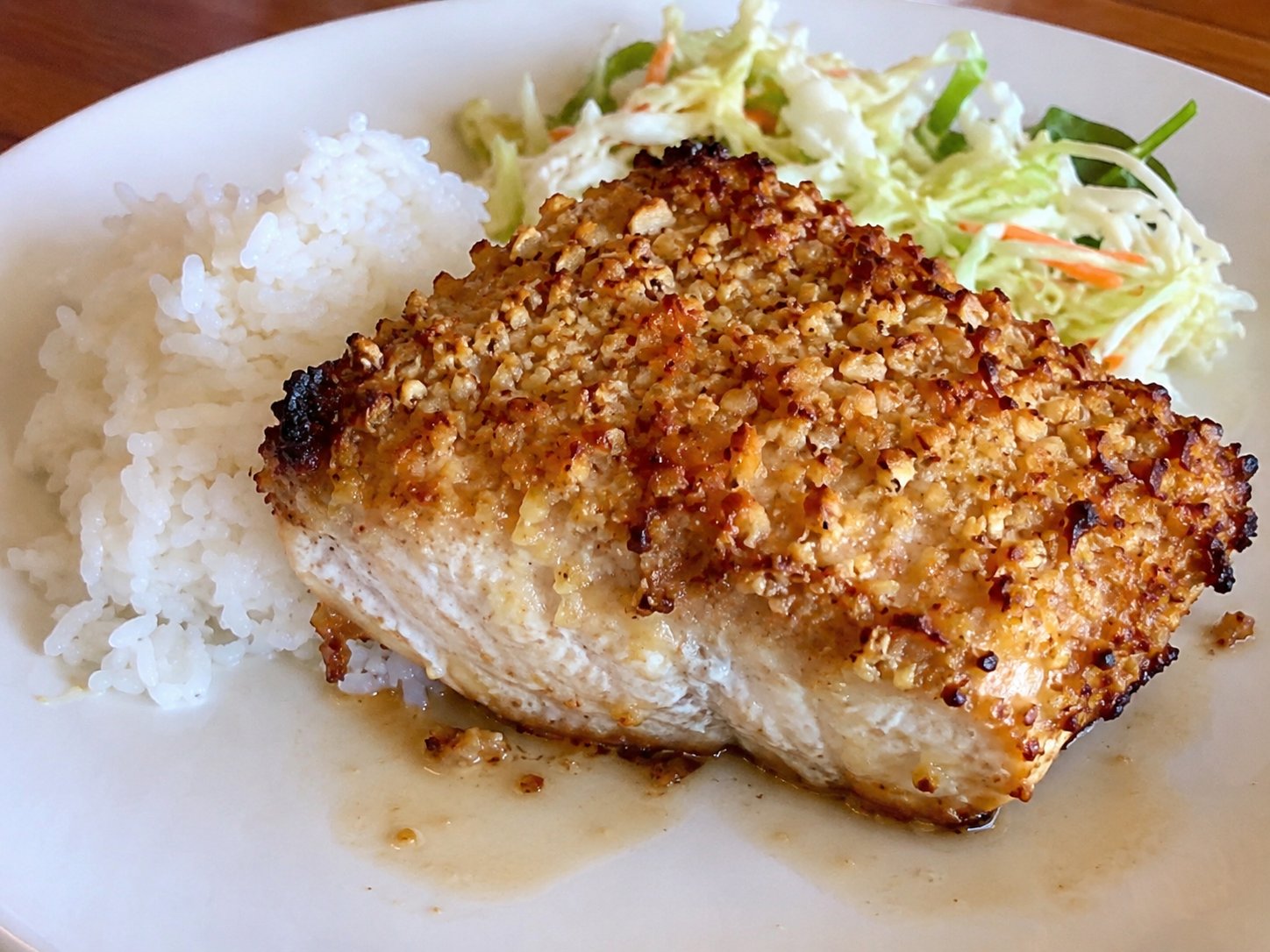

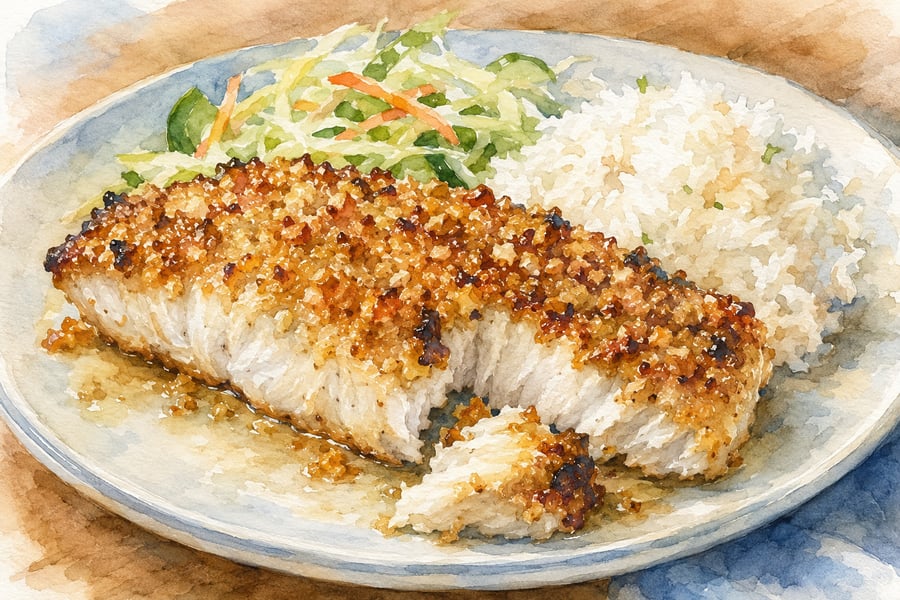
Macadamia nut crusted mahi mahi is the dish that defined Hawaii Regional Cuisine for everyone who arrived in the islands after 1991. Fresh Hawaiian fish, a chopped macadamia and panko crust, a quick sear in butter to set the nuts, a finish in the oven, and a brown-butter lemon sauce poured over the plate at the table. A chef's-dining-room move that scales down to a home kitchen, which is why it has held a spot on island fine-dining menus for three decades.
The dish came out of the founding moment of Hawaii Regional Cuisine, when twelve chefs — Roy Yamaguchi, Alan Wong, Sam Choy, Peter Merriman, and the rest — signed onto a shared manifesto in 1991 to cook with island ingredients instead of flown-in continental ones. Macadamia nuts were already a major Big Island crop. Mahi mahi was on every fishing boat from Kona to Hanalei. Putting them together was less a recipe invention than a statement: this is what Hawaii fine dining tastes like.
At a glance
4
15 minutes
15 minutes
Easy to moderate
Ingredients
For the fish
- 4 mahi mahi fillets, 5 to 6 oz each, skin off, about 1 inch thick
- Kosher salt and freshly ground black pepper
- 1/2 cup all-purpose flour
- 2 large eggs, lightly beaten
For the crust
- 3/4 cup roasted unsalted macadamia nuts, finely chopped
- 3/4 cup panko bread crumbs
- 2 tablespoons finely chopped flat-leaf parsley
- 1/2 teaspoon kosher salt
For the brown-butter lemon sauce
- 6 tablespoons unsalted butter
- 2 tablespoons fresh lemon juice
- 1 tablespoon capers, drained (optional)
- 1 tablespoon chopped parsley
Equipment
- Large oven-safe skillet (cast iron or stainless)
- Sheet pan and a wire rack
- Three shallow plates or pie dishes for the dredge stations
- Sharp chef's knife and cutting board
To serve
- Steamed white rice
- Wilted greens or a simple salad
- Lemon wedges
Method
- Heat the oven and rest the fish. Heat the oven to 400°F. Pat the mahi mahi dry with paper towels and season both sides with salt and pepper. Let it sit at room temperature for 10 minutes while you set up the dredge.
- Build the dredge stations. Three shallow dishes in a row: flour in the first, beaten eggs in the second, and the chopped macadamias, panko, parsley, and salt mixed together in the third. Mix the crust with your fingers so the nut oils coat the panko evenly.
- Coat the fish. Press each fillet first into the flour (tap off the excess), then dip in the egg (let the excess drip off), then press firmly into the macadamia-panko mixture on both sides. Pack the crust on with a flat hand — it needs to stick. Set the coated fillets on a wire rack while you heat the pan.
- Sear. Heat 2 tablespoons of neutral oil in the skillet over medium-high heat until shimmering. Add the fillets crust-side down and cook 2 to 3 minutes, until the macadamia crust is deep golden brown. Carefully flip and sear the second side for 1 minute. The nuts burn fast. Move quickly and drop the heat if needed.
- Finish in the oven. Transfer the skillet (or the fillets to a sheet pan if your skillet isn't oven-safe) to the oven and bake 6 to 8 minutes, until the fish flakes easily with a fork and registers 130 to 135°F at the thickest part. Mahi mahi is at its best just barely cooked through.
- Brown the butter for the sauce. Wipe out a small skillet and melt the butter over medium heat. Swirl the pan as the milk solids settle and brown, about 3 minutes, until the butter smells nutty and the bottom of the pan looks the color of toffee. Pull from the heat, stir in the lemon juice, capers, and parsley.
- Plate. Lay each fillet over rice and greens, spoon the brown-butter sauce around (not over the crust — you want the crust to stay crisp), and serve with a lemon wedge.
Notes from a local cook
Buy mahi mahi fresh, not frozen, when you can. Mahi mahi is wild-caught year-round in Hawaii, with peak runs in spring and fall. Look for a fishmonger who can name the boat or the landing the fish came in on. If you are inland and the only option is frozen, defrost it overnight in the refrigerator on a rack so the surface stays dry, then pat very dry before dredging. Wet fish slides out of the crust.
Chop, do not pulverize, the macadamias. A food processor turns mac nuts into oily paste in two seconds. Chop them by hand to a coarse rubble — the size of small peas mixed with crumbs — so the crust has texture and crunch. If you must use a processor, pulse it three or four times and watch closely.
Sub the fish, not the nut. If mahi mahi isn't around, ono (wahoo), opah, snapper, or halibut all work with this same technique. The macadamia crust is the load-bearing flavor; switching the fish just changes the texture underneath. What you cannot do is swap macadamia for pecans or almonds and still call this a Hawaii Regional dish.
Make ahead. You can dredge the fillets and refrigerate them on a rack, uncovered, for up to 4 hours before searing. The chilled crust actually adheres better. Do not coat and freeze. The panko goes soggy.
While You're on the Islands
Eat it made by someone else. The dish still anchors menus at the restaurants that grew out of the Hawaii Regional Cuisine generation. Roy's Waikiki and the other Roy's Restaurants on Oahu list a Macadamia Nut Crusted Hawaiian Fish on the menu. On the Big Island, Sam Choy's Kai Lanai in Keauhou serves a Macadamia Nut Crusted Fresh Catch — the same technique Sam Choy was demonstrating on his TV cooking show back in the 1990s. For the deeper context, see our Hawaii for foodies guide and the island-by-island Hawaii Eats hub.
Buy the ingredients fresh. A bag of freshly roasted, unsalted macadamia nuts from a Big Island roastery beats anything bagged at a mainland grocery store — pick some up while you're here even if you cook this dish back home.
Bring It Home
What to stock up on before you fly home: a bag of Hawaiian macadamia nuts travels well and is the one ingredient that makes this dish — don't swap in pecans or almonds and still call it a Hawaii Regional dish. If mahi mahi isn't around at home, ono, snapper, or halibut all work with this same crust technique.