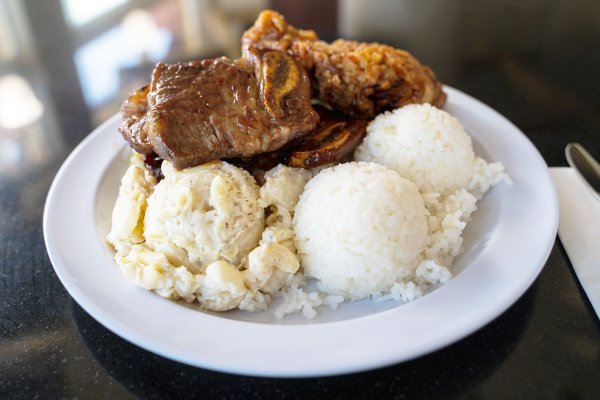
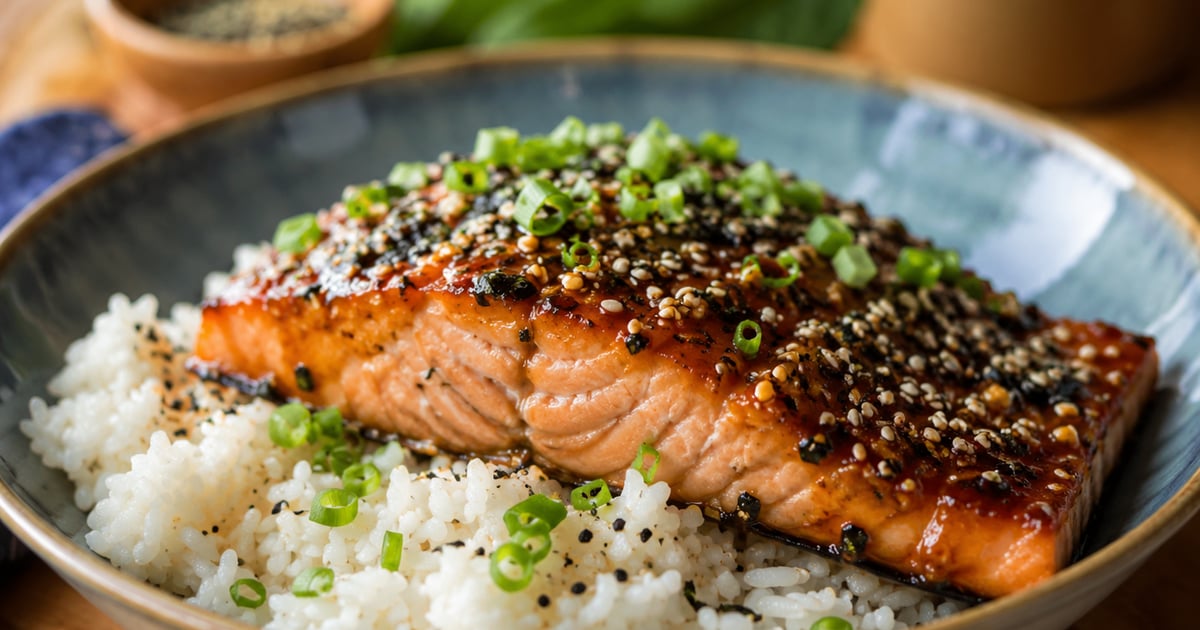

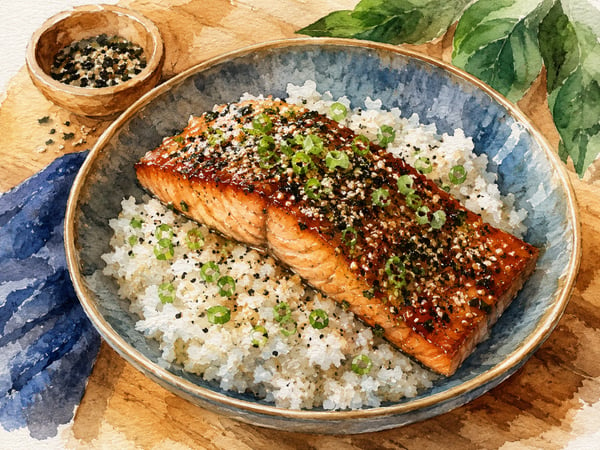
I make furikake salmon more nights than I want to admit. Here's the move. I slather a salmon fillet with a glaze of Kewpie mayo, shoyu, and a dab of yellow mustard. I dump a thick layer of nori-sesame furikake on top. I bake it at 425F for 12 minutes. The furikake is that black-and-green seasoning made of toasted nori flakes, sesame seeds, salt, and sugar. In the oven it crisps into a savory crust. The mayo glaze keeps the salmon glossy and tender underneath. From fridge to fork: about 25 minutes.
It's a fixture in Hawaii home kitchens and at potlucks, and most local cooks I know have their own tweak. Foodland sells a version by the pound at the prepared-foods counter, and it's one of the chain's house favorites. Mine started as a friend's mom's recipe and drifted from there. Heavier on the mustard one week. Sweeter glaze the next. A different brand of furikake when I forgot to restock. The base is forgiving enough to take it.
At a glance
4
10 minutes
12 to 14 minutes
Easy
Ingredients
For the salmon
- 1.5 lb salmon fillet (one piece, skin on or off, your call), patted dry
- 1/4 teaspoon kosher salt
- Pinch of black pepper
For the glaze
- 1/4 cup Kewpie mayonnaise (Japanese mayo; Hellmann's works if you must)
- 1 tablespoon shoyu (soy sauce). Aloha Shoyu or Kikkoman
- 1 tablespoon yellow mustard
- 1 teaspoon sesame oil
- 1 teaspoon grated fresh ginger (optional)
For the topping
- 1/2 cup nori komi furikake (the basic black-and-green nori-sesame kind; JFC or Urashima brand)
To serve
- Steamed white rice (Calrose or other short-grain)
- Sliced cucumber or simple mixed greens
- Pickled ginger (optional)
Equipment
- Rimmed sheet pan
- Parchment paper or foil
- Small bowl for the glaze
- Rubber spatula or pastry brush
- Fish spatula
Sourcing notes
- Any fresh or frozen salmon works. Sockeye for stronger flavor, king for buttery richness, Atlantic farmed for an easy weeknight grab.
- Kewpie mayo is sold at most Asian markets and now turns up at Target, Costco, and other mainland chains too.
Method
- Preheat the oven. Heat the oven to 425F. Line the sheet pan with parchment paper or lightly oiled foil. Parchment is easier cleanup. Foil takes the high heat better if you want a bit more crisping on the bottom.
- Pat the salmon. Lay the salmon fillet on the prepared sheet pan skin-side down (or just down if no skin). Blot the top dry with paper towels. Wet salmon dilutes the glaze and the furikake slides off. Sprinkle the salt and pepper directly on the fish.
- Mix the glaze. In a small bowl, whisk the Kewpie mayo, shoyu, mustard, sesame oil, and ginger if using until smooth. It should be the color of pale caramel and the consistency of thick salad dressing.
- Glaze the salmon. Spread the entire glaze across the top of the fillet in an even layer with a spatula or the back of a spoon. Cover every inch. The glaze is what holds the furikake on.
- Layer the furikake on. Sprinkle the furikake evenly over the glaze, pressing it gently with your fingers so it adheres. Pour it on generously. You want a thick black-and-green crust that fully covers the orange salmon underneath. Half a cup might feel like too much. It is not.
- Bake. Bake at 425F for 12 to 14 minutes for a 1.5 lb fillet about 1 inch thick. The salmon is done when the flesh flakes easily with a fork at the thickest point and registers 125F to 130F on a thermometer (it will carry over to 130 to 135F as it rests). Thicker fillets need 2 to 3 more minutes; thinner pieces are done sooner.
- Rest, then serve. Let the salmon rest on the pan for 3 minutes. Slide a fish spatula under the fillet and transfer it to a serving plate, or portion it directly onto plates over steamed rice. Furikake crust should be crisp and toasty; salmon underneath should be tender and pink. Eat with chopsticks or a fork.
Notes from a local cook
Kewpie is doing real work. Kewpie's tangier, egg-yolk-rich flavor and thicker body make a meaningful difference here. It clings better than American mayo and the taste is closer to the takeout-counter version. If all you have is Hellmann's, add half a teaspoon of rice vinegar to the glaze to bring up the brightness. Avoid Miracle Whip. Too sweet, wrong texture.
Pile the furikake on. The mistake I see most often when friends try this at home is going timid with the furikake. The recipe calls for a generous half cup for a 1.5 lb fillet, and that is the right amount. You want full coverage, no orange flesh peeking through. A thin sprinkle gives you a wisp of flavor and bald patches in the crust. Dump it on.
Plain nori komi, not the fancy stuff. Nori komi furikake, the basic black-and-green seaweed-sesame variety, is what I use for this. Tamago furikake (with dried egg) and bonito furikake (with dried fish flakes) shift the flavor in ways that fight the salmon for me. Save those for sprinkling on rice. The plain one is what I want here.
Frozen salmon works. No need to splurge on fresh wild king salmon for a weeknight dinner. Frozen Atlantic salmon fillets, thawed overnight in the refrigerator and patted very dry, produce a perfectly good version of this dish. The furikake crust and the glaze are doing most of the talking. Once you have the technique down, upgrade to wild Pacific salmon for special occasions.
While You're on the Islands
Eat it made by someone else. Most Hawaii households make this themselves, but if you want the takeout-counter version, head to the prepared-foods case at Foodland, which carries it as a house favorite across the chain's island locations. Tamura's Fine Wine & Liquors runs a well-known poke and prepared-foods counter at its Oahu and Maui locations — worth checking the case for furikake salmon alongside the poke selection. For a sit-down version, a lot of Hawaii Regional Cuisine restaurants list a riff on the dish under "miso glazed" or "furikake crusted" salmon. See our guide to Oahu dining for more.
Buy the ingredients fresh. Kewpie mayo and nori komi furikake are stocked at any island grocery store's Japanese-foods aisle — easy to grab both while you're shopping for produce.
Bring It Home
What to stock up on before you fly home: a bottle of Kewpie mayonnaise and a bag of nori komi furikake are the two ingredients that actually make this dish — most mainland grocery stores don't reliably stock either, and regular American mayo doesn't get you the same glaze.
Where to try this in Hawaii