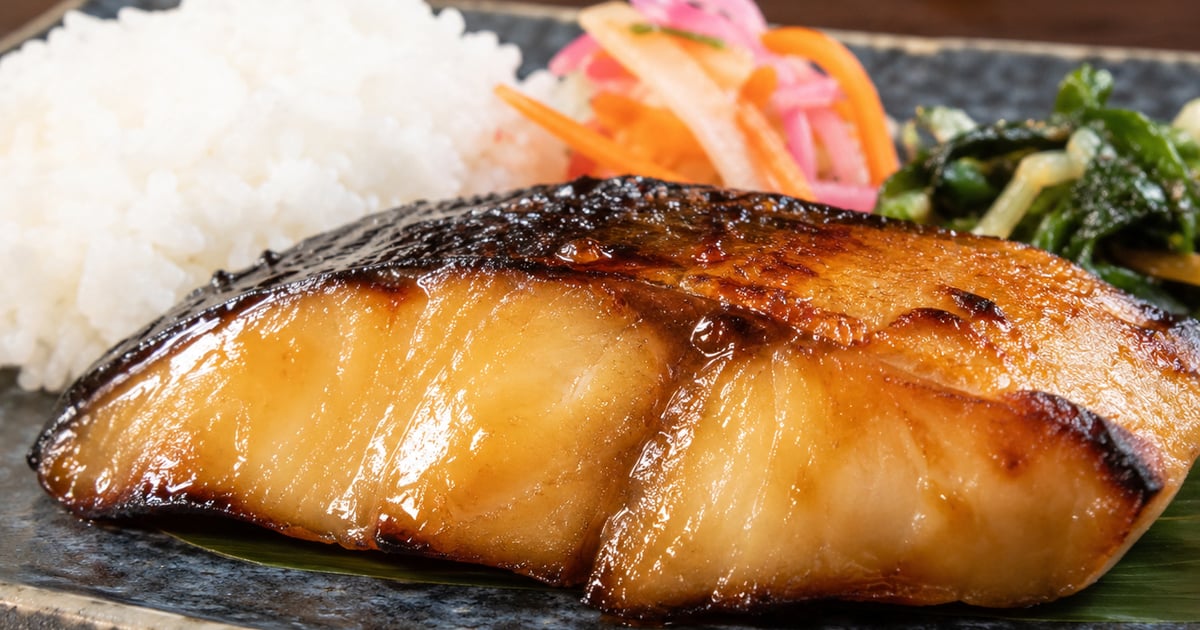

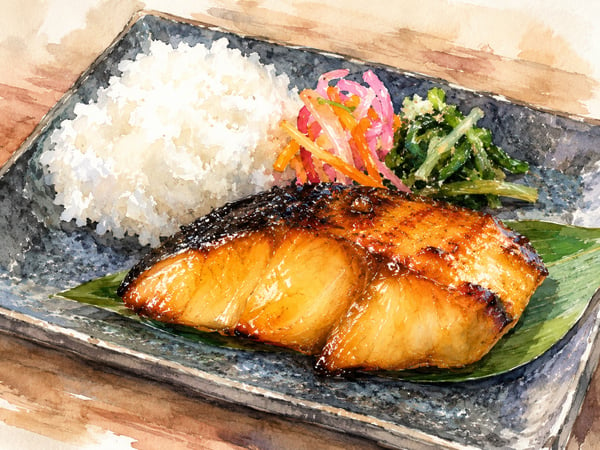
Misoyaki butterfish is the silky, lacquered miso-marinated black cod that has anchored Hawaii Regional Cuisine menus for decades. "Butterfish" is the Hawaii market name for what the rest of the country sells as black cod or sablefish — a deepwater fish with a high natural fat content that gives the flesh a buttery, melting texture. Marinate it for 48 hours in white miso, sake, mirin, and sugar, then broil it until the surface caramelizes into a deep mahogany shell over flesh that flakes apart with the side of a fork. There is almost nothing else you have to do to it.
The Japanese name for this preparation is saikyo yaki — Kyoto-style sweet white miso fish — and grilled miso-marinated fish has been a fixture of kaiseki cooking for generations. The Hawaii version moved into the public eye when Roy Yamaguchi opened Roy's in Hawaii Kai in 1988 and built the menu around dishes like this one. Today you can find a takeout version at Foodland's prepared-foods counter alongside the white-tablecloth versions.
At a glance
4
10 minutes
48 hours
10 minutes
Ingredients
For the marinade
- 3/4 cup white miso (shiro miso — the pale, mellow Kyoto style; not red or awase)
- 1/2 cup sake
- 1/2 cup mirin
- 1/2 cup granulated sugar
For the fish
- 4 black cod (butterfish) fillets, 5 to 6 oz each, skin on, about 1 inch thick
To serve
- Steamed short-grain Japanese rice (Calrose or Koshihikari)
- 2 tablespoons pickled ginger (gari)
- 4 wedges of lemon
- Quick cucumber-vinegar pickles or a small mound of dressed greens
Equipment
- Small saucepan
- Whisk
- Glass or ceramic dish big enough to hold the fillets in a single layer
- Plastic wrap
- Sheet pan and aluminum foil
- Wire rack that fits the sheet pan
Sourcing notes
- True black cod (sablefish) from the Pacific Northwest — most Hawaii fish counters carry it
- Sweet white miso (shiro miso) if your grocery store does not carry it
Method
- Make the marinade. In a small saucepan, whisk the sake and mirin together over medium heat. Bring to a gentle simmer for 90 seconds to burn off the raw alcohol — you should be able to smell the alcohol clearing. Remove from the heat. Whisk in the sugar until it dissolves completely. Add the white miso a spoonful at a time, whisking until the marinade is smooth and the color of caramel. Cool to room temperature, about 30 minutes. Never use warm marinade on raw fish.
- Pat the fish dry. Lay the black cod fillets on paper towels and blot every surface dry. Wet fish does not absorb marinade evenly and will give you a soggy crust at the broiler step.
- Marinate, long. Spread half the cooled marinade across the bottom of the glass dish. Lay the fillets skin-side down on the marinade. Spread the remaining marinade over the tops of the fillets in a generous layer. Cover tightly with plastic wrap, pressing it directly onto the marinade so no air gaps remain. Refrigerate for at least 48 hours, ideally 72. Yes, two full days. This is not negotiable for the flavor.
- Wipe and rest. Lift each fillet out of the marinade and gently wipe off the thick layer of miso with the back of a knife or paper towels. You want a thin coating, not chunks. Chunks scorch and turn bitter under the broiler. Let the fillets sit at room temperature for 15 minutes while you preheat the broiler.
- Broil. Heat the broiler to high with a rack positioned 6 inches below the heat element. Line a sheet pan with foil and set the wire rack on top. Place the fillets skin-side down on the rack with some space between them. Broil for 6 to 8 minutes, watching constantly through the door window. The top should turn a deep mahogany brown with a few dark caramelized spots. If the surface is browning too fast before the inside cooks, move the rack down one level.
- Check doneness. The fish is done when the flesh flakes easily with the tip of a knife and registers 130F to 135F at the thickest point. Black cod is naturally so fatty that it stays moist even slightly overcooked, but pull it as soon as it flakes for the best texture.
- Plate. Slide each fillet onto a plate with a generous scoop of rice, a small mound of pickled ginger, a wedge of lemon, and the cucumber pickle or greens on the side. Eat with chopsticks. The fillet should slide apart with light pressure.
Notes from a local cook
Two days, minimum. The 48-hour marinade is the whole technique. The miso needs the time to penetrate the dense, fatty flesh and lay down the deep umami that defines the dish. Twenty-four hours is the bare minimum and the fish will taste underdone in flavor; at six hours, the dish does not exist. Plan ahead. If you need to push the cook back a day, just leave it in the fridge another 12 hours and it will be even better.
Wipe the marinade off, but not all of it. The visible chunks of miso on the surface of the fish will scorch under the broiler and turn bitter, so wipe them off. But the thin caramel-colored film that has soaked into the flesh is exactly what you want to crust under the heat — leave that alone. A clean spatula or the back of a butter knife is the right tool.
True black cod, not "butterfish" labeled escolar. Some mainland markets sell escolar as "butterfish," and escolar contains indigestible wax esters that give some people serious stomach trouble. True black cod (also sold as sablefish) is what every Hawaii market means by butterfish, but if you are buying on the mainland and the label just says "butterfish," ask the counter. The Pacific Northwest catch is the best supply chain. Frozen sablefish at a Japanese market is fine — thaw overnight in the fridge.
White miso, never red. Sweet white miso (shiro miso) is short-fermented and mellow, with a pale beige color. Red miso (aka miso) is fermented longer, sharper, and saltier. The Kyoto saikyo-style marinade calls for white. Substituting red gives you a saltier, more pungent crust and loses the silky sweetness that makes the dish work.
While You're on the Islands
Eat it made by someone else. On Oahu, the dish is a fixture at Roy's — the original Hawaii Kai location opened in 1988 and the dining room still runs the misoyaki butterfish nightly. The takeout version at Foodland's prepared-foods counter is the everyday option, and worth the line. On Maui, Roy's Kaanapali also keeps misoyaki butterfish on the dinner menu in steady rotation. See our guides to Oahu dining and Maui dining for more on Hawaii Regional Cuisine restaurants.
Buy the ingredients fresh. White (shiro) miso is stocked at any island Japanese grocery store, and Foodland's fish counter sells true black cod / sablefish — worth confirming the name with the counter staff so you don't accidentally end up with escolar.
Bring It Home
What you can substitute, what you can't: white miso is stocked at most mainland Japanese and Asian grocery stores, so nothing here needs packing home. For the fish, ask specifically for black cod or sablefish — some mainland markets sell escolar labeled as "butterfish," and escolar can cause real digestive trouble. True black cod from a Pacific Northwest supplier is the safe call.
Where to try this in Hawaii