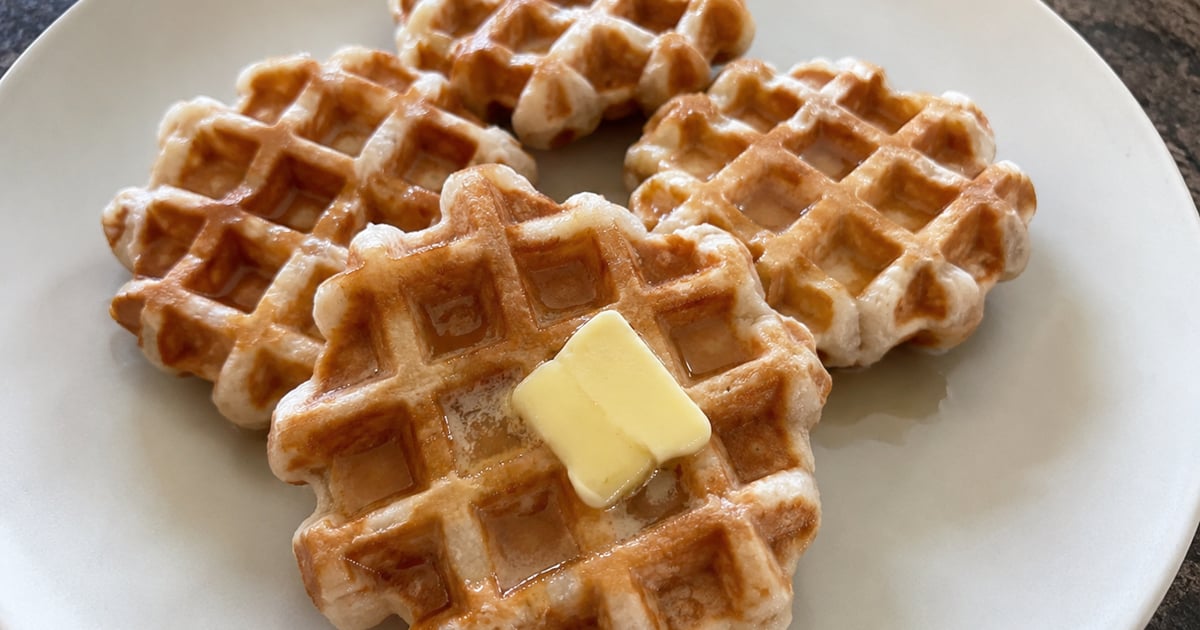


A mochi waffle is what happens when butter mochi meets a waffle iron. The outside develops a thin, lacy crunch that snaps when you bite it. The inside stays glossy and pull-apart chewy, the way good mochi is supposed to be: somewhere between a pancake and a piece of gum, in the best possible way. Pour a little coconut syrup over the top, scatter on some toasted shredded coconut, and you have a Hawaii cafe breakfast.
The dish is a fairly modern arrival, but its parents are old. Mochiko (Japanese sweet rice flour) came to Hawaii with Japanese plantation workers starting in the late 1800s, and butter mochi, the coconut-milk-and-mochiko slab cake, has been a staple of island potlucks and bake sales for decades. Honolulu cafes started cooking the same batter in a waffle iron in the mid-2010s, and the format stuck. Tropical fruit toppings — pineapple, mango, banana — show up alongside coconut syrup more often than maple, at least at the cafes I've eaten them at.
At a glance
6 to 8 waffles
10 minutes
4 to 5 minutes per waffle
Easy
Ingredients
For the batter
- 1 ½ cups Koda Farms Blue Star mochiko (sweet rice flour)
- ½ cup all-purpose flour
- ½ cup granulated sugar
- 1 ½ teaspoons baking powder
- ¼ teaspoon salt
- 1 can (13.5 oz) full-fat unsweetened coconut milk
- ¼ cup whole milk
- 2 large eggs
- 3 tablespoons unsalted butter, melted, plus more for the iron
- 1 teaspoon vanilla extract
For the coconut syrup (optional but better)
- ½ cup full-fat coconut milk
- ½ cup granulated sugar
- Pinch of salt
- ½ teaspoon vanilla extract
Equipment
- Standard or Belgian waffle iron (Belgian gives a bigger chew)
- Two mixing bowls
- Whisk
- Small saucepan for the syrup
To serve
- Coconut syrup (above), maple syrup, or lilikoi curd
- Toasted unsweetened shredded coconut
- Diced fresh pineapple, banana, or mango
- Whipped cream if you're going full brunch
Method
- Whisk the dry. In a large bowl, whisk together the mochiko, all-purpose flour, sugar, baking powder, and salt until evenly combined. Mochiko clumps more than wheat flour, so break the lumps up now.
- Whisk the wet. In a second bowl, whisk the coconut milk, whole milk, eggs, melted butter, and vanilla until smooth.
- Combine. Pour the wet into the dry and whisk gently until just combined. A few small lumps are fine. An overmixed batter goes tough. Let it rest 5 minutes so the rice flour hydrates. That rest is the difference between a chewy waffle and a gummy one.
- Heat the iron hot. Preheat the waffle iron to its medium-high setting. Mochi batter needs more heat than pancake batter to crisp the outside before the inside sets soft. Brush the plates with melted butter.
- Cook longer than you think. Pour about ½ cup of batter into a standard iron, ¾ cup into a Belgian. Close and cook for 4 to 5 minutes, longer than a standard waffle. The waffle is ready when the steam slows to almost nothing and the outside is a deep golden brown. Pull it too soon and the inside will be gluey instead of chewy.
- Make the syrup while you cook. In a small saucepan, combine the coconut milk, sugar, and salt. Bring to a gentle simmer over medium heat, whisking, and cook for 4 to 5 minutes until it just thickens enough to coat the back of a spoon. Off heat, stir in the vanilla. The syrup thickens more as it cools, so pull it before it looks ready.
- Serve immediately. Mochi waffles are best straight off the iron. The crisp edge softens within about 5 minutes, and reheated ones don't recover. Top with coconut syrup, toasted coconut, and fresh fruit.
Notes from a local cook
Use Koda Farms Blue Star mochiko if you can. It is the box in the blue and red packaging on Hawaii grocery shelves — what I've cooked with my entire life and what every aunty I know reaches for. Other sweet rice flour brands work in a pinch, but I haven't liked the results as much. Don't substitute regular rice flour or glutinous rice flour from a Korean or Thai brand — same plant family, different grind, different result.
Make it dairy-free. Swap the whole milk for more coconut milk and use a neutral oil (or vegan butter) instead of dairy butter. The waffles still crisp up fine. The coconut flavor leans harder, which I like.
Lilikoi curd is the upgrade. If you can get your hands on passion fruit, a spoon of lilikoi curd on top is the move. The tartness cuts the sweetness of the mochiko and the coconut, and the color is loud enough to carry the whole plate.
Leftovers, sort of. Cold mochi waffles eaten straight from the fridge the next morning are a different food entirely — dense and chewy like a chilled slice of butter mochi. Not the original dish, but worth knowing about. Don't try to reheat them in a toaster; they go rubbery.
While You're on the Islands
Eat it made by someone else. Honolulu's brunch scene is the easiest place to catch a mochi waffle on a menu — rotate through the city's locally-owned cafes and you'll spot them. Big Island cafes in Hilo and Kailua-Kona sometimes run mochi waffles as a rotating weekend special. Maui has a thinner scene; Paia and Kahului cafes occasionally feature them. See our Oahu dining guide for current Honolulu cafe picks.
Buy the ingredients fresh. Mochiko (sweet rice flour) is stocked at any island Japanese or Asian grocery — easy to grab a bag if you want to make this in a vacation rental kitchen.
Bring It Home
What you can substitute, what you can't: mochiko (the Koda Farms brand is the most widely available) is stocked at most mainland Asian grocery stores, so there's nothing here that needs special sourcing from Hawaii — just look for the same brand once you're home.