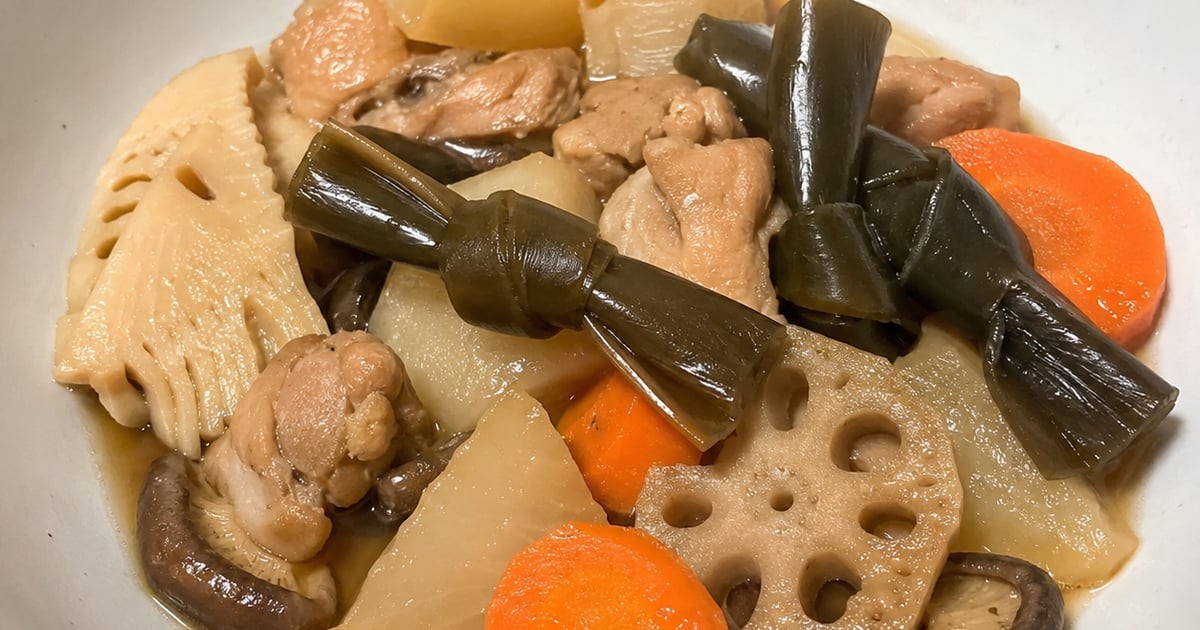

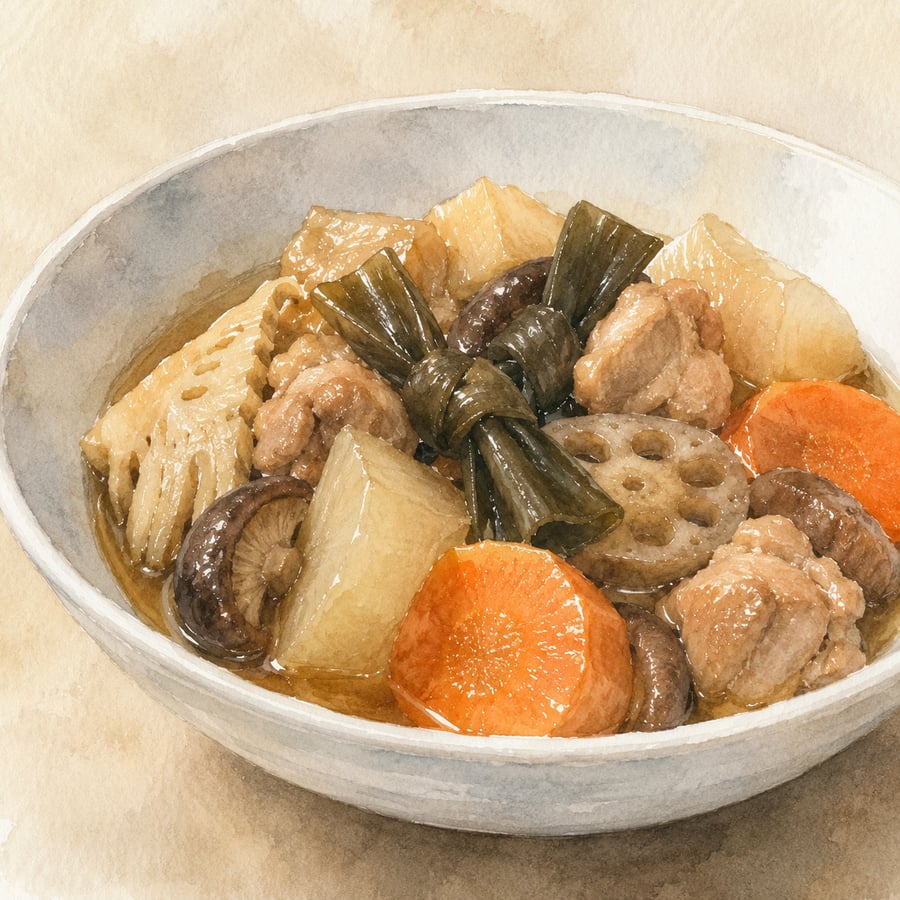
If you grew up in a Japanese-Hawaiian household, nishime is the pot that sat on the stove the day before New Year's. The core lineup is chicken, gobo, daikon, carrot, and konnyaku — all simmered in a single shoyu-dashi broth until every piece turns the same deep amber and gives up its own flavor to everything next to it. Lotus root, taro, aburaage, and shiitake are common add-ins, depending on the household. The pot was always too big. Leftovers were the point.
The dish traces back to nimono, the broad Japanese family of simmered dishes, and arrived in Hawaii with Japanese plantation laborers in the late 1800s and early 1900s. It settled into the local calendar as a New Year's staple and shows up at funerals and gatherings too. The pot is forgiving. Swap chicken for pork, leave the chicken out for a vegetarian version, or add aburaage and shiitake to deepen the broth. The frame is what matters: shoyu, dashi, mirin, sugar, and time.
At a glance
6 to 8 as a side
30 minutes
1 hour 15 minutes
Easy to moderate
Ingredients
For the simmer
- 1.5 lb bone-in chicken thighs, skin removed, cut into 2-inch pieces
- 1 large daikon radish, peeled, cut into 1-inch half-moons
- 3 medium carrots, peeled, cut into 1-inch chunks on the diagonal
- 1 burdock root (gobo), scrubbed and cut into 2-inch matchsticks; soak in water for 10 minutes to keep it from browning
- 1 lotus root (renkon), peeled, sliced into ¼-inch rounds (optional)
- 1 small taro corm (about 8 oz), peeled and cut into 1-inch chunks (optional)
- 1 block konnyaku (yam cake), torn into bite-sized chunks (do not cut with a knife — tearing gives the broth more surface to grip)
- 4 dried shiitake mushrooms, soaked in 1 cup warm water for 20 minutes (reserve the soaking liquid)
- 2 sheets aburaage (fried tofu pouches), rinsed and cut into 1-inch squares (optional)
For the broth
- 3 cups dashi (homemade from kombu and katsuobushi, or made from a teaspoon of dashi powder)
- 1 cup of the reserved shiitake soaking liquid
- ⅓ cup shoyu (Aloha Shoyu is the Hawaii default; Kikkoman works)
- 3 tablespoons mirin
- 2 tablespoons sake (optional but worth it)
- 2 tablespoons sugar
- 1 tablespoon vegetable oil
Equipment
- Large heavy-bottomed pot or Dutch oven (5-quart or larger)
- Otoshibuta (drop-lid) or a circle of parchment paper cut to fit inside the pot
To serve
- Steamed Calrose rice
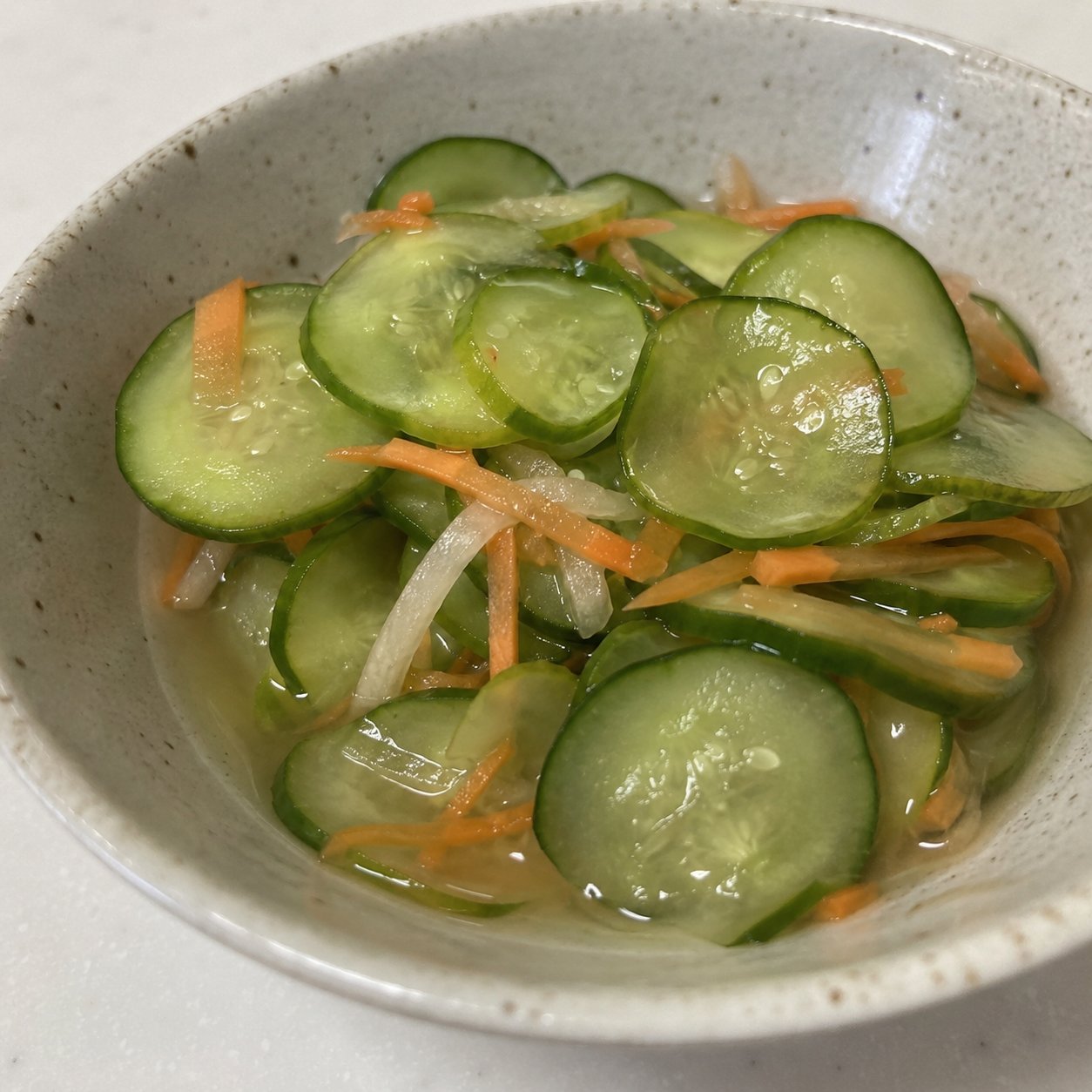
- Pickled vegetables (try our namasu)
Method
- Sear the chicken. Heat the vegetable oil in your pot over medium-high. Pat the chicken dry and brown the pieces on all sides — about 5 minutes total. You are not cooking them through, just building a base layer of flavor. Remove and set aside.
- Add the hard vegetables. To the same pot, add the daikon, carrots, gobo (drained), lotus root, and taro. Stir to coat in the residual chicken fat for about 2 minutes. The taro especially needs that contact to keep its edges from disintegrating later.
- Build the broth. Pour in the dashi, shiitake soaking liquid, shoyu, mirin, sake, and sugar. Return the chicken to the pot. Add the rehydrated shiitake mushrooms (stems removed), the konnyaku, and the aburaage if using. The liquid should come about two-thirds of the way up the vegetables — add more dashi or water if needed.
- Drop-lid simmer. Bring to a gentle boil, then reduce to a low simmer. Place an otoshibuta or a parchment circle directly on top of the food (this is how nimono cooks evenly without losing too much liquid). Cover the pot loosely. Simmer for 45 minutes to an hour, until the daikon and taro are fork-tender and the broth has reduced by about a third.
- Rest, then serve. Turn off the heat and let the pot sit for at least 30 minutes — an hour is better. This is the most important step. Nishime is at its best after the broth has had time to soak back into everything (Just One Cookbook). Serve at room temperature or gently rewarmed, with a small mound of rice and a few pieces of each vegetable in a shallow bowl.
Notes from a local cook
Make it a day ahead. Nishime tastes better the next day. The flavors keep developing in the broth overnight, and the vegetables firm up into a more pleasing texture. That is why a lot of households cook the pot a day or two before New Year's and serve it cold or rewarmed on January 1st — check it off the list early so the kitchen is clear for everything else.
Tear the konnyaku, do not cut it. The torn edges have more surface area for the broth to grip. This is one of those small Japanese-cooking conventions that actually matters — a clean knife-cut block of konnyaku just slides the broth off.
The vegetarian version is genuinely good. Drop the chicken, double the shiitake, and add a chunk of kombu to the broth. The aburaage and the kombu together carry the savor. Just be sure the shiitake soaking liquid is in the pot — it is doing a lot of the heavy lifting on flavor.
About the taro. Hawaii taro is dense and starchy and will absorb the broth like a sponge. If you cannot find fresh taro, frozen taro chunks from a Hawaiian or Asian market work; plain potato is a poor substitute — it will fall apart. Skip it entirely if you do not have it.
While You're on the Islands
Eat it made by someone else. Most home-style nishime in Hawaii lives at Japanese-Hawaiian okazuya — counter-service deli-style lunch spots that opened in plantation camps and never quite went away. Mitsu-Ken at 2300 N. King Street in Kalihi-Pālama is best known for its garlic chicken, but like most okazuya, its hot trays rotate — call ahead if you are going specifically for nishime. See our full guides to Oahu dining and Big Island dining.
Buy the ingredients fresh. Konnyaku (konjac), taro, and dried shiitake are all stocked at any island Asian grocery store — no special farmers-market trip needed if you want to cook this one yourself.
Bring It Home
What you can substitute, what you can't: konnyaku, dried shiitake, and gobo (burdock root) are all sold at most mainland Japanese or Asian grocery stores, so nothing here needs packing home — just know the names to ask for once you're back.
Where to find okazuya in Hawaii