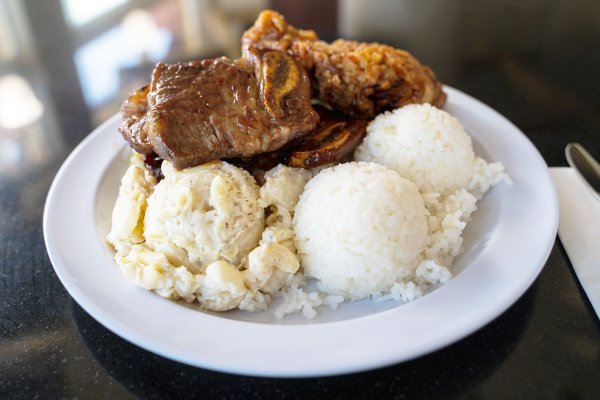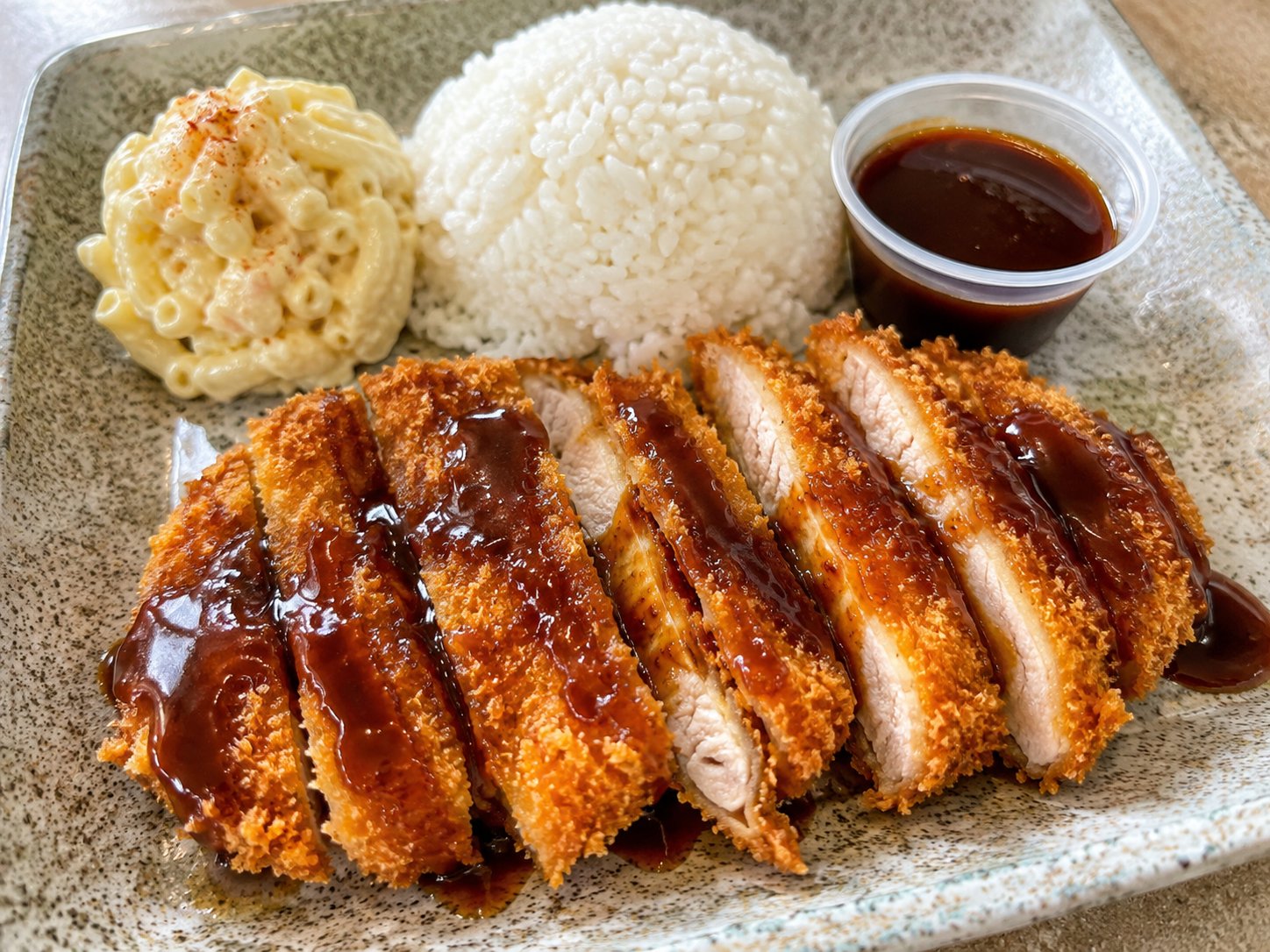
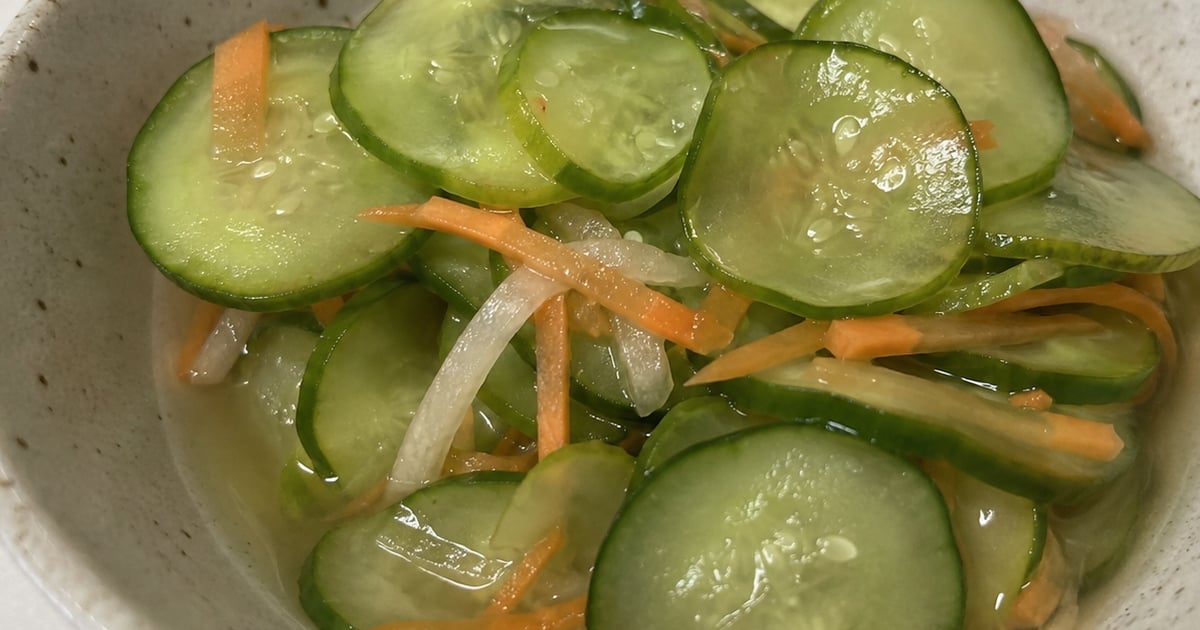

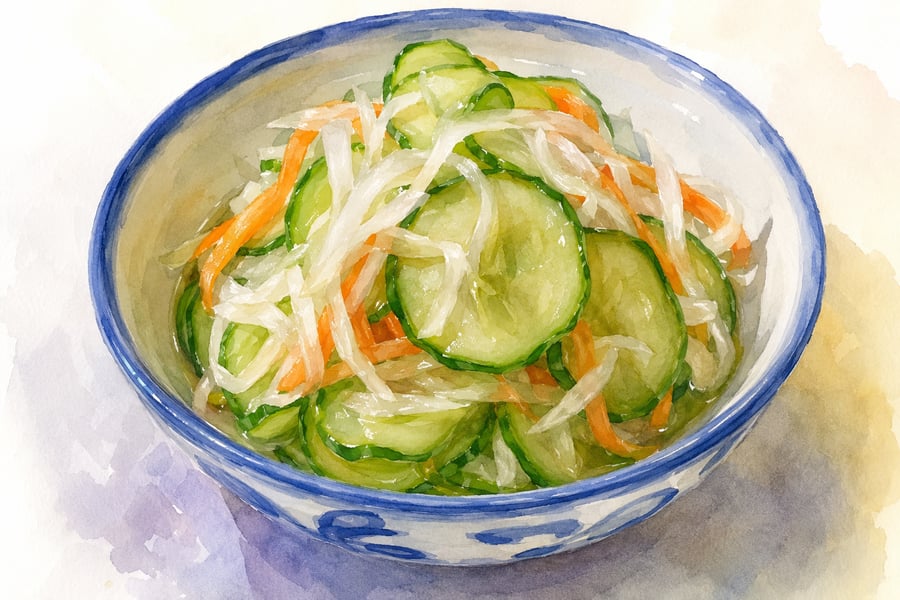
Namasu is the small mound of pickled cucumber and carrot that lands in the corner of most Japanese-Hawaiian plate-lunch boxes, next to the rice and across from whatever the protein is. Sweet, tart, cold, crunchy. Exactly what your mouth wants after three bites of fried chicken katsu or a salt-heavy nishime. The whole point of namasu is to be the bright counter to everything else on the plate.
The dish traveled over with the Japanese plantation laborers who began arriving in Hawaiʻi in the late 1800s. In Japan, namasu covers a broad family of vinegar-dressed raw vegetable and seafood salads, most famously the daikon-and-carrot kohaku namasu served at New Year's as part of osechi ryori. In Hawaiʻi the form simplified over generations. English cucumber tends to be the dominant base, carrot gets shredded in for color, and the dressing usually leans sweeter than the Japanese original. The whole thing takes 15 minutes of active work and improves as it sits.
At a glance
about 4 cups (8 small sides)
about 15 minutes
1 hour minimum, 4 hours better
Easy
Ingredients
For the vegetables
- 2 large English cucumbers (or 4 small Japanese cucumbers), sliced into very thin rounds or ribbons. A mandoline makes this trivial.
- 2 medium carrots, peeled and shredded on the large holes of a box grater
- 4 inches daikon radish, peeled and shredded (optional but traditional)
- 1 tablespoon fine sea salt or Hawaiian sea salt, for drawing water out of the cucumber
For the dressing
- ½ cup rice vinegar (unseasoned)
- ¼ cup granulated sugar
- 1 teaspoon fine sea salt
- 1 tablespoon toasted sesame seeds (optional)
- 1 small piece of fresh ginger, peeled and very thinly julienned (optional)
- A small piece of kombu, wiped with a damp cloth, dropped into the bowl while it rests (optional, for depth)
Equipment
- Mandoline or sharp knife
- Box grater
- Colander
- Large mixing bowl
- Clean kitchen towel or several paper towels
To serve
- As a side to nishime or shoyu chicken
- Next to chicken katsu as the cool counterpoint to the breading
- On a New Year's plate alongside black-eyed beans, ozoni, and nishime
Method
- Salt the cucumbers. Slice the cucumbers as thin as you can stand. Paper-thin rounds are ideal. Put them in a colander, sprinkle with the tablespoon of salt, and toss to coat. Let drain over the sink or a bowl for at least 15 minutes. The salt pulls a surprising amount of water out and leaves the cucumber crunchy instead of waterlogged.
- Squeeze. Gather small handfuls of the salted cucumber, lift them out of the colander, and squeeze firmly between your palms over the sink to wring out the water. Or pile the cucumber on a clean kitchen towel, gather the corners, and twist. Do not skip this. It is the difference between crisp namasu and a soup. Transfer the squeezed cucumber to a large mixing bowl.
- Add the carrot and daikon. Add the shredded carrot and shredded daikon (if using) to the bowl with the cucumber. The carrot will tint the whole bowl a soft pink-orange over time, which is the look you want.
- Make the dressing. In a small saucepan, combine the rice vinegar, sugar, and 1 teaspoon salt. Warm over low heat just until the sugar dissolves, about 2 minutes. Do not boil. You want the brightness of the vinegar intact. Remove from heat and let cool to room temperature. Stir in the sesame seeds and julienned ginger if using.
- Combine and rest. Pour the dressing over the vegetables. Toss gently with your hands to coat. Drop in the small piece of kombu if using. Cover and refrigerate for at least an hour. Four hours or overnight is better. Toss again before serving. The longer it sits, the more the dressing pulls into the vegetables and the more the flavors round out.
- Serve cold. Lift a small mound out with a slotted spoon, leaving most of the liquid behind in the bowl, and place next to whatever you are eating. Namasu keeps in the refrigerator for at least 5 days and arguably gets better through day 3.
Notes from a local cook
The salt-and-squeeze step is the whole recipe. Skip it and you will have watery namasu by hour two. Cucumbers are mostly water. Pulling that water out with salt before the dressing goes on is what gives you a pickle that stays crisp.
Slice as thin as your patience allows. The classic Hawaiʻi okazuya version is essentially translucent cucumber ribbons. A cheap plastic mandoline from a Japanese market gets you there in 60 seconds and pays for itself fast on this kind of cooking. If you are using a knife, sharpen it first.
Adjusting sweetness. The classic Hawaiʻi ratio leans sweet because that is what plate-lunch palates expect. Cut the sugar to 2 tablespoons for a more savory Japanese version. Push it up to ⅓ cup if you remember your grandmother's version being almost candy-sweet (a common Big Island Japanese-Hawaiian preference). Adjust to taste.
Other vegetables. Thinly sliced sweet onion is a good addition. Thinly shaved fresh ginger turns it into a sharper, more Japanese version. Thin half-moons of yellow squash work too. The dressing carries pretty much any crisp watery vegetable.
While You're on the Islands
Eat it made by someone else. Namasu is a standard sight on Japanese-Hawaiian okazuya and plate-lunch counters around the islands. On Oʻahu, Mitsu-Ken at 2300 N. King Street in Kalihi-Pālama is the classic okazuya stop, with side dishes like namasu always part of the case. On Hawaiʻi Island, Suisan Fish Market in Hilo is best known for poke, and their deli case usually has local sides in cold containers next to it. For a full Japanese-Hawaiian plate at home, pair namasu with nishime and shoyu chicken over rice. See our guides to Oahu dining and Big Island dining.
Buy the ingredients fresh. Daikon and carrots are sold at any island grocery store — no special sourcing needed for this one, which is exactly why it's a good first dish to cook on a short trip.
Bring It Home
What you can substitute, what you can't: daikon, carrots, rice vinegar, and sugar are pantry-shelf items at any mainland grocery store, so this is one of the easiest recipes on this site to keep making after the trip — nothing here needs special sourcing.
Where to find okazuya in Hawaii