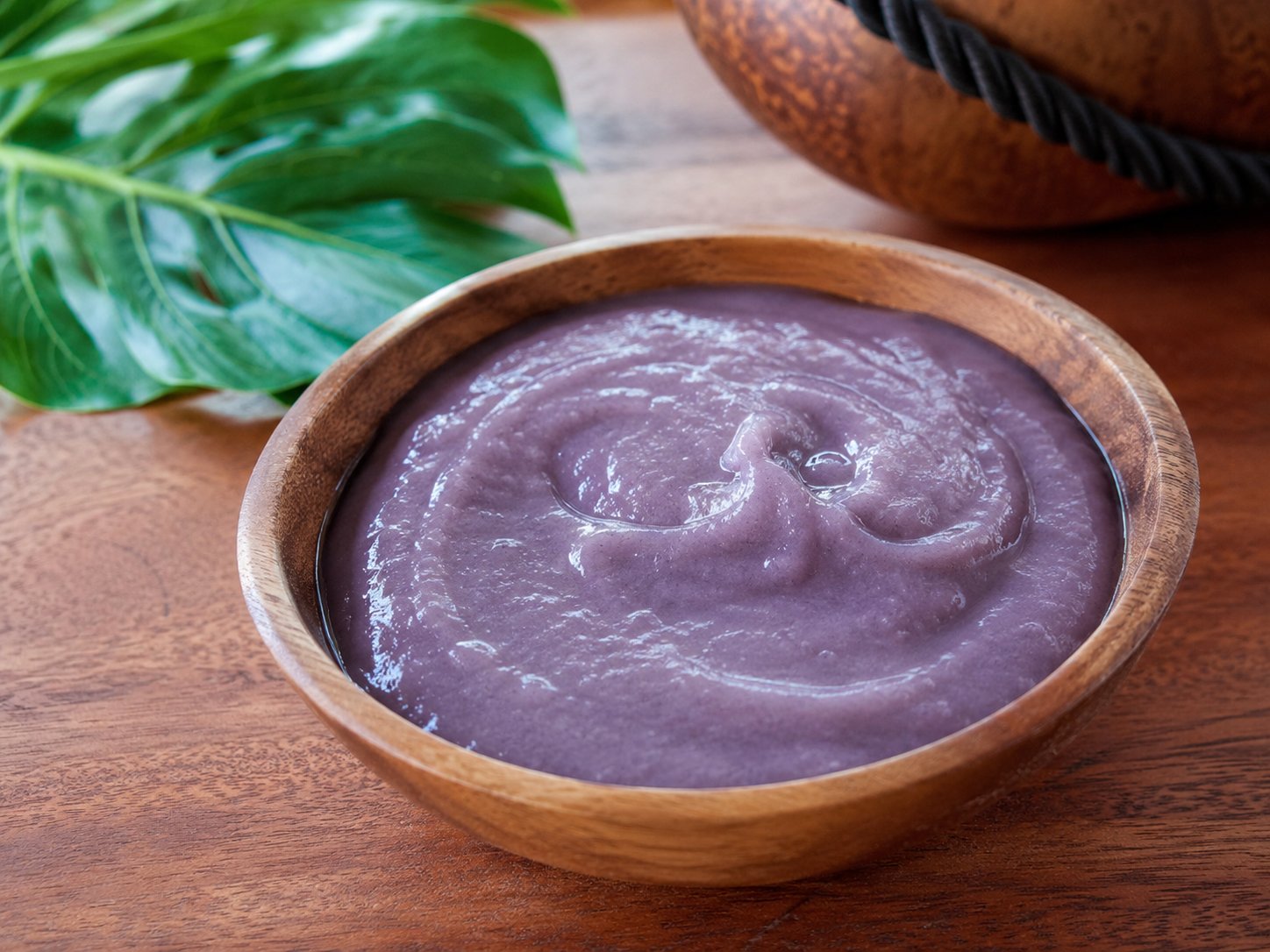
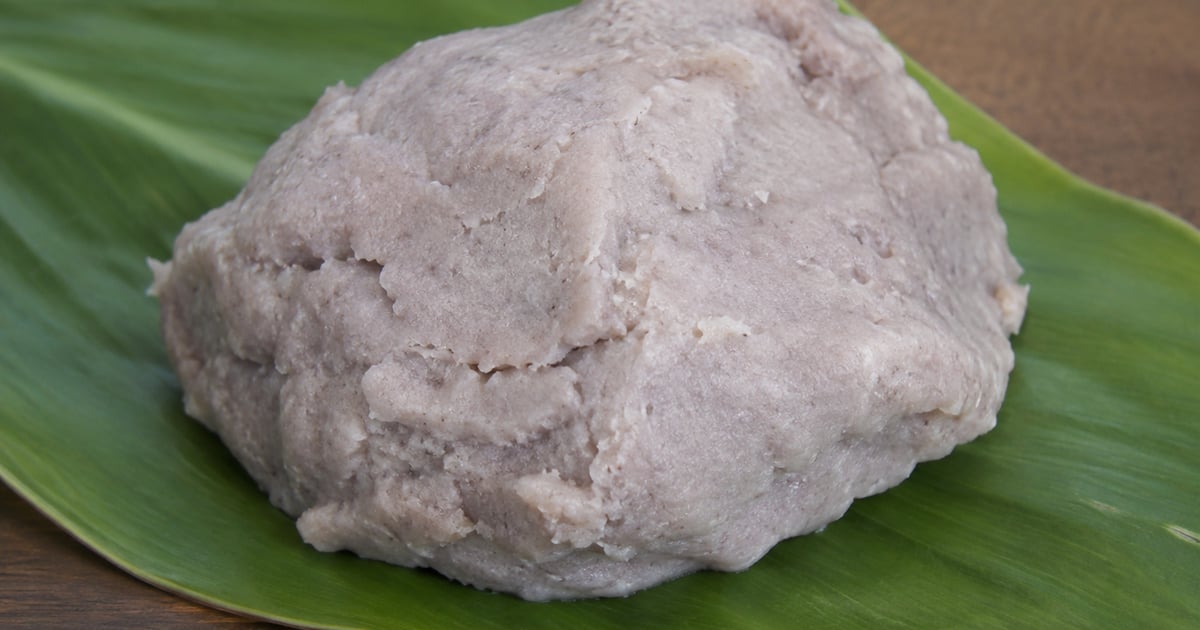


Paʻi ʻai is what poi looks like before you add the water. Native Hawaiian cooks would steam taro corm (kalo) for hours until it was knife-tender, then pound it on a wood board with a stone pounder until the starch broke down into a dense, springy paste. Pressed and salted, the result was shelf-stable for days — a portable starch you could carry to the fields, take fishing, or wrap and trade. Add water at the table and it loosens into the familiar purple-grey poi you might know from a luau plate.
If you have ever wondered why poi tastes faintly fermented, this is the reason: paʻi ʻai sits and develops gentle wild lacto-fermentation as it ages. Polynesian voyagers brought kalo to Hawaiʻi more than a thousand years ago, and Hawaiian families have been pounding and eating it this way ever since. It was also, technically, illegal to sell commercially in Hawaii until 2011, when the state legislature passed a traditional-foods bill carving out an exemption to the Department of Health's commercial-kitchen rules. The argument from kalo farmers and Native Hawaiian practitioners was simple: this is the food that fed the islands long before the state had a Health Department, and pounding it on a wood board on a porch is the entire point.
At a glance
About 2 lb paʻi ʻai
20 minutes
2 hours steam, 30 minutes pounding
Easy ingredients, demanding technique
Ingredients
For the paʻi ʻai
- 3 to 4 lb fresh Hawaiian kalo (taro corm), preferably a wetland variety like Maui Lehua or Mana ʻUlu
- 1 to 2 teaspoons Hawaiian alaea sea salt, to taste
- Cold water, for the pounding board and your hands
To serve (optional)
- Cold spring water, to thin into poi at the table
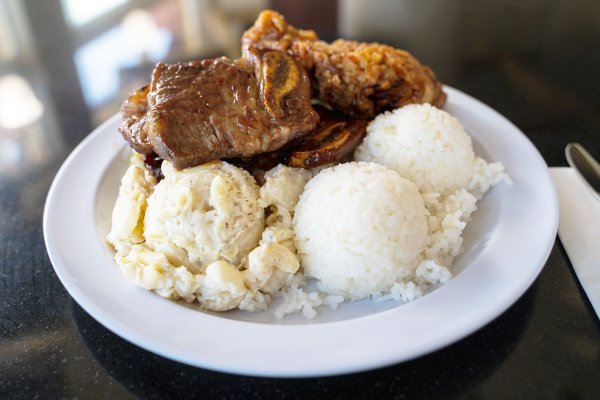
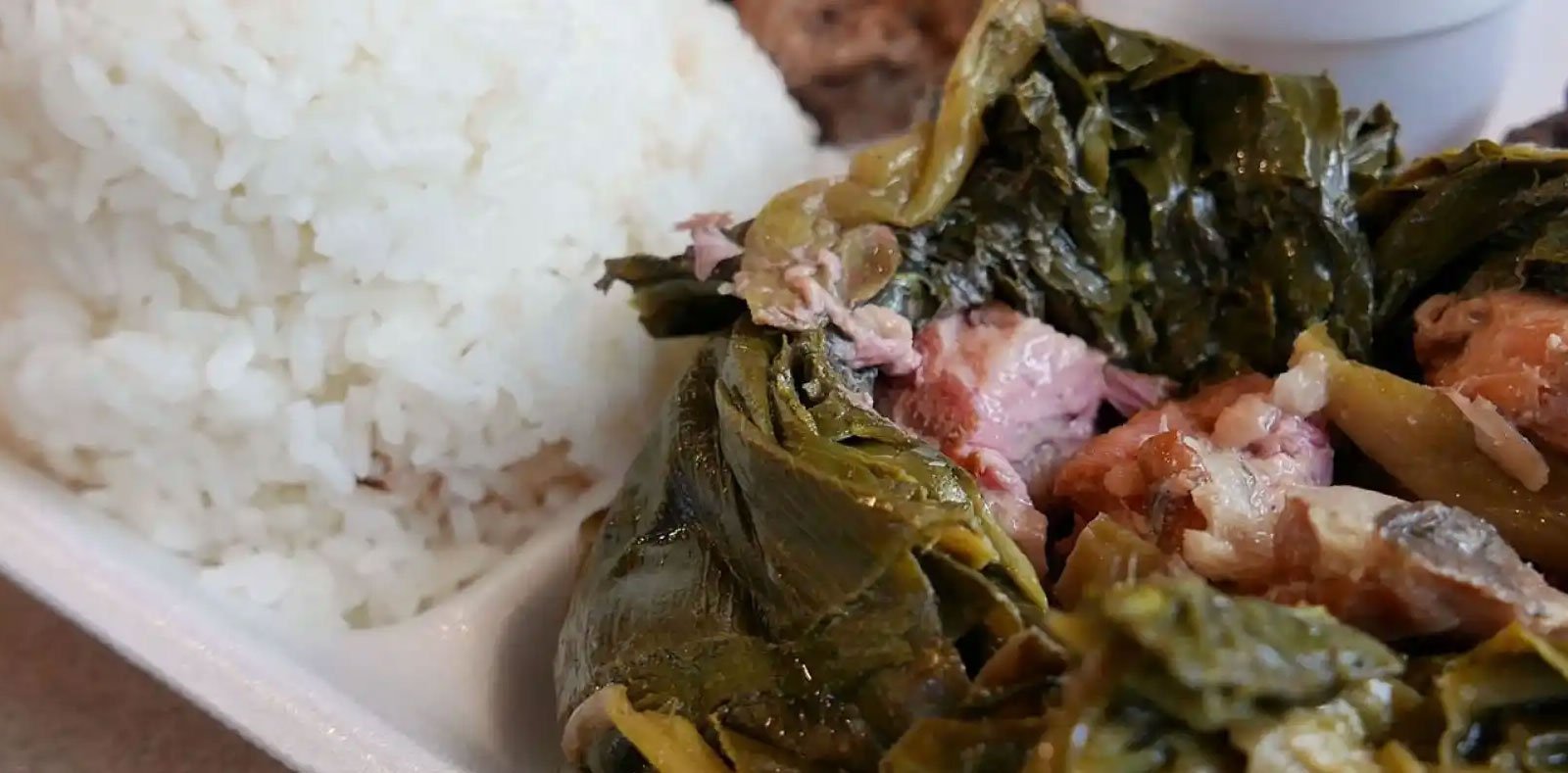
- Kalua pig, laulau, or lomi lomi salmon for a traditional plate
Equipment
- Stockpot with a steamer insert or a pressure cooker
- Wood board for pounding (traditionally a papa kuʻi ʻai); a heavy hardwood cutting board works
- A stone pounder (pōhaku kuʻi ʻai) is traditional; a wood pestle or potato masher will substitute
- Sharp paring knife
- Disposable food-safe gloves
To store
- Ti leaves for wrapping, or a sealed glass container
Method
- Glove up and peel. Put on disposable gloves before you touch the kalo. Raw taro contains calcium oxalate crystals that will leave your hands itching for hours; cooking destroys them, but the raw corm has not been cooked yet. Trim away the leaf base and any bruised spots, then peel the brown skin until you reach the firm white or pale-purple flesh.
- Steam until tender all the way through. Cut the peeled corm into 2-inch chunks. Steam over rolling boiling water for 90 minutes to 2 hours, depending on size. The kalo is done when a knife slides in with no resistance — like a fully baked potato. Under-cooking is the most common mistake. Calcium oxalate crystals only break down with thorough cooking, so do not pull it early to save time.
- Pound while it is still hot. Transfer the hot kalo to your pounding board. Add a teaspoon of salt to start. Working with the stone or wood pestle in one hand, press and fold the kalo, turning the board as you go. Dip your free hand in cold water and use it to keep the mass from sticking to the board. The texture moves through three stages: lumpy mash, sticky dough, and finally a smooth, springy paste that pulls away from the board cleanly. Plan on 20 to 30 minutes of pounding for 3 lb of cooked kalo.
- Taste and adjust the salt. A finished paʻi ʻai should taste gently savory — the salt should round the earthy taro flavor, not stand out on its own. Add salt a pinch at a time and pound it in. If the paste feels stiff and crumbly, dip your hands in cold water and work the moisture in; if it feels too wet, keep pounding to drive off the steam.
- Shape, wrap, and store. Press the finished paste into a tight loaf or break into 4-ounce bricks. Wrap each portion in ti leaves (or transfer to a sealed container) and refrigerate. It will keep 4 to 5 days as the lacto-fermentation gently develops. To serve as poi, mash a portion in a bowl with cold spring water a tablespoon at a time until you reach a smooth pudding consistency.
Notes from a local cook
Cook the kalo through. This is the rule that does not bend. Raw or undercooked taro will scratch the back of your throat — that is the calcium oxalate talking. A 2-hour steam on 2-inch chunks is what longtime kalo farmers do, and it is what the state's commercial-foods rule for paʻi ʻai effectively calls for too. Pressure-cooking at high pressure for 45 minutes works if you are tight on time.
Wetland kalo behaves differently from dryland. Maui Lehua and Mana ʻUlu (wetland varieties) pound up smooth and slightly sweet. Dryland varieties like ʻEleʻele Mākoko are denser and earthier — great if you want a sturdier paʻi ʻai for travel, less great if you are after the silky poi-into-water experience. Local kalo farmers on Kauaʻi and Maui will tell you which variety they are selling; if you cannot get fresh, frozen taro chunks from a Hawaiian grocer will work.
The pounding is a workout, and it should be. If your arms are not tired, you have not pounded long enough. Paʻi ʻai is supposed to be dense and elastic — closer to bread dough than mashed potatoes. The smoother the paste, the more cleanly it will thin into poi later.
If your kitchen runs cold, ferment intentionally. Paʻi ʻai left at room temperature for 24 to 48 hours develops the tangy “day-two poi” flavor many Hawaiian families prefer. Refrigerated, the fermentation slows but does not stop. Both styles are correct — cooks just disagree on which one is better.
While You're on the Islands
Eat it made by someone else. The clearest path to tasting real paʻi ʻai without making it yourself is a Hanalei taro farm stand on Kauaʻi, where kalo families like the Haraguchi farm have been growing wetland taro for decades. On Oʻahu, the long-running Hawaiian sit-downs — Helena's Hawaiian Food in Kalihi and Highway Inn in Kakaʻako and Waipahu — serve fresh poi made from paʻi ʻai on their combination plates. See our full guide to Oahu dining and the poi recipe for the next step.
Buy the ingredients fresh. The 2011 traditional-foods law means small kalo farmers can sell paʻi ʻai directly to the public — the easiest way to find it (or fresh taro corms to pound yourself) is to stop by a weekend farmers market on Kauaʻi or Maui and ask the kalo grower directly.
Bring It Home
What you can substitute, what you can't: fresh kalo doesn't travel home well, but frozen taro chunks from a Hawaiian or Asian grocer are a fine substitute once you're back on the mainland and want to keep pounding paʻi ʻai — just make sure they're cooked through (the 2-hour steam in the Method above isn't optional; raw or undercooked taro will scratch the back of your throat from its natural calcium oxalate).