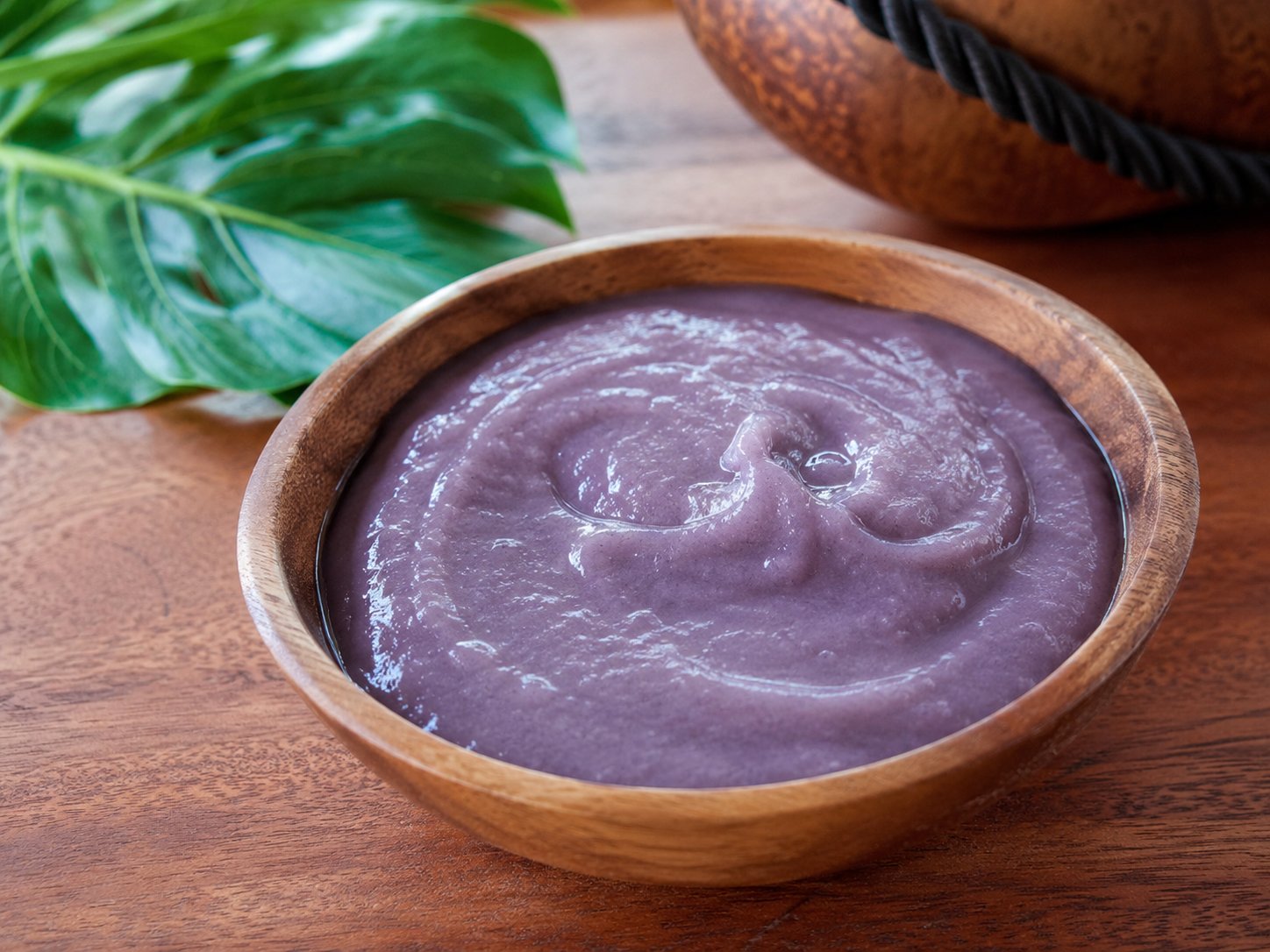


Poi anchors a Native Hawaiian plate. Cooked kalo (taro) root, pounded with water until it goes from chunky paste to silky purple-gray cream, then served fresh-sweet on day one and pleasantly sour by day three. The Hawaiian word poi means the pounded staple food (Hawaiian Dictionary, wehewehe.org) — the implied subject is kalo, because for centuries kalo poi was the daily carbohydrate of the Hawaiian Islands.
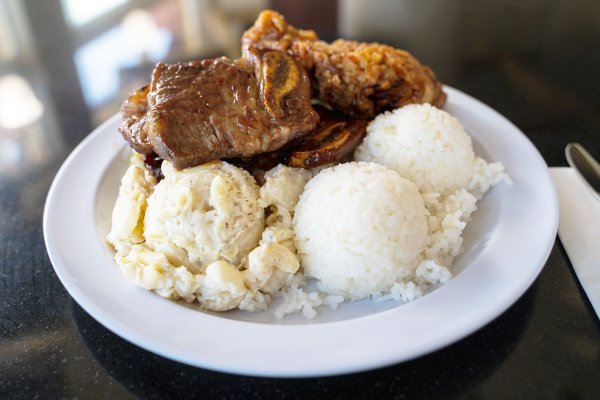
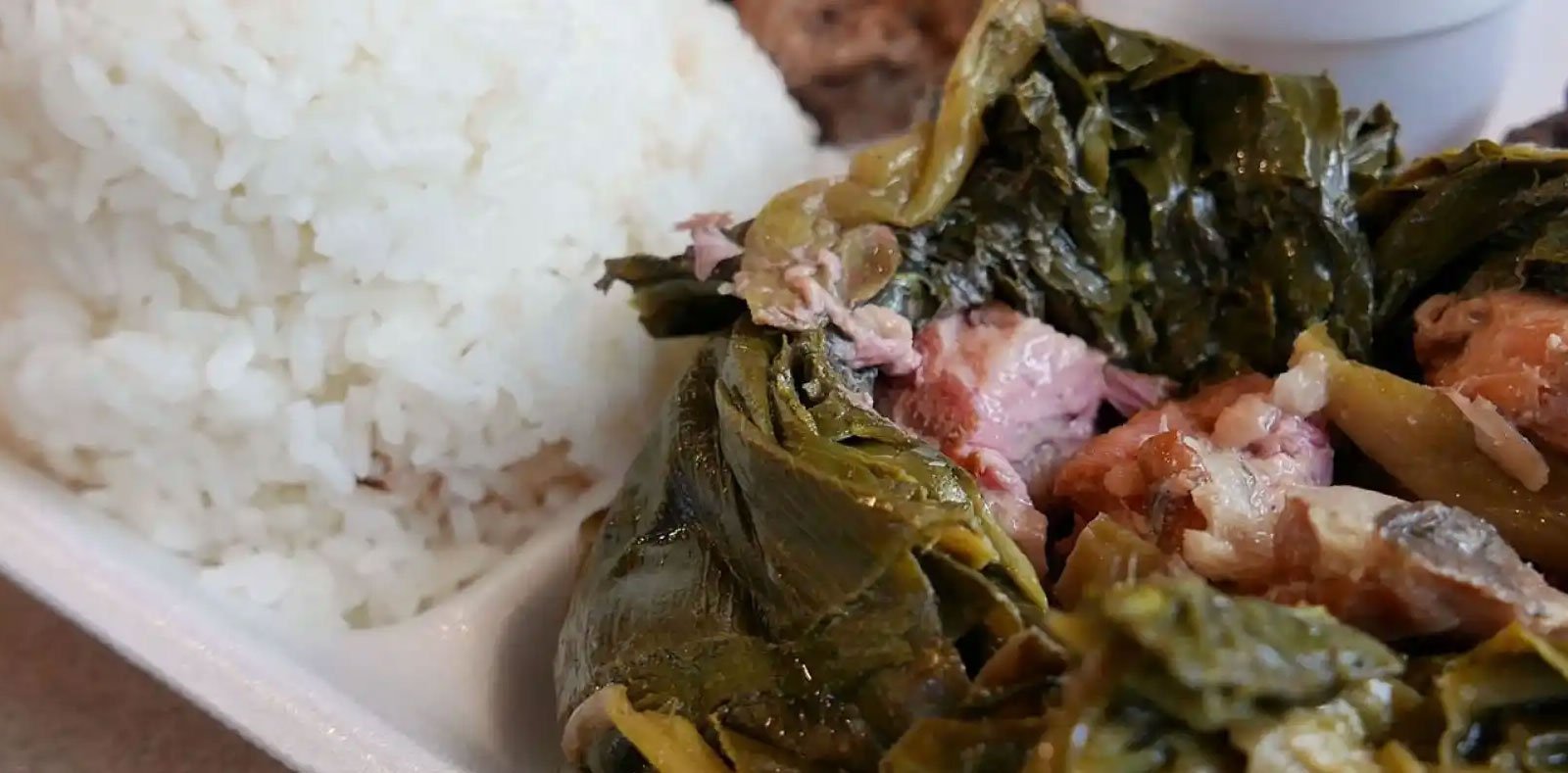
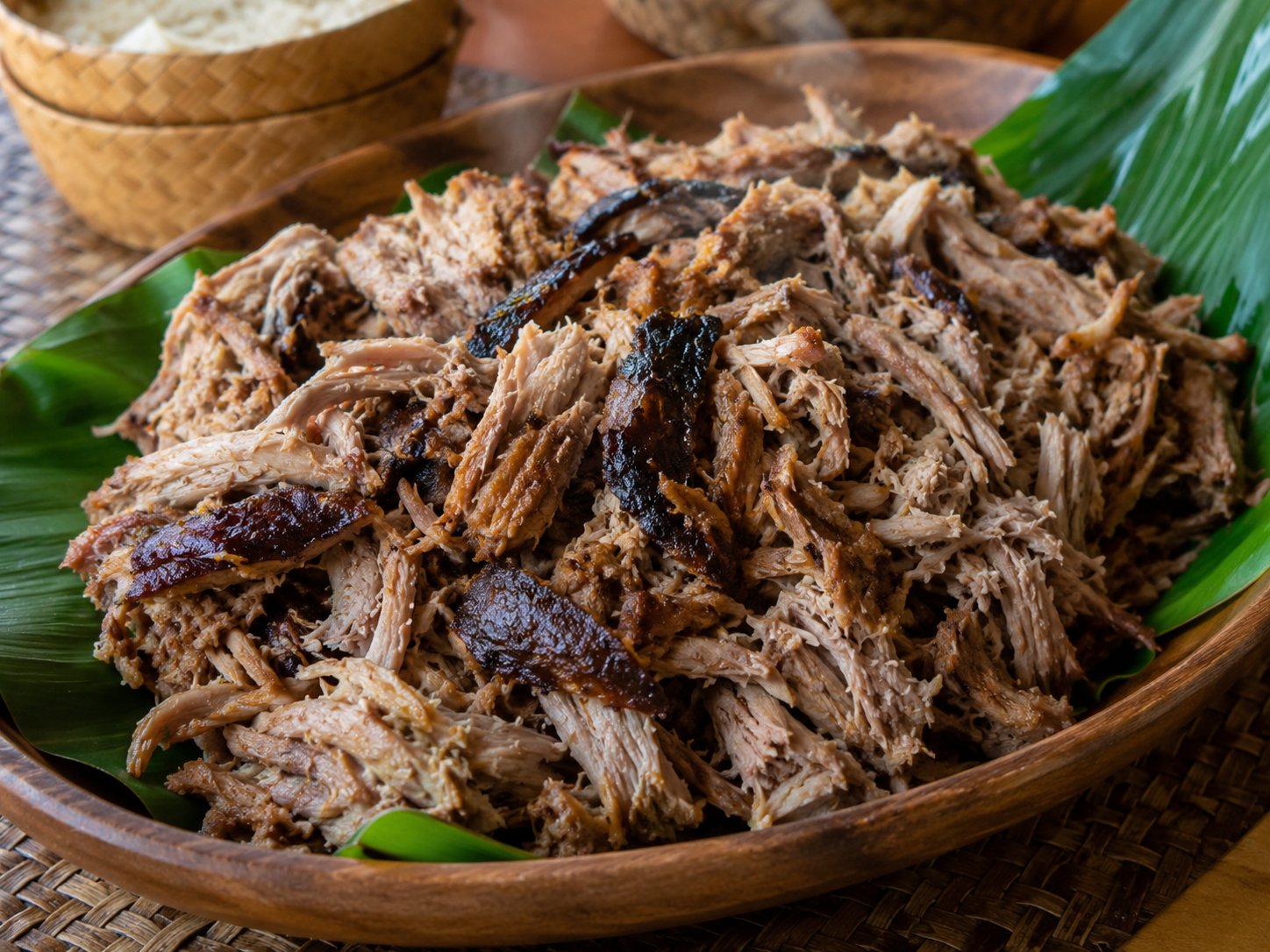
Fresh poi is mild. A spoonful tastes a little like wet cream of wheat with a faint pink-banana sweetness, then turns tangier and more yogurt-like over the next day or two as lactic acid bacteria on the corm ferment it. On a Native Hawaiian plate at Helena's Hawaiian Food or Highway Inn, the poi is the cooling neutral note between the salty kalua pig and the salt-cured fish.
At a glance
6 to 8
20 minutes
1 hour 30 minutes
Moderate
Ingredients
For the poi
- 3 lb fresh kalo (taro corm), small to medium — about 4 to 6 corms depending on size
- 1 to 2 cups cool fresh water, added gradually
- Pinch of Hawaiian alaea sea salt (optional, modern preference)
Optional, for serving
- Cold lomi lomi salmon on the side
- Kalua pig and rice
- Pipikaula or salted dried fish
Equipment
- Large stockpot for steaming or boiling
- Sharp paring knife and cutting board
- Heavy mortar and pestle, or a stand mixer with a paddle attachment, or a high-powered blender
- Disposable kitchen gloves — raw taro contains calcium oxalate that irritates skin
- Fine-mesh strainer
- Glass or ceramic bowl with cover for fermenting
Method
- Cook the kalo, fully. Wash each corm and trim off the rough hair-roots and any bruised spots. Do NOT peel raw — raw taro contains calcium oxalate crystals that irritate skin and throat. Place the whole, unpeeled corms in a stockpot, cover with cold water by 2 inches, bring to a steady boil, and cook for 1 hour to 1.5 hours until a knife slides through the center with no resistance. Soft is good. Firm is not. (Alternative: pressure cook at high pressure for 30 to 40 minutes, depending on size.)
- Peel while warm. Wearing gloves, hold each corm with a kitchen towel and use a paring knife to slip the skin off. The outer skin pulls away cleanly once the corm is cooked. Cut out any tough fibrous core threads. Cube the cooked flesh into 2-inch chunks. Discard the skin.
- Pound or blend with cool water. Traditional method: place the warm cubes in a mortar with a few tablespoons of cool fresh water and pound rhythmically until the mash turns from chunky to smooth-paste. Add water a tablespoon at a time as you go. You want a thick pudding-like consistency, not soup. Modern stand-mixer method: paddle the warm taro on low for 2 minutes, then medium for 3 to 4 minutes, drizzling in cool water as needed. High-powered blender method: work in batches with 1/2 cup water at a time, stopping to scrape down the sides every 30 seconds. Aim for a creamy, lavender-gray purée with no visible chunks.
- Strain (optional, traditional). Press the poi through a fine-mesh strainer to catch any remaining fibers. This step is the difference between rough home poi and the silky restaurant version.
- Rest and serve. Transfer to a glass or ceramic bowl, smooth the surface, and pour a thin layer of cool water on top to keep a skin from forming. Cover loosely and leave at cool room temperature. Day one is "sweet poi" — mild, slightly nutty, lightly starchy. Day two starts turning. Day three is full "sour poi" — tangy, almost yogurt-like, and what many older Hawaiian families prefer. Stir before each serving.
Notes from a local cook
Cook it long enough. Undercooked taro is genuinely unpleasant — it has a scratchy throat-burn from the calcium oxalate that proper cooking breaks down. Set a timer for 90 minutes and check with a knife. If the corm still resists in the center, keep going. Better to overcook than to rush.
Wear gloves with the raw root. The same calcium oxalate that ruins undercooked poi also irritates bare skin on contact with the raw outside. People who handle a lot of fresh kalo — farmers, restaurant prep cooks — sometimes develop hand itching from repeated exposure. Dispose of the gloves and the peelings after the prep.
Water is the only seasoning you need. Traditional poi is just kalo and water. Salt is a modern addition some cooks like; many older Hawaiian families consider it unnecessary. The flavor changes you taste from day to day are the natural lactic acid bacteria on the corm doing their work, not anything you added.
One-finger, two-finger, three-finger. The thickness of poi is described by how many fingers you need to scoop it cleanly — thicker poi is "one-finger," thinner pudding-consistency is "two-finger," and a drinkable version closer to liquid is "three-finger." Restaurant poi is usually two-finger. Day-three sour poi at the back of the fridge will thicken as it ferments.
While You're on the Islands
Eat it made by someone else. If you're visiting, the easiest place to taste fresh and sour poi side by side is on a Native Hawaiian sit-down plate at Helena's Hawaiian Food on North School Street in Kalihi (Oahu), a James Beard America's Classics honoree that has been serving Honolulu Hawaiian food since the 1940s. Highway Inn in Kakaako and Waipahu (Oahu), founded by the Toguchi family in 1947 and still family-run, puts poi on the menu alongside the rest of the Native Hawaiian plate. See our full guides to Oahu dining and Hawaiian luaus for more sit-down plates that build around it.
Buy the ingredients fresh. On Kauai's North Shore, the nonprofit Waipa Foundation in Hanalei pounds fresh poi from kalo grown in their loi (taro patches) and sells it as part of their weekly community schedule — check current event days before a special-trip detour. It's one of the few sources of genuinely fresh, community-pounded poi rather than the commercial pasteurized version sold in stores, and worth seeking out if you want to taste the difference.
Bring It Home
What you can substitute, what you can't: fresh kalo doesn't travel home, so this is best treated as an on-island dish unless you have access to a Hawaiian or Asian grocer that carries frozen taro corms. The commercial pasteurized poi sold in some specialty grocery stores stateside is a reasonable stand-in for the texture, but it won't have the same live fermentation tang as fresh-pounded poi a day or two off the loi.
Where to Eat It on Your Trip
Our picks for Poi across the islands — tap a spot for hours, photos, and directions.
 Photo: r3xOʻahu
Waiahole Poi Factory
 Photo: Eddie KimOʻahu
Helena's Hawaiian Food
 Photo: Mama's Fish HouseMaui
Mama's Fish House
 Photo: Old Lahaina LuauMaui
Old Lahaina Luau
 Photo: Hanalei TaroKauaʻi
Hanalei Taro & Juice Co.
 Photo: Minn TunKauaʻi