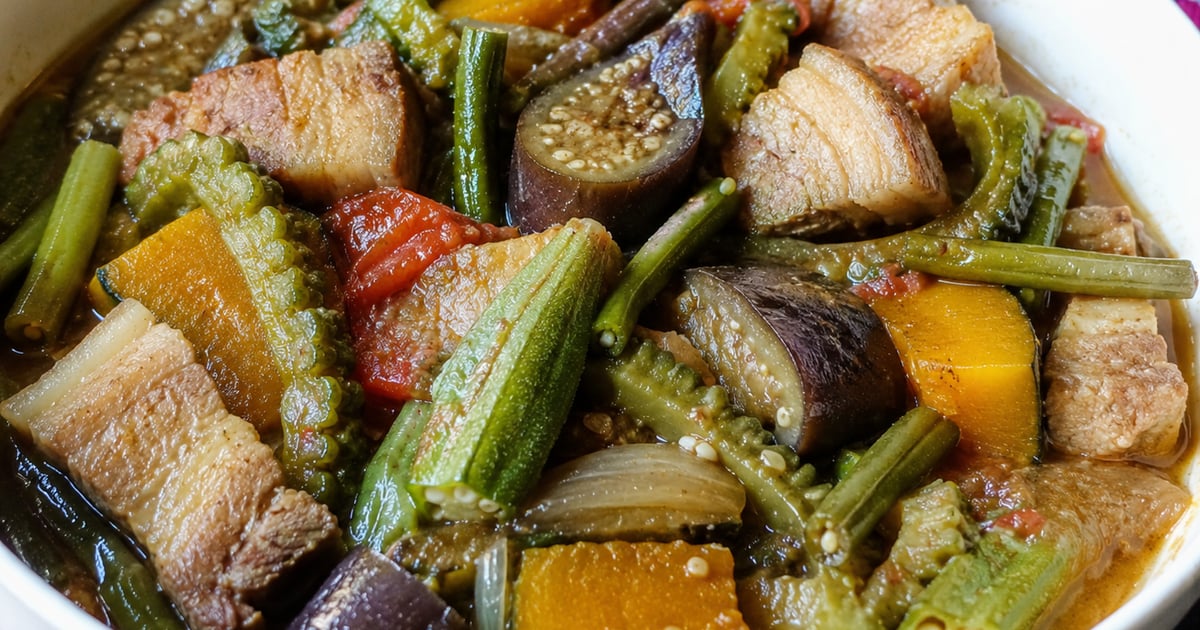


Pinakbet is the dish I cook on a Tuesday when the fridge is full of odd vegetables and the rice cooker is already on. Bittermelon, Japanese eggplant, okra, kabocha, long beans. They go into a hot pan with rendered pork fat, get a heavy spoon of bagoong (fermented shrimp paste), and slump together into a savory, funky stew that exists to be ladled over rice.
Filipino plantation workers brought it here. The first Sakadas arrived from the Ilocos region in 1906 to work the sugar plantations, and the everyday Ilocano cooking they carried with them, pinakbet included, became part of the local food vocabulary. The Hawaiʻi version tends to be gentler than the old-country original: less bagoong, more sweetness from the kabocha. The name itself comes from the Ilocano pinakebbet, meaning shrunk or shriveled — a literal description of what the vegetables do in the pan.
At a glance
4 with rice
25 minutes
About 30 minutes
Easy
Ingredients
For the base
- 1/2 lb pork belly, cut into 1-inch pieces (or 1/2 lb leftover lechon, cubed)
- 2 tablespoons vegetable oil
- 1 small yellow onion, sliced thin
- 4 cloves garlic, minced
- 1 large tomato, cut into wedges
- 2 tablespoons bagoong alamang (Filipino fermented shrimp paste)
- 1 tablespoon fish sauce (patis), or to taste
- 1 cup water or unsalted chicken broth
For the vegetables
- 1 small bittermelon (ampalaya), seeded and sliced into half-moons
- 2 Japanese eggplants, cut into 2-inch chunks
- 1/2 small kabocha squash, peeled and cut into 1-inch chunks (about 2 cups)
- 8 to 10 okra pods, trimmed
- 1 cup long beans (sitaw) or green beans, cut into 2-inch pieces
Equipment
- Large wok or Dutch oven with a lid
- Cutting board and sharp knife
- Slotted spoon
To serve
- Steamed white rice (calrose or jasmine)
- Calamansi or lime wedges
- Fish sauce on the table for those who want more salt
Method
- Render the pork. Heat the oil in your wok over medium-high. Add the pork belly and cook, stirring occasionally, until the fat renders out and the edges turn deep golden brown, about 8 to 10 minutes. That rendered fat is the flavor base of the whole dish. Do not rush it. (If using leftover lechon, skip ahead and just warm the cubes briefly before adding the onion.)
- Build the aromatic layer. Add the onion and cook 2 minutes until translucent. Add the garlic and cook 30 seconds until fragrant. Add the tomato wedges and let them break down 2 minutes more, pressing with your spoon. Stir in the bagoong. It will sizzle and smell pungent for a few seconds, then mellow as it cooks into the fat. This is the moment that defines pinakbet; do not skip it.
- Add the harder vegetables first. Stir in the kabocha squash and long beans, then pour in the cup of water. Bring to a low simmer, cover, and cook 8 minutes. The squash should be just tender enough to pierce with a fork but still hold its shape.
- Layer in the softer vegetables. Add the bittermelon, eggplant, and okra on top. Do not stir yet. Cover and steam over medium heat 6 to 8 minutes more, until everything is tender and the eggplant has collapsed.
- Stir once, season, serve. Drizzle the fish sauce over the top. Stir gently from the bottom up, taking care not to mash the squash and eggplant. Taste and add more bagoong or patis if it needs salt. The dish should land savory and funky with a faint bitter edge from the ampalaya. Serve over rice with a squeeze of calamansi.
Notes from a local cook
Bagoong is the dish; do not skip it. Fermented shrimp paste is the funky, salty backbone of pinakbet, and a substitute will not get you there. Look for jars labeled bagoong alamang at any Filipino market or large Asian grocery. The pink-tinted shrimp version is the most common. The sweetened style (often labeled guisado) is sweeter and lighter; the unsweetened style is more aggressive. Start with 2 tablespoons of whichever you have, taste, and adjust at the end.
The bittermelon is supposed to be bitter. If you have never cooked with ampalaya before, the first taste reads as startling. The bitterness is the point. To soften the edge slightly, salt the slices and let them sit 10 minutes before adding to the pan; the leached liquid carries a lot of the bitter compound. Plenty of Hawaiʻi families like the fuller bitter note and skip this step.
Do not stir aggressively. Pinakbet is meant to look like a stew of distinct vegetables, not a baby-food puree. Stir just enough to mix the seasoning. Local cooks often layer the softer vegetables on top and let them steam through without ever turning the pot. You cut down into the layers when you serve.
Use what is in the fridge. Pinakbet is forgiving. Chinese long beans, regular green beans, snake gourd, winter melon, even chayote all work. The non-negotiables are the bagoong and at least one bitter element (usually the ampalaya). Some families add a small piece of shrimp paste-marinated fish toward the end for extra depth.
While You're on the Islands
Eat it made by someone else. Hawaiʻi has the highest per-capita Filipino-American population of any U.S. state, and you can taste that on a plate-lunch line. Waipahu and Kalihi on Oʻahu are the two neighborhoods where the Filipino food culture runs deepest.
- Elena's Home of Finest Filipino Foods in Waipahu has been my go-to for plate-lunch Filipino food on Oʻahu for years. Check the current menu before driving out for pinakbet specifically.
- Max's of Manila — the international Filipino chain — runs Oʻahu locations and tends to keep pinakbet on the regular menu.
- The Aloha Stadium Swap Meet in Halawa is worth a wander on a weekend morning. Filipino food vendors rotate through, and on a lucky day you will find a home-cook pinakbet better than anything sit-down.
Buy the ingredients fresh. The same swap meet and Filipino markets around Waipahu sell the full vegetable lineup (bitter melon, eggplant, long beans, okra) plus bagoong (fermented shrimp paste) in one stop — much easier than hunting piece by piece at a regular grocery store.
Bring It Home
What you can substitute, what you can't: bagoong (fermented shrimp paste) and bitter melon are both sold at most mainland Filipino or Asian grocery stores, so there's nothing here that needs packing home — just know what to ask for. The vegetable mix is flexible; swap in whatever's fresh and in season wherever you live.