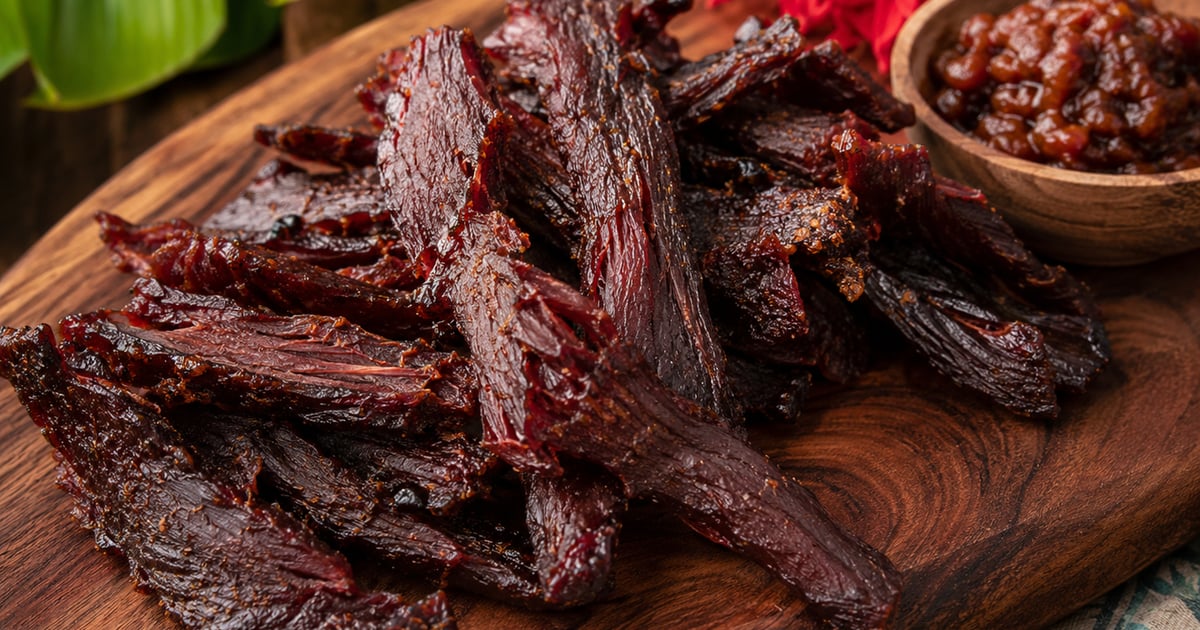

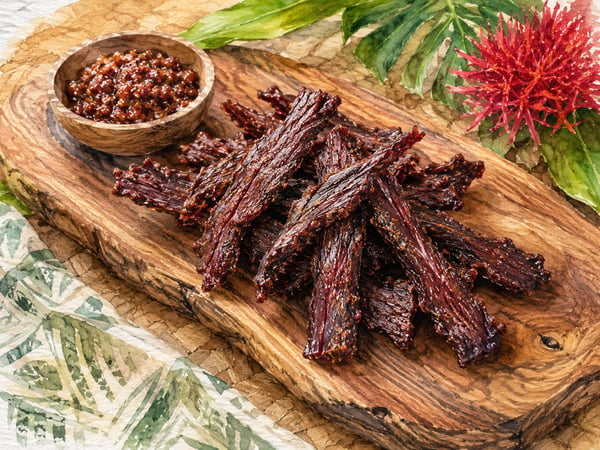
Pipikaula is the Native Hawaiian answer to beef jerky. The name literally means "beef rope" (pipi = beef, kaula = rope or cord). Strips of beef get salted heavily with Hawaiian sea salt, marinated briefly in shoyu, brown sugar, ginger, and garlic, then hung to air-dry for a day. A quick pass under the broiler crisps the edges and leaves the centers chewy. The result is salty, dense, and concentrated. It travels well, keeps for a week, and has long been associated with paniolo (Hawaiian cowboys) culture on the Big Island and Maui.
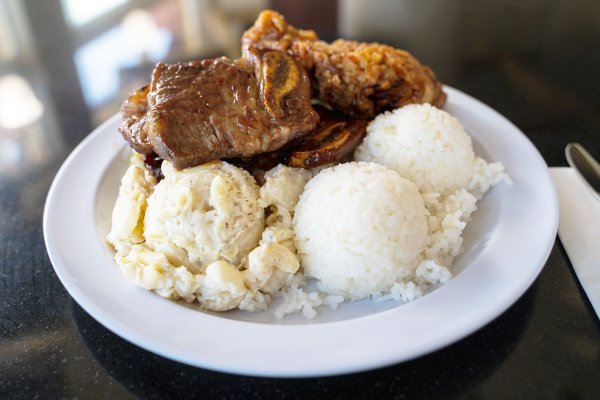
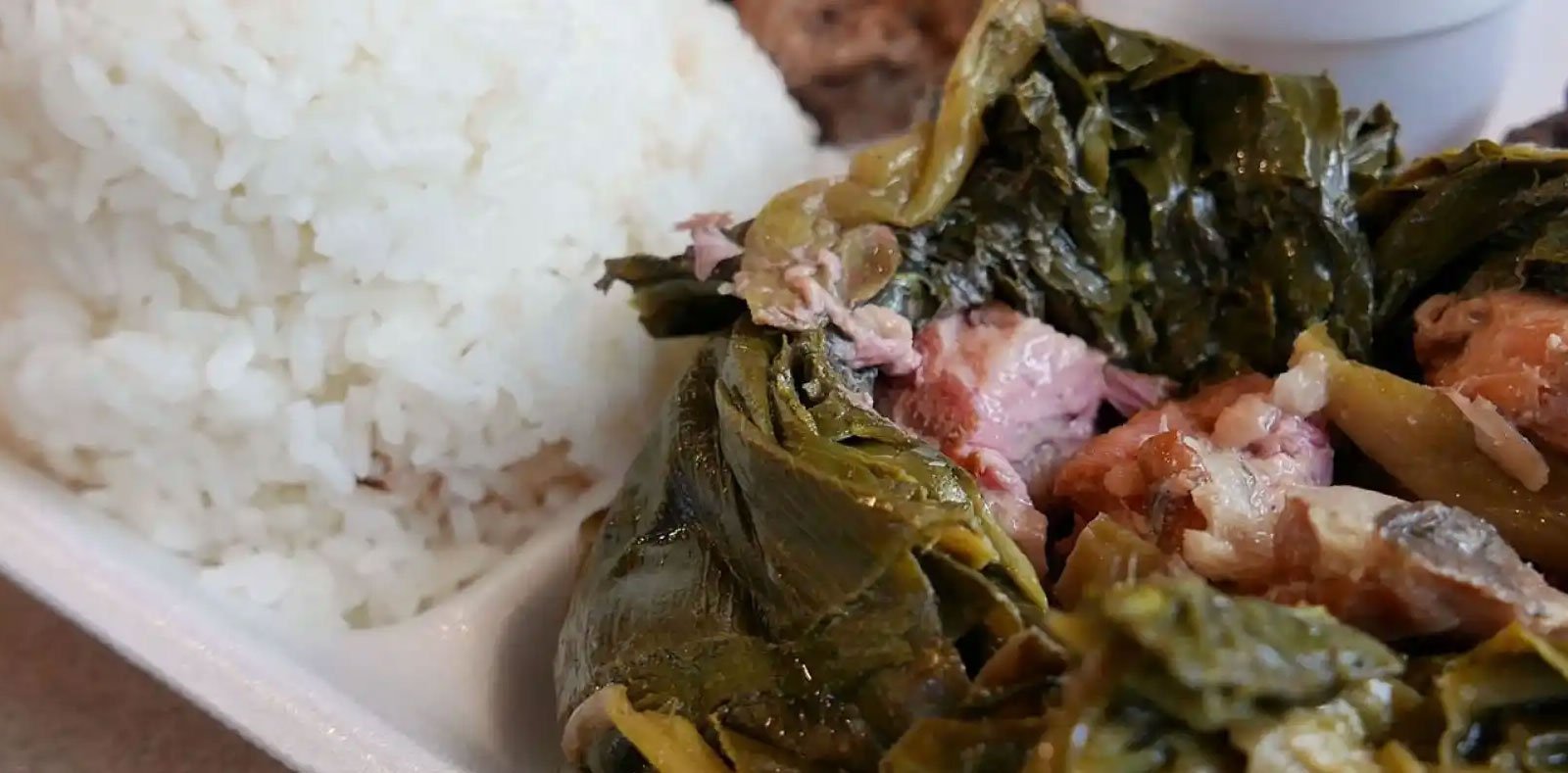
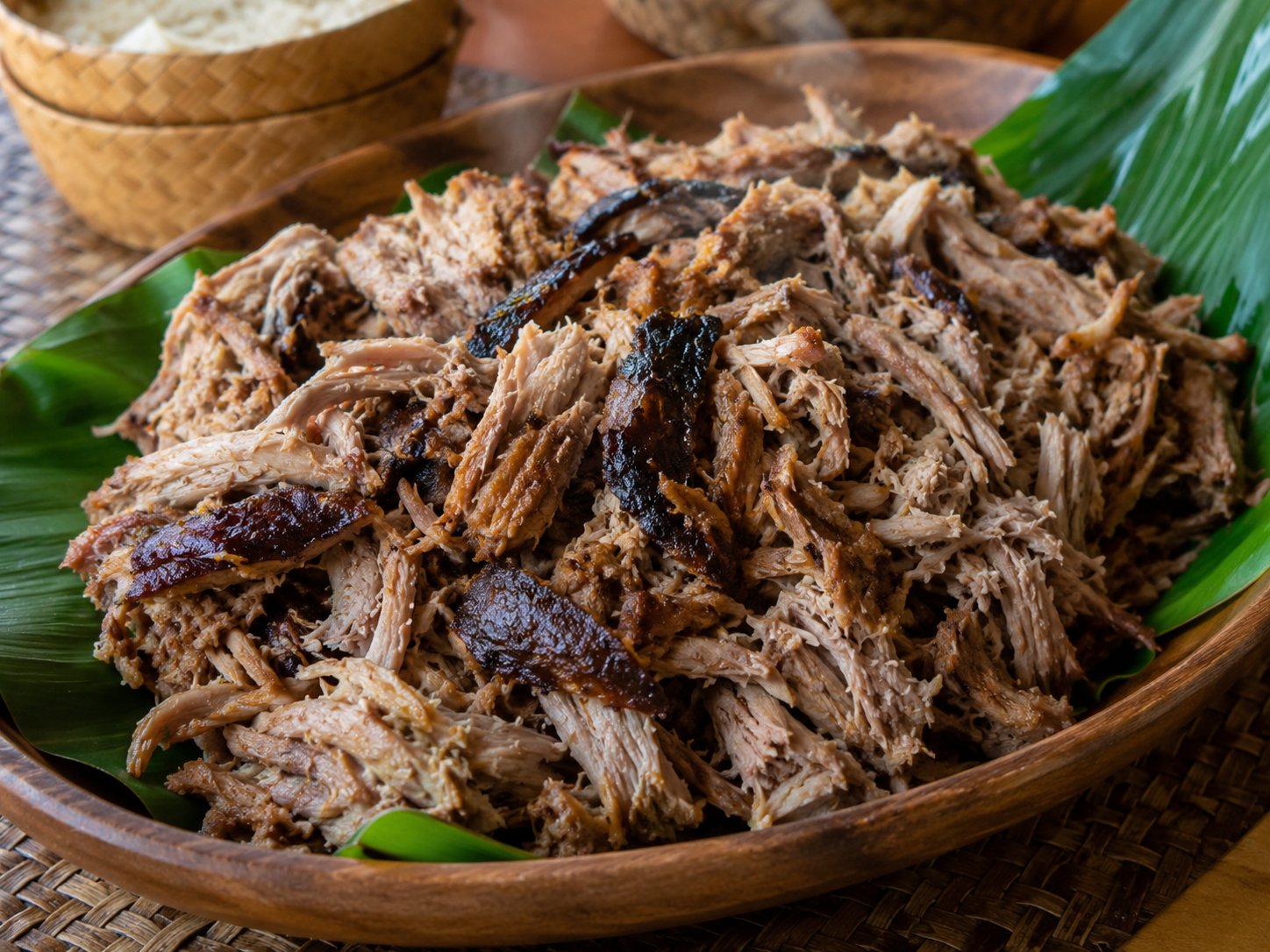
It is a luau-plate fixture. At a sit-down Hawaiian Food meal, pipikaula lands on the table in a small dish alongside laulau, kalua pig, lomi salmon, poi, and haupia. It plays a side role rather than a main. Small slivers go a long way because the salt and the concentrated beef flavor are intense. The version at Helena's Hawaiian Food in Kalihi (Oahu) is the one most often pointed to as a reference. They make a short rib pipikaula and hang the strips in a screened case near the front of the restaurant where you can watch them dry.
At a glance
About 1 lb pipikaula (serves 6 as a side)
20 minutes
4 to 12 hours
12 to 18 hours
4 to 6 minutes
Ingredients
For the beef
- 2 lb beef. Flank steak, top round, or boneless short ribs all work. Flank is the easiest place to start.
For the cure
- 2 Tbsp Hawaiian alaea sea salt (brick-red coarse salt); kosher salt substitutes
- 1/2 cup soy sauce
- 1/4 cup brown sugar, packed
- 3 cloves garlic, finely minced
- 1 Tbsp fresh ginger, grated
- 1 tsp crushed red Hawaiian chili pepper, or 1/2 tsp crushed red pepper flakes (optional)
- 1 tsp freshly ground black pepper
To finish
- A light brush of toasted sesame oil before broiling (optional but recommended)
Equipment
- Sharp knife and cutting board
- Large bowl or gallon zip-top bag
- Cooling racks set over baking sheets. Kitchen twine and a clean, well-ventilated place to hang strips also works.
- Heavy-duty foil and a broiler-safe baking sheet
To serve
- Steamed white rice and poi for a traditional Hawaiian plate
- Sliced into matchsticks over macaroni salad as a snacking topping
- Pulled apart over fried rice, or eaten straight off the cutting board with a cold beer
Method
- Slice with the grain. Trim any heavy fat or silverskin off the beef. Cut into strips about 1/4 to 1/3 inch thick, 1.5 inches wide, and as long as the piece allows. Four to six inches is fine. Slice WITH the grain, not across. Pipikaula is meant to be chewy, and slicing with the grain gives you that classic jerky pull. (This is the opposite of how you would cut a steak.)
- Cure. Combine the alaea salt, soy sauce, brown sugar, garlic, ginger, chili, and black pepper in a large bowl or zip-top bag. Stir until the sugar dissolves. Add the beef strips and massage thoroughly so every strip is coated. Refrigerate at least 4 hours and up to 12. The strips will release liquid as the salt draws out moisture. That is exactly what you want.
- Pat dry. Lift the strips out of the marinade and blot each one with paper towels. The surface should be tacky, not wet. Discard the marinade. It has done its job.
- Air-dry. Lay the strips in a single layer on cooling racks set over baking sheets so air circulates around all sides. Place in front of a fan, or in a cool, dry, well-ventilated room, for 12 to 18 hours. Do not use the refrigerator. The humidity inside is too high. The traditional method is to hang the strips on kitchen twine in a shaded, breezy spot. The strips are ready when the surface is dry to the touch, dark brick-red, and they have lost roughly half their starting weight. They should feel firm but still bendable.
- Broil to finish. Preheat your broiler with a rack about 4 inches below the element. Lay the dried strips on a foil-lined baking sheet, brush very lightly with toasted sesame oil if using, and broil 2 to 3 minutes per side until the edges crisp and a few dark blistered spots appear. Watch closely. The sugar in the cure burns fast.
- Cool and slice. Let the broiled strips rest 5 minutes on a cutting board. They will firm up further as they cool. Slice across the grain into thin bite-size pieces for serving. The broiling tenderized the surface but the interior is still dense, so smaller slices eat better.
Notes from a local cook
Cut with the grain, slice against it. The two cuts in this recipe are deliberately opposite. Cutting with the grain when you make the strips gives pipikaula its signature pull and chew. Slicing across the grain right before serving makes each bite tender enough to eat without sawing. Get this backwards and you end up with either shoe-leather or paper-thin shavings.
Hawaiian salt matters here. Alaea sea salt is the brick-red coarse salt colored by volcanic Hawaiian clay. It is mineralized differently from kosher salt and gives pipikaula a rounder, earthier seasoning. You can find it at most Hawaiian and well-stocked specialty grocers on the mainland, or via mail order. If you cannot find it, kosher salt works, but the dish will taste sharper and one-dimensional.
The fan-and-counter method works. Traditional pipikaula was hung outdoors in the trade winds. Most modern kitchens use cooling racks plus a small fan running across the strips for 12 to 18 hours. Avoid the oven-on-low approach. It cooks the meat instead of drying it, and the texture goes wrong. If you live somewhere humid, run a dehumidifier or move the setup into an air-conditioned room.
Store it like jerky. Finished pipikaula keeps 5 to 7 days in an airtight container in the refrigerator, or 2 to 3 months vacuum-sealed in the freezer. The salt and the drying are doing the preservation work. Refrigeration is just insurance. If you start to see surface moisture pulling out of the strips, broil them again briefly to crisp them back up.
While You're on the Islands
Eat it made by someone else. Helena's Hawaiian Food on North School Street in Kalihi (Oahu) is the obvious first stop. The restaurant is a James Beard America's Classics honoree, and its menu features pipikaula short ribs. The strips hang to dry in a screened case near the entrance. Highway Inn, with locations in Kakaako and Waipahu, also serves pipikaula short ribs as part of its traditional Hawaiian lineup. On Maui, look for pipikaula on the Hawaiian Food plate at small Native Hawaiian restaurants and family-run lunch counters. See our Hawaiian luaus guide for full luau experiences where pipikaula often appears alongside laulau and kalua pig.
Buy the ingredients fresh. Hawaiian alaea sea salt is in the regular spice aisle at any island Foodland or Safeway — easy to grab before you leave, and it's the salt that gives the dish its rounder, earthier seasoning compared to plain kosher salt.
Bring It Home
What to stock up on before you fly home: a bag of Hawaiian alaea sea salt is worth packing if you didn't grab it on island — it's also sold via mail order if you'd rather not carry it.
What you can substitute, what you can't: kosher salt works as a cure, but the dish will taste sharper and one-dimensional without the alaea's mineral edge. The beef itself doesn't need any special sourcing — any well-marbled flank or short rib from a regular grocery store works.
Where to try this in Hawaii