
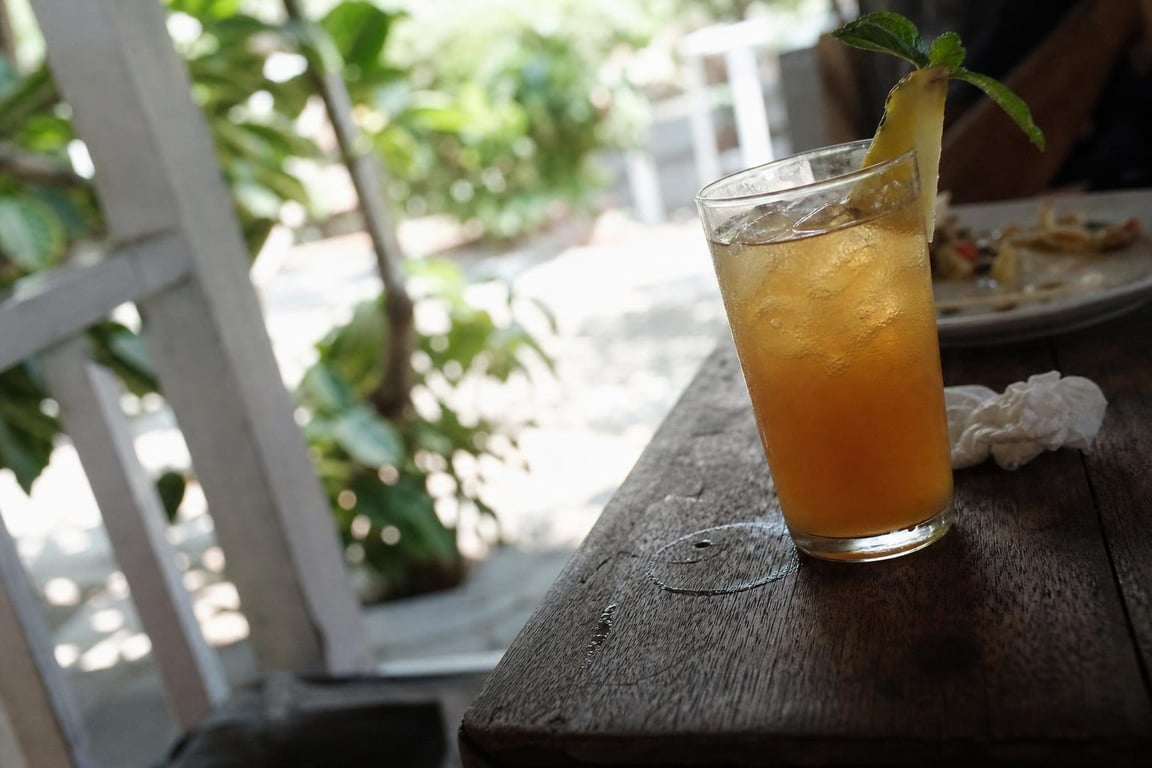
Scan the drink list at a local-style lunch spot or an island hotel dining room and there's a good chance plantation iced tea is on it — from Highway Inn in Kaka'ako to Big Island lunch menus like Huggo's. The formula is disarmingly simple: strong black iced tea cut with pineapple juice. Because pineapple juice brings its own sugar, many places keep the tea itself unsweetened and let the fruit do the work. It's what you drink in Hawaii when it's noon, it's hot, and a Mai Tai would end your afternoon.
The name looks back at the sugar and pineapple plantation era that shaped so much of local food culture — the same century that gave Hawaii its plate lunch and its saimin. We'll be straight with you: nobody credibly documents a single origin for the drink, and it doesn't need one. Iced tea plus the fruit that Hawaii grew by the shipload was always going to happen. The house version below is two ingredients and a decision about mint.
At a glance
2 quarts (8 glasses)
10 minutes
2 hours
Easy
Ingredients
For the tea
- 6 cups water
- 6 black tea bags (orange pekoe or English breakfast — nothing smoky)
- 2 cups pineapple juice, chilled
Optional
- Simple syrup to taste — many island restaurants pour it unsweetened
- Fresh mint sprigs
Equipment
- Saucepan or kettle
- 2-quart pitcher
To serve
- Tall glasses packed with ice
- Thin pineapple spears for garnish
Method
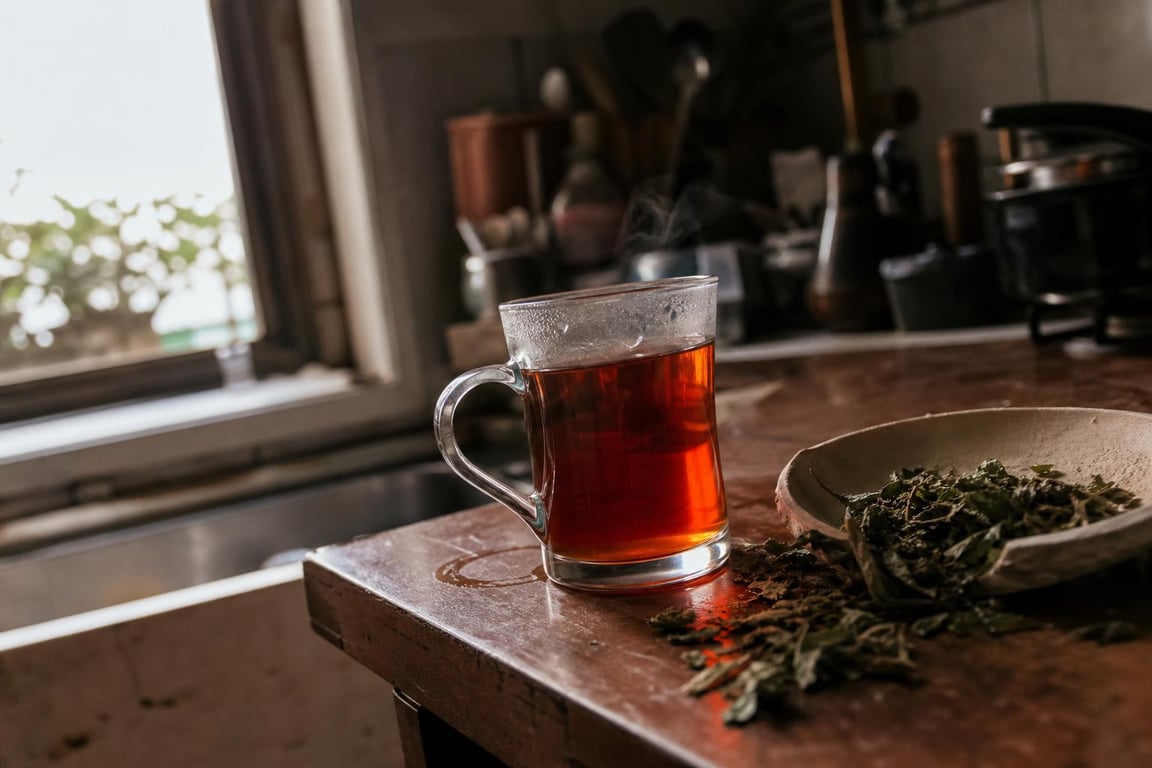
- Brew the tea strong. Bring the water to a boil, kill the heat, and steep the 6 tea bags for 5 to 7 minutes. You want the tea over-strength on purpose — the pineapple juice and the ice will both dilute it.
- Cool before mixing. Pull the bags without squeezing them hard (squeezing drags out bitterness) and let the tea cool to room temperature before it goes in the fridge. Mixing pineapple juice into hot tea dulls the fruit.
- Add the pineapple. Stir in the chilled pineapple juice. The classic restaurant ratio lands around 3 parts tea to 1 part juice — start there, then adjust. More juice reads sweeter and more tropical; less keeps it firmly an iced tea.
- Serve tall and cold. Pour over glasses packed with ice, slide a pineapple spear down the side, and slap a mint sprig between your palms before adding it — that wakes up the aroma. Refill all afternoon.
Notes from a local cook
Unsweetened is the local default. The pineapple juice carries enough sugar that added syrup quickly turns this into dessert. Taste before you sweeten. If you do want it sweeter, use simple syrup, not granulated sugar — sugar won't dissolve in cold tea and just sits at the bottom of the pitcher.
Fresh or canned both work. Fresh-pressed pineapple juice makes a brighter glass. Canned 100% pineapple juice from the grocery store also works fine and is what most island kitchens actually pour. Buy the 100% juice cans, not "pineapple drink."
Cold-brew option for zero bitterness. Steep the same 6 bags in 6 cups of cold water in the fridge overnight. Cold-brewed black tea comes out smooth enough that you may skip the pineapple's softening job entirely and drop to a 4:1 ratio.
Where to try the real thing
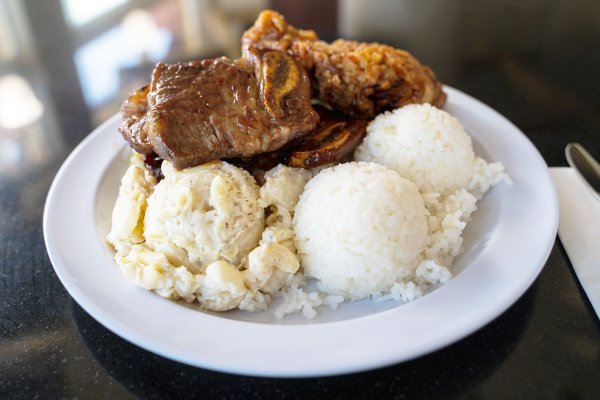
This is one you don't plan a pilgrimage for — you just order it, everywhere, until it becomes your default. Highway Inn lists it right on the beverage section of their Kaka'ako menu, poured alongside their Hawaiian plates. Plenty of hotel lunch spots and casual sit-down places keep it on the drink list too. Order it with a plate lunch and you've assembled the full local midday experience. See our guides to Oahu dining and what to eat in Hawaii.