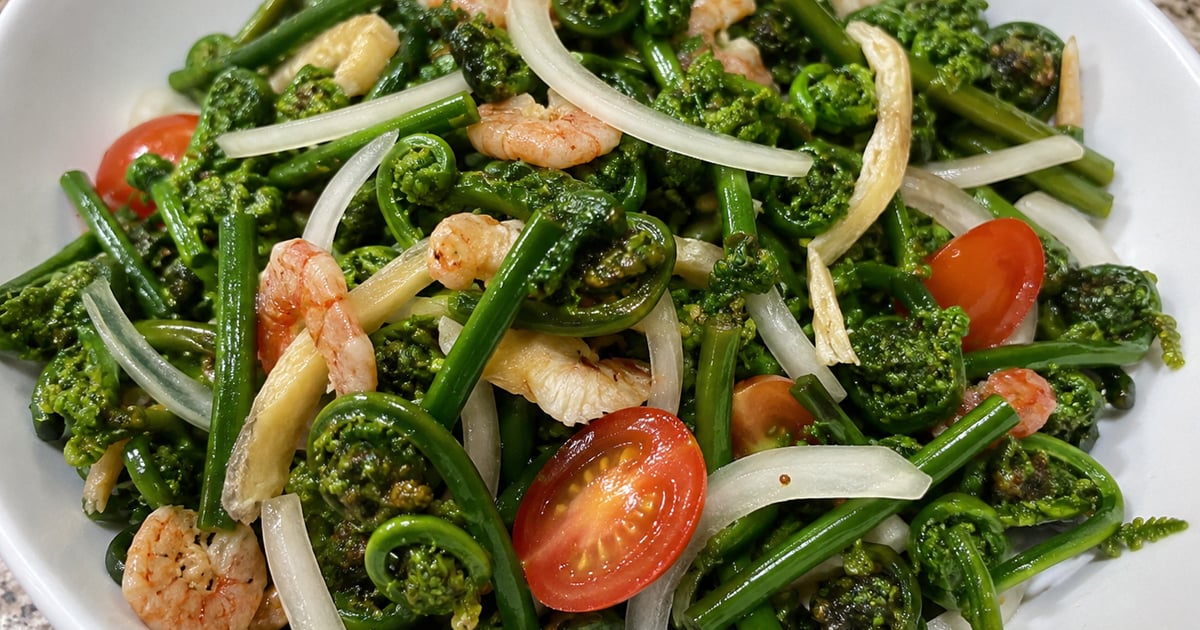


Pohole fern salad is one of those Hawaii side dishes you only find where the ingredient grows. Pohole is the curled-up shoot of a wild fern that comes up along stream banks and damp forest edges on Maui and the Big Island. The botanical name is Diplazium esculentum; the Hawaiian word is pohole on Maui and hoʻiʻo on the Big Island (CTAHR, University of Hawaiʻi at Mānoa; Wehewehe Hawaiian Dictionary). The young, unfurled fiddleheads are the part you eat. Snap one with your fingers and you can hear it — bright, juicy, almost like a stringless snap pea, with a faint green-bean note and a clean, lightly mineral finish.
The preparation is short. You blanch the ferns very briefly, toss them with diced tomato, slivered sweet onion, and a sesame-shoyu dressing, and chill the bowl while you cook the rest of the meal. Pohole grows year-round in Hawaii's wet climate, but it's still a forage-and-find ingredient — so the salad shows up on Maui plate-lunch counters and at sit-down luau spreads whenever supply allows, not on a fixed schedule.
At a glance
4 to 6 as a side
15 minutes
1 minute (blanch)
Easy if you can find pohole
Ingredients
For the salad
- About 8 oz fresh pohole fiddleheads, trimmed (a packed quart bowl)
- 2 medium ripe tomatoes, diced into ½-inch pieces
- ½ small Maui sweet onion (or Vidalia/Walla Walla), thinly slivered
- 2 stalks green onion, thinly sliced
- Optional: 4 oz dried baby shrimp, briefly soaked, OR ¼ cup salted ahi or salmon, finely diced
For the dressing
- 2 tablespoons shoyu (soy sauce)
- 1 tablespoon rice vinegar
- 1 tablespoon toasted sesame oil
- 1 teaspoon grated fresh ginger
- 1 teaspoon toasted sesame seeds
- Pinch of red chili flakes (optional)
Equipment
- Large pot for blanching
- Bowl of ice water for shocking
- Sharp knife and cutting board
- Mixing bowl and whisk
To serve
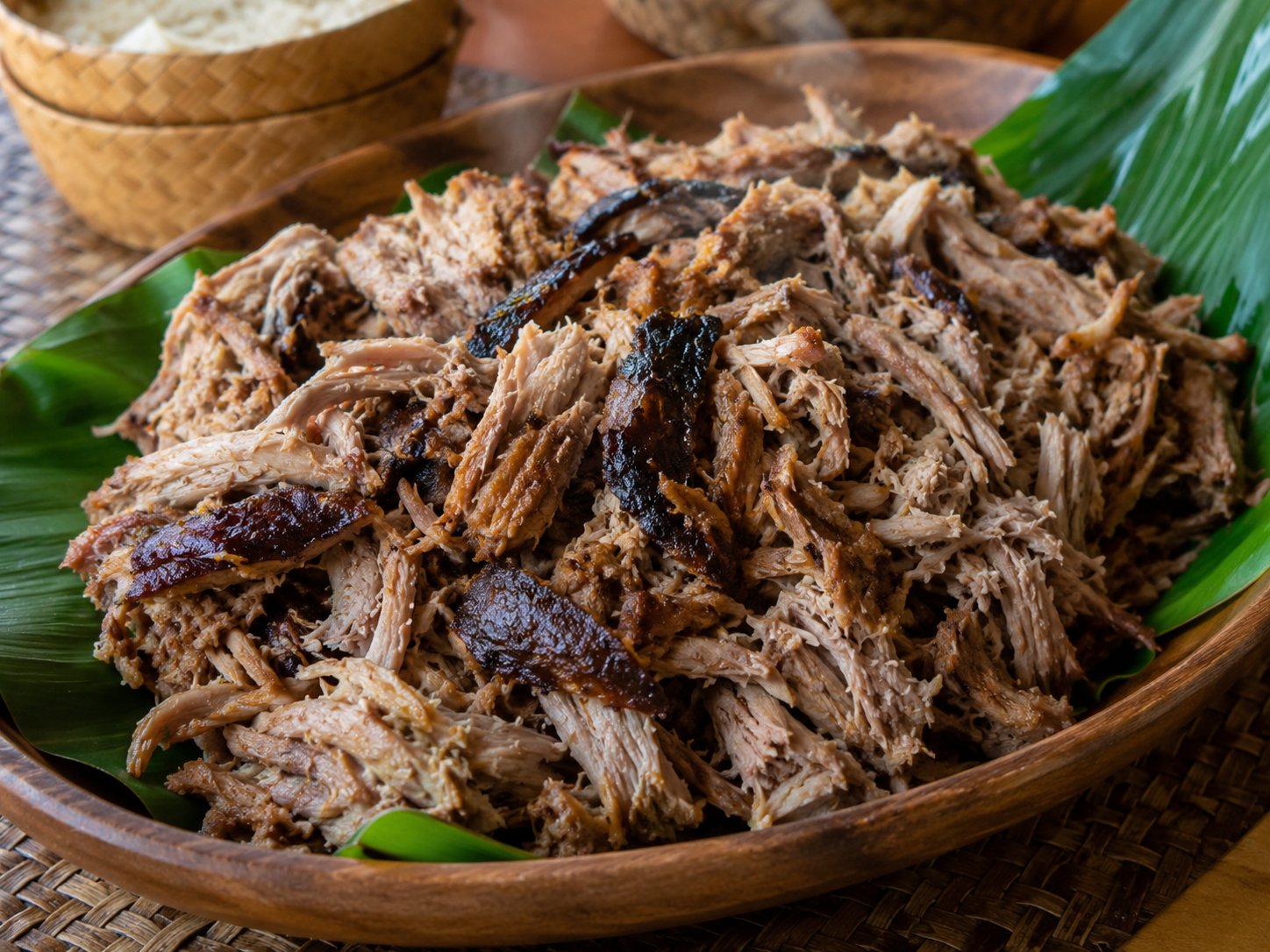
- Alongside kalua pig or another smoky, fatty protein
- With white rice and any plate-lunch combination
- Chill at least 30 minutes before serving for the best flavor
Method
- Trim the pohole. Pinch off the tightly coiled head and the tender top 2 to 3 inches of each stem. Discard the woody lower stem. Rinse the trimmed pieces in cold water and shake them dry.
- Blanch fast, not long. Bring a large pot of well-salted water to a rolling boil. Drop the pohole in for 30 to 60 seconds — just until the shoots turn bright green and lose their raw-grass smell. Any longer and they go limp.
- Shock cold. Drain into a colander and immediately plunge into ice water. Hold them there for a minute, then drain well and pat dry. This is what keeps the crunch.
- Whisk the dressing. In a small bowl, whisk the shoyu, rice vinegar, sesame oil, ginger, sesame seeds, and chili flakes (if using). Taste — it should hit salty, tangy, and nutty in that order.
- Toss and chill. In a serving bowl, gently combine the cooled pohole, diced tomato, slivered onion, green onion, and the dried shrimp or salted fish if using. Pour the dressing over the top and toss with your hands. Cover and refrigerate at least 30 minutes — an hour is better — so the flavors come together. Serve cold.
Notes from a local cook
Sourcing is the whole game. Pohole isn't carried at most mainland Asian grocers, and it isn't farmed at commercial scale — what shows up at Hawaii farmers markets was hand-cut that morning at a stream bank by someone with patient knees. On Maui, the Upcountry Farmers Market at Kulamalu Town Center in Pukalani runs Saturday mornings 7–11 a.m. and is a reasonable bet when pohole is around; smaller produce stalls in and around Wailuku sometimes carry it too, though they come and go. On the Big Island, the Hilo Farmers Market runs its big market days Wednesday and Saturday. If you're not in Hawaii and you find fiddleheads from Matteuccia struthiopteris (the East Coast ostrich fern) at a specialty grocer, those are the closest practical substitute — same shape, similar crunch, slightly different flavor. Cook them the same way.
Do not eat pohole raw. Fiddleheads of any species should be cooked thoroughly before eating — the University of Maine Cooperative Extension documents outbreaks tied to undercooked fiddleheads and recommends boiling or steaming them. A 30-to-60-second hard blanch in well-salted water is the minimum here, and skipping it does not improve the dish.
The dried-shrimp or salted-fish layer is optional. A small handful of dried baby shrimp or finely diced salted ahi adds the savory backbone that pushes the dish from "fresh salad" toward "luau-plate side." If you can't get either, a teaspoon of fish sauce in the dressing will get you most of the way there.
While You're on the Islands
Eat it made by someone else. If you'd rather taste pohole fern salad before cooking it, your best odds are at a Maui farmers market in season or at a Hawaiian-food counter that lists it as a daily side. Call ahead — supply depends on what foragers brought in that week. Maui plate-lunch counters and Hawaiian-food spots rotate pohole salad in as a side depending on supply — our Maui dining guide has current picks. Hilo Hawaiian-food restaurants sometimes run a hoʻiʻo salad as a special — see our Big Island dining guide.
Buy the ingredients fresh. This is genuinely a buy-it-on-island dish — pohole isn't farmed at commercial scale, so a farmers market is your only real source. Upcountry Farmers Market in Pukalani, Maui (Saturdays 7–11 a.m.) and the Hilo Farmers Market on the Big Island (Wednesday and Saturday) both carry fresh pohole whenever foragers bring it down — year-round, but never guaranteed. See the Maui farmers markets guide for more on what else lands on these tables.
Bring It Home
What you can substitute, what you can't: there's no good shipped or shelf-stable version of pohole — it's a hand-foraged, spring-and-early-summer ingredient, full stop. Once you're home, fiddleheads from Matteuccia struthiopteris (the East Coast ostrich fern), found at specialty grocers in early spring, are the closest practical substitute: same shape, similar crunch, slightly different flavor. Cook them the same way, with the same mandatory hard blanch — fiddleheads of any species should never be eaten raw.