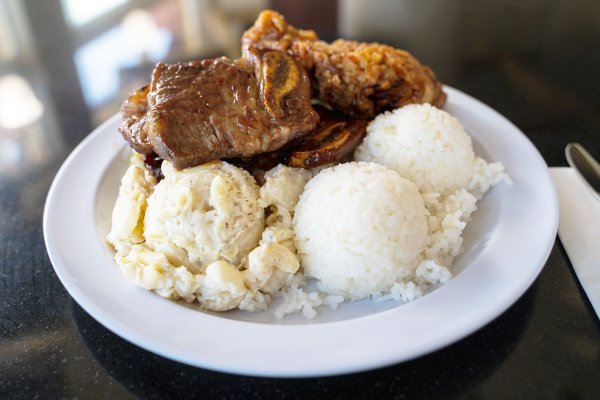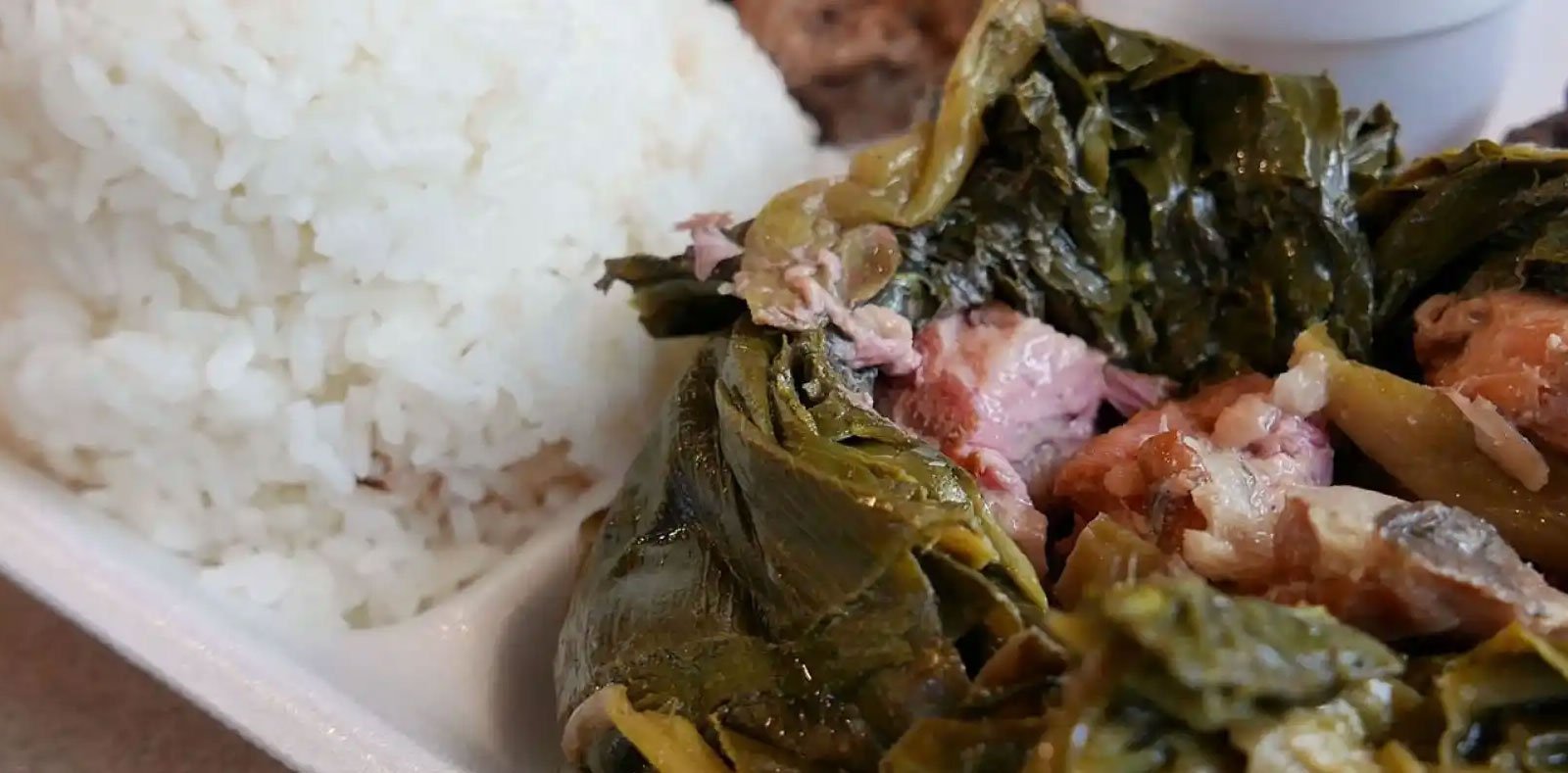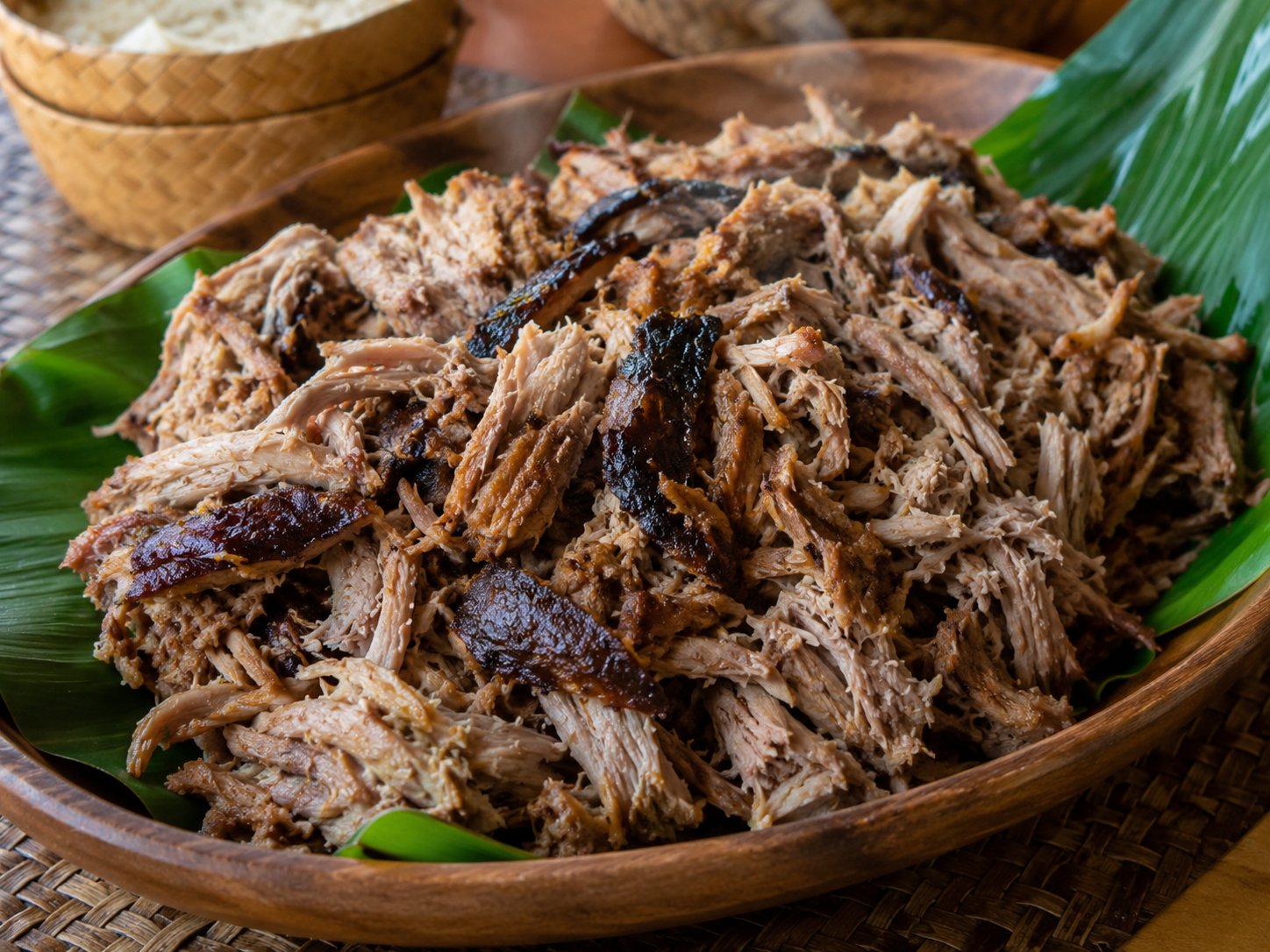
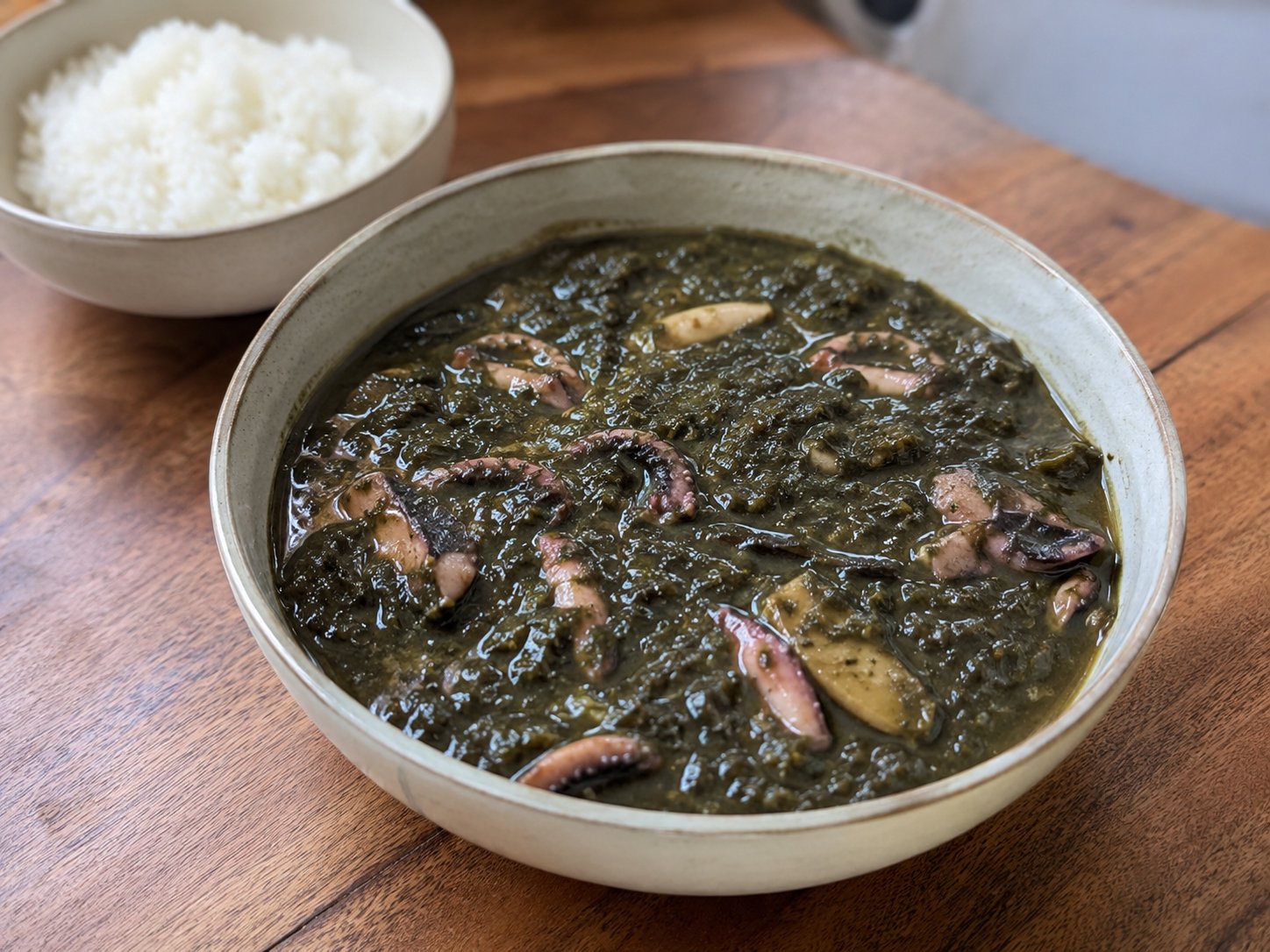

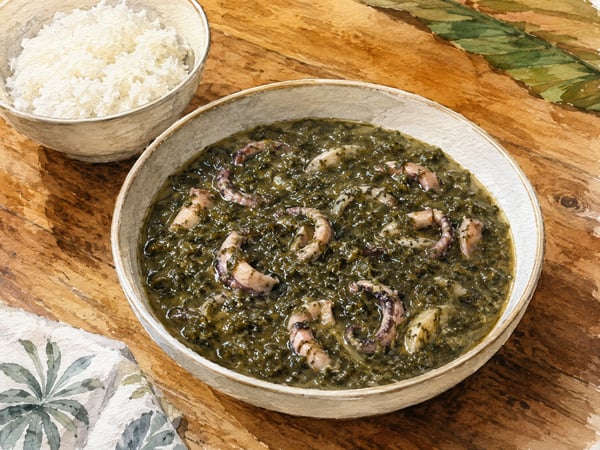
Squid lūʻau is the deep-green, coconut-creamed stew that sits in a small bowl next to the kalua pig on a traditional Hawaiian luau plate. It is built on young taro leaves, called lūʻau (a different word from the party of the same name), simmered for hours with coconut milk until they break down into a soft, almost-creamed-spinach mass. Tender pieces of squid or octopus go in late so they stay snappy. It looks unassuming. It eats like the best thing on the plate.
The dish has deep roots in Native Hawaiian cooking. Kalo (taro) was the most important food crop in pre-contact Hawaii; the corm became poi, and the leaves got their own preparations. Octopus (heʻe) was a regular reef catch and the original protein for this stew. Most home cooks now substitute frozen cleaned squid because it is easier to source on the mainland and steady to work with. The dish still tastes like Hawaii.
At a glance
6 as a side
30 minutes
2 to 2.5 hours
Moderate
Ingredients
For the stew (squid version)
- 1 1/2 lb cleaned squid (tubes and tentacles)
- 1 1/2 lb young taro (lūʻau) leaves, fresh from a Hawaiian grocer if available, otherwise frozen
- 1 medium yellow onion, diced
- 1 1/2 cans (about 20 oz) full-fat coconut milk
- 1 1/2 cups water or chicken stock
- 1 teaspoon Hawaiian alaea sea salt (or any coarse sea salt), plus more to taste
- 1/2 teaspoon black pepper
- 1 tablespoon neutral oil (for sautéing the squid)
To swap in octopus
- 1 lb pre-cooked octopus (frozen Spanish/Portuguese pulpo), cut bite-size — swap in for the squid (see step 6)
Optional
- 1 small chunk (about 4 oz) cooked taro, mashed, to thicken the stew toward the end
- A small splash of soy sauce, for finishing
Equipment
- Large heavy-bottomed pot or Dutch oven (5-quart or larger)
- Sharp knife and cutting board
- Wooden spoon
- Fine-mesh strainer (for rinsing the squid)
To serve
- Steamed white rice or poi
- Lomi lomi salmon and kalua pig if you're building a full luau-style plate
Method
- Prep the protein. For squid: cut tubes into 1/2-inch rings. Leave tentacles whole or halve them if very large. Rinse under cold water and pat dry. Cold, dry squid sears clean. Wet squid steams and turns rubbery. For pre-cooked octopus: pat dry, cut into bite-size pieces, and set aside until step 6.
- Prep the taro leaves. Wash each leaf thoroughly. Cut out the thick central stem and stalk. They take longer to break down than the leaf, and raw taro contains calcium oxalate crystals that need long cooking to neutralize. Stack the leaves and slice into rough 1-inch ribbons.
- Sweat the onion. Heat the oil in the pot over medium. Add the onion with a pinch of salt and cook 5 to 7 minutes until soft and translucent, not browned.
- Wilt the leaves. Add the taro leaves in batches, stirring after each addition until they wilt down. They start as a giant mountain and collapse to about a quarter of the volume.
- Add the coconut milk and simmer. Pour in the coconut milk and water (or stock). Add the alaea salt and black pepper. Bring to a gentle simmer, then reduce heat to low. Cover and cook 1.5 to 2 hours, stirring every 15 to 20 minutes. The leaves should be fully softened, dark army-green, and broken down into a thick, creamy stew. Taste a leaf. If it feels grassy or your tongue tingles, keep going. That is undercooked taro and the cure is more time.
- Add the protein. For squid: stir in the squid rings and tentacles. Cook just 3 to 5 minutes until the squid turns opaque and just-tender. Do not let it boil hard. Squid that cooks for more than about 10 minutes seizes up rubbery. Pull from heat the moment the squid is opaque. For pre-cooked octopus: stir in the pieces during the last 5 minutes, just to warm through. Raw whole octopus is a different recipe; it needs a 45-minute braise of its own before it lands in the stew.
- Adjust and serve. Stir in the optional mashed taro for body, if using. Taste for salt and add a splash of soy sauce if you want a savory edge. Serve hot in small bowls or as part of a luau-style plate alongside rice or poi.
Notes from a local cook
The taro-leaf cook time is the rule. Same as with laulau, you cannot shortcut this. Raw taro leaves carry calcium oxalate crystals that cause a scratchy throat and an unpleasant tongue tingle if undercooked. The fix is time: a slow simmer of 1.5 to 2 hours minimum. If a taste test at the 1.5-hour mark still has any grassy or tingly quality, keep going. Better to add 30 minutes than to serve an under-cooked bowl.
Frozen luau leaves are fine. Look for them in the freezer case at Hawaiian and Asian groceries, including some mainland stores. The bag will be 12 to 16 oz of pre-stemmed, blanched leaves. Easier than fresh, and totally legitimate. They come pre-cleaned, so you can skip step 2 and head straight to wilting them into the pot.
Octopus is the older version. If you go that route, stick with pre-cooked pulpo and follow the timing in step 6. Mixing in a little alongside the squid also works and adds a deeper umami note.
This dish reheats beautifully. Squid lūʻau is one of those stews that gets better overnight. The flavors deepen, the coconut milk thickens, and you can finish a small splash of soy sauce or a squeeze of lemon at the table for brightness. Reheat gently over low heat so the squid doesn't seize.
While You're on the Islands
Eat it made by someone else. The sit-down version is on the menu at Helena's Hawaiian Food in Kalihi on Oahu, a James Beard America's Classic honoree. Highway Inn, run by the Toguchi family since 1947, with locations in Kakaako and Waipahu, plates squid lūʻau as part of its Hawaiian combo plates and as a standalone side. Both are among the longest-running Hawaiian food spots in Honolulu. Check our Hawaiian luaus guide for current per-island options.
Buy the ingredients fresh. Frozen luau leaves (pre-stemmed and blanched) are stocked in the freezer case at most island grocery stores and at Hawaiian or Asian groceries — no special farmers-market trip required for this one.
Bring It Home
What you can substitute, what you can't: frozen taro (luau) leaves travel and freeze well, so if your mainland grocer doesn't stock them, a Hawaiian or Asian specialty grocer online is your best bet. The one rule that doesn't bend regardless of where you buy them: cook the leaves a full 1.5 to 2 hours minimum. Raw or undercooked taro leaves carry calcium oxalate crystals that cause a scratchy throat if you rush the simmer.
Where to try this in Hawaii