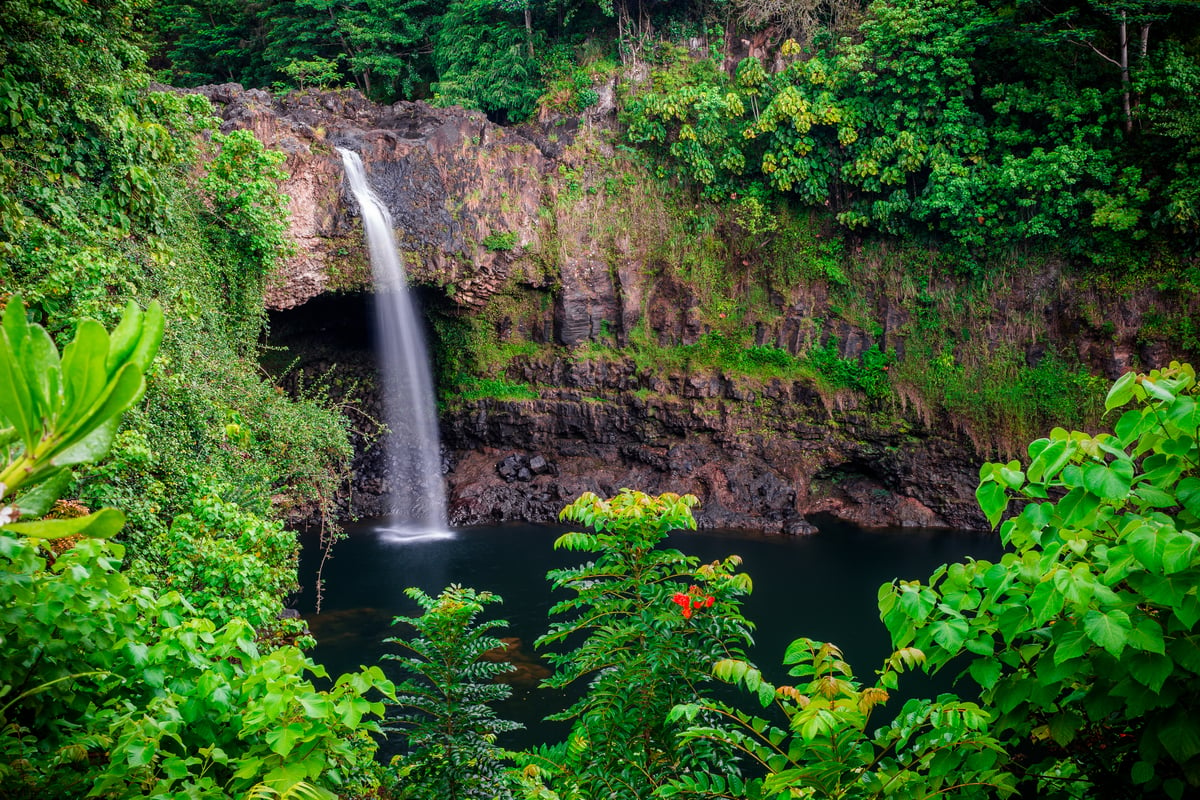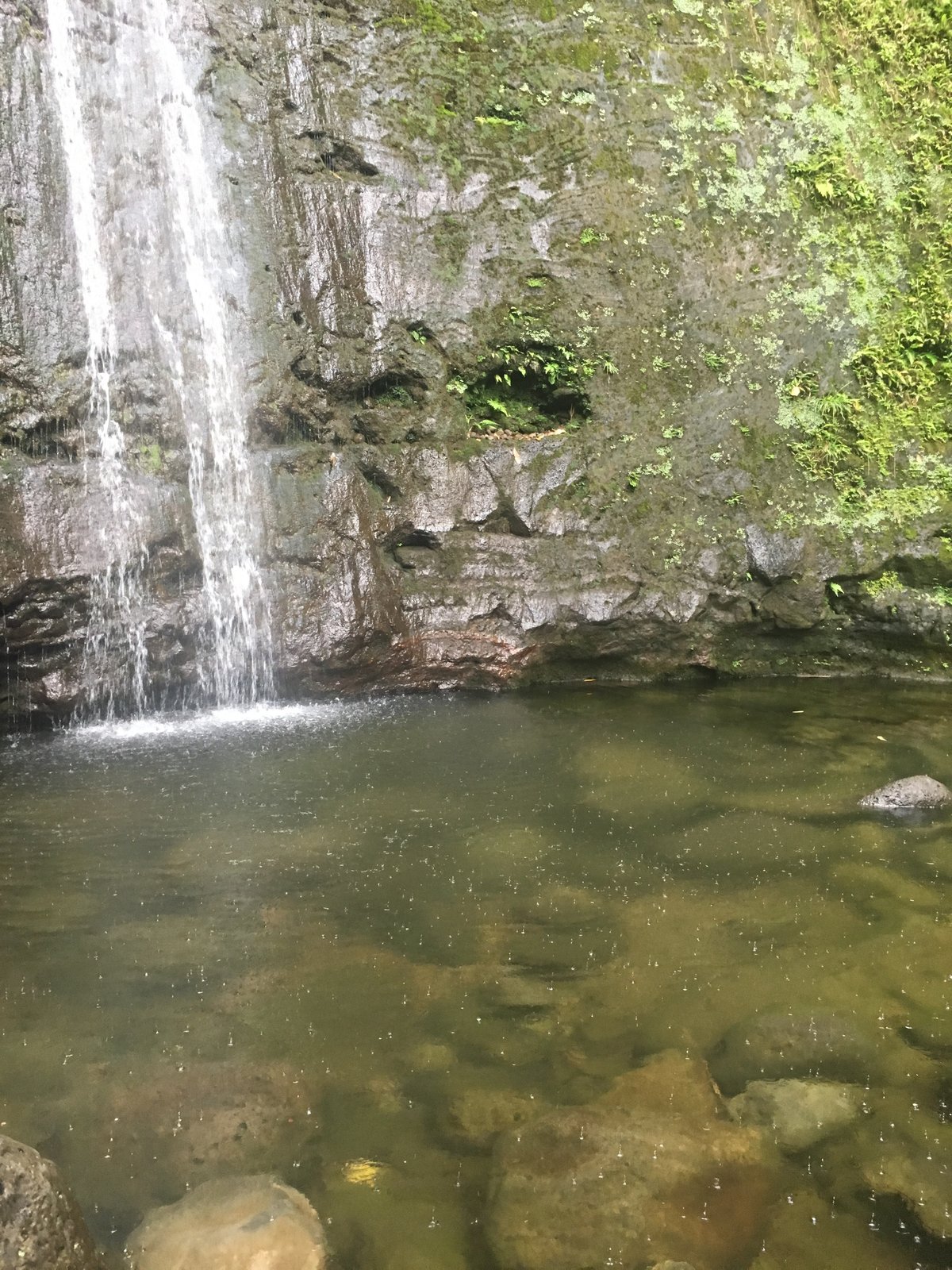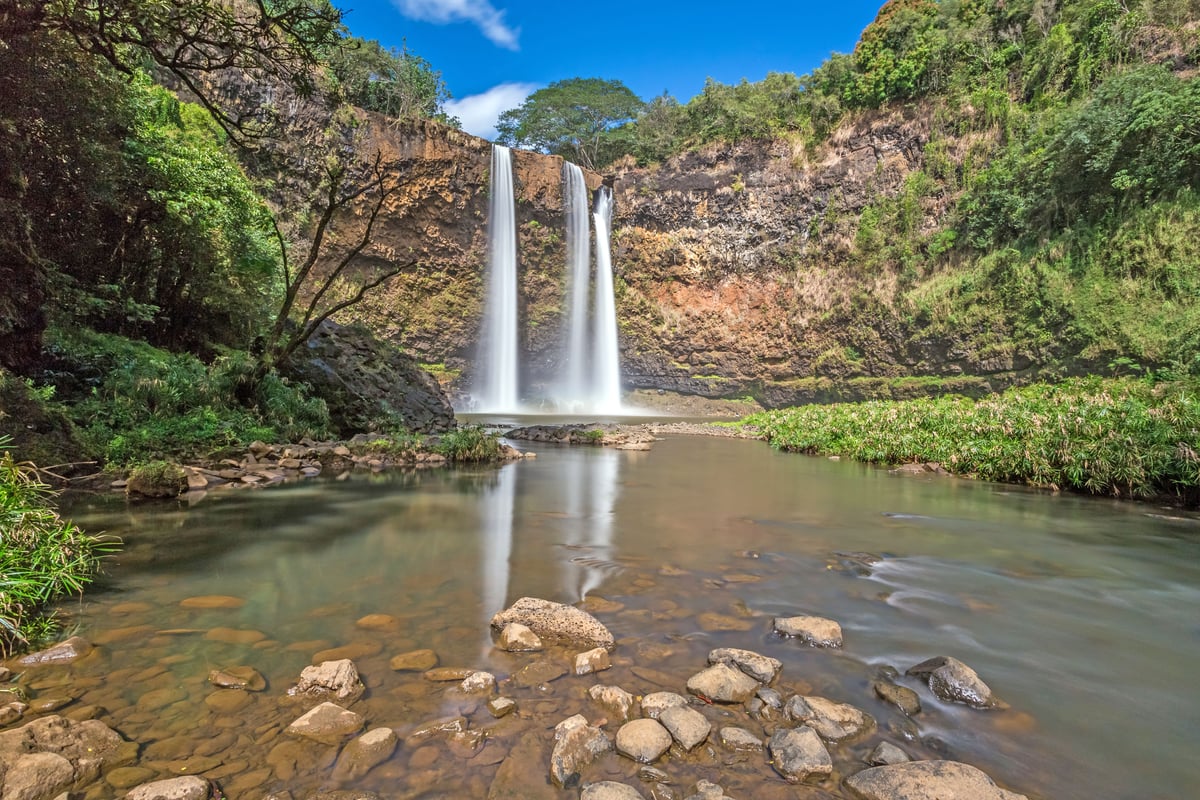
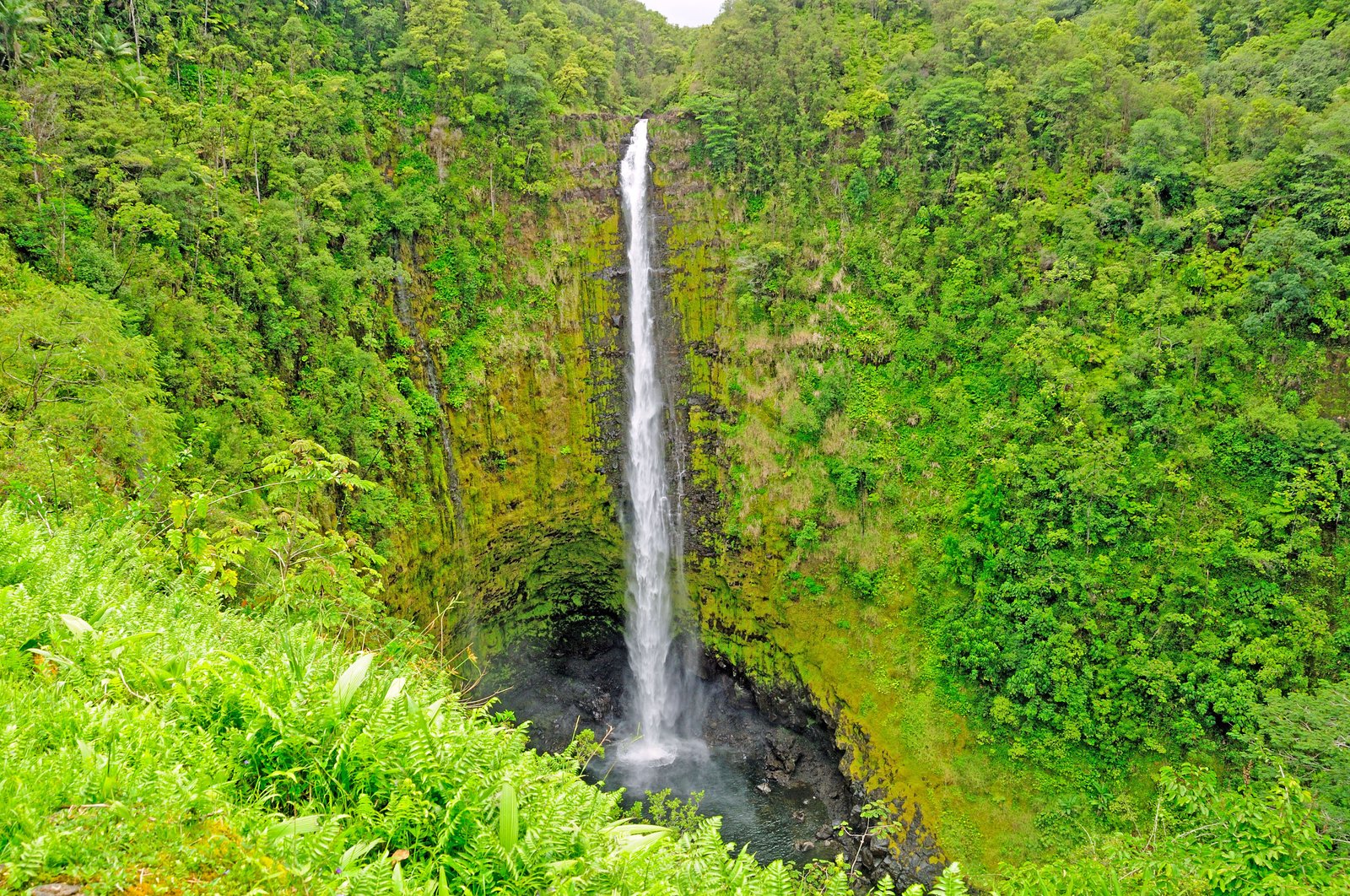

Hawaiʻi’s fall waterfall season catches almost every visitor by surprise. The falls look different than the ones people saw in a summer travel show. Bigger. Louder. In some spots, much higher volume than the July version. That is not the video’s fault. It is a real seasonal shift, and it is one of the quiet reasons a fall Hawaiʻi trip can feel more lush than a summer one.
Hawaiʻi has two rough climate seasons — a dry season from about May through September and a wet season from October through April. The National Weather Service Honolulu Forecast Office uses this framing in its climate summaries. The transition is not a hard switch on October 1. It is a gradual return of frontal systems and heavier trade-wind showers to the windward (northeast-facing) slopes of every island through September, October, and into November. The waterfalls that thin down to a trickle during a dry summer come back to life on that same schedule.
This is a guide for anyone planning a September-through-November Hawaiʻi trip who wants to build a waterfall day into it. Where the fall rains hit hardest, which falls come back first, how to plan a hike around a wet-season stream, and where the flash-flood risk is real enough that it should change your day.