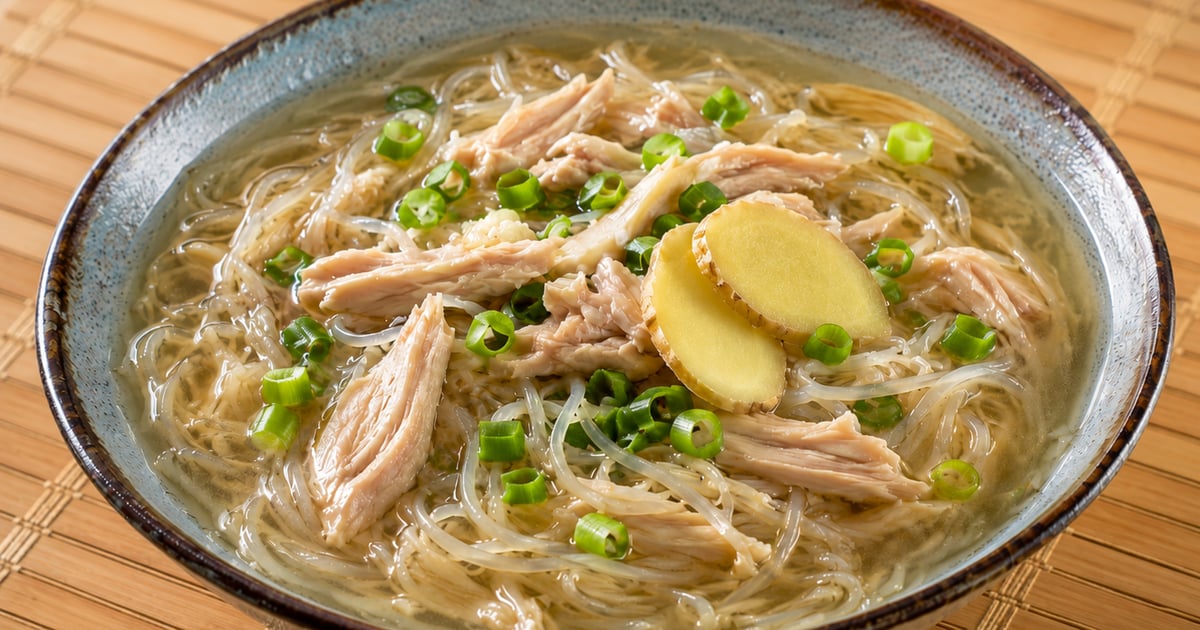

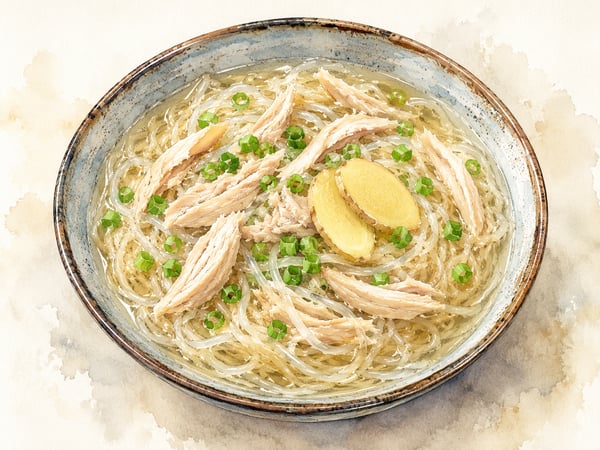
Chicken long rice is the brothy noodle side that rides in a small cup on the Hawaiian luau plate. Translucent cellophane noodles, shredded chicken, fat slices of fresh ginger, sliced green onion, a light shoyu-chicken broth. It's quietly the part of the plate I look for first. Most visitors miss it because the cup is small and the plate is loud; once you've had a good version it stays with you. Forty minutes on the stove, almost no technique, and the load-bearing ingredient is the ginger.
"Long rice" is the Hawaii name for cellophane noodles — also called glass noodles or saifun — the translucent strands made from mung bean starch. Chinese contract laborers first arrived to work Hawaii's sugar plantations in 1852, and the noodle worked its way into the Hawaiian luau plate the way other plantation-era borrowings did: imported, adopted, kept. The "long" describes the noodle length; the "rice" is a localism that stuck despite the noodle not actually being made of rice at all. Every household version is slightly different, but the load-bearing ingredient is the ginger — a genuinely big amount of it, sliced thick, simmered hard. Skimping on ginger is the most common home-cooking mistake.
At a glance
4 to 6 as a side
15 minutes
45 minutes
Easy
Ingredients
Broth and chicken
- 1½ pounds bone-in, skin-on chicken thighs (about 4 thighs)
- 6 cups water
- 1 large piece fresh ginger (3-inch knob), peeled and sliced ¼-inch thick — use it all, this is the dish
- 4 cloves garlic, smashed
- 3 tablespoons soy sauce (shoyu — Aloha Shoyu if you have it)
- 1 teaspoon Hawaiian sea salt or kosher salt (more to taste)
- ½ teaspoon white pepper
Long rice
- 1 (3.75 oz) package cellophane / bean thread noodles (also labeled "saifun" or "long rice")
Equipment
- Large stockpot or Dutch oven (4-quart or bigger)
- Strainer or slotted spoon
- Kitchen scissors (for cutting noodles)
- Two forks for shredding chicken
To finish
- 4 green onions, thinly sliced (both green and white parts)
- Extra soy sauce, to taste
Method
- Build the chicken-ginger broth. Place the chicken thighs in a large pot with the water, sliced ginger, smashed garlic, soy sauce, salt, and white pepper. Bring to a boil over high heat, then drop to a gentle simmer. Skim any foam that rises in the first 10 minutes.
- Simmer until tender. Cover partially and simmer 35 to 40 minutes, until the chicken is fully tender and the broth is fragrant with ginger. Don't rush this — the broth gets its color and depth from the long simmer.
- Soak the noodles. While the chicken simmers, place the cellophane noodles in a large heatproof bowl. Cover with hot tap water and let sit 10 to 15 minutes, until soft and pliable but still firm enough to cut. Drain. With kitchen scissors, cut the noodles into roughly 4-inch lengths so they're easier to eat with a fork.
- Shred the chicken. Pull the thighs out and transfer to a cutting board. When cool enough to handle, discard the skin and bones. Shred the meat into bite-sized pieces with two forks or your fingers. Return the meat to the broth.
- Finish the dish. Bring the broth back to a gentle simmer. Add the drained noodles and simmer for 5 to 7 minutes, stirring occasionally, until the noodles turn translucent and have soaked up a good amount of broth. The pot should look brothy but not soupy — closer to a wet noodle side than to a soup.
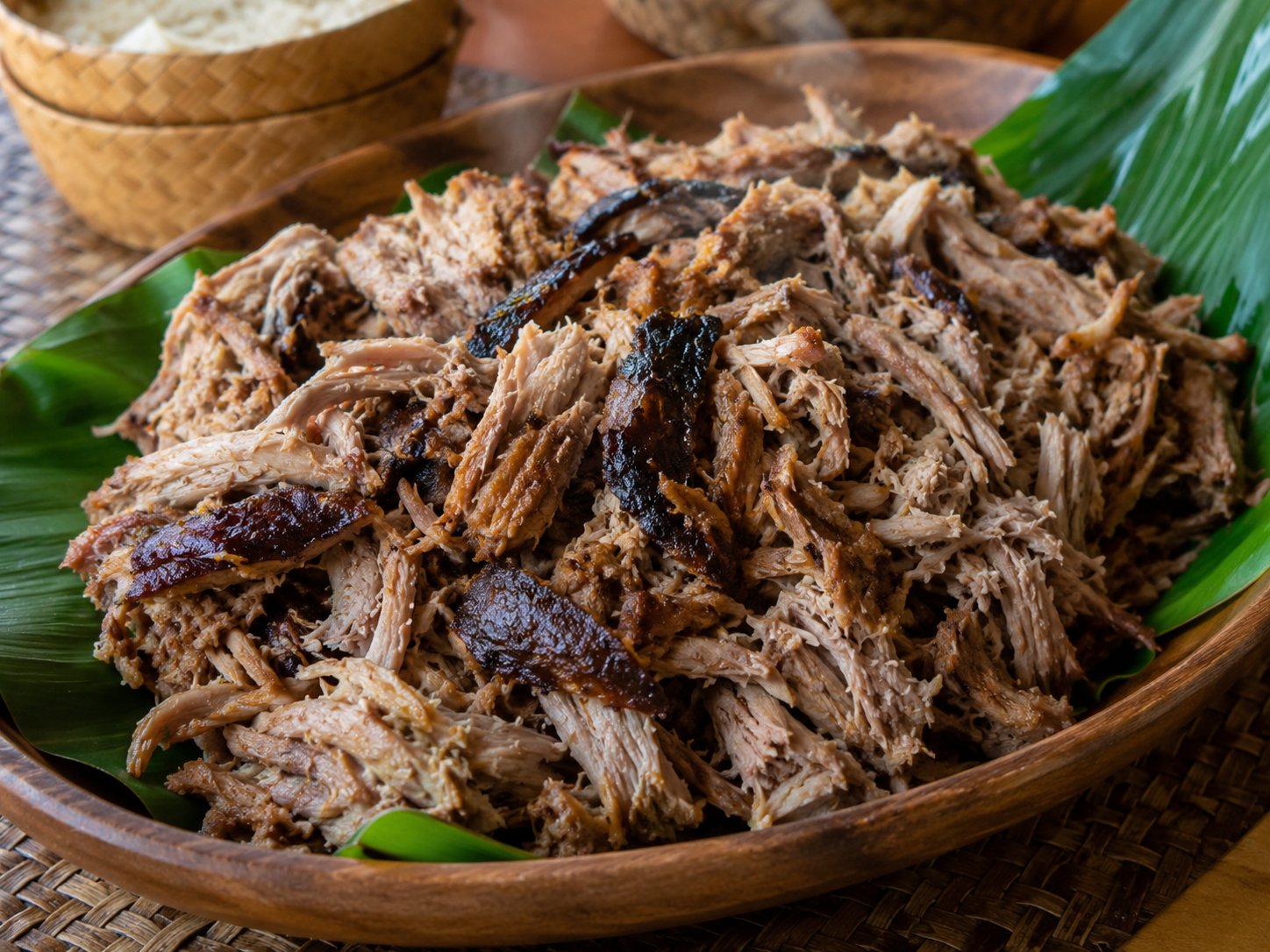
- Adjust seasoning. Taste the broth. Add more soy sauce or salt as needed. The seasoning should be present but gentle — the dish balances the saltier kalua pig and lomi salmon on the same plate, not competes with them.
- Serve. Spoon into small bowls or cups. Top each with a generous pinch of sliced green onions. Serve warm, alongside other Hawaiian-plate dishes.
Notes from a local cook
Ginger is the dish. The recipe calls for a full 3-inch knob, sliced thick. Most home cooks instinctively halve it. Don't. The broth needs to taste assertively of ginger — that's the difference between an authentic Hawaiian chicken long rice and a generic glass-noodle soup. The ginger slices stay in the pot; some people fish them out before serving, some leave them in. Either way is correct.
Bean thread noodles only. The dish does not work with rice noodles, ramen, udon, or any other noodle. Bean thread (cellophane, glass) noodles are translucent, slippery, and almost chewy. Any Asian grocery has them, often in a 4-pack labeled "saifun" or "long rice." Outside an Asian grocery, the Asian aisle at most supermarkets carries them.
Bone-in thighs over breast. The bones are doing real work in the broth. Boneless thighs are a step down but acceptable. Boneless breast is a step too far — the meat dries out and the broth loses depth. If you can only find boneless thighs, simmer for 25 minutes instead of 40.
Best eaten same day. The noodles keep drinking broth as the dish sits, so leftovers turn from "brothy noodle side" to "tangled noodle clump" overnight. If you're cooking for a potluck the next day, make the broth ahead but add the noodles within 30 minutes of serving. A splash of fresh water and a quick simmer will revive any leftovers that have firmed up.
While You're on the Islands
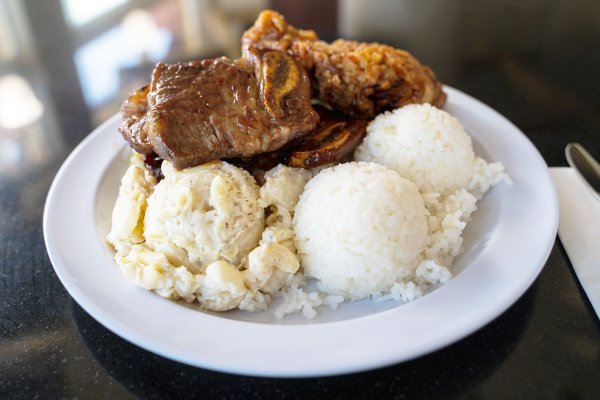
Eat it made by someone else. Helena's Hawaiian Food in Kalihi serves chicken long rice with its combination plates — a James Beard America's Classics winner. Check the hours before driving over; they're closed several days a week. Highway Inn, family-run since 1947 in Kakaʻako and Waipahu, has chicken long rice on the side menu and in the combination plates. Young's Fish Market in Kalihi keeps it on the everyday Hawaiian-plate counter. Most commercial luaus serve chicken long rice in a chafing dish next to the kalua pig — menus rotate, so check the specific luau's current offerings if you're going for the long rice. See Hawaiian luaus for the full lineup.
Buy the ingredients fresh. Bean thread (long rice) noodles and fresh ginger are stocked in the Asian-foods aisle at any island Foodland or Safeway — no special sourcing trip needed.
Bring It Home
What you can substitute, what you can't: bean thread noodles (also called cellophane or glass noodles) are sold at any mainland Asian grocery store, so nothing here needs packing home. A good chicken broth and fresh ginger do most of the flavor work, and both are easy to find anywhere.
Where to try this in Hawaii