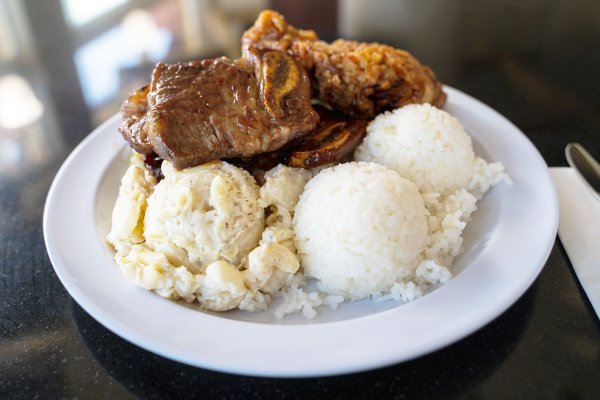
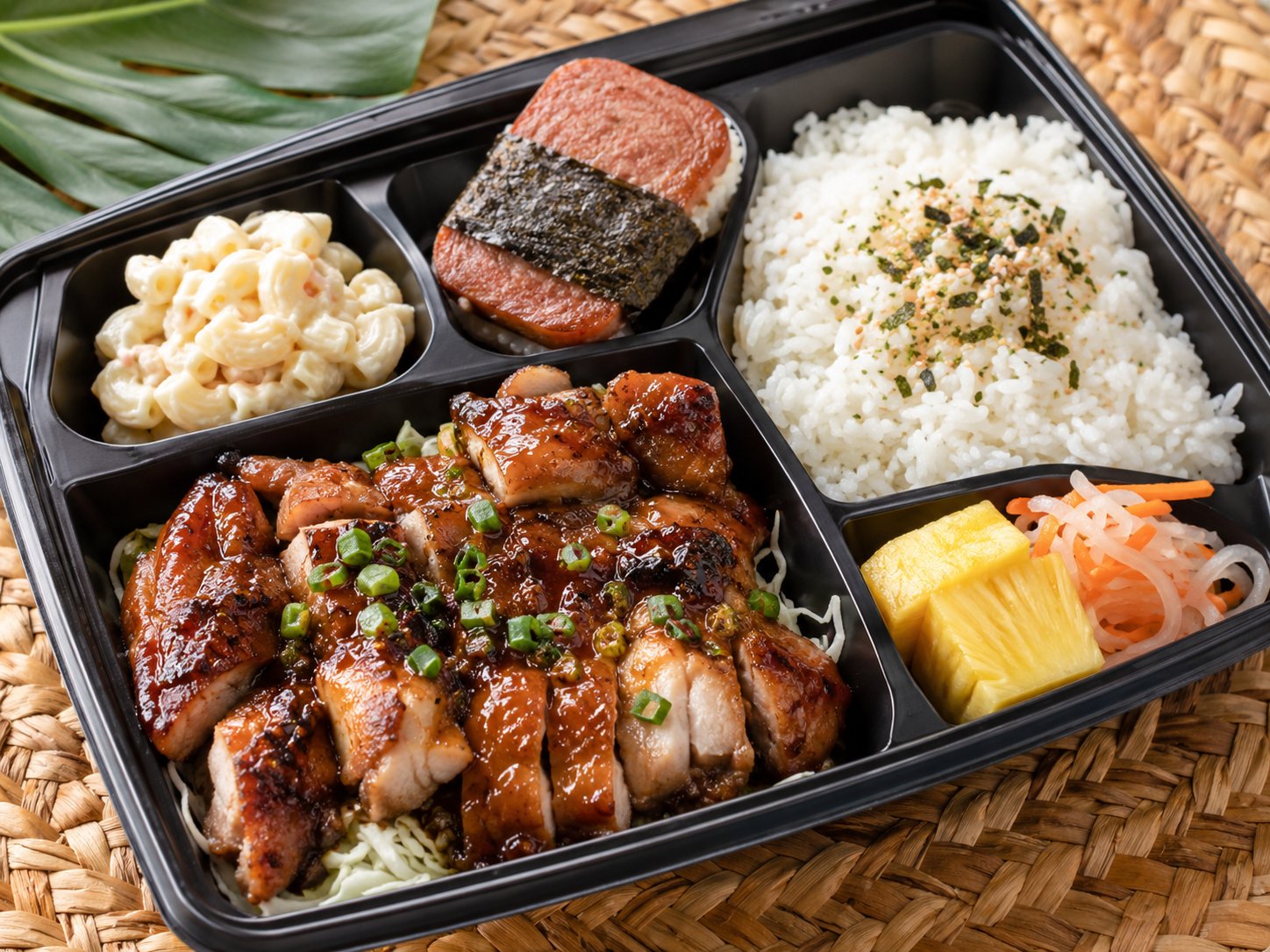

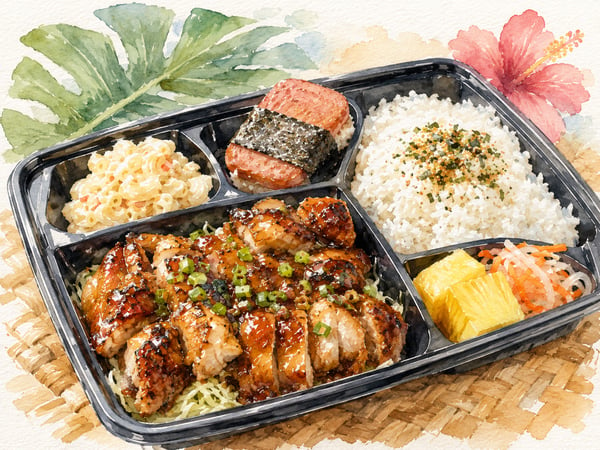
A Hawaii bento is not the lacquered-box-with-decorative-quail-egg bento you see in Japanese cookbooks. It's a one-pound takeout container, usually pink or yellow plastic, packed dense with two scoops of rice on one side and a rotating cast of fried, grilled, and sautéed proteins on the other. Fried chicken, teriyaki beef, hot dogs cut on the bias, two strips of bacon, a piece of fried Spam, a fried egg flat across the top of the rice, a sprinkle of furikake. Something pickled if you're lucky. The lid clicks shut and the whole thing weighs about two pounds.
The Japanese word bentō traveled to Hawaiʻi with the first wave of plantation workers in the 1880s, and the form evolved fast. Plantation cooks needed lunches that could survive a long shift in a metal pail and a humid field, so they leaned into anything fried, anything cured, anything pickled. Decades later the same logic still drives the takeout case. Done right, a Hawaii bento covers protein, starch, fat, salt, acid, and crunch in one container. Here's how to build one at home.
At a glance
2 bento boxes
15 minutes
30 minutes
Easy (assembly)
Ingredients
For the rice base
- 2 cups Calrose or other short-grain white rice, cooked (about 4 cups cooked)
- 2 tablespoons nori komi furikake (nori-and-sesame rice sprinkle)
- 1 teaspoon toasted sesame seeds
For the Spam
- 4 slices Spam (¼-inch thick)
- 1 tablespoon shoyu
- 1 tablespoon brown sugar
For the eggs
- 2 large eggs
- 1 teaspoon neutral oil for the pan
- Pinch of salt
For the protein (pick one)
- 2 pieces chicken katsu (see our chicken katsu recipe), OR
- 2 small pieces shoyu chicken (see our shoyu chicken recipe), OR
- 2 small skewers teriyaki beef
For the sides
- 2 hot dogs (use plain skinless if you want it local-style), each cut into 4 pieces on the bias and pan-seared
- 2 tablespoons takuan (Japanese pickled daikon) or kim chee, drained
- Optional: 2 strips bacon, cooked
- Optional: 2 tablespoons mac salad on the side
Equipment
- 2 rectangular takeout containers (about 6x8 inches), or any 2-compartment lunch box
- Small nonstick or cast iron pan for Spam, eggs, hot dogs
- Rice cooker, ideally
To serve
- Eat warm or pack and eat within 4 hours, ideally chilled
- Optional packets of shoyu and katsu sauce on the side
Method
- Cook the rice first. Rinse the rice three times until the water runs nearly clear, then cook by your usual method (rice cooker is the simplest path). Rice is the foundation here — everything else gets piled on top of it, so dial it in. Keep warm while you cook the rest.
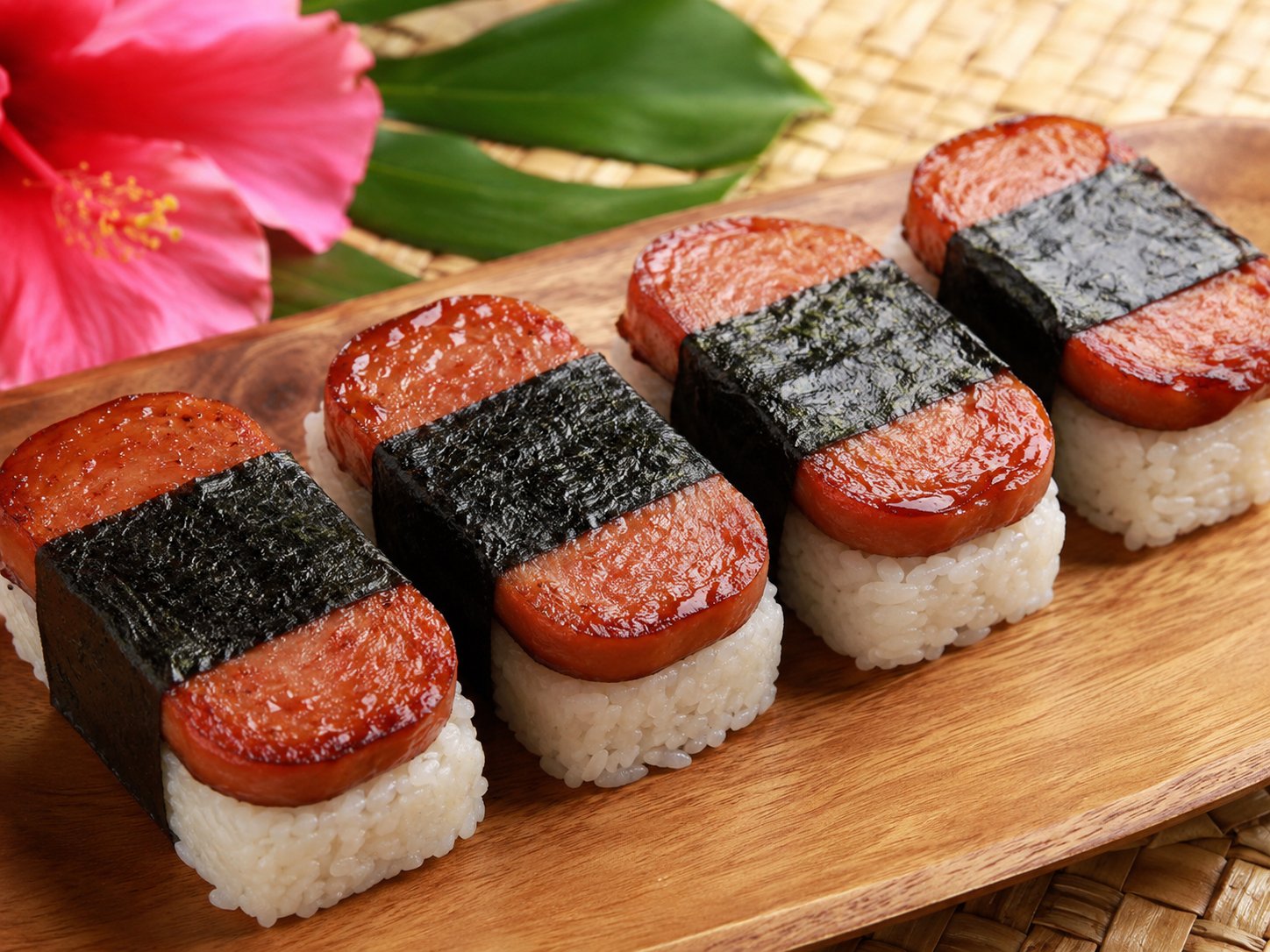
- Glaze the Spam. Whisk the shoyu and brown sugar together until the sugar dissolves. Pan-fry the Spam slices over medium heat in a dry pan (Spam has enough fat) until each side is browned with crispy edges, about 2 minutes a side. Drop the heat, pour in the shoyu-sugar mixture, and tilt the pan to coat. The glaze should reduce to a sticky lacquer in about 30 seconds. Pull the Spam out and set on a plate. This is the same glaze used for Spam musubi and the trick that separates Hawaiʻi Spam from a sandwich.
- Sear the hot dogs. Same pan, no need to clean. Cut the hot dogs on the bias into 4 pieces each. Sear cut-side-down over medium-high heat until both flat sides have a deep brown crust, about 90 seconds per side. The angled cut gives more surface area for the sear.
- Fry the eggs. Heat the oil over medium-high in a small nonstick pan. Crack in one egg. Once the white sets around the edge, season with a pinch of salt and lower the heat. For local-style, you want the white fully cooked but the yolk still soft, about 3 minutes total. Repeat with the second egg. This egg gets laid flat across the top of the rice; no flipping needed.
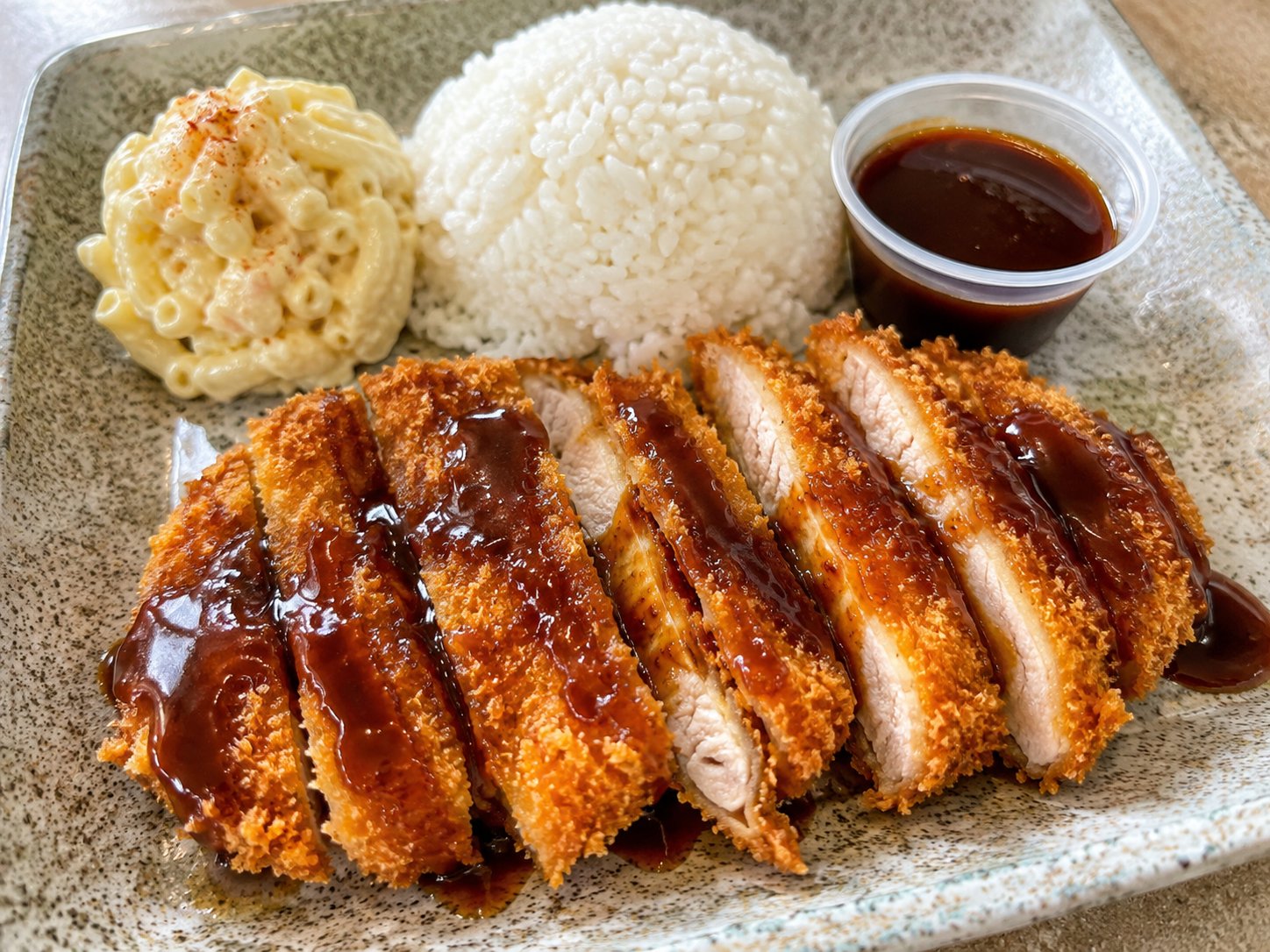
- Cook the protein. If using chicken katsu, follow our chicken katsu recipe and slice into strips. For shoyu chicken, see the shoyu chicken recipe. For teriyaki beef, slice flank or skirt thin against the grain, marinate in 3 tablespoons shoyu + 2 tablespoons brown sugar + 1 clove grated garlic for 20 minutes, then sear hot and fast in a screaming pan.
- Build the box. In each takeout container: pile two scoops of warm rice on the left half (or two-thirds, depending on container shape) and pack it tight enough to hold its shape. Shower the rice with furikake and sesame seeds. Lay the fried egg flat across the top of the rice. On the right side: fan the protein in one quadrant, the Spam in another, the hot dog pieces in another, and tuck the takuan or kim chee into the last gap. The compartments should feel full — local bento doesn't go for negative space. Press a small piece of parchment between the protein and pickle if the colors clash visually; otherwise let it look like a working person's lunch.
- Eat or pack. Eat warm right away, or seal and refrigerate. A Hawaii bento packs up better than most plate lunches because the components are designed to hold their texture at room temperature for a few hours. If you're brown-bagging it the next day, skip the egg (it gets rubbery cold) and add a piece of fried chicken instead.
Notes from a local cook
Two scoops, no fewer. The plate-lunch and bento math is two scoops of rice minimum. This is not a Western portion-control suggestion; the protein-to-starch ratio of a bento depends on enough rice to soak up the shoyu, the egg yolk, and the Spam glaze. A small handful won't get the job done.
Furikake is non-negotiable. Plain rice in a bento reads as unfinished. Nori komi furikake (the green and black flecks of dried seaweed, sesame, and dried fish) is the standard. The Mishima and JFC brands at any Asian grocer both work. Hawaiʻi-style hurricane popcorn furikake is a different blend; use the nori komi one for bento.
Build it the night before, eat it the next day. Counterintuitive but true. A Hawaii bento improves with about 4 hours of rest in the fridge — the rice firms up, the flavors meld, the Spam glaze sets. Just pull it out 20 minutes before lunch so the rice loses its chill. Skip this trick with the chicken katsu version; the panko crust softens overnight.
Make it yours. The bento formula is rice, furikake, egg, Spam, one main protein, and one pickled vegetable. Swap the protein for whatever you have: leftover teriyaki, panko fish, mochiko chicken, fried tofu. The structure is the recipe; the contents are improvisation.
While You're on the Islands
Eat it made by someone else. The Honolulu okazu-ya tradition is the place to study the form. Mitsu-Ken Okazu & Catering at 2300 N. King Street in Kalihi has been around since the early 1990s. Get there before the morning line wraps around the building — their garlic chicken bento sells out fast. Zippy's sells the Zip Pac, a bento-shaped takeout box with teriyaki beef, fried chicken, fried fish, and Spam over rice. For the wider okazu-ya scene, bento culture is alive in Liliha, Kalihi, and the eastside neighborhoods like Kaimuki and Kapahulu. See our Oahu dining guide for more.
Buy the ingredients fresh. Spam, furikake, and takuan (pickled daikon) are stocked at any island grocery store — easy to build the whole bento from one shopping trip.
Bring It Home
What you can substitute, what you can't: Spam, furikake, and takuan all ship and store well — see our Spam musubi recipe for the same furikake sourcing notes. Nothing in this bento needs special sourcing once you're home; it's a pantry-friendly assembly dish by design.
Where to try this in Hawaii