
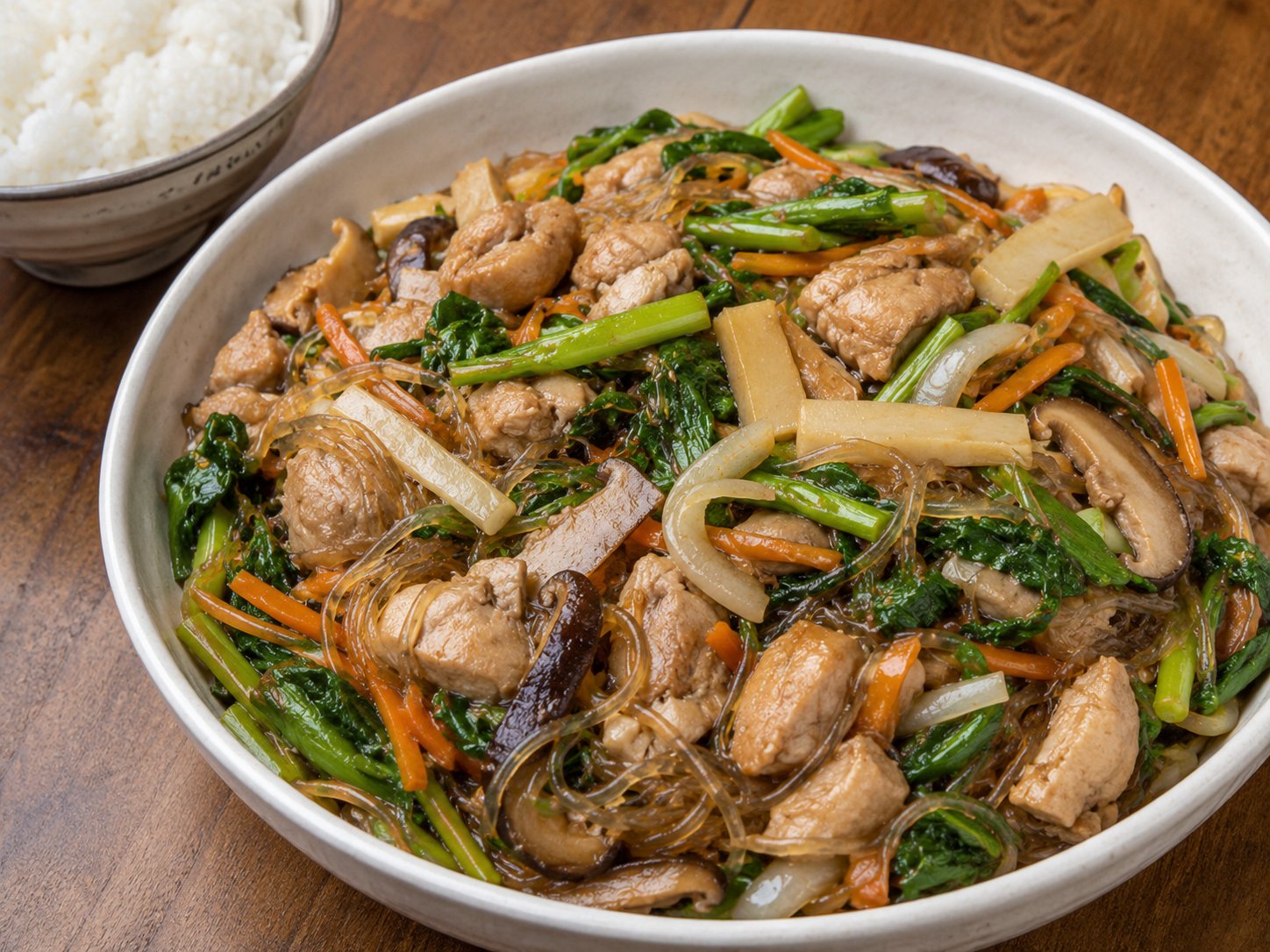

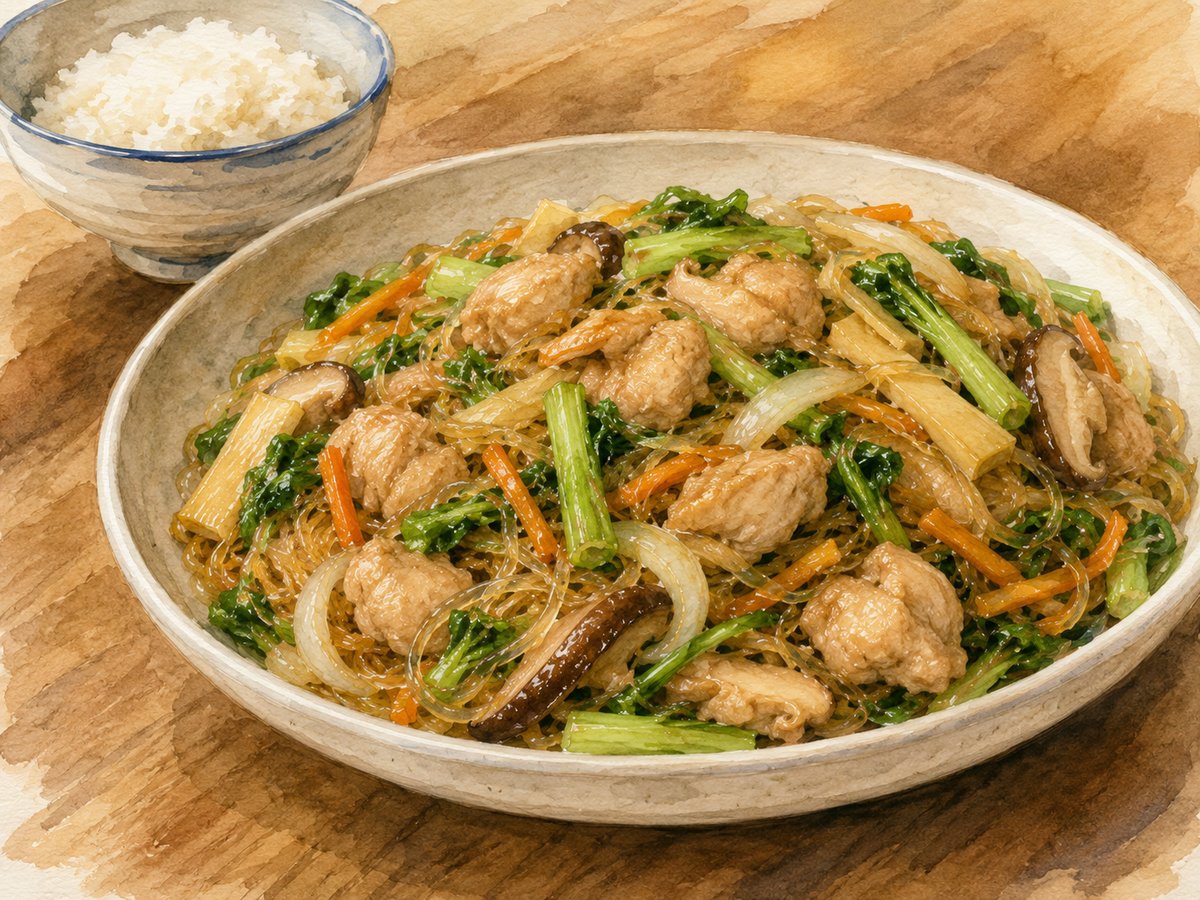
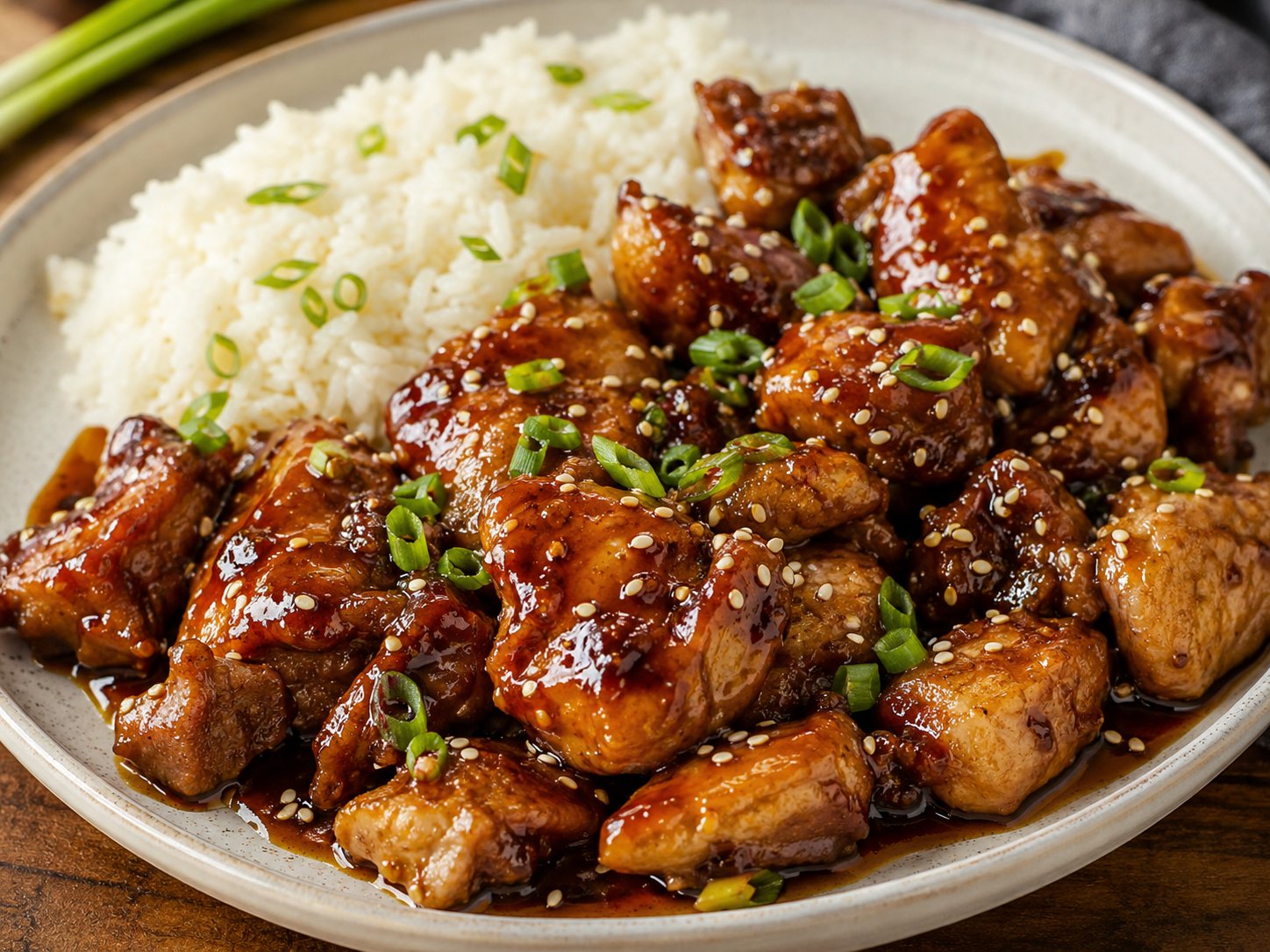
Hekka is what we call chicken sukiyaki in Hawaii. One pot: thin chicken, cubes of firm tofu, sliced bamboo shoots, soaked mung bean threads, carrot, onion, and Chinese cabbage, all simmered in a sweet-shoyu broth and ladled over rice. The dish came over with the Japanese contract laborers who arrived in the Islands in the late 19th century to work sugar plantations; "hekka" is a regionalism that stuck here as the dish localized. The Hawaii version usually uses chicken rather than the thinly-marbled beef of Tokyo sukiyaki, a plantation-economics swap that made the dish workable on a tight food budget.
It is quiet food. Nothing about it is dramatic. The broth runs sweet enough to glaze the rice underneath. The mung bean threads (long rice, in Hawaii English) drink up the liquid and slick around the chicken and tofu. The bamboo shoots give the only crunch. I make hekka on Sunday nights when I want to feed four people in 45 minutes without thinking hard about it.
At a glance
4 to 6 over rice
about 20 minutes
about 25 minutes
Easy
Ingredients
For the hekka
- 1 1/2 lb boneless skinless chicken thighs, sliced thin against the grain (about 1/4-inch slices)
- 14 oz firm tofu, drained and cut into 1-inch cubes
- 3 oz dried mung bean threads (long rice)
- 1 small head Chinese cabbage (about 1 lb), cored and cut into 2-inch pieces
- 1 medium yellow onion, halved and sliced thin
- 2 medium carrots, peeled and sliced on the bias
- 1 can (8 oz) bamboo shoots, drained and sliced
- 4 stalks green onion, cut into 2-inch lengths
- 1 tablespoon neutral oil
For the broth
- 1/2 cup shoyu
- 1/4 cup sake or mirin
- 1/4 cup granulated sugar (reduce to 3 tablespoons if using mirin)
- 2 cups chicken stock (low-sodium) or water
- 1-inch piece fresh ginger, peeled and sliced into coins
Equipment
- Large heavy pot (5-quart Dutch oven, deep skillet, or wok)
- Heatproof bowl for soaking noodles
- Sharp knife and cutting board
- Tongs or chopsticks for serving
To serve
- Steamed short- or medium-grain white rice
- Pickled vegetables, kim chee, or tsukemono on the side
- Furikake or shichimi togarashi for sprinkling
Method
- Soak the long rice. Put the mung bean threads in a heatproof bowl. Cover with hot tap water. Soak 15 minutes until pliable. Drain, cut into rough 4-inch lengths with kitchen scissors, and set aside.
- Mix the broth. Combine the shoyu, sake or mirin, sugar, chicken stock, and ginger coins in a small bowl. Stir until the sugar dissolves. Taste it. You want something between savory-sweet teriyaki and a strong dashi. Adjust sugar in 1-teaspoon increments if needed.
- Brown the chicken. Heat the oil in the Dutch oven over medium-high. Add the sliced chicken in a single layer and cook without stirring for 2 minutes to build some color. Toss and cook another minute. The chicken does not need to cook through here. The broth will finish it.
- Build in stages. Add the onion and carrot to the pot and stir for 2 minutes until they start to soften. Pour the broth over everything. Bring to a low simmer, scraping any browned bits off the bottom of the pot with a wooden spoon.
- Add the vegetables and tofu. Lay the Chinese cabbage, bamboo shoots, and tofu cubes on top of the simmering broth. Cover and cook for 10 to 12 minutes, until the cabbage has wilted into the broth and the carrots are tender. Don't stir aggressively. You want the tofu to stay in clean cubes.
- Add the long rice. Tuck the soaked noodles down into the broth around the vegetables. Cover and cook another 4 to 5 minutes until they have absorbed most of the liquid and turned glossy. Scatter the green onions over the top.
- Serve. Spoon hot white rice into shallow bowls. Ladle hekka over the rice. Every bowl should get some chicken, some tofu, plenty of noodles, and a slick of the sweet broth. Pass furikake or shichimi at the table.
Notes from a local cook
Use chicken thighs, not breasts. Thighs stay tender after a long simmer and forgive a few extra minutes in the broth. Breasts go from raw to chalky in a narrow window and will dry out the dish. If breasts are all you have, slice them very thin and add them with the cabbage rather than browning first.
The broth is a personal dial. Hekka leans sweet by tradition, but every cook lands the sugar in a different place. I usually start at 3 tablespoons, taste after the broth comes together, and add more in 1-teaspoon shots until it sits where I want it. Sake brings a clean savory note. Mirin is sweeter and lets you cut the sugar back.
Long rice is the Hawaii name for mung bean threads. You will also see them sold as saifun, cellophane noodles, or glass noodles at Asian grocers. They look like nylon fishing line dry, then turn translucent and slippery once cooked. Do not substitute rice noodles or wheat noodles. They are the wrong texture and they cloud the broth.
What else can go in. Sliced shiitake mushrooms are a common add. Some families throw in a handful of watercress or spinach at the very end. A raw egg cracked over an individual serving and stirred in is a tableside finish borrowed from Tokyo sukiyaki. It gently cooks in the hot broth.
While You're on the Islands
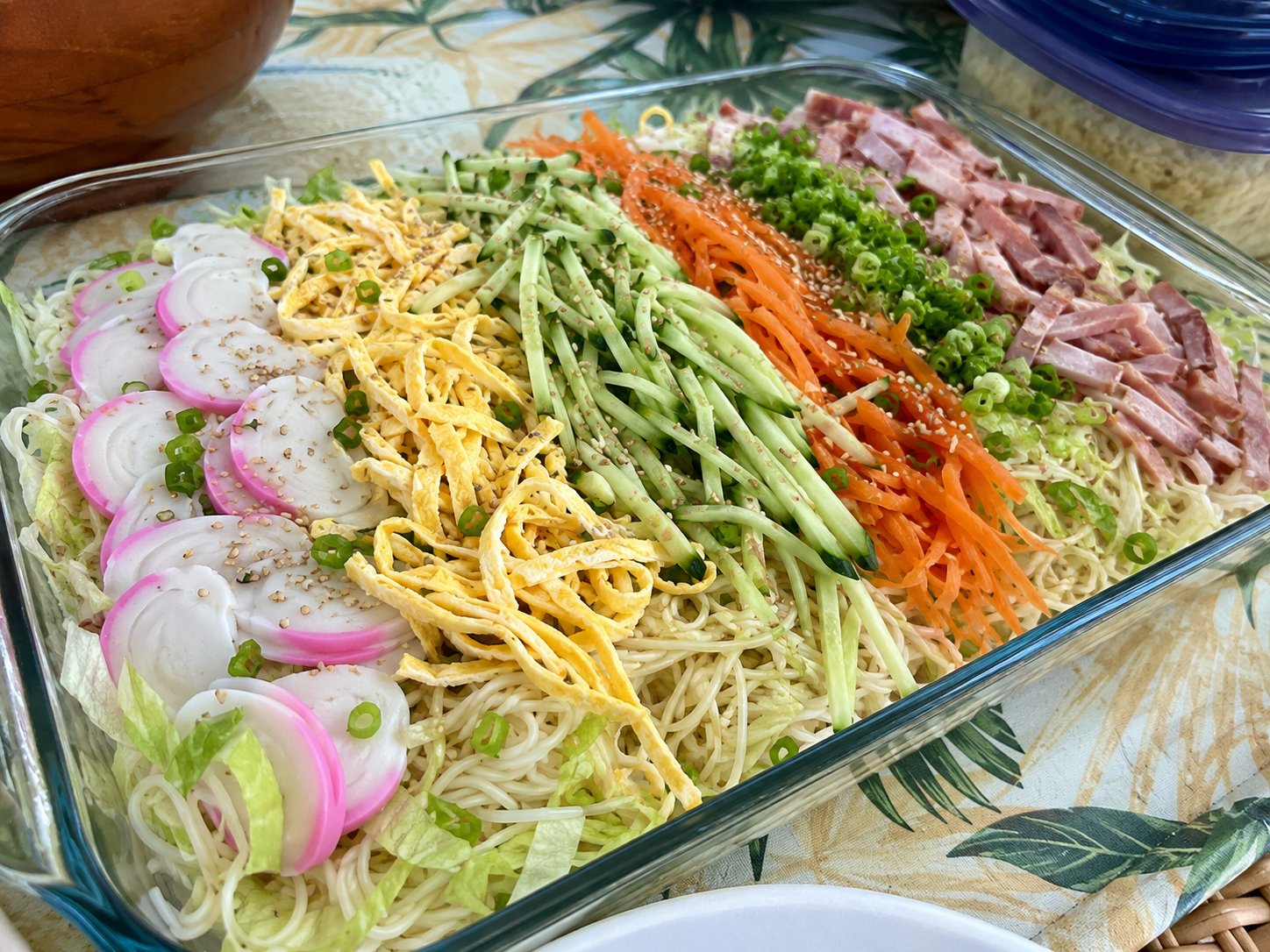
Eat it made by someone else. You will not see hekka on many restaurant menus anymore. It lives on as a home dish, cooked at family dinners and at potlucks at Buddhist temples and Japanese-American community halls. The closest counter version you can order is chicken sukiyaki at a Japanese plate-lunch shop or izakaya — essentially the same one-pot dish hekka grew out of, served under its Tokyo name. If you want the actual home version, the best path is getting yourself invited to dinner at a Japanese-Hawaii family's house. For more from this same plantation kitchen, see our somen salad recipe and our Hawaiian manju recipe.
Buy the ingredients fresh. Long rice (mung bean thread noodles) and fresh shiitake are stocked at any island Asian grocery — no special sourcing trip needed if you want to cook this one yourself.
Bring It Home
What you can substitute, what you can't: long rice (also sold as saifun, cellophane noodles, or glass noodles) is stocked at any mainland Asian grocery store. Don't substitute rice noodles or wheat noodles — wrong texture, and they cloud the broth. Sake or mirin, sugar, and shoyu round out the rest, all easy to find anywhere.
Where to try this in Hawaii