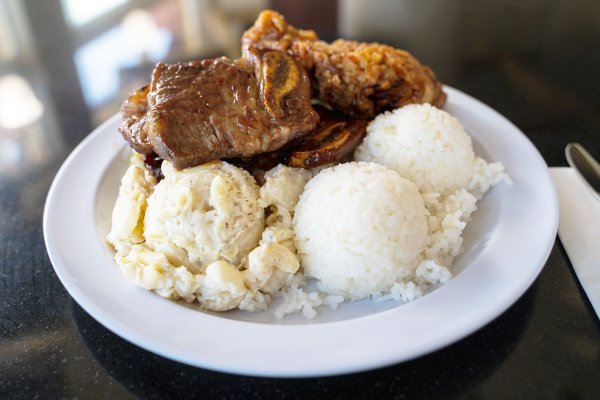
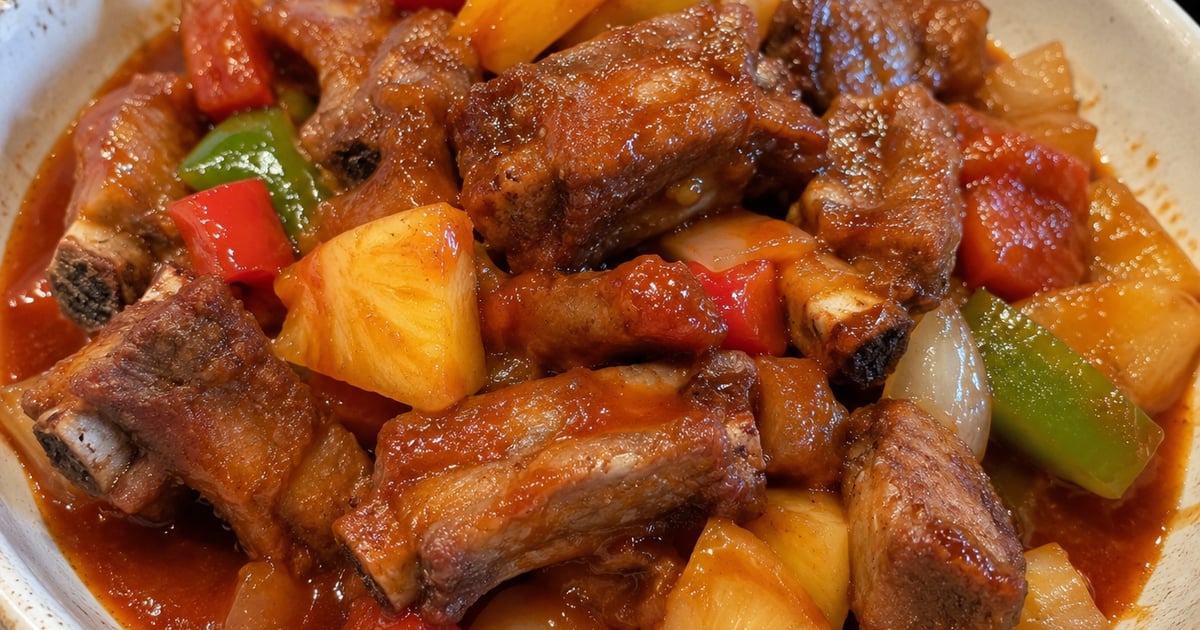


Point at a steam-tray window in Honolulu's Chinatown and ask for a two-scoop plate. Sweet sour spareribs is probably one of the things looking back at you. Sticky brown-sugar pork bones tangled with pineapple chunks, bell pepper, and onion in a glossy red-brown sauce. The recipe reads like the pantry it came out of: ribs, a bottle of vinegar, a jar of shoyu, a can of pineapple. Sweet, savory, sour, slightly funky. It tastes nothing like the orange-dyed sweet-and-sour pork at a mainland strip-mall Chinese restaurant. That is the point.
The Hawaii version uses bone-in spareribs, hacked into roughly 1-inch pieces by the butcher. The bones do real work. Collagen melts and thickens the braise. The diner gets something to chew. Pineapple juice replaces some of the water. Aloha shoyu, the sweeter, milder Hawaii-style soy sauce, goes in by the quarter cup. The whole thing comes together on the stovetop in about an hour and tastes better the next day.
At a glance
4 to 6 with rice
20 minutes
About 1 hour
Easy
Ingredients
For the spareribs
- 3 lb bone-in pork spareribs, hacked by the butcher into 1-inch pieces (ask for “Chinese cut” or “sweet sour cut”)
- 1 tablespoon vegetable oil for browning
- 2 cloves garlic, minced
- 1 tablespoon fresh ginger, minced
For the braise
- 1/2 cup brown sugar, packed
- 1/3 cup distilled white or rice vinegar
- 1/4 cup Aloha shoyu (or any Hawaii-style soy sauce)
- 1/4 cup ketchup
- 1 cup pineapple juice (canned is fine; reserve from the chunks below)
- 1 cup water, plus more as needed
To finish
- 1 can (20 oz) pineapple chunks in juice, drained (juice into the braise)
- 1 green bell pepper, cut into 1-inch squares
- 1 red bell pepper, cut into 1-inch squares
- 1 small yellow onion, cut into wedges
- 1 tablespoon cornstarch + 2 tablespoons cold water (slurry)
Equipment
- Large heavy pot or Dutch oven with a lid
- Sharp tongs for turning ribs
- Slotted spoon
To serve
- Steamed white rice (calrose or short grain)
- Local-style macaroni salad on the side, plate-lunch style
- A spoonful of Hawaiian chili pepper water if you like heat
Method
- Brown the ribs. Heat the oil in your Dutch oven over medium-high. Pat the rib pieces dry with paper towels. That is the difference between browning and steaming. Work in two batches so you don't crowd the pot. Sear the ribs on all sides until they go dark mahogany, about 8 to 10 minutes per batch. Pull them onto a plate as they finish.
- Build the sauce. Drop the heat to medium. Add the garlic and ginger to the rendered pork fat and stir for 30 seconds until fragrant. Pour in the brown sugar, vinegar, shoyu, ketchup, pineapple juice, and water. Whisk until the sugar dissolves and the sauce looks glossy. Taste it. The sauce should hit you as aggressively sweet-sour-salty. The ribs will balance it out.
- Braise low and slow. Return the ribs and any juices to the pot. The liquid should come about two-thirds of the way up the meat. Add more water if it's short. Bring to a low boil, then drop to a bare simmer. Cover with the lid cracked open and cook 45 minutes, stirring every 15 minutes so nothing scorches on the bottom. The ribs are done when the meat shrinks back from the bone and a fork pulls a piece apart with light resistance.
- Add the vegetables. Stir in the bell peppers, onion, and pineapple chunks. Cook uncovered 6 to 8 minutes more. You want the peppers to soften but still have some snap. If they go limp, they get lost in the sauce.
- Thicken and serve. Whisk the cornstarch slurry, then drizzle it into the simmering sauce while stirring. The braise will tighten into a glossy glaze in about a minute. Cut the heat. Serve in shallow bowls over rice with mac salad on the side and a small pool of pepper water if you want it.
Notes from a local cook
The cut matters more than anything else. Ask your butcher for spareribs hacked into 1-inch pieces, bone in. If they look at you blankly, the phrase "Chinese-style cut" or "sweet sour cut" will usually click. Boneless ribs work in a pinch but lose the marrow-rich body that makes the sauce cling. St. Louis ribs cut crosswise on a band saw at a Korean or Chinese butcher are perfect.
Hawaii shoyu is sweeter and lighter than mainland soy sauce. If all you have is Kikkoman or a dark Chinese soy, drop the amount to 3 tablespoons and add a pinch more brown sugar. Aloha shoyu runs notably less salty than dark soy sauce, and that's why this dish doesn't taste like dim sum sweet-and-sour pork. Yamasa is the other bottle you'll see on Hawaii kitchen counters, though it's a Japanese brand, not a Hawaii one.
Make it the day before. Like most braises, sweet sour spareribs is better after a night in the fridge. The fat solidifies on top and lifts off cleanly with a spoon, the flavors marry, and the texture firms up. Rewarm gently on the stove with a splash of water if the glaze tightens too far.
Pineapple from a can is the move. Fresh pineapple carries bromelain, an enzyme that breaks down meat protein. Great for a marinade. Bad for a finished dish, where it will turn your ribs mushy. Canned pineapple has been heat-treated, which denatures the enzyme. This is one place where canned beats fresh.
While You're on the Islands
Eat it made by someone else. Sweet sour spareribs is a Honolulu Chinatown plate-lunch counter staple. The kind of dish you point at through the steam-table glass at a Cantonese-Hawaiian counter on Maunakea Street or Hotel Street. Royal Kitchen in the Chinatown Cultural Plaza is best known for its baked manapua, and the rotating hot-food trays typically include sweet sour spareribs and shoyu chicken. Several of the family-run Chinese-Hawaiian counters in Honolulu's Chinatown serve a version on the steam table. See our guide to Oahu dining for more local-Chinese sit-downs.
Buy the ingredients fresh. Chinatown's market stalls sell pork spareribs cut to order, plus Aloha Shoyu and canned pineapple from the same aisle — one stop for everything this dish needs.
Bring It Home
What to stock up on before you fly home: a bottle of Aloha Shoyu ships well and is the one ingredient that genuinely changes how this dish tastes — sweeter and lighter than mainland soy sauce. If you can't find it, drop the soy sauce amount slightly and add a pinch more brown sugar.