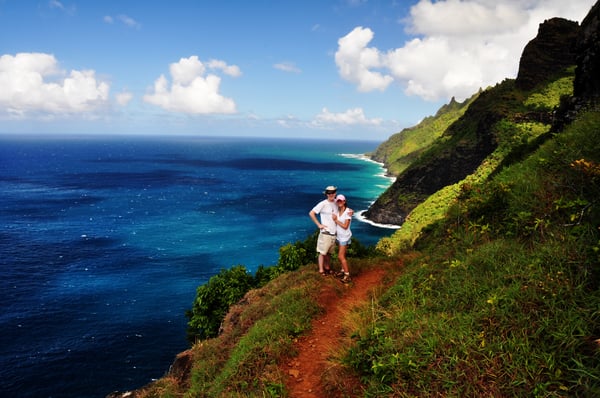

Hawaii's cultural environment is the result of layer upon layer of various cultural groups. The culture of Hawai'i is arguably one of the strongest remaining in the world, and certainly within the United States. The culture and practices of the Hawaiian people remains very evident on the islands, even though the Hawaiian race itself has become diminished and "diluted" over the years - few pure blood Hawaiians remain in the general population. If you're planning a visit, our Hawaii etiquette guide covers how to engage with this living culture respectfully — from kapu signs to sacred sites.
Remnants of New English culture remain, though not nearly to the degree of early Asian immigrants who came to work in the sugar cane fields in the early 20th century. Additionally, Polynesian influence in the islands is strong as one might expect. Today Hawaii is a truly a melting pot of many cultures, beliefs, and heritage.
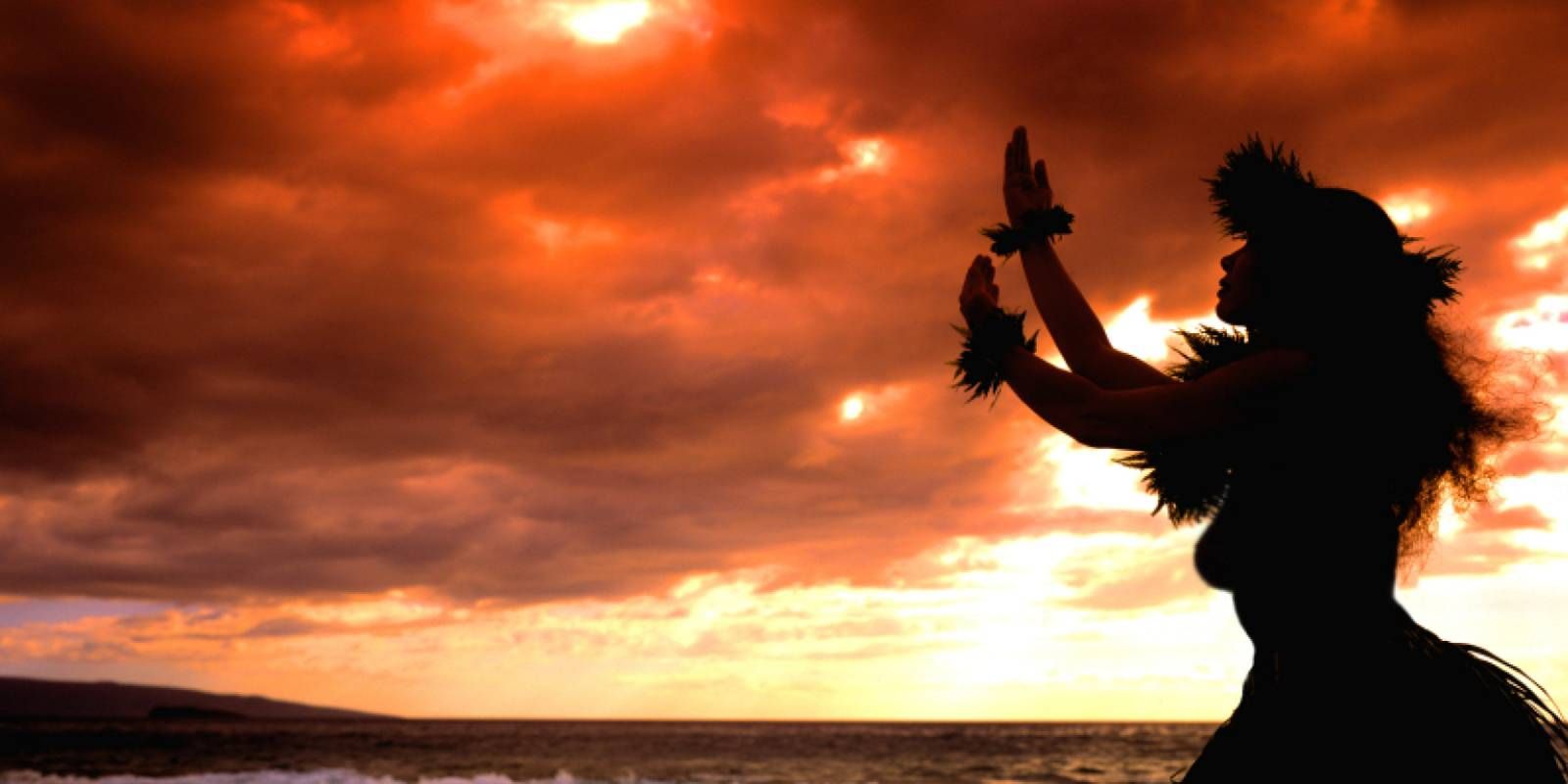
The arts are of high interest in the islands, either in the form of music, photography, hula dance, or art. Galleries for art and photography are prominent throughout the islands, music has worked its way around the globe and into several major movies (thanks to the late Israel Kamakawiwo'ole - Brother IZ), and the hula is world renown. Appreciation of classical, modern, and experimental art forms is evident in attendance figures at galleries, concerts, legitimate theater performances, and museums. Many ethnic groups preserve the traditions of their ancestors by combining or modifying music and dance forms.
Since the preservation of the culture and heritage is very important to the people of Hawaii, an assortment of cultural and scientific institutions present a wide variety of opportunities for the appreciation and understanding of the fine arts, history, traditions, and sciences of the Hawaiian people. The Bernice P. Bishop Museum, founded in 1889 in Honolulu, is a research center and museum dedicated to the study, preservation, and display of the history, sciences, and cultures of the Pacific and its people. The Honolulu Museum of Art, formerly the Honolulu Academy of Arts, holds a major collection of Western and Asian art, including works by Monet, van Gogh, Matisse, Gauguin, and Picasso.
The active art, music, and drama departments in Hawaiian schools and colleges and at the University of Hawaii contribute to the expanding cultural life of Hawaii, while the state has several theater organizations, professional and amateur. Hawaii recognizes both English and Hawaiian as official languages. As of late, the Hawaiian language is taught frequently in schools and the once nearly "dead" language has seen a revival.
Two of Hawaii's best-known national parks are Hawaii Volcanoes National Park, on the island of Hawaii, and Haleakala National Park, on Maui. The islands also include other National Park Service sites, including the much-visited U.S.S. Arizona Memorial in Pearl Harbor. Hawaii's state and county parks include Waimea Canyon State Park on Kauai, often called the "Grand Canyon of the Pacific."
Get Your Free Hawai'i Guide
Instant access — opens immediately
- Beaches, activities & top spots
- Restaurant & dining recommendations
- Maps, itineraries & insider tips
Want the full offline version? Get the Complete Hawai'i Guidebook →
The Hawaiian islands are also home to some of the most fascinating heiau (temples) that remain in the United States. Unfortunately, many of these heiau were destroyed after the ancient kapu system was abolished in 1819 and early missionaries arrived shortly thereafter. The largest intact heiau in the state, Pi'ilanehale Heiau, stands on Maui just outside of Hana town. Today all visitors and residents alike can visit this monumental structure.
Surfing originated in ancient Hawaii and is now practiced at recognized breaks throughout the islands. Holua was a popular game of the ancient ali'i (royalty), involved a sled, and was incredibly dangerous.
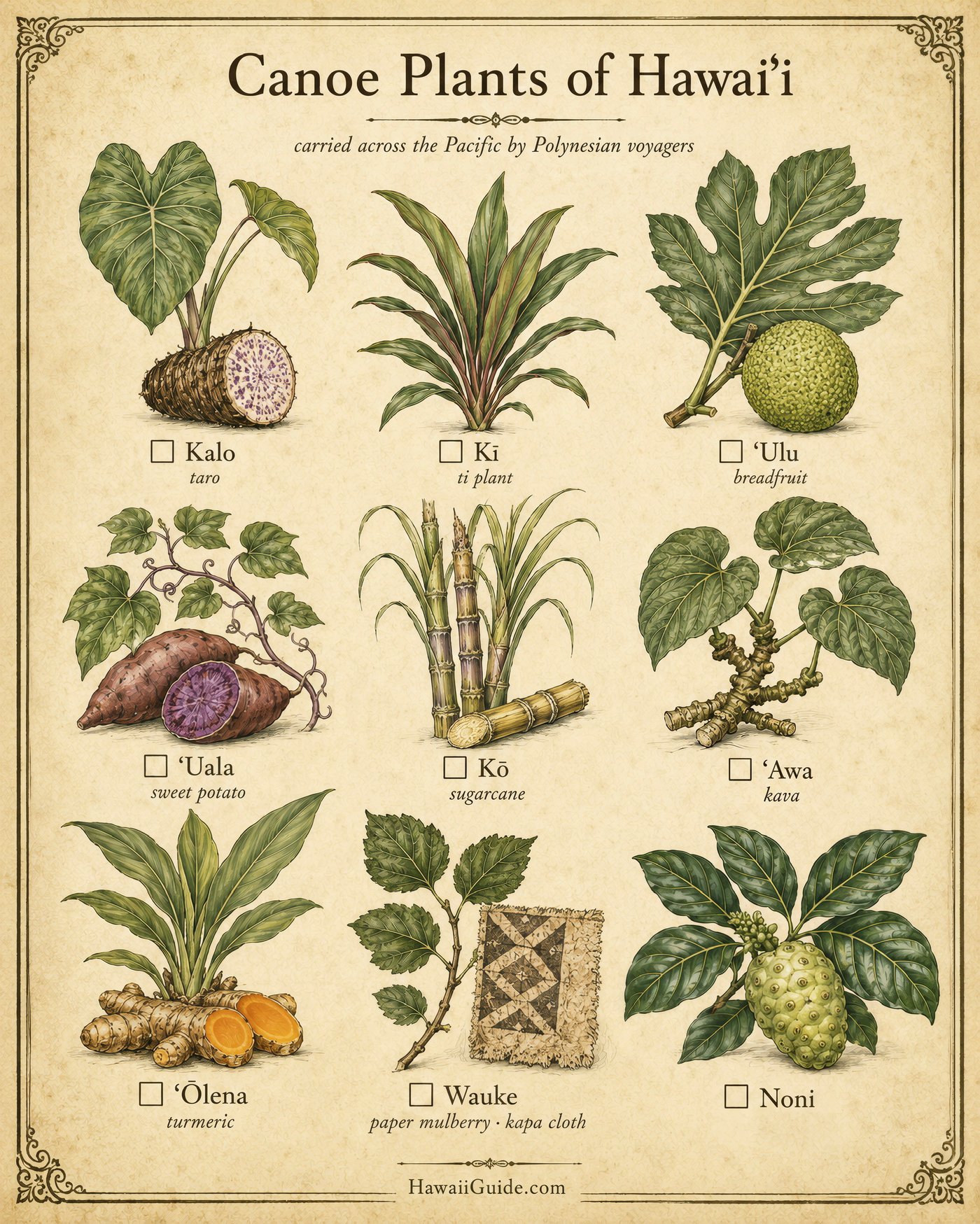
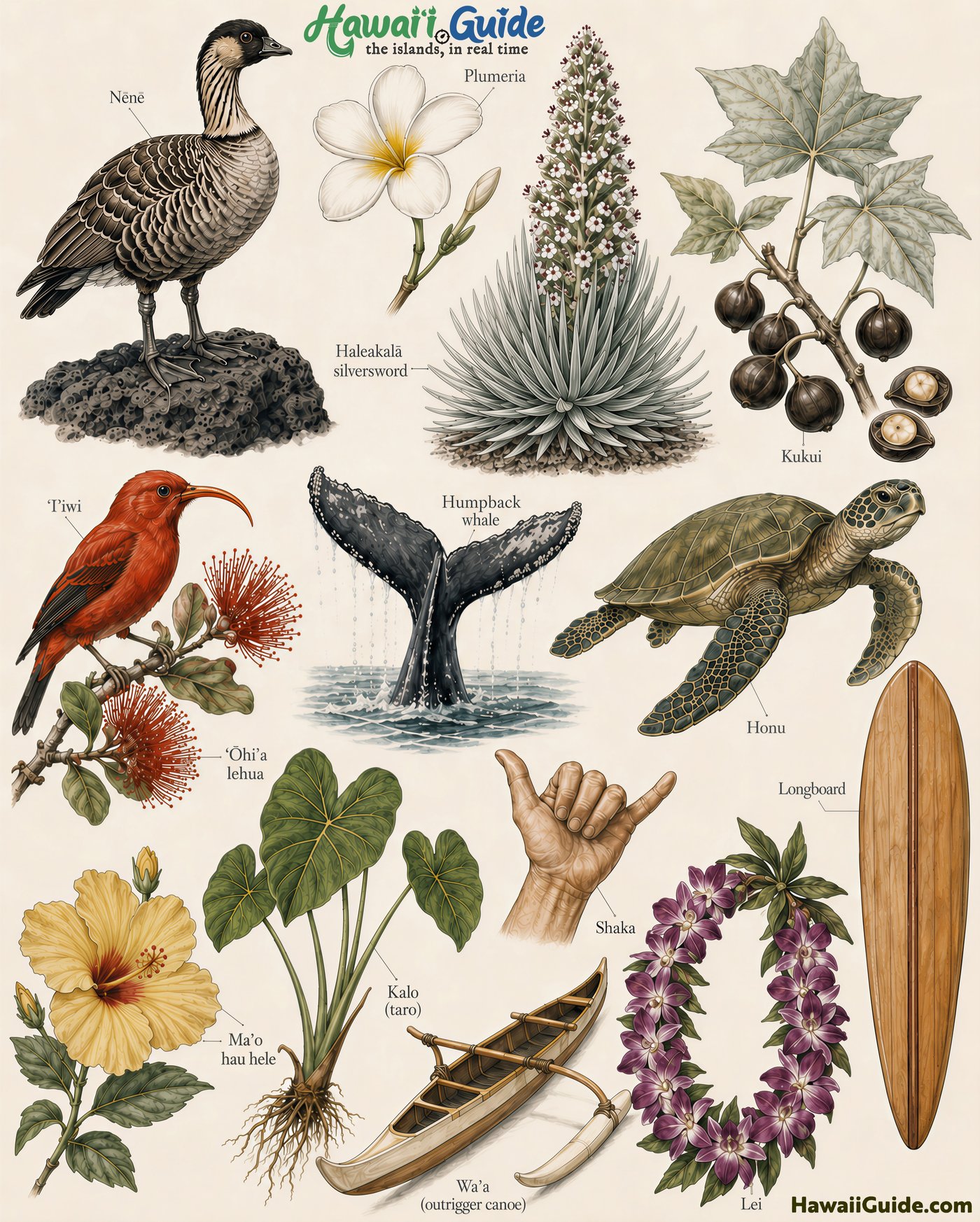
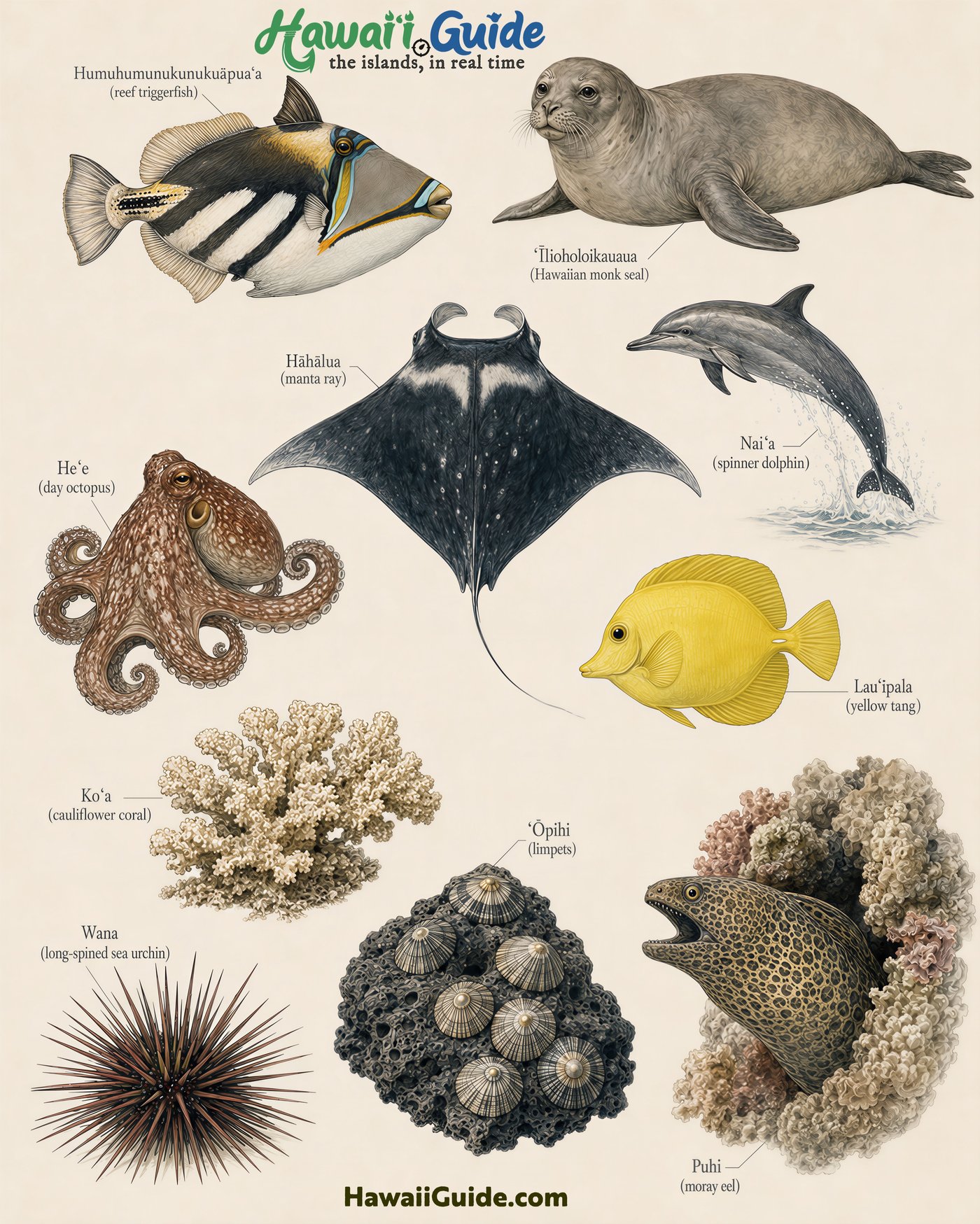
Illustrated Canoe Plants, ʻĀina & Kai Guides
Three visual companions to Hawaiʻi's land- and ocean-centered cultural context — including the plants Polynesian voyagers carried here. Tap a guide to view it larger or download the print-ready PDF.