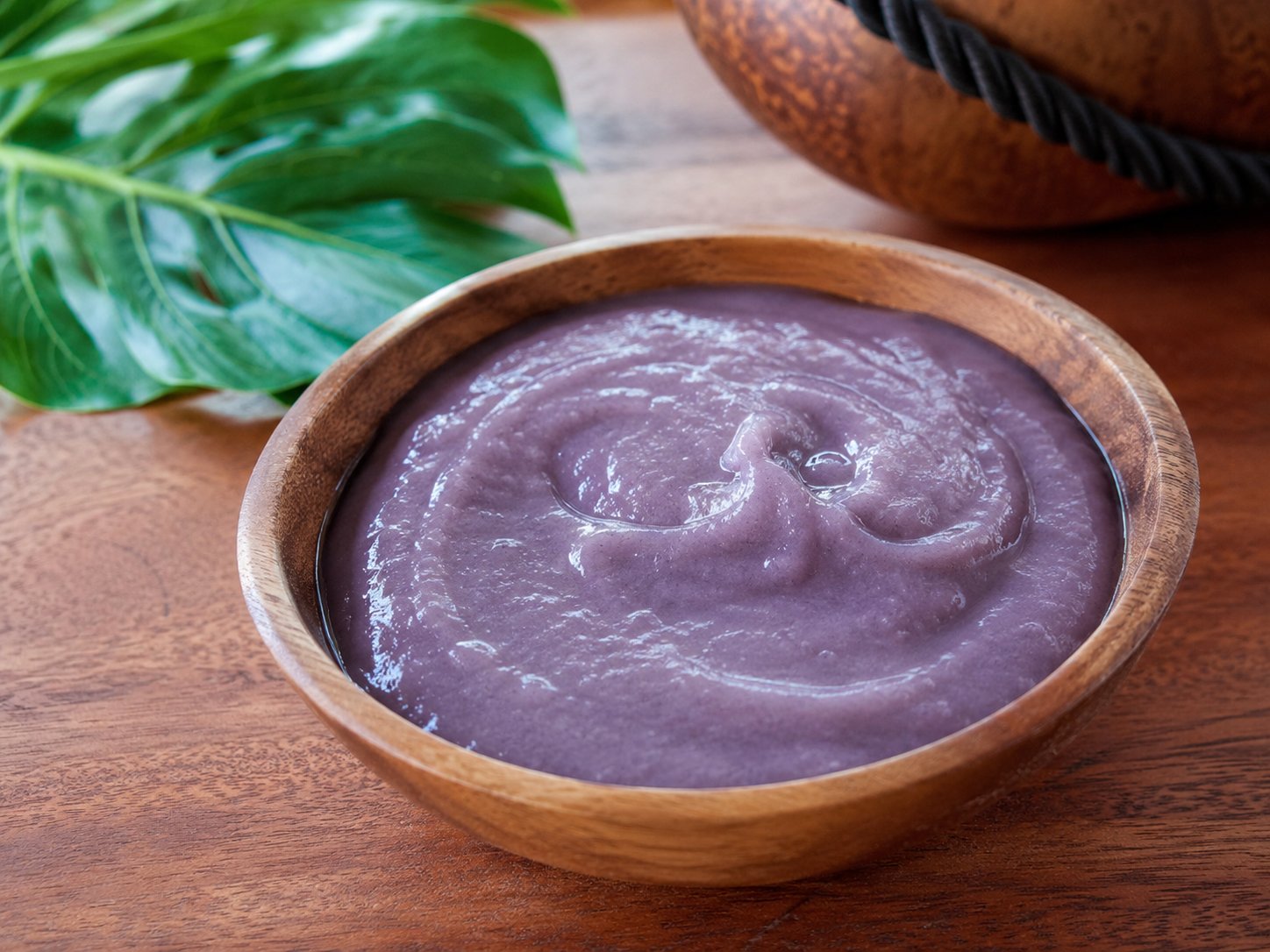
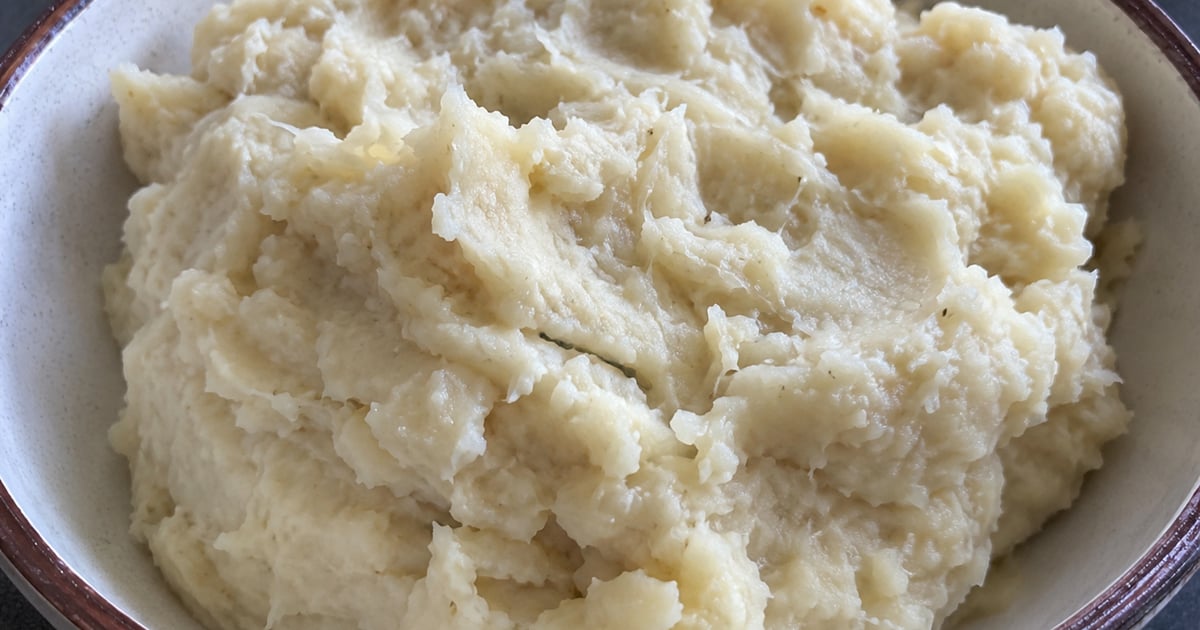

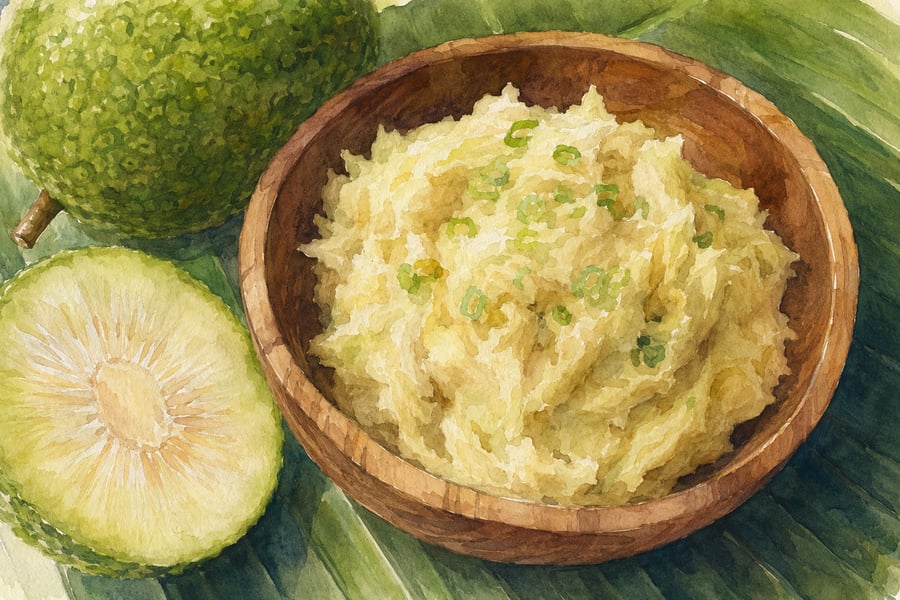
Mashed breadfruit (ulu) is one of Hawaii's oldest plate starches — steamed ripe fruit broken down with coconut milk and a pinch of Hawaiian sea salt. Ulu, the Hawaiian word for breadfruit, came over with the first Polynesian voyagers as one of the canoe plants. A single mature tree can produce hundreds of fruits a year and feed a family for generations, which is why the voyagers bothered carrying young trees across thousands of miles of open ocean.
The flesh of a ripe breadfruit is creamy, sweet, and starchy — somewhere between freshly baked bread, potatoes, and chestnuts. You can fry it, roast it, bake it like a potato, or do what most home cooks do and steam it whole, peel it, and mash it. The Hawaii ‘Ulu Cooperative, a Hawaii Island farmer-and-chef group formed in 2016, now aggregates fruit from over 100 member farms statewide and sells fresh and frozen ulu through island markets, retailers, and direct shipping — the main reason ulu has gotten easier to find on shelves.
At a glance
4 to 6 as a side
15 minutes
45 minutes to 1 hour steaming
Easy
Ingredients
For the mash
- 1 large ripe (mature but not soft) breadfruit, about 3 to 4 lb — the skin should be yellow-green with brown specks, and the fruit should give slightly when you press it
- ½ cup full-fat coconut milk, plus more to taste
- 1 teaspoon Hawaiian sea salt (alaea or paʻakai), or flaky sea salt
- 2 tablespoons unsalted butter (optional, for a more western-style mash)
Equipment
- Large stockpot with a steamer insert
- Sharp knife and cutting board (a breadfruit will dull your knife — use the second-best one in your drawer)
- Vegetable peeler or paring knife
- Potato masher or large fork
Optional add-ins
- Toasted coconut flakes for garnish
- A drizzle of unrefined coconut oil on top before serving
- 1 small clove of garlic, mashed and stirred in — not traditional but works on a contemporary plate
- Black pepper or a small pinch of chili pepper flakes
To serve
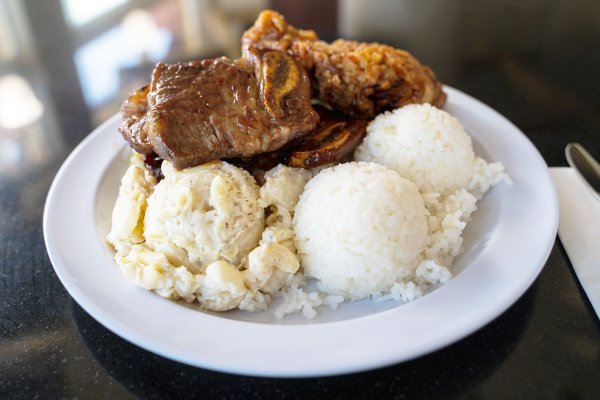
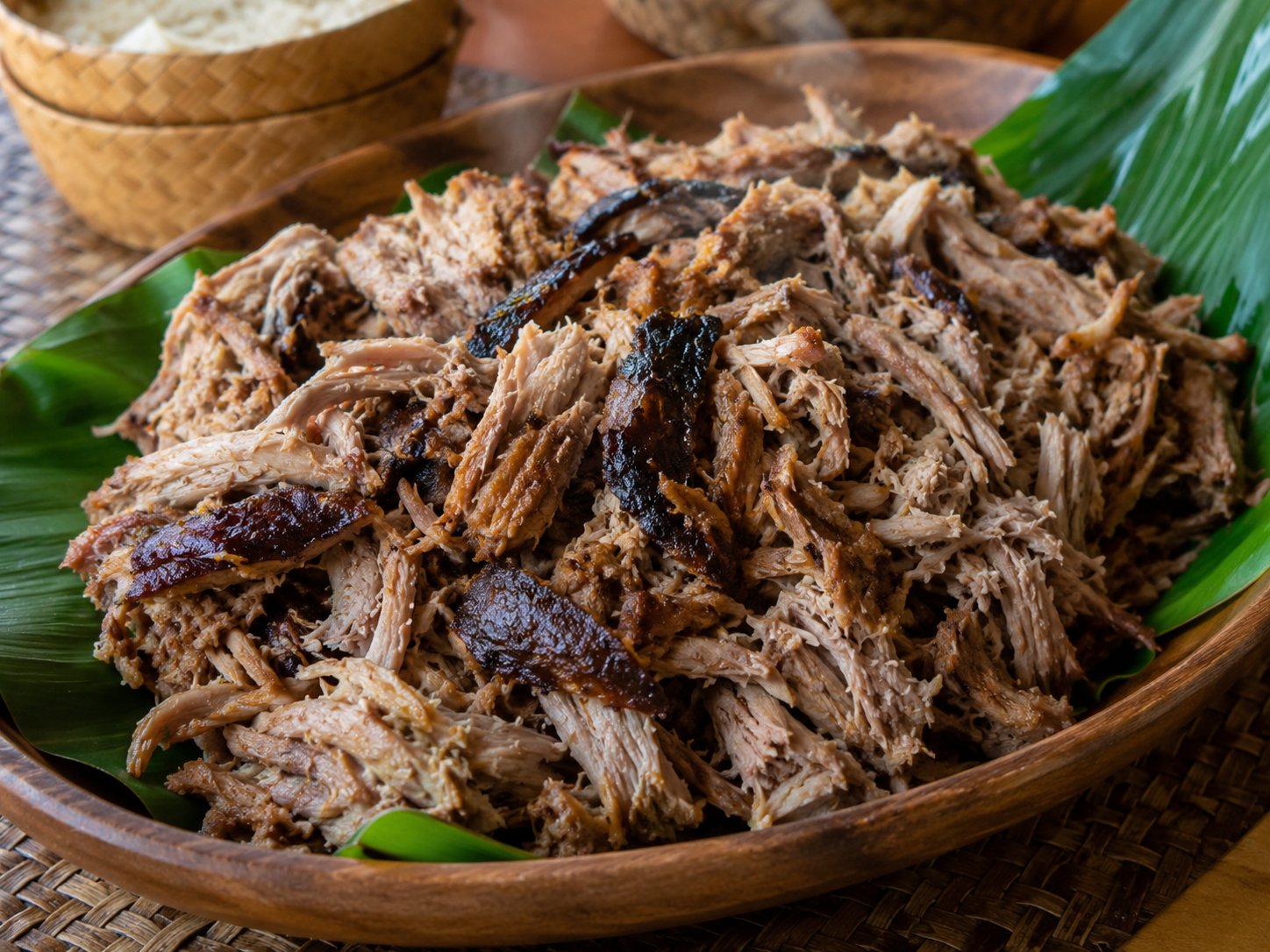
- As a side to kalua pig or laulau on a Hawaiian plate
- As a substitute for poi when fresh poi is not available
- With lomi lomi salmon spooned over the top
Method
- Test the ulu. A breadfruit is ready to cook when the skin is yellow-green with brown specks and the fruit gives slightly under your thumb. Fully soft and brown means it has tipped into overripe and will be sweet and pudding-like — fine for a dessert preparation but too soft for a savory mash. A rock-hard pale green ulu is underripe; let it sit on the counter another day or two.
- Whole-steam or quarter-steam. The traditional method is to wrap the whole fruit in ti leaves and steam it for an hour. The home-kitchen shortcut: cut the ulu into quarters lengthwise. Do not peel yet — the skin keeps the flesh from drying out. Cut around the central core (it is woody and inedible) and discard. Place the quarters in a steamer over rapidly boiling water, cover, and steam for 45 minutes to an hour. The flesh is done when a knife slides in with no resistance.
- Peel and core. When cool enough to handle, peel back the skin (it should come off in sheets when fully cooked) and scoop the cooked flesh into a bowl. If any tough fibers from near the core slipped through, remove them now.
- Mash and season. Mash the cooked flesh with a potato masher or large fork. Add the coconut milk a little at a time, stirring until the mash reaches the consistency you want — somewhere between fluffy mashed potatoes and creamy polenta. Stir in the Hawaiian salt and the butter if using. Taste, adjust salt, and add a splash more coconut milk if it tightens up.
- Serve warm. Spoon onto plates next to kalua pig, lomi salmon, or laulau. A small drizzle of unrefined coconut oil and a few flakes of toasted coconut on top is the contemporary luau-plate version.
Notes from a local cook
Ripeness is everything. A breadfruit picked too green has very little flavor and a starchy, almost chalky texture. Picked too late, it is too sweet for a savory dish. In my kitchen the sweet spot is mature but still firm, with the skin starting to color and the fruit giving slightly under thumb pressure. If your only option is rock-hard, leave it on the counter for two or three days; it ripens fast.
Frozen ulu is fine. The Hawaii ‘Ulu Cooperative sells frozen ulu through its online store and ships to the mainland. Thaw, steam another 15 minutes to finish, and proceed with the mash. I find the cooked texture and flavor close enough to fresh that I happily use it in the off season.
The latex. Cutting a raw breadfruit releases a sticky white sap that will gum up your knife. Oil the blade lightly before you start and have a wet paper towel ready. This is also why I steam the fruit before peeling — once the flesh is cooked the skin lifts off in sheets and you skip the sap fight entirely.
Leftovers. Mashed ulu firms up considerably in the fridge. The next-day move is to scoop tablespoons of it into hot oil and shallow-fry until crisp on both sides — instant ulu fritters. Salt them while they are hot.
While You're on the Islands
Eat it made by someone else. Hawaii Island has the densest concentration of farms and the cooperative network, so it is generally the easiest place to spot ulu on a menu in Hilo and Kona. On Oahu, Helena's Hawaiian Food in Kalihi sometimes runs ulu as a rotating side — it is not on the printed menu, so call ahead if you are making the trip for it. On Maui, small Hana Highway lunch stops are the usual hunting ground, again as a daily-special call. See our Big Island dining and Oahu dining guides for more.
Buy the ingredients fresh. The Hawaii ‘Ulu Cooperative sells fresh and frozen ulu directly through its online store and works with retailers, restaurants, and farmers' markets statewide — ask at any Big Island farmers market for ulu by name if you want to cook it yourself while you're here.
Bring It Home
This one ships. Unlike most ingredients on this list, you don't need a suitcase trick — the Hawaii ‘Ulu Cooperative ships frozen ulu straight to the mainland, so you can keep making this dish year-round without waiting for your next trip. Thaw it, steam another 15 minutes to finish, and proceed with the mash — the cooked texture and flavor are close enough to fresh that it's a fine year-round substitute.
Where to try Native Hawaiian food