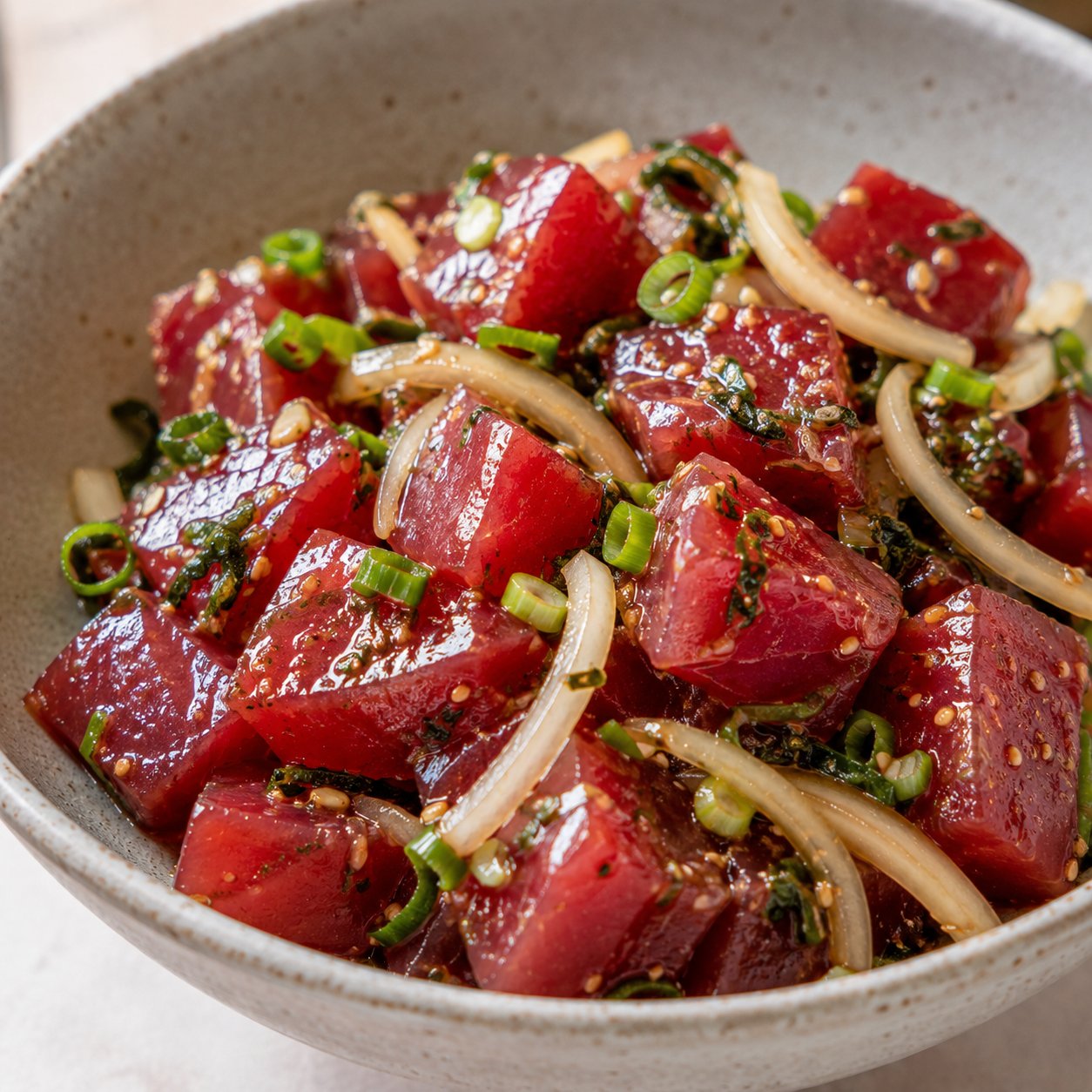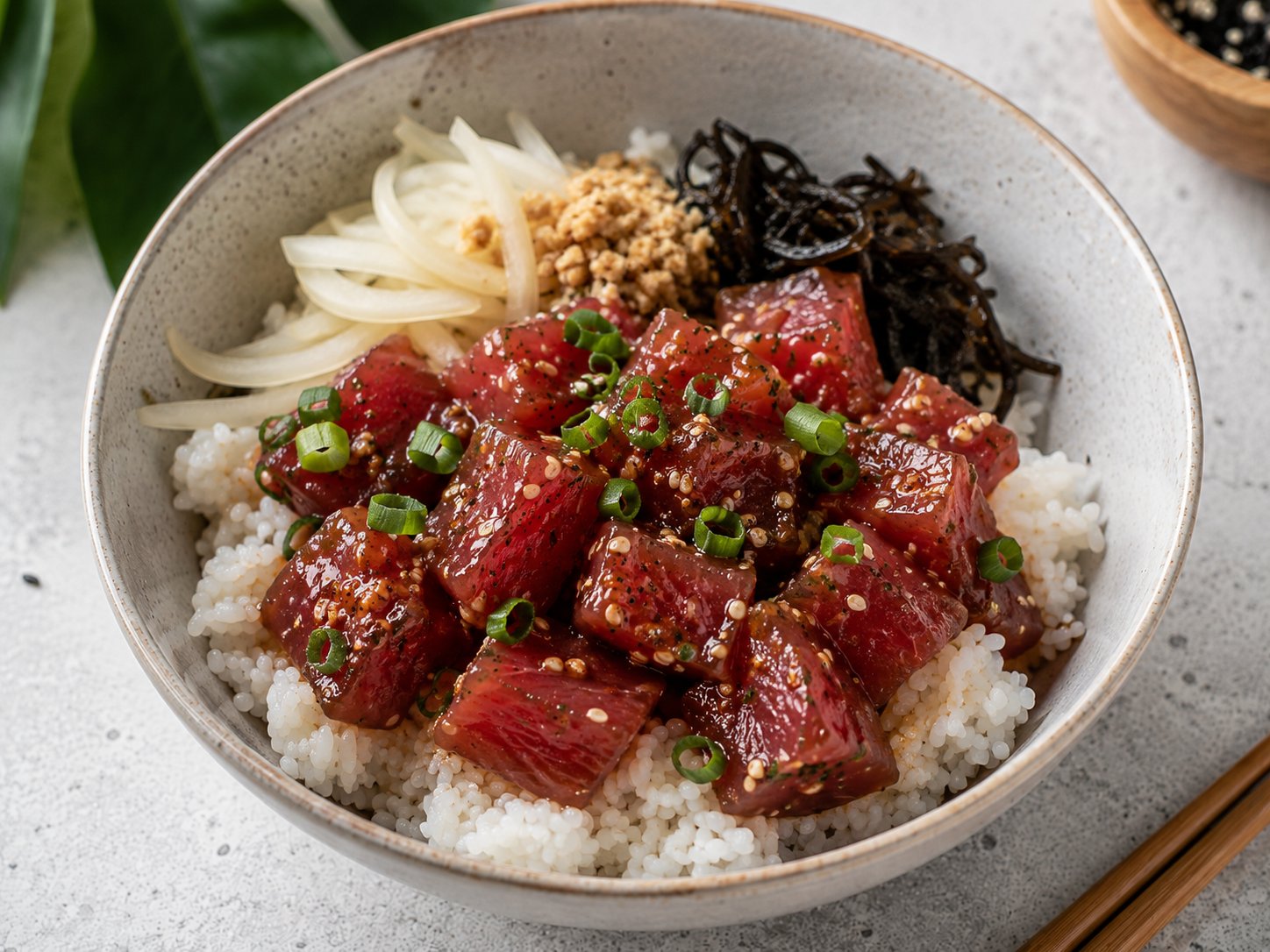
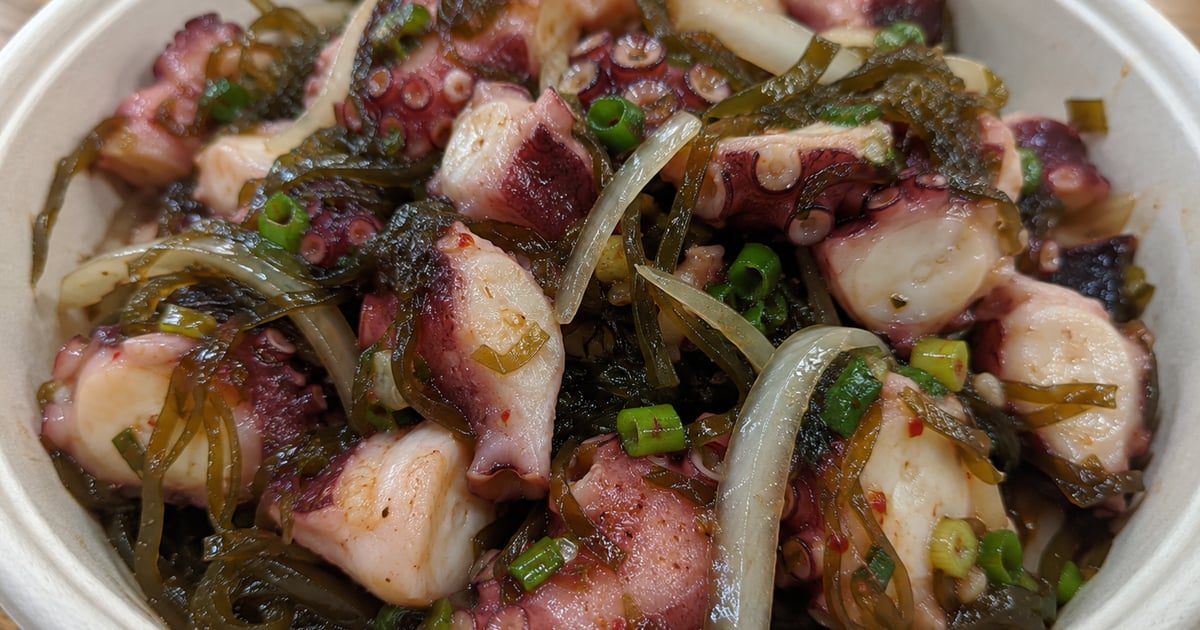

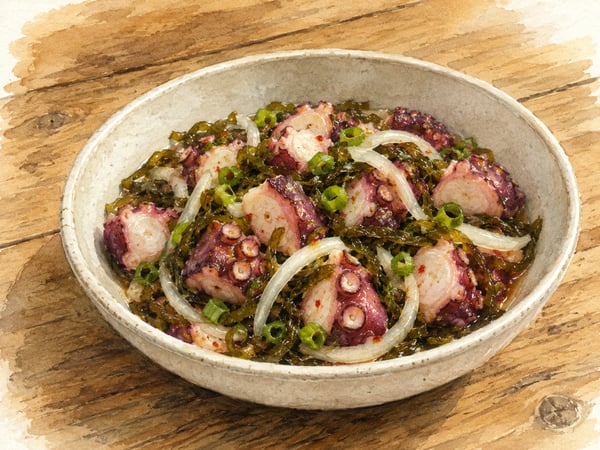
Tako poke is what happens when ahi is sold out at the fish counter and the auntie next to you reaches past it. Tako is the Japanese word for octopus (the Hawaiian name is heʻe), and tako poke is the cooked-seafood cousin of the more famous ahi shoyu poke. It is chewy in a satisfying way rather than buttery, milder in flavor, and forgiving for anyone wary of raw fish. Eat it when you want a Hawaii fish-counter snack without the sushi-grade sourcing puzzle.
The recipe is short. Octopus arrives at the store already cooked, sometimes sliced, sometimes whole. The long simmer to tenderize the meat has been done for you. From there, the build is the same logic as ahi shoyu poke: shoyu, toasted sesame oil, sweet Maui onion, green onion, sesame seeds, and a handful of ogo (limu, the wiry red seaweed). Twenty minutes from the time you open the package.
At a Glance
4 appetizer or 2 main
15 minutes
None (octopus is pre-cooked)
Easy
Ingredients
For the poke
- 1 lb cooked octopus (tako), sliced into ¼-inch pieces. Look for it at a Japanese grocer or the fish counter at Foodland
- 3 tablespoons shoyu (soy sauce). Aloha Shoyu if you can find it, Kikkoman if not
- 1 tablespoon toasted sesame oil
- ¼ cup thinly sliced sweet Maui onion (or Vidalia, Walla Walla)
- 2 stalks green onion, sliced thin (white and green parts)
- 1 teaspoon toasted sesame seeds, plus more to finish
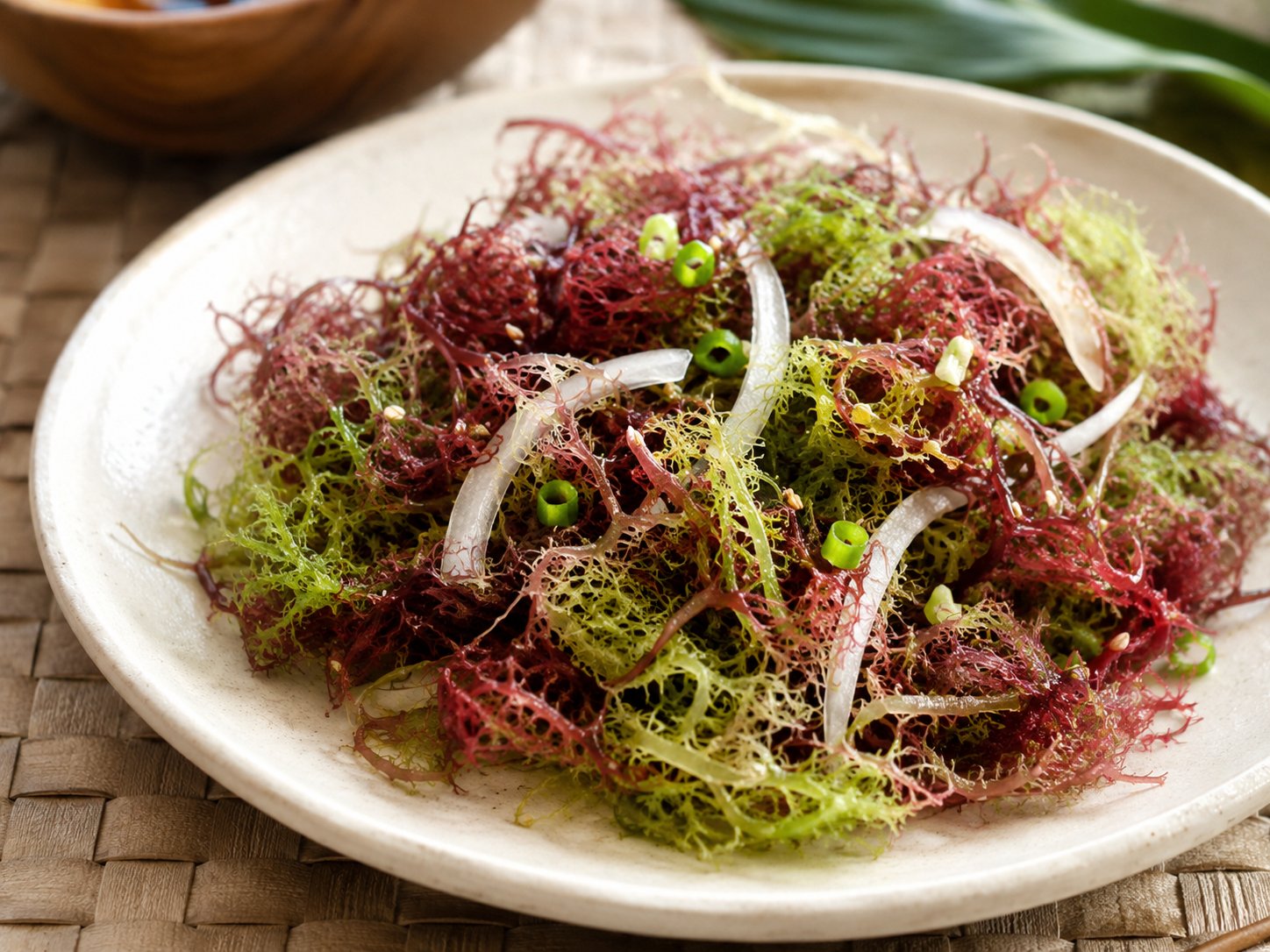
- ¼ cup chopped ogo seaweed (or rehydrated wakame as a mainland substitute)
- ½ teaspoon Hawaiian alaea sea salt
Optional add-ins
- 1 small Hawaiian chili pepper, minced, for slow heat
- 1 teaspoon grated fresh ginger
- Splash of rice vinegar to brighten
Equipment
- Sharp chef's knife
- Medium mixing bowl
- Cutting board
To serve
- Steamed white rice (Calrose or other medium-grain), warm
- A few slices of avocado on the side
- As part of a poke-bowl spread with ahi shoyu and salmon poke
Method
- Source the octopus. Buy pre-cooked tako. It is sold sliced or whole, refrigerated, in vacuum-sealed packs. In Hawaii, the fish counter at most Foodland stores has it, as do Japanese specialty markets and Don Quijote. If you can only get whole cooked tako, slice it crosswise into ¼-inch coins. Raw octopus needs a long, slow simmer to tenderize and is not the right starting point for this recipe.
- Cut to size. Pat the octopus dry with paper towels. Slice the larger tentacle pieces into bite-sized chunks, somewhere between ½ and ¾ inch across. Uniform pieces matter so the dressing coats evenly.
- Build the dressing. In a medium bowl, combine the shoyu, sesame oil, sliced sweet onion, green onion, sesame seeds, Hawaiian salt, and ogo. Stir to dissolve the salt. If you are using ginger, chili pepper, or rice vinegar, add it now.
- Toss the tako. Add the octopus to the bowl and toss gently with a spoon or your hands until every piece is coated. Octopus is sturdier than ahi, so you can be firmer here. It will not fall apart.
- Rest, then serve. Let the poke sit at room temperature for 10 minutes so the flavors come together, or refrigerate for up to an hour. Unlike raw ahi poke, tako does not turn rubbery from extended marinating, and leftover tako poke is still good the next day. Plate over warm rice or serve in a small bowl with rice on the side, scatter another pinch of sesame seeds on top, and finish with a slice or two of avocado.
Notes from a local cook
Cooked tako is the whole game. Octopus that has been pre-cooked (simmered or steamed until tender, then chilled) is the entire reason this recipe is a 20-minute weeknight dish. Raw octopus is a different animal. It needs a long, slow simmer in salted water with a wine cork tossed in (an old Mediterranean trick) before the meat tenderizes. If your store only has raw, save the recipe for a weekend and budget the cook time.
Chewy is the point, not the problem. Tako has more bite than ahi. That is the texture you want. If yours is rubbery to the point of being unchewable, the octopus was overcooked before it got to you. Switch suppliers next time, and in the meantime, slice the pieces thinner so the bite is more manageable.
Ogo is what makes it taste Hawaii. The wiry red seaweed (Gracilaria parvispora, known locally as limu manauea) brings a faint salinity and a snap that store-bought wakame cannot replicate. Hawaii grocers often carry it fresh near the seafood counter, though availability varies. If you are on the mainland, wakame is fine, but rehydrate it briefly in cold water first or it will turn slimy in the dressing.
Maui onions matter when you can get them. The whole point of using a sweet onion is to avoid the sulfurous bite of a regular yellow onion, which fights the shoyu. Maui onions are the local benchmark. Vidalia, Walla Walla, or Texas 1015 sweet onions from the mainland all work as substitutes. Plain yellow onion does not.
While You're on the Islands
Eat it made by someone else. For an everyday tako poke fix, Foodland fish counters across the islands almost always have a tako variety in rotation alongside the ahi flavors. On Maui, the fish counter at Tamura's Fine Wine & Liquors in Wailuku is my own go-to. See our full best poke in Hawaii roundup and the island-by-island poke-bowl spot guides for more.
Buy the ingredients fresh. The same Foodland fish counters sell pre-cooked octopus by the pound for cutting your own, and fresh ogo (limu manauea) often turns up near the seafood counter, though availability varies day to day.
Bring It Home
What you can substitute, what you can't: pre-cooked octopus from a mainland fish counter works fine in place of the island catch — just don't overcook it further once it's home, or it turns rubbery. Fresh ogo doesn't ship well, so dried wakame (rehydrated briefly in cold water) is the standard mainland stand-in. A Vidalia or Walla Walla onion covers for Maui sweet onion; plain yellow onion is too sharp and fights the shoyu.
Where to Eat It on Your Trip
Our picks for Tako Poke across the islands — tap a spot for hours, photos, and directions.
 Photo: 守井嘉朗Oʻahu
Ono Seafood
 Photo: KANGHAN LEEOʻahu
Fresh Catch
 Photo: D DalbyMaui
Honokowai Okazuya & Deli
 Photo: Umekes Fish Market Bar & GrillBig Island
Umekes Fish Market Bar & Grill
 Photo: Jason ScofieldKauaʻi
Koloa Fish Market
 Photo: The Fish ExpressKauaʻi